A model is a simplification of some part of the world, especially a complex system, into logic, causality, and patterns. A model imitates how the world works, which makes it a digital twin. Simulation is what happens when you change parameters and run that model across time over and over. Applying the result back to reality becomes prediction and decision-making. So when we say we use a "model," what we are really doing is running a small simulation of the world.
These days I have been running this frame against almost everything in daily life.
There was one question I had carried for the last ten years. "When a professional barista makes coffee in a cafe, 8 or 9 cups out of 10 taste great. But when I brew at home, only 2 or 3 out of 10 are great. Why, even when I control all the variables like beans, grind, water, temperature, and extraction?"
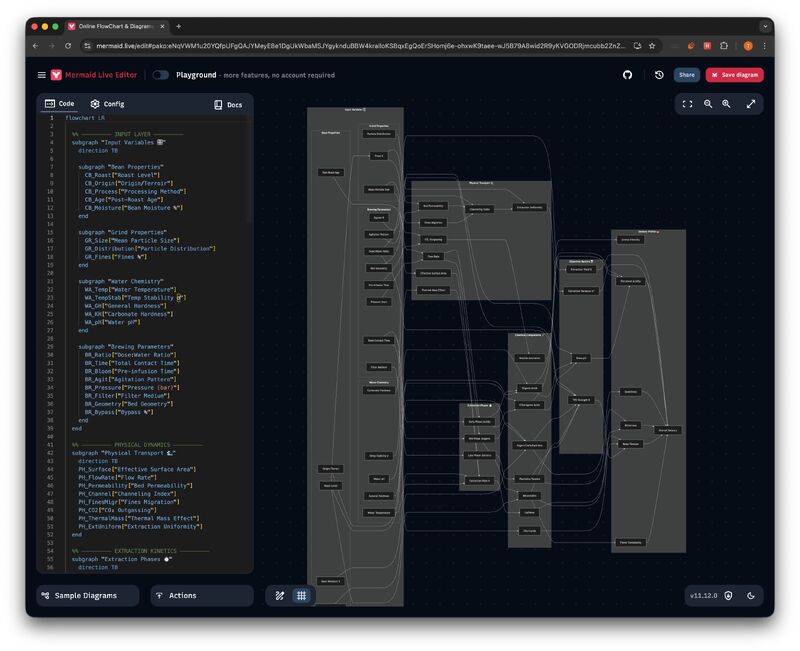
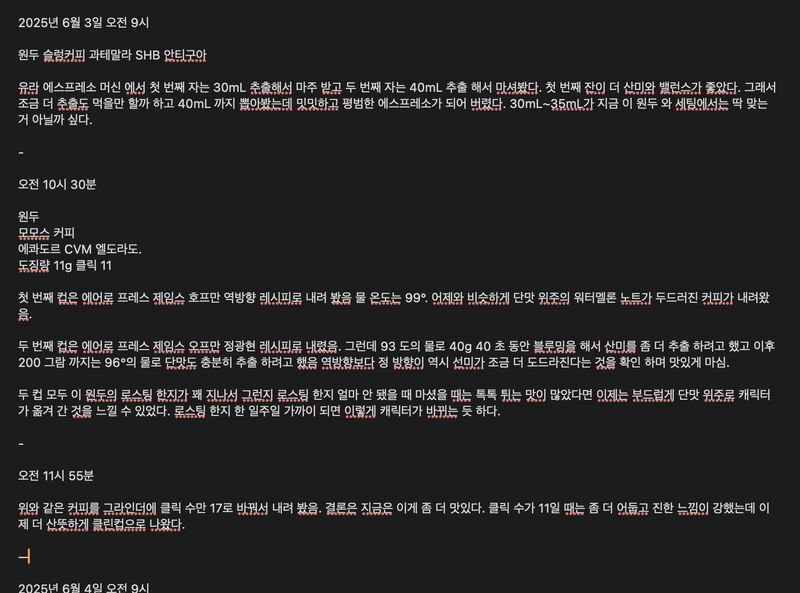
To answer that question, I fed an LLM all the voice notes I had recorded while drinking coffee over the last six months and had it analyze them. I extracted causal pairs that influence the coffee taste I want, then organized them into a causal graph connecting the inputs that affect taste, their interactions, and taste itself as the output. Most of the variables were ones I had already been controlling fairly well, but one recommendation from the LLM stood out: static control. It suggested the RDT technique, where you spray a single drop of water onto the beans before grinding. Static causes grounds to scatter and clump.
After that, I became a home barista who gets 8 or 9 good cups out of 10, meaning cups that land in the sweet spot I intended. At home I only brew a few times a day, unlike in a cafe where grinding happens continuously, so static management mattered more than I realized. Once you know it, it feels trivial. But solving a years-long frustration like this with help from an LLM is exactly the kind of everyday improvement I value. It is precious.