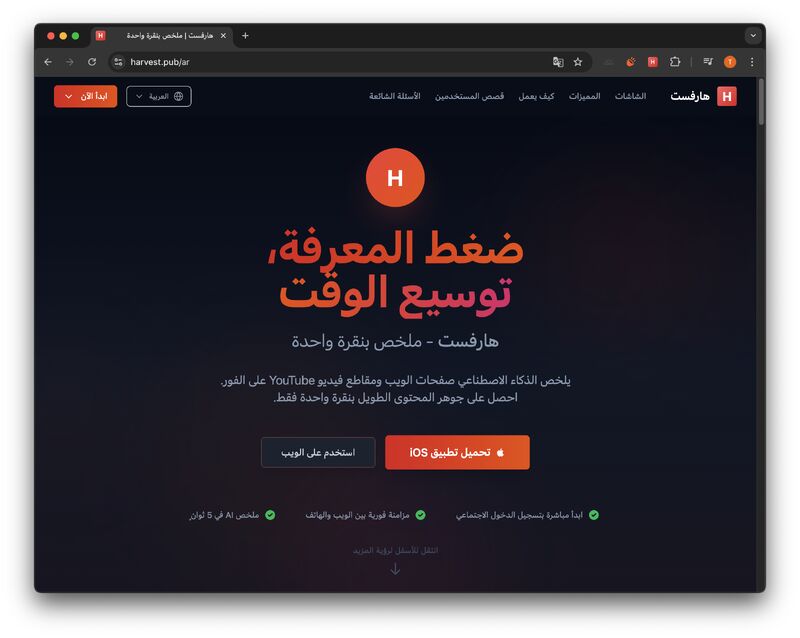
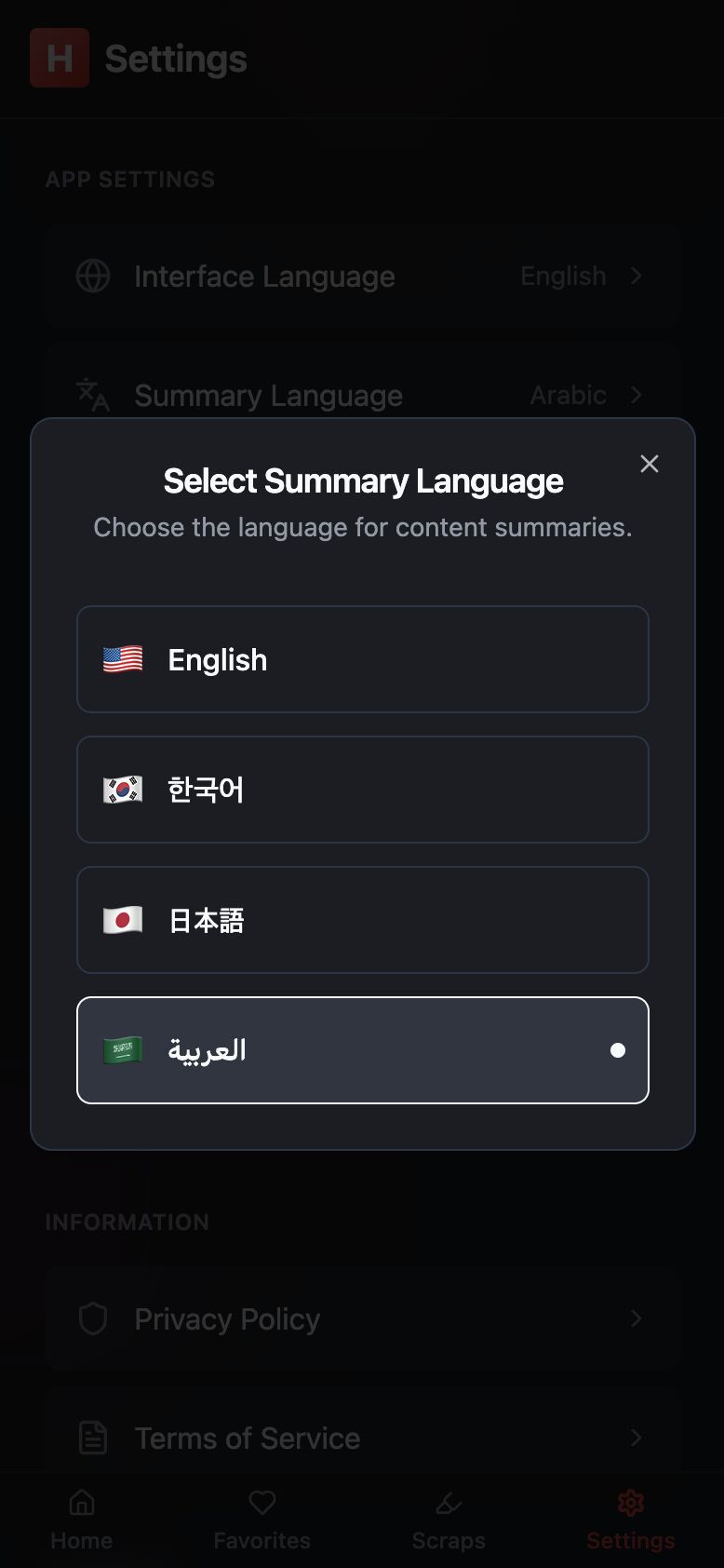
Something unexpected happened after I opened the Harvest service I built and use as a hobby in English. A small viral loop broke out among students in Saudi Arabia and Iraq, with around 200 signups a day on average. If I had only looked at Korea, I never would have experienced that kind of serendipity.
I exchanged emails with a few of them as part user interviews, part follow-up. The Arabic app market turned out to be fascinating. Arabic can only be written and read from right to left. Because of this RTL characteristic, even things like the iPhone back button appear on the right, so from the perspective of English-speaking markets or Korea, everything feels mirrored left-to-right.
So a lot of global services reportedly never supported Arabic or localized for it because of RTL. They assumed the ROI wasn't worth it. Local users, meanwhile, just accepted apps where OS-level RTL and app-level LTR were awkwardly mixed together.
These days AI agents do most of the coding, so if you ask for RTL support from the initial requirements, they usually handle it just fine. All I had done was carry over a habit from building global products in the US: even a small service should have multilingual support across the landing page and the product UI so it meets a global standard. That turned out to be the equivalent of leaving the door open for luck to walk in.
If Arabic localization used to feel like a low-ROI decision, it now feels like a market worth trying precisely because AI coding changes the economics. And this probably applies to far more than Arabic. There must be a huge number of things we still haven't retried simply because habit and convention keep us from reconsidering them.
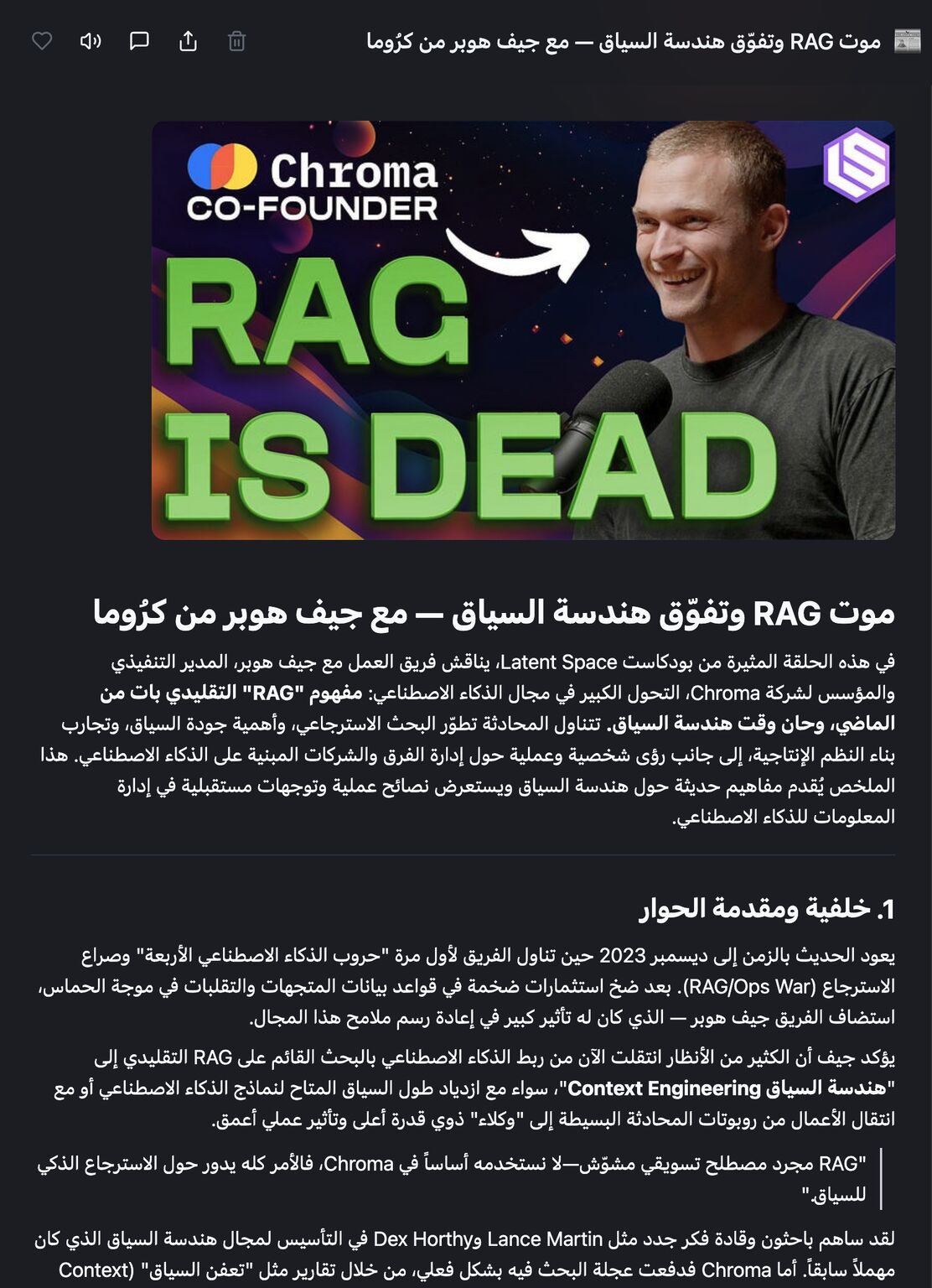
Fatimah, who is studying medicine in Iraq, told me mine was the first free app that summarized difficult course material at a high enough level to actually help, and that she got good exam results because of it. (Well, of course. I built it for myself, so I use fast, high-quality models and A/B test the summary prompts obsessively... I only shared it with people around me, so I never even attached monetization.) Thank you for giving me the kind of experience and reflection that I could not have bought with money, only encountered through timing.
When I moved from developing only in Korea to building global products in the US, I learned a lot about things like time zones. You only see as much as you know. See more, ask more, learn more, and become the kind of person who keeps doors to luck quietly open.