1. Introduction: The Existential Crisis
- OpenAI's 4o generated 700M+ images in one week, threatening Midjourney and others.
- "If foundation models provide similar capabilities, do we need specialized AI applications?"
2. Dual Threats
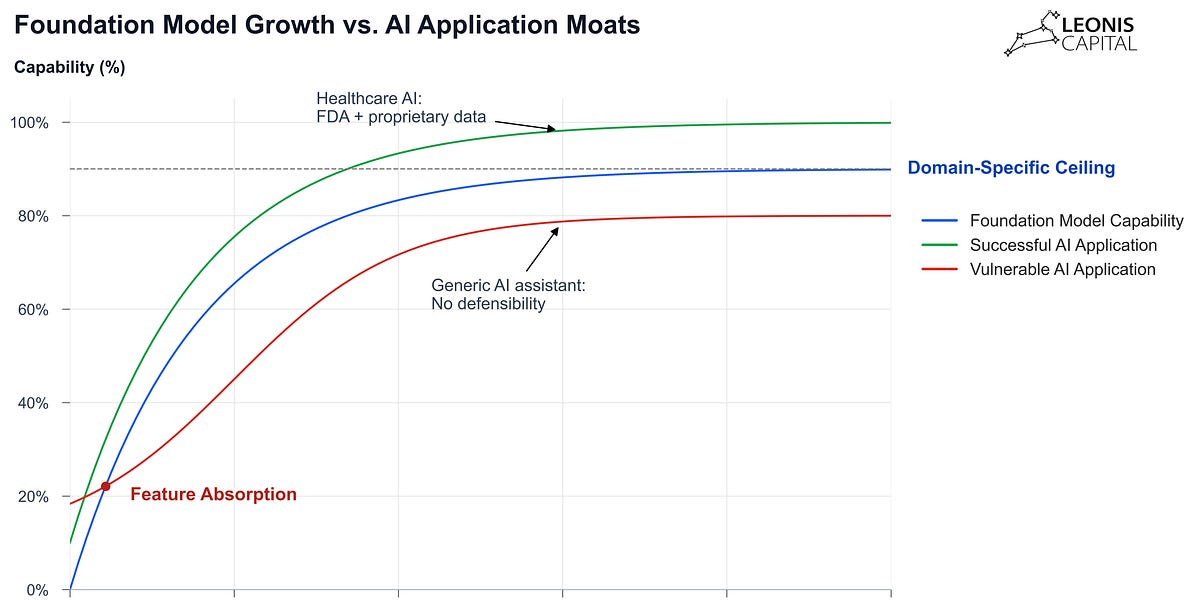
- Vertical: Foundation models absorb application features.
- Horizontal: Other startups quickly replicate features.
3. Absorption Pattern
- AI startups gain attention with new use cases, then foundation model upgrades catch up.
- Users question: "Why pay for a separate solution?" -- churn accelerates.
4. The 2x2 Risk Matrix
- Zone 1 (High Risk): Horizontal + simple (basic text generation, simple chatbots)
- Zone 2 (Medium-High): Vertical + simple (domain chatbots)
- Zone 3 (Medium): Horizontal + complex (advanced code gen, Perplexity-like search)
- Zone 4 (Low Risk): Vertical + complex (Harvey for law, Hippocratic AI for healthcare)
5. MCP and Changing Moats
- Anthropic's MCP standardizes LLM-external tool interaction.
- "Connection" is no longer a differentiator. The real moat is in the "last mile."
6. Optimal Specialization Zone
- Too broad = absorbed by foundation models. Too narrow = can't scale.
- Start narrow and deep, then expand gradually.
7. D Factor for Applications
- Most AI applications have D closer to 1.0 than founders think.
- ARR $10M, SaaS multiple 10x = $100M; with D=0.9, actual value = $10M.
8. Four Moat Stages
- Pre-Moat: Aspirational, no real defenses
- Moat Construction: Paying customers, partial integration
- Moat Validation: Survives major LLM launches without churn
- Mature Moat: Brand, deep integration, regulatory barriers
9. Conclusion
- "In vertical markets, only companies that constantly innovate and build deep domain expertise can capture the trillion-dollar opportunity."