-
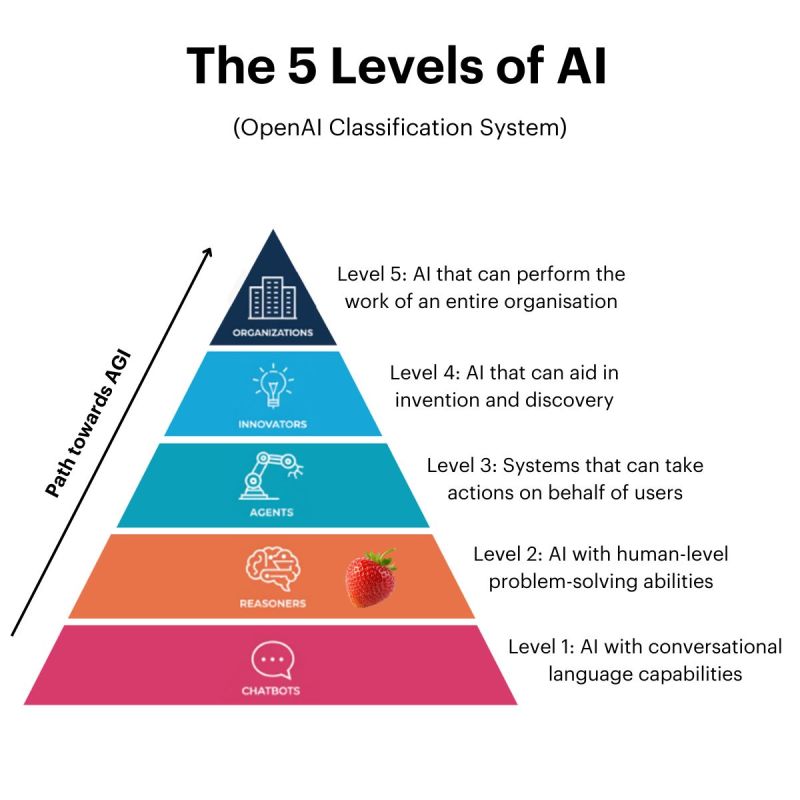
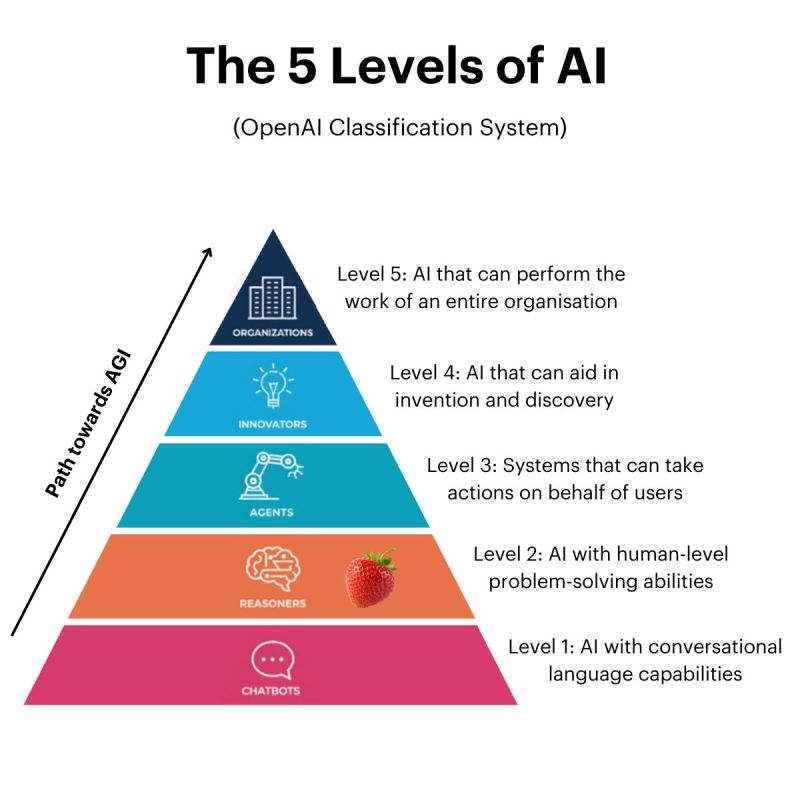
The initial GPT was at the level of a chatbot, answering questions. At this time, people made and executed all decisions themselves, so it was rarely left to AI.
-
An LLM with reasoning skills goes beyond simply providing information and helps with decision-making. For example, if you ask "how should I spend my budget," AI makes suggestions, and people make decisions based on the suggestions. From this point on, humans will be able to 'delegate' some judgments to AI.
-
In the 'agent' era, expected from 2025, AI will directly handle work. People set the direction, "Let's go to this goal," leave part of the execution to AI, and monitor the results. This clearly broadens the scope of delegation.
-
Afterwards, there will be areas where AI can do better than humans, and through this, inventions/discoveries/innovations will become possible. Eventually, AI reaches a stage where it makes decisions and operates on its own like a small organization.
-
This AI development process resembles an office worker's career path. It is similar to the process of starting as a practitioner and working your way up to manager, director, and executive level, gradually delegating more authority and responsibility and making larger strategic decisions. It looks like they are only entrusted with small tasks at first, but eventually end up coordinating the entire company.
-
When people reach Level 5, the work they do becomes similar to the current CEO role. To seize opportunities during this process of change, it is essential to expand delegation-related skills such as problem definition, goal setting, and result interpretation. In the end, it means that you have to be like a 'prepared CEO'.
-
Good delegation frees individuals from repetitive tasks and micromanagement. If tasks can be properly delegated to AI, people can focus on bigger and more important problems.