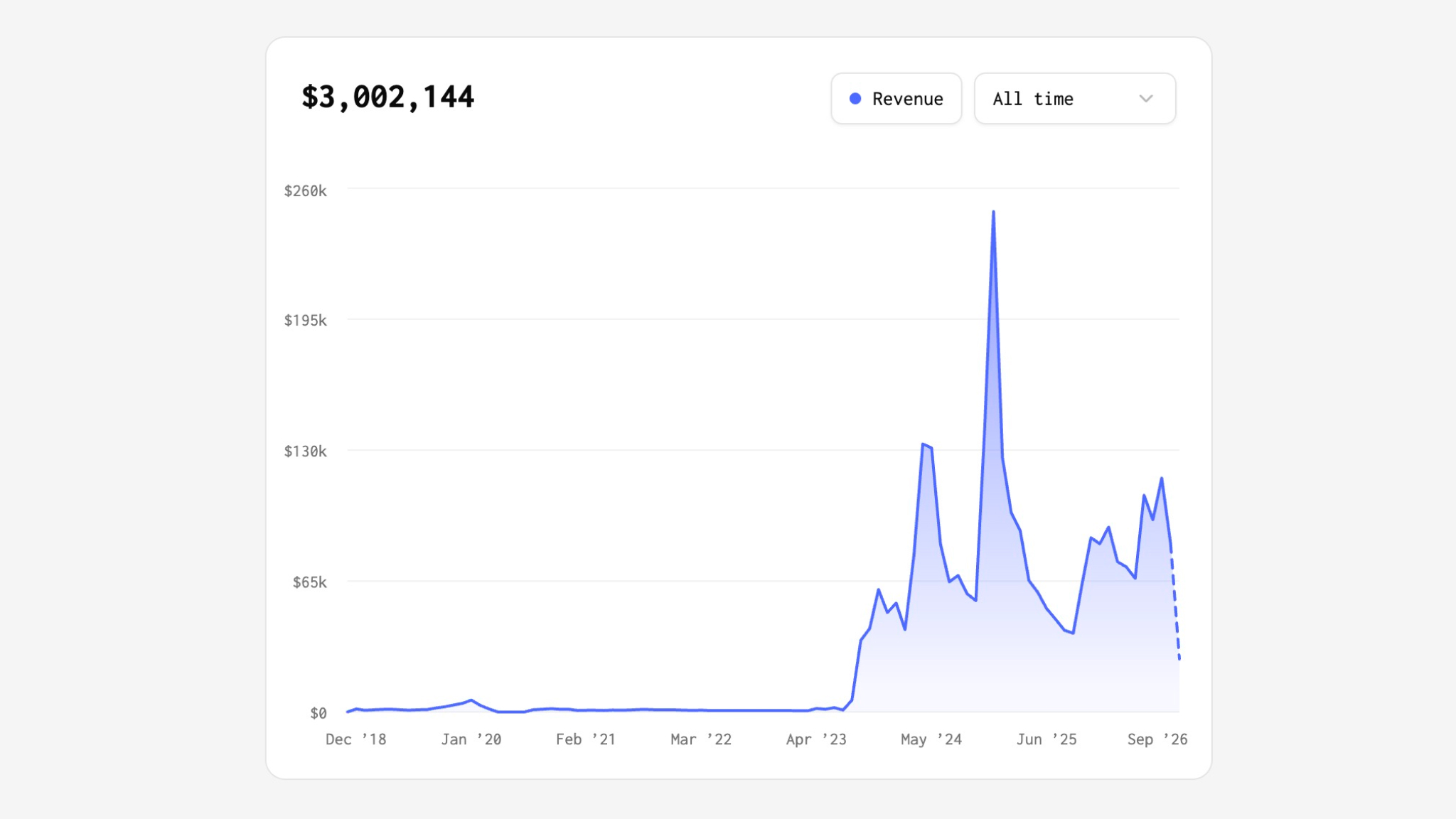
Starting in 2016, over roughly ten years, the author built 36 startups alone (solo), without outside investment (bootstrapped), at around an 85% margin, earning a cumulative $3 million. This success didn't come from pushing one giant idea from the start. It came after countless failures, depression, and pivots, as he learned to build small, ship fast, and quit when it doesn't work. About 90% of the 36 made almost no money, but in the end the author found something that mattered more than money: products he enjoys building and a way of life that suits him. 🚀
1. Dreaming of Becoming Mark Zuckerberg
The author graduated in computer science in 2016. His friends applied to companies in Paris, France, but he felt that path wasn't right for him. A 2015 exchange semester in Hong Kong had changed his thinking a lot. He didn't know what he wanted to do, but he knew at least that he didn't want an ordinary job.
One hungover Sunday at 2 p.m., while watching the movie The Social Network, he was suddenly struck with certainty.
"I'm going to be the next Mark Zuckerberg."
The "unicorn-level" idea he came up with was Tinder for people who love sports. But since he had spent more time partying than studying in college, he first had to learn to code again. For a year, he asked people to sign a non-disclosure agreement (NDA) before he would explain his idea, and he even made a logo and business cards.

At the time he was a waiter at a Paris restaurant earning $10 an hour, but in his head he was already acting like Zuckerberg. Then a customer told him about a new school that taught entrepreneurship, and, lonely as he was, he signed up right away.
In class, when the instructor asked, "How is your startup going to make money?", he had no answer at all. He had spent a whole year building the product and had never once thought about a revenue model. The app couldn't even handle sign-ups properly, and the only user was the author himself. His relationship wasn't going well either.
In the end, on March 10, 2017, he decided to quit everything. The following week his parents drove him to the airport, and he cried in the car.
2. An AI Startup in Korea and the Glove Business Fiasco
The author joined his friend Sacha, who was waiting for him in Seoul, South Korea. The two raised $100,000 from an angel investor and built a two-employee AI startup. The goal was a service that reverse-engineered airfare pricing to predict future prices.
But nine months later, all that was left was a bad product, a business with no income, and a stifling life of wearing a shirt every day. The author shut the business down yet again. In December 2017, in a foreign country, out of money and out of confidence, he started smoking again.
That's when he recognized a pattern repeating in his life.
"Big goals, big failures."
So he tried a business that seemed much simpler. After seeing a Facebook ad for "big mittens for couples," he decided to sell them in Korea. He could have easily sourced and resold the product, dropshipping-style, but as a product-obsessed engineer, he thought he had to make the product himself.
A grandmother in Korea hand-knitted 50 Glovers™, "gloves for couples," and production took a month and a half.

His new Korean girlfriend helped with translation. The author poured his entire savings of a few hundred dollars into Facebook ads, but the result was zero sales.
In January 2018, his tiny 8㎡ bedroom was full of unsold gloves, and his bank account was empty. He had to sell the gloves at $20 each to pay rent, so every night he went out to the streets with his girlfriend to sell them. To endure two hours of the Korean winter at -15°C, he had to drink a liter of beer before heading out. They sold about two gloves a day, and every next morning he woke up sick and coughing.
"What on earth am I doing with my life?"
3. The First Customer's "Yes" and the Birth of VirallyBot
In April 2018, the author was poorer than ever, in bad health, and physically wrecked. To cover living expenses, he went back to working as an extra, a job that paid $200 per gig when he got called once or twice a week.
At the same time, to clear his head, he started doing 20 minutes of high-intensity jump rope every other day, and within a month he had transformed his body. This time, instead of aiming for enormous success as before, he set a very small, concrete goal.
"Make just $1 online with code."
This time he focused on problems people actually have rather than on the product itself. Starting from the idea that every business wants to grow, he decided to build a gamified marketing tool for escape rooms.
Meeting a marketer named Andrei at a startup event was a key turning point. Andrei gave the author, who always started by building the product, this advice:
"Why don't you try selling it before you build it?"
He was a developer who didn't like marketing, but after two years of failure he took the advice. After he sent a few cold emails, Daniela from Time's Up Escape Rooms in Australia asked for a call to hear about the product.
On July 13, 2018, the author was staying briefly in Osaka, Japan, to sort out a visa issue. After a sleepless night at the cheapest guesthouse he could find, he started the 9 a.m. sales call in a hot common area with unstable Wi-Fi. He recalls that his pitch was so awkward it was embarrassing.
But at the end of the 42-minute call, Daniela said "yes," and signed up for the $99/month plan that same day. The author went back to Korea and built the actual product. This was the beginning of VirallyBot, a gamified marketing SaaS for escape rooms.

VirallyBot went on to make about $100,000, $30,000 of which was sitting in an old PayPal account. The author says this single first call became the foundation that paid his living expenses for the next five years. 🎉
4. Growing a SaaS in Bali
In September 2018, the author and his girlfriend felt there was no longer any reason to stay in Seoul, and moved to Bali, which was warm and cheap. He sold VirallyBot to escape rooms for $199 a month.
His daily routine was fairly clear.
- In the morning, he gathered lists of prospects and sent cold emails. He tried cold calling too, but it didn't suit him.
- In the afternoon, he improved his coding skills by adding games and features.

Life got a lot better. Instead of a cramped room with bugs, he lived in a nicer house, and he learned to surf. The SaaS started making $1,500 a month.
The problem, however, was high churn. For escape rooms to make money from the software, they had to actively use it, but many customers didn't. As new customers came in and existing ones kept leaving, the author felt like he was running endlessly on a treadmill.
He offered a $1,999 annual plan instead of monthly subscriptions and made some sales that way, and by early 2020 monthly revenue had risen to $3,000. Still, the underlying problem wasn't solved. So he built GameWidget, which targeted the same escape room market but reduced the effort required from customers. It was a product where you just added a simple script to your website, and visitors could play a mini-game and get a discount coupon.

In a two-month beta test, conversion rates rose by 0.6 percentage points. Considering that the industry regards even a 3% conversion rate as excellent, it was an impressive result, and the author had high hopes.
5. COVID, Marriage, and a Deepening Sense of Failure
When COVID-19 hit in March 2020, escape rooms all closed their doors. The author's revenue dropped to $0 within a week.
Even so, he was lucky to be in Bali. There he met Hugues, who became a lifelong friend, and for six months the two surfed uncrowded waves and talked about life. His girlfriend and Hugues accepted even his weird and vulnerable sides without judgment. Thanks to this experience, the author came to care less about what other people thought of him.

In the summer of 2020, the author and his girlfriend decided to get married. They went back to France, and his girlfriend's parents came from Korea for the wedding. The wedding was wonderful, but because of COVID-19 entry restrictions they couldn't return to Bali. The two then spent a year in Paris, where the author's parents and sisters lived.
He restarted his old SaaS and got monthly recurring revenue (MRR) back up to $1,000, but then realized he no longer liked the product and quit. After months of doing nothing, in January 2021 he launched The Golden Plumber, a two-page PDF info product that promised to solve men's post-urination discomfort. He ran ads on adult sites, and over two months it made a grand total of $4. He gave up again.
His parents gave him $100,000 as an early inheritance. In March 2021, he invested all of it in Tesla stock at its peak, and resolved not to touch the money for at least 20 years, because he felt it wasn't money he had earned.
But just two weeks later, his investment portfolio was down $36,000. He was 27, broke, and living in his parents' house. One thought kept looping in his head:
"I'm a failure..."
On the morning of June 9, 2021, drinking coffee in his room, he started to cry. The sadness turned into anger, and he ended up punching four holes in the wall.
6. Regaining a Sense of Life Through a Job
The author says the image of a 27-year-old man crying in his mother's arms may not be common, but life isn't like the movies. He chose a very big change.
"Quit startups and get a job."
Two weeks after applying for software engineer roles, he landed an interview. At the end of the interview, the HR person asked, "Is there anything you'd like to say to Tai Lopez?" It wasn't mentioned anywhere in the application, but it turned out to be an offer for a $9,000-a-month job working with Tai Lopez. The author accepted.
During this period he started reading. Because books had been boring at school, he had assumed he hated reading, but he discovered that reading could actually be his favorite activity. His first book, Matthew Walker's Why We Sleep, changed his life. He realized he hadn't even known how tired he was, and once he fixed his sleep, his motivation and happiness went up and his anxiety went down.
Even while working, he studied Korean for an hour a day, six days a week. Three months later, he could talk with his wife in Korean. He felt good every day and regained a sense of growth and purpose.
In October 2021 he went back to Bali, but in November he was laid off. Even so, he didn't fall apart the way he used to. Inspired by Pieter Levels, who builds startups in public, he decided to go back to making startups. This time, though, he had a new approach and a new dream.
7. Projects Built for Fun and the Start of Building in Public
The author felt that without anything special happening in his life, it was hard to even find startup ideas. Tired of the "make it big or go bust" mindset of the previous few years, he wanted simple projects anyone could understand.
In December 2021, he built Mood2Movie, an app that recommends movies based on your mood. The name sounds grand, but the actual structure was simple: you pick a mood, and it recommends movie genres that fit that mood.

This free app was easy to post in communities like Reddit, and one post went viral, bringing in 10,000 visitors. It also took off on Hacker News, for a cumulative total of more than 20,000 visitors. He finally had real results and a story worth sharing on Twitter.
Over the next six months, barely thinking about money, he launched seven projects. Along the way he learned a lot about coding, search engine optimization (SEO), writing, product launches, and marketing. In July 2022, he reached 1,000 followers on Twitter.
He changed his lifestyle too. He ate healthy food, prioritized sleep, and exercised every day by surfing or skateboarding. He even raised a chick. His income was only a few hundred dollars a month, but it was so much fun he couldn't stop.
8. Habits Garden and Side-Project Marketing
In August 2022, Habits Garden, a gamified habit-tracking app, was making about $200 a month. The author decided to focus on it. But as a developer absorbed only in building products, he still didn't like traditional marketing.
The approach that suited him was side-project marketing: building separate free tools to promote a paid product.
The prime example: he launched VisualizeHabit, a free tool that visualizes what small habits add up to over the long term. He naturally linked Habits Garden inside this tool, and it brought in 30,000 visitors over two months.

To launch products quickly, he started making fun launch videos. People enjoyed and shared the videos, which created a viral loop that in turn grew his visitors and followers. Each free side project added Twitter followers and traffic.
Thanks to this strategy, Habits Garden reached 10,000 users in January 2023. Users wanted a mobile app, and although the author knew nothing about mobile development, with help from his friend Martin he launched the app on the App Store and Play Store in 14 days.
Even so, revenue was around $700 a month. Not bad, but not a big enough business to justify six months of work. The author admits it candidly:
"I fell in love with the wrong product."
9. Shipping Like Crazy and Finally Finding the Right Market
In early 2023, the author sold a micro-startup he had built in 2021, which made $80 a month, for $4,300. That gave him a story to share, and his Twitter account grew by about 50 people a day. But it still wasn't enough to reliably cover even his low cost of living.
So he repeated his 2021 strategy more systematically: launching startups like crazy. This time, though, he set three rules.
- No free plans.
- Build only painkiller products that people truly need, not mere "nice-to-haves."
- If there's no sign of product-market fit, move on quickly.
Over eight months he built eight startups, and six of them made money. Two of them covered his living expenses. The strategy was simple:
"Build fast, launch virally, repeat."
In July 2023, his monthly income reached about $3,000. Sixty percent of that revenue came from MakeLanding, an AI landing-page generator, but he didn't use the product himself and had no interest in the market. He had built it simply out of fear of missing out on the AI boom. He tried to grow it but failed.
In August 2023, after visiting Korea with his family and holding a second wedding ceremony with his wife, he reached an important conclusion.
"I need to build businesses for customers I genuinely care about."
He quit all his directionless AI projects and decided to focus on products he would actually use himself. He sold the AI landing-page generator for $35,000 and the habit-tracking app for $10,000. These sales gave him time and mental breathing room.
On September 1, 2023, he launched ShipFast, a NextJS boilerplate that helps people build startups quickly. It packed everything he had learned over the past two years of shipping products fast into a single GitHub repository.

He told his wife he'd be lucky to make even $100, but ShipFast made $40,000 in its first month.
"Product-market fit is hard to explain, but when it comes, you know it."
He kept adding features and sharing the process on Twitter. Testimonials poured in from customers saying things like "I made my first dollar online thanks to this boilerplate," which was deeply rewarding for the author. He also launched ByeDispute, a no-code tool that prevents Stripe payment disputes and chargebacks.
In November 2023, running everything alone with no employees, he hit $65,400 a month at a 91% margin. By the end of 2023, ShipFast alone had generated nearly $200,000 in cumulative revenue. It felt like the past seven years of effort were finally paying off financially.
10. The New Pressure That Big Success Created
Content and videos grew ShipFast enormously. In April 2024, monthly revenue reached $133,000, and his YouTube channel quickly grew to 100,000 subscribers. That was because the author had a story backed by years of failure and real numbers.
But this success made him overconfident. Thinking he could become "the Alex Hormozi for developers," he focused even more on content and info products.
As the question "How did you learn to code?" kept coming up under his videos, he created CodeFast, a coding course. He put in six hours a day for nine months, and it made $100,000 within two days of launch.

But the author's emotions swung wildly with changes in revenue. One month he'd make $120,000, and the next month $40,000. Objectively it was still a lot of money, but it was hard to ignore a declining chart.
By the end of 2024 he had made $1.2 million cumulatively, but he confesses he wasn't simply happy.
"Realistically, it felt like a rat race where I had to work harder and harder just to keep the numbers up."
11. Going Back to Building Products
In October 2024, the author launched DataFast, which connects the payment service Stripe with web analytics to show which marketing channels are actually performing.

DataFast reached $300 in monthly recurring revenue within two weeks. That was tiny compared with CodeFast, but for the author this product was what actually saved him. After nine months of making videos, he felt happy again building features people could actually touch and use.
"I realized I needed to go back to my first love: building apps out of curiosity, not because of a revenue opportunity."
When he started building in public, his goal had been to make one startup a month. He drifted away from that path for a while in 2024, but in 2025 he came back to it. He built several small projects such as BioAge and SuperShrimp, and most of them didn't make much money. His total revenue also went down. But he was having fun again.

He cut back his working hours and prioritized other parts of his life too. He traveled with his wife to New Zealand, Korea, Bali, South Africa, and Greece, and he started running and weight training. His measure of success had shifted from mere revenue to fun and balance in life. 🏃
12. TrustMRR, the Slow Growth of DataFast, and the 10% That Succeed
On October 30, 2025, the author launched TrustMRR, a marketplace for buying and selling profitable startups based on verified revenue data.

The buzz of the first month faded the next. To keep the project alive, the author started building features targeting various niche markets. After 10 failures, in January 2026, a marketplace feature for selling startups took off.
Someone offered to acquire TrustMRR for $1 million, but the author turned it down. In the post, he explains that over the following seven months it achieved the following:
- 164 founders closed acquisitions or sales.
- About 200,000 people visit the site every month.
- The author earned nearly $400,000.
At the same time, DataFast kept growing steadily as he added features. When the author wrote the post in September 2026, DataFast's MRR was $30,831 and its churn rate was about 7%.

In August 2026, he also launched Stalkr, which finds reviews, feature ideas, and bug reports about your own product and your competitors across the internet. It got its first customers and reached $223 MRR. That's tiny compared with his other products, but for the author the size doesn't matter. He is building a tool he uses himself, and he is enjoying the process of building it.

Looking back on this long journey, the author found one fact that kept repeating.
"I have absolutely no idea what will succeed."
ShipFast and TrustMRR exploded quickly, and DataFast grew slowly but steadily. Meanwhile, the other 30-odd startups made almost no money. In other words, about 90% of the 36 startups failed.
But he doesn't deny the failures.
"My goal is to build things that make me happy, even if they don't make money."
13. Start Small, Quit Fast, Start Again
When he first started building startups in 2016, the author believed he would succeed. But he says that if he had known in advance that success would take seven years of failure, he probably wouldn't have started at all. That's why he remains "stupidly optimistic" even now.
These days, though, he no longer looks only at some enormous success years down the road the way he used to. Instead of chasing giant dreams, he thinks in weeks and builds small, fast projects. And if they don't work, he quits even faster.
"I don't think in years. I don't dream big."
"I think in weeks. I build small projects fast, and I quit them even faster."
"That's how I wake up happy, enjoy the process, and eventually build projects that change my life."
The author thanks the readers who have followed his writing, saying they gave his posts a purpose and that this is what keeps him going. He closes by cheering on his readers' own projects and challenges. ❤️
The main products he currently runs or recommends are:
- CodeFast: A course that helps people learn to code in weeks, not months, with more than 3,300 students.
- DataFast: An analytics tool that helps startups grow with actionable data, used by more than 20,000 founders.
- TrustMRR: A platform for buying and selling profitable startups based on verified revenue data.
- Stalkr: A tool that tracks mentions of your product and competitors across the internet.
14. Wrapping Up
This story isn't simply a success story about making $3 million. It's a record of finding a way of building startups that fits him, after passing through giant, unprepared dreams, repeated shutdowns, a COVID-induced revenue collapse, depression and a day job, and an accumulation of small projects.
The most important lesson is not to try to predict the odds of success perfectly in advance, but to build small, launch it yourself, watch how customers respond, and move on to the next attempt if it doesn't work. Even if 90% fail, the remaining 10% can change your life. That is the conclusion the author reached through his 36 startups.