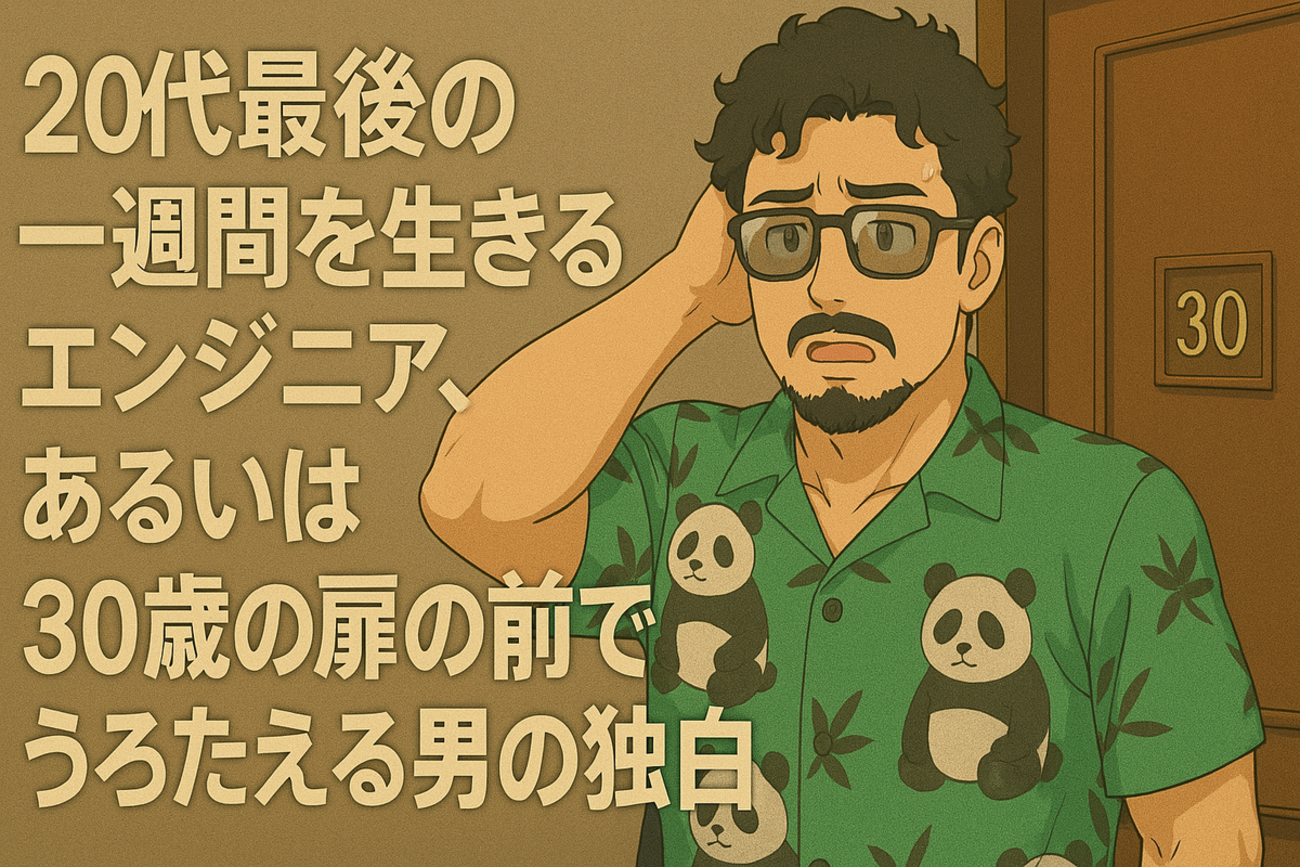
This article is a candid memoir by an engineer spending the last week of his twenties, openly reflecting on a decade's worth of experiences and realizations as he faces his thirties. Rather than celebrating flashy successes, he shares lessons learned through trial and error as an ordinary human being, emphasizing how important the courage to not fear failure, passion for expertise, precious human relationships, a balanced personal life, and a willingness to learn and ask questions are in life. Ultimately, he conveys the wisdom of achieving sustainable growth based on three pillars — time, money, and health — and of deeply understanding oneself while building positive relationships. None of this journey was perfect, but he wishes to share with readers the unique values and meaning he discovered within it.
1. Taking on Challenges and Learning Through Failure 🏃♂️
The author faces his last week as a twenty-something, standing before the great turning point of age 30. In his teenage years, he simply followed the predetermined path, but entering his twenties, he confesses that the "rails" disappeared and a period of wandering began where he had to find his own way. He realized he wasn't a "hero" blessed with special talents, and in accepting this, he actually felt a sense of liberation. This article captures the precious lessons that an ordinary human learned during their twenties.
One of the most important lessons the author learned in his twenties is that failure is not something to fear but a gift that life gives us. He experienced countless failures — system outages, botched effort estimates, bugs from missed tests, presentations that failed to resonate — but those bitter experiences became the driving force for his growth.
"The only absolute failure is not trying anything and avoiding all risk."
We tend to avoid new challenges out of fear of failure, but the author emphasizes that not trying is itself the biggest failure, and it means losing even the chance to succeed. Success and failure are not clearly delineated, and their evaluation can change with time and perspective — an important insight.
He also says that to truly learn from failure, you need to set clear deadlines and commit wholeheartedly. A vague "someday" leads to nothing, and only failure backed by sufficient preparation and planning holds real value. Rather than simply attributing failure to "lack of ability," it's important to focus on specific circumstances and context to identify the root cause.
The author argues that small failures and repeated adjustments to plans lead to steady growth rather than big catastrophic failures. He also warns that perfectionism can become a trap that blocks action. In your youth, companies grant you the precious "right to fail," so don't let fear of others' judgment cause you to miss opportunities.
"What we really fear is not failure itself, but others' judgment of that failure." "You don't have to be perfect. It's okay not to be special. Even if you're not the hero, the protagonist of this story is undoubtedly you."
He then emphasizes the importance of "the courage to endure embarrassment." Other people aren't watching our every move as much as we think, and taking on challenges despite the risk of embarrassment is more valuable than attempting nothing out of fear of failure. This courage can be an eternal weapon for engineers who must constantly learn and evolve regardless of age or rank.
Sometimes, "the courage to take a groundless first step" — one that can't be logically explained — can open unexpected paths. Experiences that seem like detours will serve as unique strengths in the future, the author firmly believes. To learn from failure, you need to wait for emotions to settle, objectively analyze the situation, make plans to avoid repeating the same mistakes, and then follow through.
In conclusion, the author urges his younger peers not to cage their potential behind a fear of failure. Someone who actually takes on challenges and produces results is far more admirable than someone who creates nothing and only criticizes. Since the technology world is always evolving, his biggest teaching from his twenties is to accept failure as a gift for growth rather than something to avoid.
2. Finding Your Expertise and Pouring in Your Passion 🔥
As a new engineer, the author confesses he wanted to dabble in everything — frontend, backend, infrastructure, containers, databases, machine learning. But he soon realized that "learning everything actually means understanding nothing deeply." Shallow, broad knowledge can't beat deep expertise.
"Learning everything actually means understanding nothing deeply." "Choosing isn't about giving something up — it's about focusing."
It can be frightening to close off other paths through choice, but because time is finite, choosing and setting deadlines are essential. It's unwise to narrow your options too early; instead, broaden your possibilities sufficiently, then find what truly matters and dig deep. Setting deadlines for this process helps sharpen focus and establish priorities.
The author emphasizes to young people in their twenties the importance of "diligently doing what's in front of you without being impatient." Don't be swayed by others' flashy successes on social media — walk your own path steadily and give your best to the project at hand. Even when fixing a minor bug, aiming for fundamental understanding by investigating the root cause brings the most reliable growth.
"The preciousness of diligently continuing with what's in front of you." "Not giving up, enduring the pain, and continuing to work hard has overwhelming value."
Since most people quit along the way, persisting for one year creates a difference, three years earns recognition as an expert, and five or ten years makes you an overwhelming presence — a simple but powerful truth.
Meanwhile, he delivers the sharp admonition: "Don't pretend to be busy — it's proof of incompetence." Truly capable people never lose their composure no matter how busy they are, and "I don't have time" is the same as saying "it's not a priority."
The essence of problem-solving begins with the insight that "understanding a problem correctly means it's half solved." The author chose "system reliability" as his area of expertise and dived deep. This wasn't mere technical curiosity but was born from an earnest desire to understand and solve the essence of problems. This deep expertise gifted him fundamental problem-solving ability and solid confidence.
To grow as an engineer, he advises expanding your perspective beyond being a mere implementer to becoming a designer, and then an architect. Architect thinking is the ability to simultaneously consider technical feasibility and business value to arrive at optimal solutions. He emphasizes the importance of "broad perspective" and "creativity" — leveraging knowledge and experience from other fields to find new solutions based on deep expertise. Ultimately, engineers must never lose sight of the perspective that their work is about "creating value."
"Our job is to create value."
Using the analogy that life is like a card game — you can't change the initial cards you're dealt, but through play you can draw new cards and build your own deck — he explains the process of finding one's own path.
Entering his twenties, he awakened to the reality that "nobody helps you anymore," which was the first step toward adult independence. Rather than comparing yourself to others' success, following the principle of "don't try to be outstanding — be different" — stepping away from fiercely competitive fields to build a unique presence in niches where your strengths shine — is important.
He then explains that the advent of the generative AI era has completely changed the rules of the technology industry, and refined technical skills, overwhelming speed, and the practical application of LLM technology have become essential. Amid this unprecedented wave of change, "creating maximum value from your current position" and "continuing to learn without fearing change" are the only survival strategies.
The author warns that passion is not infinite and must be strategically invested. Nobody can give their all at all times, and sometimes recognizing the value of "periods of not trying hard" and preparing for the next leap through rest is essential. Burnout can happen to anyone, so rather than blaming yourself for not being able to push hard, accept it as a message from your body and mind saying "let's rest."
"People are not beings who can sustain the same level of effort indefinitely." "There's no need to blame yourself for 'not being able to try hard.'"
He also urges having the courage to choose new paths without being bound by past declarations. Decisions made in your early twenties don't determine your entire life; being honest with today's self is more important than being faithful to yesterday's self.
"Choice is free, but it comes with responsibility."
Ultimately, finding a field you can truly pour your passion into, immersing yourself deeply, and taking responsibility for that choice — this becomes your unique strength and the pillar that sustains your life. The author firmly states that building solid expertise while flexibly embracing new knowledge, and taking responsibility for every choice, is the path to maximizing your potential.
3. Encountering the Best and Emulating Their Habits 📚
The author initially thought "you can't imitate geniuses," but upon observing top performers, he discovered the surprising fact that most of them excelled not through special talent but by "doing ordinary things with extraordinary care and consistency."
"When I observed top-tier people, I noticed something surprising. Most of them weren't relying on special talent — they were doing ordinary things with extraordinary care and consistency."
Like the martial arts maxim that "the eye never masters before the hand does," mere surface-level imitation is insufficient — without understanding the essence, it's soulless mimicry. But after a thousand imitations, there comes a moment when it becomes your own, emphasizing that imitation can ultimately be elevated into something uniquely yours.
Another characteristic of top performers is that they clearly decide "what not to do." They had a selective approach of boldly discarding unimportant things to focus time and energy on what's essential — pointless social media arguments, unimportant meetings, relationships that don't contribute to growth — all systematically excluded. This was the secret to their excellence.
He explains that you should learn not just the visible methods or techniques, but pay attention to the essential aspects — "why they made certain choices, what thought processes were involved, what they valued." Abstraction and concretization skills are at the heart of this insight, and fundamental thinking and values hold universal worth.
The author says that while schools and workplaces emphasize "correct answers" or "results," perhaps the most important thing is actually "the power of asking questions." Asking questions is fundamentally an act of reorganizing information, and for engineers, asking "are we even approaching the right problem in the first place?" is even more crucial. High-quality questions are crafted through four stages — "preparing the soil, gathering seeds, sprouting, and shaping" — and require the courage to admit one's own ignorance and ask honest questions.
"Asking questions is not shameful. Someone who can honestly say 'I don't know this and I want to learn' actually appears wiser."
He adds that "good questions" vary by context but can only be discovered through deep thinking about one's own experience and the world. Good questions arise naturally from "why?" and cherishing a sense of "something feels off" is important. When a company faces multiple problems simultaneously, the ability to see through to the core issue and focus on achievable goals is required.
When learning from top performers' habits, rather than copying the "form" of their behavior, it's important to understand the essence behind it and adapt it to your own context. Don't rely solely on external mentors or lectures — use daily work, collaboration with colleagues, and your own failures and successes as "the most practical learning opportunities."
The author shares that by adopting a top performer's "morning habit" of reading articles and books from various fields for 30 minutes each morning, he learned to broaden his worldview and gain new perspectives. The shortcut to becoming first-rate is ultimately "continuing to do the obvious things, obviously" — these small daily habits compound like interest to create an overwhelming difference.
"Don't underestimate the power of compounding."
He then stresses the importance of questioning the label "first-rate" itself. Rather than being swayed by others' evaluations, you need the courage to trust your own instincts, find people who genuinely inspire you, and share their value with the world. Even if others don't notice, learning from extraordinary people who inspire you and working to show that discovery to the world creates real change.
4. Making Colleagues, Making Friends, Growing Together 🤝
The author thought engineering was a lonely profession, but realized that in fact, the best engineers have excellent human relationships. A team that elevates one another is stronger than a single genius.
"I thought engineering was a lonely profession. Silently working with code in a dark room — that kind of image. But really... is that true?" "A team that elevates each other is stronger than a single genius."
An important truth here is that "you must work on yourself to become the kind of person you'd want to befriend." Relationships with those around you reflect you like a mirror, and as the saying goes, "the five people around you shape your future" — consciously choosing good relationships is crucial.
The author says that going beyond company walls to meet like-minded peers for deep conversations and technical consultations, growing together, was a great driving force. In particular, friends completely unrelated to work provided new perspectives and values from outside the tech world, enriching his life.
He explains that sometimes rival relationships can become "precious bonds of growing together" beyond mere competition. He also recommends actively participating in various communities for broader encounters and growth opportunities. However, he warns that over-reliance on social media or online communities can actually deepen loneliness, and advises using online interactions as a springboard for offline meetings.
"A smartphone is a convenient tool, but it will never cure your loneliness."
Beyond simply joining communities, he emphasizes the value of "hosting gatherings." Starting with small study groups, the experience of "creating a venue" develops leadership, planning, and execution skills. A host isn't just someone who provides a space but has a responsibility to actively ensure all participants have a safe and beneficial time.
The author says the realization that "you must work on yourself to become the kind of person you'd want to befriend" is extremely important. It's much easier to change yourself than to change others, and when you change, the relationships around you naturally change too. You should strive to first embody the qualities you desire in others — sincerity, reliability, empathy, a growth mindset.
"Changing others is extremely difficult, but changing myself is surprisingly easy." "I must work on myself to become 'someone people want to be around.'"
He also advises: "Be cheerful — it attracts people." Technical skills alone aren't enough; to become someone others want to work with, maintaining a consistently cheerful attitude is important. Cheerfulness is a choice, and this choice attracts the best colleagues.
Looking deeper into human relationships, he arrives at the important realization that what is repulsive to one person can be uniquely valuable to another. Questioning whose rules define "correctness" and having the tolerance to respect others' values and accept different perspectives is necessary.
He advises having "the courage to choose your relationships." As the saying goes, we become the average of our five closest people — reducing relationships that negatively affect you and spending time with positive, growth-oriented people is crucial. This isn't selfish behavior but an act of responsibility for your own life and self-protection.
"The five people around you shape your future."
"The courage to distance yourself from negative conversations" is also necessary. Criticizing others is easy but doesn't improve the situation; taking a constructive approach and thinking "what can we do about it?" is what matters. The word "friend" might sound grandiose, but the colleagues met in your twenties are undoubtedly treasures in your life, and trustworthy relationships don't fade with time but deepen.
Finally, he emphasizes that "trying to be loved by everyone is impossible" — forming deep relationships with a few colleagues who resonate with your values and truly understand you is far more valuable. You don't need to shoulder everything and fight alone; the joy of growing together with companions will enrich your life.
5. Taking Care of Your Personal Life and Having Romantic Relationships 💑
The author recalls seeing engineers joke "programming is my significant other" and recognizing the sad truth within that joke. He warns that realizing late that "work isn't everything" means missing important life experiences, and especially emphasizes that romantic relationships teach invaluable lessons that technology cannot provide.
"'Programming is my significant other' — I've seen engineers say this half-jokingly. Even as a joke, there's a sad truth within." "We may be using 'legitimate-sounding excuses' like work or self-improvement to look away from ourselves — the selves we're actually just afraid of."
Many people postpone romance with excuses like "I'm too busy" or "I need to spend time on self-improvement," but the author suggests this might actually stem from anxiety about being hurt, fear of change, and hesitation about facing oneself.
After experiencing several breakups that were harder than expected, he realized the obvious truth that "work isn't everything." Understanding the emotional realm that logic alone cannot resolve, deep connections with others, and his own heart's movements — all of this came through romance. The pain of heartbreak actually added human depth.
Romance teaches that there are parts of life that can't be explained by logic alone, and the lesson that "waiting for perfect preparation means you'll never start anything." Fearing hurt means missing growth opportunities, and acknowledging your own weaknesses is also an important strength.
Having a fulfilling personal life is never a waste of time — it's an essential element that enriches your life. Cherishing time outside of work introduces new perspectives and values, which can unexpectedly benefit your work as well.
Heartbreak is certainly painful, but it's "an important opportunity for growth as a human being." It teaches you that you're not a special being, that no relationship is perfect, but that you can still move forward.
"No one will like you exactly as you are."
Romance often tells us "they won't like you just as you are" and demands change. But this isn't a bad thing — it can actually be proof of growth. Learning to be considerate of your partner, recognizing your selfish sides, and striving to become a better person — this process itself is one of romance's greatest values.
He also emphasizes that "appearance is an expression of the inner self" — grooming isn't shallow behavior but reflects self-respect and consideration for others. It's not about expensive clothes or following trends, but about cleanliness as the foundation while expressing your individuality. First impressions are formed in just seconds and influence perceptions for a long time, so grooming is an investment in properly expressing your value.
The author notes that many engineers obsess over the "ideal partner," trying to find the perfect match, but romance can't be solved with formulas — it's "a battle of probability and numbers." If you don't take action, nothing changes, so actively participating in social life to increase opportunities for meeting people is important. Don't fear rejection, and be prepared to get hurt.
In long-term relationships, alignment of values, the ability to have constructive conversations, and being able to comfortably spend ordinary daily life together are far more important than initial attraction. To avoid "dead ends" in romance or marriage, you must coolly assess not just surface-level charm but whether this person is truly a suitable partner for everyday life.
Ultimately, finding meaning in life based on your own values rather than others' standards, and making autonomous choices, is what matters. Romance is the same — it becomes a precious opportunity to deeply know yourself. The author repeatedly emphasizes that spending your precious twenties exclusively on work is a waste, and that romance and personal life are vital elements that make life deeper and richer.
"Life is only once. That precious time is too valuable to devote solely to work."
All of this doesn't mean "neglect your work" — rather, a fulfilling personal life can actually drive the best performance at work. Don't fear the changes that come through romance, and while sometimes having the courage to face your own unpleasant sides, hold onto your core values and move forward one step at a time.
6. Maintaining Proper Greetings and Etiquette, and... 🙏
The author recalls questioning why a simple "hello" matters so much — shouldn't technical skills be enough to earn recognition? But he faced the cold reality that "technical skills alone won't earn you recognition." No matter how brilliant your code, nobody wants to work with someone they'd rather avoid.
"There is a cold reality that 'technical skills alone won't earn you recognition.' No matter how great the code, nobody wants to work with someone they don't want to be around."
Greetings and etiquette aren't mere formalities but expressions of respect for the other person, and a balance between "honestly learning with humility" and "constructive boldness" is necessary. These two may seem contradictory but actually complement each other — humility enables accepting constructive feedback, and respect provides the foundation where new ideas gain resonance.
In conclusion, there is value in "the very attitude of trying to be a good person" — even if you can't become a perfectly "good person," the effort in that direction builds the foundation of trust.
The author points out that engineers often fall into the deep-seated misconception that "technical skills are all that matters." Reflecting on his own past of dismissing communication skills and etiquette in pursuit of technical excellence, he confesses this led to situations where he couldn't effectively leverage his outstanding technical skills.
He emphasizes the importance of "honesty" — while critical thinking matters, "honestly learning and humbly accepting" holds even greater value. A perfect person may be admired, but it's natural for people to want to cheer on someone who's trying their hardest. When you acknowledge your imperfections openly, you gain more empathy and support.
"Boldness" is also an important element, he explains. It's an attitude that only gains meaning after you've honestly learned and built basic trust. Being someone who can make constructive suggestions like "I think we can do better than the current approach" or "using this new technology could be more efficient" — that's the essence of "boldness in a positive sense." However, this boldness is a privilege that can only be accepted when built upon deep respect for superiors and a foundation of everyday honesty.
In your early twenties, slightly bold attitudes may be tolerated due to youth, but in your late twenties, as perception shifts to "mid-career," the same attitude risks being seen as "overbearing." At this stage, going beyond simply pointing out problems to presenting specific solutions, taking responsibility for your words, and being prepared to execute your own proposals is required. In other words, "boldness" must be elevated into "constructive proposing ability."
Not using "busyness" as an excuse is also important. No matter how busy you are, never forget basic gratitude and courtesy — email writing, phone etiquette, meeting contributions, and daily greetings may seem trivial but are the important elements that shape our impression.
"Even when busy, it's important not to forget basic gratitude and courtesy."
The author says "appearance also matters." Even in a world that evaluates technical skill and expertise, the impact of appearance in human relationships is larger than expected. Clean attire, proper bearing, and the absence of unpleasant body odor are minimum courtesies toward others and indicators of self-management ability and consideration for others.
Human relationships are surprisingly built on simple things, the author says. Greetings, courtesy, gratitude. These are never "old-fashioned" but universal values that remain the foundation of human relationships no matter how times change. Especially as smooth remote communication becomes routine in the generative AI era, in-person warmth and humanity become even more important.
These "obvious things done consistently" brought unexpectedly large changes — smoothing communication within the organization, building collaborative relationships, making it easier to get help in difficult times, and having proposals better received. This change wasn't superficial but spread throughout the organization like a "chain of goodwill" — when you treat others sincerely, they respond with equal sincerity.
"How you behave when nobody's watching reveals your true self."
He emphasizes that "your behavior when nobody is watching reveals your true self" — small acts of dishonesty accumulate and erode your inner self, eventually breaking promises with yourself. Even imperfectly, continuing to "follow your conscience when nobody's watching" is a practice of self-respect that brings unshakeable confidence and inner peace.
The author had long been indifferent to writing, but realized that writing ability is essential for properly conveying technical skills. With the increase in remote work and the growth of chat and email communication, the ability to express thoughts in writing has become crucial. A piece of writing's value is always determined by the "reader," so you must consider structure, word choice, and expression from the reader's perspective.
"Writing ability is consideration for the other person."
He emphasizes that "words always come back to you" — especially dismissive or contemptuous words can boomerang back. In environments where people are excluded with "because you're a beginner," nobody has the courage to take their first step as a beginner. Criticism is like medicine — it can be poison or cure depending on how it's used — so focusing on "ideas" or "code" rather than "people" and offering constructive alternatives is important. Balance between critical thinking and empathetic communication is key.
Most importantly, the author insists on not calculating "gains and losses" from these behaviors. Giving without expecting returns ultimately enriches yourself, and the spirit of helping others, the attitude of helping, and the willingness to act for others invariably comes back to you. Even in the world of technology — or perhaps especially because it is the world of technology — these human fundamentals must be cherished. This is the most precious message the author wants to convey to the next generation of engineers.
7. Building Questioning Skills and Making Conversations Enjoyable 🗣️
The author pondered "how can I become a better conversationalist?" and devoured books on conversation skills, but realized the ironic truth that "following 'effective questioning techniques' by the book only makes conversations more awkward." If you have "genuine curiosity about and desire to understand the other person," good questions come naturally.
"'Effective questioning techniques' followed by the book only made conversations more awkward." "What matters is not technique, but genuine curiosity and a desire to understand the other person."
The essence of conversation is like "catch" — not one-sidedly talking or listening, but exchanging the ball back and forth. He emphasizes that "questions have the power to draw out the other person's value." While questions may seem to expose one's ignorance, being unafraid of that and honestly saying "I don't know this and want to learn" actually makes you appear wiser. The secret to good conversation is listening 80% and talking 20%, and above all, having the heart of "I want to hear this person's story right now."
The author confesses he was once bad at conversation, often wearing out the other person by talking too much. The secret to keeping conversation flowing is "appropriately echoing what the other person says." This isn't mere mimicry but shows you're receiving and trying to understand their words, giving the other person the security of feeling truly understood and encouraging them to continue.
"The more you talk, the less memorable you become."
Realizing that the more you talk, the less memorable you become, he found it far more effective to let others handle explanations while contributing a witty remark to lighten the mood. Being mindful of the 80% listening, 20% talking ratio naturally centers conversation on the other person.
Developing conversation like a story rather than a theory, exchanging a single topic back and forth like catch — that's the joy of conversation. Over-organizing a story kills the fun, so what matters is how to expand a one-line story.
The author shares an experience where, in conversation with a senior engineer, his questions about a system problem naturally advanced the discussion — questions born from genuine work needs naturally developed the conversation. To improve question quality, balance closed questions (yes/no) with open questions (inviting detailed answers), and especially "why," "how," and "how did you feel about that" — depth-seeking questions create opportunities to reach the other person's thoughts and feelings.
"The courage not to fear silence" is also essential for quality conversation. Treating silence as thinking time and waiting for the other person's words leads to deeper conversation. Also, when you have genuine respect for the other person, honorific language comes naturally — it's not forced but a natural emotion.
He emphasizes that "background knowledge enriches conversation" — when conversation feels boring, the cause is usually not knowing the background information. As your information base grows, conversations generally become more enjoyable; background knowledge creates the "context" of conversation and adds richness and depth to words.
However, since having all background knowledge is impossible, the courage to honestly admit what you don't know is important. Asking questions isn't revealing ignorance — it's an active behavior demonstrating willingness to learn and intellectual curiosity.
He says "questions have the power to draw out the other person's value" — ask questions that acknowledge the other person's efforts and ideas. Increasing empathetic expressions like "I see" and "absolutely" and consciously empathizing with the other person's emotions lays the groundwork for constructive conversation.
Questions are both a window to understanding others and an opportunity for self-growth. The habit of reflecting on conversation content deepens this learning. You don't need to ask perfect questions — what's important is having genuine interest and respect for the other person and treasuring each conversation.
The author notes that while our society emphasizes academic credentials and acquiring specialized knowledge, "the ability to collaborate with others through conversation" is equally important for maximizing those assets. This is especially true in modern society where direct conversation opportunities are declining due to digitalization and remote work expansion.
Quality conversation has the power to transcend professional and cultural barriers, and becomes a source of new discoveries and creation. Conversations with people from diverse backgrounds provide new perspectives and enhance cognitive flexibility.
As an engineer, the author valued opportunities for technical community exchange and conversations with people from different industries, and these experiences broadened his perspective, enhanced his cognitive flexibility, and ultimately contributed greatly to his growth as a technician. Specialized knowledge is a tool that expands possibilities, and conversation ability is the foundation for collaboration and creation — being mindful of balancing both when allocating time is important.
Conversation skills can be improved by anyone through conscious practice — prioritize "listening" and adopt "a posture of asking with curiosity." Rather than pursuing perfection, start by having genuine interest and respect for others and treasuring each conversation.
In modern society where technology evolves and AI advances, the uniquely human value of conversation will become even more important. True conversation isn't about winning arguments but a process of respecting different perspectives and deepening thought — humility and respect for others are essential. The goal is not "winning the debate" but "mutual understanding and shared growth."
8. Knowing Yourself and Honing Your Talents 💎
"Knowing yourself" seems simple but is difficult, the author says. We often get trapped by past investments — "I've already spent so much time on this..." — but he warns of the danger of clinging to "sunk costs." What matters is the choice you make now; continuing down the wrong path because you're anchored to the past is the greatest loss.
"The danger of clinging to past investments — time and effort already spent."
While self-criticism might seem harmful, the author explains that self-critique and self-denial are entirely different things. Self-critique is pruning shears for growth; self-denial is poison that withers the roots. Confidence comes from the strength to honestly face your weaknesses.
Everyone pauses before the question "Who am I?", and the twenties are a time of fierce wrestling with it. To work through this, you must consciously create time to face yourself away from daily busyness. The author himself found precious opportunities to listen to his inner voice through a habit of sitting in a park for 15 minutes each morning to reflect on the previous day.
An important realization from this introspective habit is that your interests and values are constantly changing. The definition "I am this kind of person" can place great restrictions on yourself, so it's important to never define yourself rigidly and always remain open to new possibilities.
The author warns that while many seek the "safe path," the true risk may be ignoring your unique biases and characteristics and living without them. The seemingly safe standardized path can paradoxically be the risky one. This comes from ignoring what might be called "impulse" — a fundamental passion beyond surface-level interest. But he also adds the warning: "don't mistake searching for impulse where there is none."
"Before the question 'Who am I?', everyone pauses at least once." "Impulse is the driving force that propels you forward regardless of advantages, disadvantages, cost-effectiveness, or the world's gaze."
Ultimately, the balance is important: "impulse teaches the broad direction, and intellect shapes goals and selects means." To escape the sunk cost trap, he advises asking yourself: "If I forgot all past investments and could choose again from this moment, would I choose the same path?" This can sometimes lead to the option of a courageous retreat, an important skill for living in unpredictable times.
When freed from fixed assumptions, a "genuinely joyful sensation" arrives. What matters is finding moments of pure excitement — not social evaluations or others' expectations — and for the author, that was "creating stories."
He also emphasizes escaping the illusion of "motivation." Growth based on temporary emotional highs doesn't last; a professional is someone who can produce stable results regardless of that day's mood. The difference between those who succeed and those who fail isn't talent or environment but "whether you can act even in an imperfect state." The time to act is always "now."
"Most motivational content has no practical value." "Growth is born from consistent habits and self-discipline that don't depend on emotional state."
He says you must honestly face the feeling of "not wanting to study" — it's a natural emotion, so rather than blaming yourself, think about how to move forward even a little. Having habits or systems to manage "days you don't want to study" is important; setting "small, achievable habits" establishes learning patterns that aren't swayed by waves of motivation.
Managing emotions like anger, anxiety, and jealousy is also important. The problem isn't the emotion itself but the reaction — when emotions surge strongly, practice labeling them ("I'm angry right now") to create distance between yourself and the emotion.
The author emphasizes not losing your "sense of play." Even when approaching things seriously, hiding a sense of play somewhere creates a foundation where new ideas spring forth, freed from suffocating tension. "Seriousness" and "playfulness" are not contradictory — when combined, life becomes richer.
The journey of self-discovery needs good companions. Others' eyes can be mirrors reflecting talents we haven't noticed ourselves. The wisdom to maintain appropriate distance without being excessively swayed by others' opinions, using them for self-growth, is necessary.
Understanding that every position has its own "rules of the game and winning conditions" is important. Student, college student, new employee, mid-career engineer — each role has different required abilities and evaluation criteria, so understanding these rules and strategizing accordingly is the shortcut to long-term growth.
Even after honing talents and understanding the environment, he warns that staying trapped in the spell of "once I'm ready" means never seizing opportunities. Perfect preparation never comes; opportunities arrive not for the prepared person but for the person with the courage to challenge and the mental space to act. Don't pack your schedule too tight — keep room in your heart and have the courage to jump in when something seems fun. Being about 60% prepared is enough; learn the remaining 40% in the process of taking on the challenge.
"Opportunities come not to the prepared person, but to the person with the courage to challenge and the space to act."
He emphasizes the importance of "systems thinking" — grasping things from a holistic perspective beyond individual technical problem-solving. Seeing not just the trees but also the forest, pursuing harmony of the entire system rather than just optimizing individual components. As an architect, the most important and difficult thing is "the wisdom to discern trade-offs" — since perfect solutions don't exist, judging what to prioritize based on the situation is the core.
Society is like a "stage" where we're always playing some "role," and rather than performing passively, it's important to find ways to consciously express it in your own way. Don't confuse your acting skill with your self-worth; accept your imperfect self while maintaining the drive to move forward.
He also emphasizes "finding the optimal effort point." Rather than blindly working hard, identify areas where your strengths can shine and precisely channel effort there — this is the shortcut to sustainable growth. Actively utilize environmental feedback and face weaknesses squarely to create specific improvement plans.
As the author closes out his twenties, he confesses he's reached the conviction that "rather than artificially boosting self-esteem, the strength to withstand legitimate self-critique is more important." Not self-blame, but a "realistic self-awareness" that acknowledges weaknesses and imperfections is the true starting point for growth. Distinguishing between self-critique and self-destruction, the rock-solid confidence that comes after thorough self-examination is one of the most valuable lessons of his twenties.
"Rather than artificially boosting self-esteem, the strength to withstand legitimate self-critique is more important."
In youth, he always sought "the right answer" and waited for supervisors' approval, but a professional starts with "thinking for yourself and deciding for yourself." Build the habit of "having your own answer first" and have the courage to stand behind your own thinking.
Most importantly, he says, is finding "harmony between the rules of the game and your own values." Without being swayed by external evaluations, identify what you truly want to achieve, and through regular reflection, understand your current position and the next action to take.
Talent grows slowly through the accumulation of environmental understanding, self-growth, and its recording and analysis — "not being satisfied with the present, not denying yourself, and steadily advancing one step at a time" is what matters.
9. Finding Mentors and Learning How to Learn 🎓
The author says the simple truth he realized throughout his twenties is that "growth requires someone's presence." Self-study has limits, and a mentor's existence acts as a catalyst for growth. Many engineers wish for "a master like Jiraiya (from Naruto)," but meetings with good mentors come from unexpected places.
"Growth requires someone's presence."
First, he warns: "Be wary of people who actively volunteer to be your mentor." People who say "let me teach you" tend to have strong self-aggrandizing desires and prioritize their own satisfaction over the other person's growth. Relationships formed naturally through everyday work and interaction are more valuable than formal "mentorship programs."
The author's first mentor was his stepfather, whom he met at age 12. This man casually bridged the gap between adults and children, giving the author hope that "becoming an adult isn't so bad" — he was "an overwhelming mass of agency." Starting his career, he met a training senior who naturally developed into a mentor-mentee relationship. The author emphasizes that both his stepfather and this senior "never said 'let me teach you' — they simply showed their back or quietly helped when needed."
He met many excellent mentors afterward, and their common trait was "not acting like mentors, but genuinely supporting juniors' growth."
There's no need to formally request a mentor — saying "please be my mentor" can actually make the relationship awkward. Learning unexpected lessons from unexpected places and people leads to genuine growth. The mentor relationship doesn't need to be fixed either; naturally changing after learning what you needed to learn is itself proof of growth.
An important realization: you don't need to find a perfect mentor. Technical guides, career counselors, life elders — different people supported his growth from different angles. Through meeting a manager younger than himself, he realized "the essence of learning unbound by age or position."
The author emphasizes that mentors and mentees don't need to share the same values — differences in values actually provide new perspectives. What you should learn from a mentor isn't their entire value system or lifestyle but technical knowledge, problem-solving approaches, and the very fact that "different ways of living exist" — that itself is precious learning.
The relationship with a mentor deepens over time — starting as someone who receives teaching, gradually becoming someone who can have technical discussions, and eventually becoming someone who can talk about each other's lives.
The author strongly warns: "Don't expect dramatic changes — abandon your fantasies." There is no magical master who will dramatically transform your life. If you're not growing, it's not because you haven't met "a good mentor" — "it's simply because you haven't worked hard enough yourself," he says bluntly.
"Don't hope for dramatic changes — stop harboring fantasies." "The reason you can't grow isn't that you haven't found 'a good mentor' — it's simply that you yourself haven't worked hard enough."
Don't get drunk on the "master and disciple stories" prevalent in the tech industry — real mentor relationships are built through boring, steady everyday accumulation. A mentor's true value lies not in "giving you fish" but "teaching you how to fish." A truly valuable mentor is someone who transforms your way of thinking and cultivates your ability to learn autonomously.
A mentor won't take responsibility for your life — no matter how excellent a mentor you meet, without the courage to think for yourself, decide for yourself, and act for yourself, nothing changes. Don't use "I don't have a good mentor" as an excuse to stop growing; look around and you'll find many people worth learning from — "wandering in search of 'someone special' is nothing but refusing to grow."
"A mentor won't take responsibility for your life." "The most dangerous thing is using 'I don't have a good mentor' as an excuse to stop your own growth."
As an engineer, the most dangerous thing to guard against is the arrogance of "I already know enough," the author says. You can learn much from younger generations' fresh perspectives, remarkable absorption capacity, and "the courage to not be ashamed of learning."
Through mentor relationships, the author says he learned "how to learn" itself. Effective learning isn't simply stuffing knowledge in but an endless journey that begins with observation and understanding, goes through practice and failure, reflects on experience, improves, and heads toward new challenges.
"Rather than searching for the perfect mentor, find learning opportunities in every encounter."
The author shares that when he suddenly found himself called "senior," he felt strong dissonance — "I'm still immature, how can I lead others?" But he realized that what's needed to be an excellent mentor isn't perfect knowledge or ability but "the delicate balance of being trusted while acknowledging one's own imperfections."
A senior's advice that the author engraved in his heart:
"A mentor must have two attitudes. Regarding the other person's potential, treat them as if they are superior to you; regarding the other person's feelings, treat them as if they are more sensitive than you, and choose your words and actions accordingly."
This was wisdom based not on mere social skills but on deep insight. "Treating the other person's potential as superior" means believing in the other person's unlimited possibilities, and "treating their feelings as more sensitive and choosing words accordingly" means considering the psychological state of someone in the process of learning.
When you're in a teaching position, the gaps in your knowledge become clearly visible, so "the courage to honestly say 'I don't know' about what you don't know" is important. Also, as the saying goes "teaching is learning twice" — becoming a mentor deepened his own knowledge. New perspectives gained through conversations with juniors become a source of organizational growth and innovation.
The most difficult thing about mentorship is "maintaining appropriate distance," the author says. Too close and you lose objectivity; too distant and trust doesn't form. What matters is never forgetting that "this relationship is for the other person's growth."
The biggest lesson as a mentor was the transition from "giving answers" to "drawing out answers." Rather than immediately answering questions, asking "what do you want to do?" and "what do you think the problem is?" — prompting them to think — produces the most effective learning. The hardest part was having "the courage to allow failure." He realized that rather than immediately correcting when a junior seems about to make a mistake, creating a safe environment where they can fail and learn is the essence of mentorship.
The author says there's no need to wait for the special title of "mentor" — everyone is already influencing and learning from someone. Rather than pursuing perfection, acknowledge that you too are in the process of growing, maintain the attitude of learning together, and remember that passing knowledge and experience to the next generation is the most valuable gift.
10. Reading Books and Putting Knowledge into Practice 📖
To the question "do engineers need to read?" the author says there are deep commonalities between reading and programming. Both are intellectual work of processing information and extracting meaning, and the ability to read excellent writing connects to the ability to read good code.
"Do engineers need to read? In an era where you can find anything through search or generative AI, reading and programming actually share deep commonalities."
While search engines and generative AI excel at information gathering speed, books contain the precious treasure of the author's "thought process," he emphasizes. Reading technical books isn't simply stuffing knowledge in but "training your problem-solving muscles" — encountering diverse ways of thinking enriches your own problem-solving approach. Likewise, reading across genres — novels, history, philosophy — teaches different perspectives and modes of thought, enhancing creativity and empathy.
The most important thing is the difference between "thinking you know something" and "truly understanding it" — and what bridges that gap is "practice." You only gain true understanding by actually applying knowledge, so you must plant the seeds of wisdom from books in real soil and cultivate them.
Having loved stories since childhood and spent much time in libraries, the author says recommending "read books" might sound like a fish saying "go swimming," but encounters with books "changed his life as an engineer multiple times," which is why he dares to speak of reading's importance.
Reading and programming share deep commonalities as intellectual work of processing information and extracting meaning. Reading difficult code is like reading complex philosophy — initially incomprehensible, but repeated reading reveals the whole picture. "The courage to face not-knowing" is the heart of growth for both programmers and readers. He adds the interesting observation that people with strong language sense often pick up programming languages more easily.
Reading habits and programming skills create synergy effects, the author emphasizes. Imagination cultivated through reading diverse genres becomes the wellspring of innovative algorithms and system designs, while logical thinking honed through programming helps decode complex texts. He advises young engineers: "Before writing code, first read lots of code," and simultaneously: "Read not just technical books but also novels, history, and philosophy." He believes these two things form the foundation for nurturing creative programmers.
After starting his career as a technician, the author confesses he lost the pure joy of reading for a while by selecting books through utilitarian criteria like "what can I gain from this book?" and "how can I apply it to my current work?" But truly valuable learning, even when it seems useless at the moment, soaks in over time and blooms in unexpected ways.
Mystery and science fiction novels gave him opportunities to think about logical reasoning, problem-solving approaches, technology's possibilities and ethical issues. This wasn't intentional from the start but was a natural harvest from purely enjoying stories and liberating imagination.
There are various approaches to reading. "Speed reading" is useful for skimming information and effective when grasping overviews of technical books or extracting needed information from vast materials. For novels, philosophy, or poetry, a "slow reading" approach is important — savoring every word and grasping meanings hidden between lines brings deep insight. "Owning books" helps build one's own intellectual foundation — technical books and masterpieces worth re-reading have ownership value.
Interestingly, many fellow engineers surprisingly don't read, the author notes. He mentions the growing time spent watching short videos on TikTok, YouTube Shorts, and Instagram Reels — this isn't something to criticize, but it could be a "hidden big opportunity." Just 15 minutes of reading instead of short videos per day amounts to about 10 books per year — a significant differentiator.
He also discusses the "tsundoku" (book-hoarding) phenomenon that every reader experiences. While piled-up books might cause guilt, shifting perspective reveals them as "investments in your future self." But excessive hoarding can become a psychological burden, so "finding the right balance for yourself" is important.
An important element of reading is the process of "understanding" and "not understanding." Reading comprehensible books provides comfort, but there's value in challenging initially incomprehensible books. Confusion, questions, and even frustration are important catalysts for intellectual growth. Engineers are prone to the impulse to "understand immediately," but "the strength to face not-knowing" is the key that opens the door to learning.
In an era of information overload, "the attitude of not accepting given information at face value" is an essential skill. All advice and teachings should be critically examined and re-evaluated in your own context. Critical reading isn't simple denial but the ability to uncover hidden premises and assumptions behind information and verify them from multiple perspectives.
Meanwhile, "immersive reading" — deeply diving into the author's perspective and surrendering to their worldview — is also important. Using both critical and empathetic approaches depending on the situation is the art of reading. Be wary of "success bias" as well — following only success stories might be chasing illusions. All these lessons should be examined through the reader's own perspective and adapted to their circumstances.
The author invites reconsideration of the idea that "only hands-on experience is true learning." While wisdom from practice is precious, our memories and perceptions are remarkably selective, and rules of thumb are merely observations from limited conditions. In contrast, systematized knowledge is the distillation of many people's trial and error, offering insights unattainable through single experience. Professional books and papers are tools that transcend the brain's physical limits — by encountering others' thought processes, you can reach levels of thinking you never could alone.
The most effective approach is "cycling between theory and practice," the author emphasizes. Implementing ideas from books, analyzing the results, and pursuing new knowledge again — this intellectual cycle accelerates professional growth. Ultimately, "where you learn" matters less than "how multi-dimensionally you learn."
Since reading choices are infinite, trusting your own curiosity and intuition in "self-selected reading" is important. At the same time, following masterpieces and bestsellers "selected by seniors" is an efficient way to build broad education. Forming reading habits requires a strategic approach, adapting reading styles to purpose. For technical books especially, going beyond merely reading to blog summaries, explaining to colleagues, and project attempts — "reading with output in mind" — is crucial.
In an era of information explosion, building a "personal knowledge management system" is a great strength for engineers. Balancing input and output, externalizing and structuring knowledge using digital tools, and regular reflection and reorganization are important — rather than trying to build a perfect system from the start, gradually evolving it is the way.
Reading has both a solitary and social dimension, and these are deeply connected. "Solitary reading" cultivates mental resilience and independence, while "shared reading" generates greater value when knowledge is shared with others. Book clubs and reading circles are especially effective.
"Thinking you know something" and "truly understanding it" are entirely different, he re-emphasizes — putting knowledge into practice is harder than expected. Gaps between theory and practice, differences in environment and conditions, skill deficiencies, organizational constraints — various difficulties arise, but "not fluctuating with the immediate effectiveness of knowledge" is important. Reading and practice are like the two wheels of a cart — balancing them brings growth.
Reading is never an obligation but the joy of satisfying intellectual curiosity and discovering new worlds, the author says. He hopes readers will deepen that joy through practice, and for those who enjoy reading, cherish that feeling. Even for those who don't, somewhere a book that will resonate might be waiting.
11. Cherishing Time, Money, and Health, and Nurturing Relationships ⏳💰💪
The old advertising slogan "Can you fight for 24 hours?" should now be replaced with "Can you fight for the rest of your life?", the author says. Time, money, and health are the core elements that determine quality of life, and these three influence each other — when one collapses, the others become precarious.
"'Can you fight for 24 hours?' — the old advertising slogan now carries an ironic resonance. The right question is 'Can you fight for the rest of your life?'" "Time, money, health."
A planned life might seem stifling, but planning and spontaneity aren't opposing concepts — a solid foundation actually allows you to relax and enjoy serendipity. Regarding health especially, he sounds the alarm that "health is lost while you take it for granted" — managing body and mind is just as important as honing technical skills. Money is more about "how you spend" than "how you earn," and when these three elements are in harmony, true "relationships" are cultivated. "Building sustainable habits starting now is the best investment in your future self."
The deepest realization the author gained in his twenties was that "time, money, and health" are the core elements determining quality of life. And the "human relationships" formed by carefully managing these elements are an irreplaceable treasure.
Time is our most valuable and finite asset. Lost money can be recovered through effort, and missed opportunities return in other forms, but lost time can never be recovered. This realization changed not only how he uses his own time but his attitude toward others' time. "Taking someone's time is the same as taking a part of their life" — this awareness fundamentally reconsidered his way of being.
For engineers, time is an asset as precious as technical skills — rather, it's the foundational asset that cultivates them. Without the awareness to value your own time and respect others' time, you can't build good relationships, and no matter how outstanding your knowledge or abilities, you can't become someone trustworthy without understanding time's preciousness.
Starting his career, the author keenly felt the cold reality that "ultimately, only you can protect yourself." Companies will never protect you, and even supervisors, colleagues, and friends can't take ultimate responsibility for your life. You yourself know best your health status, mental limits, skill gaps, and future career path — you have the responsibility to coldly analyze your situation and take necessary measures. The attitude of "self-protection" brings the best results in the long term, not only for yourself but for those around you.
Many think "I'd be happy with more free time," but in reality, free time and happiness don't have a simple proportional relationship. Beyond a certain level, more free time can actually decrease happiness, because humans want not simply "freedom to do nothing" but "freedom to immerse in something meaningful."
Money carries meaning beyond simple currency — it's "a medium of value exchange and an expression of gratitude." From his twenties, he developed a clear philosophy about income usage, consciously maintaining balance between securing basic living expenses while investing in the future and mental breathing room.
"The most important thing in financial decisions is the symmetry of risk."
The most important thing in financial decisions is "symmetry of risk." Phrases like "guaranteed profit" and "absolutely no loss" are usually traps hiding asymmetric risk — be wary of situations where only you bear the risk. Life will inevitably present moments requiring appropriate risk-taking, but this should be decision-making under your own judgment and responsibility — a process of honing judgment through experience.
He also warns: "Don't underestimate the power of compounding." Starting to invest even small amounts from your twenties can grow into unimaginable wealth over 30 to 40 years. Time is your greatest ally — starting to invest young secures time to diversify risk and weather market fluctuations. Investment isn't simply growing money but "responsible action toward your future self."
Desires for income, possessions, and status breed new desires once satisfied, so escaping this "maze of desire" requires the habit of distinguishing "what you want" from "what you need." Building a "gratitude habit" and practicing "conscious consumption" to determine what truly enriches your life is important.
Life is a continuous series of unavoidable "trade-offs." Because both time and money are finite, the simple truth that you can't have everything confronts us daily. Today's pleasure may become tomorrow's regret, and excessive patience alone can rob life of its light — awareness of what you're giving up and what you're choosing is crucial. Don't drift unconsciously; live with the clear recognition that "I am choosing A and giving up B" and take responsibility for that choice.
We're easily swayed by appearances and reputation rather than a product's true value. He warns that failing to properly assess an item's value makes you a consumer manipulated at a company's will. Without being swept up by advertising allure or friends' opinions, cultivate the strength to judge what truly has meaning for yourself.
He also advises: "Practice meditation." Meditation, which brings order to mental chaos, is a habit of surprisingly great value for engineers. Even just 10 minutes of daily meditation helps improve focus, reduce stress, and enhance creativity — it's a practical tool for resting the brain and putting it in optimal condition.
"Health is an unshakeable foundation" — the common trait of top performers is an attitude of treasuring basic lifestyle habits above all else. The era of "can you fight for 24 hours?" is over; now it's the era of "can you fight for the rest of your life?" While it's hard to realize health's importance when young, health investments invariably return as large future rewards.
"The brain is a slave to the body."
He emphasizes that "physical stamina overturns everything" — the brain is a slave to the body, so no matter how outstanding your talent or knowledge, without the stamina to support it, you can't show your true worth. Building stamina from youth provides more certain returns than any other self-investment.
"Stay energetic — energy is contagious." Even with perfect health management, if you habitually say "I'm tired" or "this is hard," the effect is halved. Words are spells that create reality — use positive words instead of negative ones and maintain good posture. This is especially important now with increased remote work, where energy conveyed through screens matters more.
He discusses the importance of sleep and diet. Quality sleep is the source of productivity and creativity, and sleep deprivation can have long-term effects that are difficult to recover from. Diet is also fundamental to health — approach it with the awareness of "building a body that writes code" and put effort into dietary management.
"Sleep deprivation is hard to notice in the short term but can have irreversible effects in the long term."
For engineers, "awareness of posture and body" cannot be overemphasized. Poor posture from smartphone use puts unimaginable strain on the neck and shoulders, potentially exacting an irreversible price later. Since becoming conscious of posture, the author experienced improved focus and positive changes in relationships with those around him.
The author still practices the "Pomodoro Technique" he encountered in his early twenties, which greatly improved both productivity and mental health. The simple cycle of 25 minutes focused, 5 minutes rest provides the brain with appropriate tension through its "finitude," breaking procrastination habits and lowering the barrier to starting difficult tasks with a "just 25 minutes" mindset. Rest isn't mere time-wasting but an essential element for maintaining high performance. During rest periods especially, "doing nothing" as a digital detox is needed to truly recharge the brain.
"Time spent touching your smartphone is not rest."
He also advises: "Don't become a slave to pleasure." Chasing immediate gratification can harm long-term health and creativity, so "environmental design" — creating environments with fewer temptations — and the habit of concretely imagining your future self are important.
He emphasizes the "need for digital detox" — modern society places us in a digital environment our brains haven't fully adapted to. Smartphones and social media overstimulate the brain's reward system, creating addictive states and reducing focus. Even tech industry pioneers recognize technology's potential negative effects and place strict limits on smartphone use — to restore a healthy digital balance, sufficient sleep, regular exercise, and limited smartphone use are important.
In cultivating "relationships — the greatest asset" — the ability to be grateful for help received and appropriately reciprocate, regular status sharing and celebration of small wins, quick consultation when problems arise, and expressions of gratitude are all essential. Always keeping promises, responding sincerely in difficult situations, and reporting even unfavorable developments honestly — "consistently doing the obvious things" is the hardest but most valuable thing. No matter how outstanding your technical skills, without trust-based relationships their value can't be fully realized — put conscious effort into relationship-building just as much as skill improvement.
He also advises: "Tame your anger." Anger is a natural emotion, but the reaction matters — don't respond immediately, take time, understand the cause of anger, and redirect that energy constructively. Someone who immediately acknowledges failure, apologizes, and converts it to learning is a professional.
He conveys the message: "Don't talk — show with your body." Goals and intentions should be clearly verbalized and shared, but avoid showing off your accomplishments or abilities. Truly outstanding people don't need to talk about themselves — their value is naturally recognized by those around them. Be someone who can report "I did it" rather than saying "I will do it." True ability is quietly, but surely, consistently delivering results.
Finally, he says "specializing in something doesn't mean losing something else." Deeply immersing in a specific field can actually enrich other areas, because deep learning in a specific field cultivates universal problem-solving ability by moving between the concrete and the abstract. When time, money, health, and human relationships are all in harmony, true resilience as an engineer emerges.
12. Having Hobbies and Expanding Your World 🌍
To the common engineer statement "programming is my hobby," the author questions whether having work and hobby perfectly aligned might harbor a small risk. "An engineer doesn't need to only be an engineer" — this means your identity isn't determined solely by your profession.
"An engineer doesn't need to only be an engineer." "The only things you can control are your own actions and reactions."
By encountering worlds completely different from programming — martial arts, music, cooking, travel — unexpected synergy effects occur, and seemingly opposing activities actually enhance each other. You might wonder whether hobbies dilute expertise and hinder careers, but in reality, experiences across diverse fields bring unexpected ideas and approaches — what he calls the "creative gap" — becoming a source of innovative ideas.
One of life's most important realizations is that "the only things you can control are your own actions and reactions." Rather than exhausting yourself trying to control external circumstances or others' behavior, changing your own response is far more effective. The sand in the hourglass is certainly decreasing, but what you build with that sand is up to you — through diverse experiences, your world becomes richer, wider, and deeper.
Life values differ from person to person — some prioritize work, others prioritize personal life. Neither can be declared right; what matters is finding the lifestyle you truly want and having the courage to pursue it.
The author says choosing both programming and martial arts — two outwardly opposing worlds — "wasn't because work was lacking, but stemmed from pure curiosity to expand my possibilities through different experiences." Logical thinking and physical intuition, digital and analog, solo work and interpersonal competition — activities of completely different natures created unexpected synergy. When stuck in one world, the other provided fresh perspectives — seemingly unrelated activities elevated each other.
One of life's most important realizations is "the wisdom to distinguish between what you can change with your own power and what you cannot." This could be called an unexpected benefit of having hobbies. Rather than pouring excessive energy into uncontrollable external factors, focusing on your own controllable actions and reactions is far more productive and leads to peace of mind. Especially in modern society, excessive frustration with political ideologies or world affairs drains mental energy greatly — rather than trying to change everything in the world, recognizing the value of taking concrete action within your reach is essential.
He asks: "Aren't you trapped in the passive thinking of 'someone will do it' or 'things will work out when the environment changes'?" Life's changes must begin with yourself; while controlling the environment or others' behavior is difficult, you always have the freedom to choose your own reactions and actions. "Rather than lamenting what you can't control, start with what you can" — this simple advice turned his perspective 180 degrees.
The "start acting within reach" approach brought larger results than expected. Rather than expecting big changes all at once, accumulating small improvements within reach ultimately leads to big change. Having agency doesn't mean shouldering all responsibility alone — it means doing your best in the given situation.
The author notes that while social media now regularly brings the world's various problems into view, concrete action in your immediate environment has more impact than internet anger or arguments. Concrete action, not abstract anger, is what creates change — "understanding your reach and doing your best within it" is universally applicable wisdom, whether in the programming world, human relationships, or self-growth.
The hobby world has the wonderful characteristic of enabling genuine communication that transcends language, titles, career, age, and other social attributes. In a jiu-jitsu dojo, for example, CEOs of major companies and young entrepreneurs all start from the same white belt, learning techniques and rules from a high school senior. These "new relationships" provide perspectives and unexpected ideas you'd never encounter otherwise, and sometimes sprout deep friendships that could never have formed in everyday life.
Each world contains diverse people — rational thinkers, intuition-followers, meticulous types, bold types — and the author recalls that interaction with these diverse people "taught him the depth of humanity." Centering your life on work isn't a wrong choice, but it's not the only path — encountering worlds outside work can actually enhance creativity and problem-solving at work. What matters is finding your own balance. The author broadened his worldview through communal living in a social apartment, routinely interacting with diverse people.
Many engineers have technology as both profession and hobby, but he realized that "technology as work" and "technology as hobby" have entirely different natures. Technology as hobby carries the freedom from deadlines, client demands, and team policies — and this "sense of play" becomes a source of innovation.
While the benefits of technology as hobby are immeasurable, having only technology as hobby risks narrowing your thinking framework — the author balances this by engaging in completely different worlds (martial arts, book clubs) alongside technology.
Life is constant change, and simply pursuing self-affirmation can sometimes devolve into "self-deception," the author warns. Having another world through hobbies provides unexpected resilience for facing this reality. Rather than pursuing perfection, the flexibility to accept your flaws while continuing to grow is a strength and the foundation of long-term mental stability.
One of the finest experiences gained from the hobby world is growing as a member of a community and eventually nurturing it. The experience of passing on what you've learned carries meaning beyond knowledge transfer — through the process of teaching, your own self-understanding deepens and community contribution cycles back into self-growth. The "connections" formed through community activities hold value beyond simple networking.
The author firmly states: "Don't build networks — shallow connections are truly meaningless." Relationships formed through perfunctory business card exchanges or surface-level conversations have no value and are just a waste of time. Truly valuable relationships form naturally — don't try to force "network building," and instead cherish deep relationships with the few people you can genuinely connect with. "Becoming a quality person yourself is the fastest path to attracting quality relationships."
"The world can keep getting wider, or keep getting narrower. That choice is in your hands."
The path you choose is yours alone, and whether you immerse yourself entirely in work or have multiple faces, that's your choice and equally admirable. But he adds the hope that you'll occasionally pause to check whether that choice is truly what you want. The door to new worlds is always open — whether to open it is your freedom, but once opened, it might lead you to unexpected landscapes.
In Closing 👋
The author is wrapping up the great chapter of his twenties and taking the first step into his thirties. Honestly, he admits some parts were written with a bit of flair, but his actual twenties were far more chaotic and immature, sometimes an endless string of embarrassing failures. It was a time full of regret — he could have lived more wisely, learned more, and realized things sooner — but it's undeniable that these imperfect journeys created who he is today.
Standing at the edge of his twenties, he's like an adventurer who's completed a great quest, but it was a modest, gentle journey — the same as most people's — not a dramatic story. He didn't earn visible medals or titles, but instead gained invisible experience points and countless memories engraved in his heart. The courage to learn from failure, the will to keep challenging, and above all, the sincerity to face oneself — these are treasures that nobody can prove but that undoubtedly grew within him.
It took a long time to realize that the essence of failure isn't failure itself, but the arrogance of not trying to learn from it and the excessive fear of embarrassment. The twenties were a period of swaying between "the excuse of youth" and "the reality of immaturity" — days of sometimes escaping into excuses, sometimes turning away from reality, yet somehow striving to move forward.
He troubled many people, wanted to run away several times, and sometimes despised himself. He wasn't always positive — in fact, time spent plagued by self-loathing and anxiety might have been longer. But within that chaos, he gradually found his own answers.
"Looking back, life is truly full of contradictions."
Life is truly full of contradictions — there are unbearably painful days but also moments when being alive feels incredibly joyful. He'd wake up in the morning feeling desperate but be wrapped in small happiness by night; feel on top of the world one moment and crash to the worst mood the next. He was repeatedly toyed with by these violent emotional storms, but looking back now, these seemingly unreasonable emotional ups and downs might be what makes life rich.
He didn't achieve world-changing accomplishments or build a career everyone would envy. Rather, it felt like a series of one step forward, two steps back. Just clinging to small daily tasks was overwhelming enough, and there were many times he could only produce below-average results. This is the reality of most "ordinary people," and he is just one of them. Yet, facing 30, he's finally able to affirm those ordinary steps. What he thought was a great labyrinth might, looking back, have been just a "tutorial."
"I don't have to be perfect. It's okay not to have special talent. Even if I'm not the hero, the protagonist of this story is undoubtedly me."
Initially, facing his limitations brought great loss and helplessness, but it surprisingly brought liberation. There's no need to be perfect, it's okay not to have special talent, and even without being a hero, the protagonist of this story is undoubtedly himself. And most people in the world are similarly "non-hero" ordinary protagonists. He's gradually come to believe that these "ordinary people's ordinary stories" hold a value that can never be found in glamorous adventure tales — a value nobody else can replicate.
What the author poured into this article is neither a shining success story of rare geniuses, lessons from someone born with special talent, nor a tale of someone who achieved something through inhuman effort. It's a daily record of a perfectly ordinary engineer's twenties spent through trial and error — traces of sometimes stopping, sometimes choosing detours, yet definitely moving forward. And perhaps above all, it's like a hand-drawn map quietly handed to his future self entering his thirties.
One reason for writing this extensive memoir was also "so as not to write trivial self-improvement pieces in his thirties." While the twenties may have been a time for self-discovery and introspection, staying trapped forever in self-analysis and retrospection prevents moving forward. This article is, in a sense, a farewell to his twenties self and a declaration of resolve to prioritize practice over detailed analysis and action over words from now on. While looking back for lessons is important, obsessing over it to the neglect of present and future action is putting the cart before the horse — using this record as a turning point, he wants to focus on challenges at a new stage in his thirties.
"Rather than chasing perfect scenarios or ideal images, what's important is living this moment sincerely."
The author sincerely thanks readers who read this long article to the end — the very act of dedicating their precious time to this imperfect story was the greatest encouragement. Readers' twenties were surely different from his, and even viewing the same landscape, how it's received differs from person to person. Still, if sharing this immature experience helps readers' lives even a little, that would be his greatest joy.
He conveys the important conviction that the value of life can never be measured by external evaluation or worldly success. The small growth of everyday life and the sincerity of trying to live genuinely possess a nobility that cannot be exchanged for anything. And the chaos of anguish and joy, despair and hope, worst and best — all mixed together — might be the very essence of life.
However, he advises being careful not to fall into the trap of "living a story." Rather than chasing an ideal plot like hero tales or success stories, or a vision of who you should be, what's important is living this moment sincerely. We're all imperfect, but precisely because of that, we're sufficiently valuable beings. Most people aren't heroes with special talents or missions, but each life has unique meaning. Rather than trying to become the protagonist of some predetermined grand narrative, walk your own way, proudly, treasuring each step. Sometimes laughing, sometimes crying, continue this amazing and troublesome adventure called life — and with a prayer for the new chapter beginning from this very moment, the article draws to a close.
Conclusion
This article contains the deep reflections of an engineer looking back on his twenties and welcoming his thirties. Rather than perfect success, he emphasizes the importance of learning from failure, pouring passion into building expertise, meeting genuine colleagues and friends, having a fulfilling personal life, and developing courtesy and questioning skills. In particular, he stresses strategically managing the three core elements of time, money, and health, and living an autonomous life based on one's own values. Not a glamorous hero's tale, but the story of an imperfect yet steadily growing individual delivers deep resonance and courage to readers, encouraging each to find true meaning and value in their own lives.