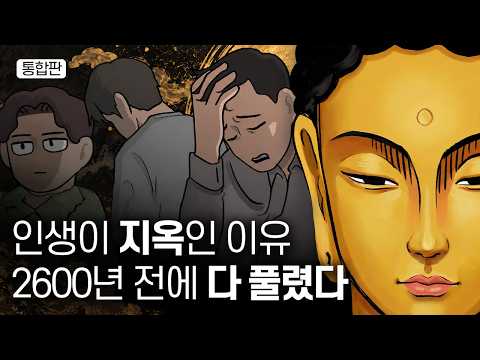
Following Shakyamuni Buddha's life, this video explains the causes of suffering and practices for reducing it. The central message is to accept that the world does not change according to our wishes, reduce attachment, greed, anger, and false beliefs, and live in ways beneficial to ourselves and others. It ultimately distills Buddhist truth into one brief statement: "If it stands still, it is not truth."
1. How Prince Siddhartha Became the Buddha
The video begins bluntly: everyone in our contacts will eventually die, and so will we. Around 2,600 years ago, a prince deeply recognized this unavoidable reality and left his palace. He was Gautama Siddhartha, also called Shakyamuni, who became the Buddha, the awakened one.
After his birth, a prophet said he would become a great, just king if he remained in the palace, or a great teacher if he left. Fearing his son would renounce worldly life, the king tried to expose him only to wealth and pleasure. But at 29, Siddhartha ventured outside and encountered unavoidable human suffering.
At the eastern gate he saw an old person, at the southern gate a sick person, and at the western gate a corpse. He was shocked to realize that everyone he loved, and he himself, would age, fall ill, and die.
"Everyone I love, and I myself, will eventually grow old, become ill, and die. Can human beings escape this unavoidable suffering?"
At the northern gate he met an ascetic who, unlike the other suffering people, seemed peaceful. Seeing the possibility of discovering truth, Siddhartha abandoned his status and palace life and left alone.
He studied with several teachers without attaining awakening. He then followed the most respected practice of the time: six years of extreme asceticism. He tormented his body and restricted food, but as his body suffered, so did his mind.
"Is this really the way?"
Weakened almost to exhaustion, he ate food offered by a woman and reached an important insight:
"There is no truth in extremes."
He immediately stopped extreme asceticism. His five fellow practitioners condemned him, but he sat alone beneath the Bodhi tree in deep meditation. Overcoming desire and delusion, he understood the causes of human suffering and the path beyond it. He became the Buddha, the "awakened one." 🙏
2. Different Words for Different People, With the Same Truth
His realization was so profound and unfamiliar that not everyone could immediately understand or accept it. He hesitated to teach it, but could not ignore the people who were suffering.
He first sought the five companions who had left him. He examined the assumptions, beliefs, and ideologies people took for granted, showing the causes and conditions from which they arose. Astonished, the five became his disciples.
He then taught kings, nobles, people of low social status, and even someone who had committed murder. He did not simply repeat identical words to everyone. He adapted explanations to people's circumstances and understanding. The wording varied; the core did not.
"The Buddha's words appeared to differ from person to person, but their essence never changed."
According to the video, listeners became more peaceful, wise, and kind, and his following grew.
Around age 80, he became seriously ill and knew death was approaching. His beloved disciple Ananda grieved deeply and could not accept his teacher's death. The Buddha again emphasized that everything changes and passes away.
"Ananda, do not grieve. Have I not told you many times that all living things must part?"
"Everything in the world breaks down and disappears. Do not wish it would remain unbroken and never disappear. No amount of crying can make that possible."
He urged disciples not to depend only on outside authorities or particular individuals after he was gone.
"After I leave, the teachings I have left will be your teacher."
"Make yourselves your lamp. Rely on yourselves and dwell within yourselves. Do not rely on something else. Make truth your lamp."
His final teaching was impermanence, the truth that everything changes.
"Nothing in this world is eternal. Everything changes. Therefore, do not be idle; practice diligently."
3. Suffering in Life and Attachment in the Mind
The video introduces the Four Noble Truths through an uncomfortable but realistic starting point: life is closely bound to suffering.
Life includes joy, of course, but no life consists solely of happiness. Viewers are asked to imagine their three most precious people, or pets, and then imagine that all will be gone within three years.
"Where there is meeting, there is parting. Human beings are destined to die."
Even one separation from a loved one can leave a lasting wound. Yet avoiding relationships out of fear brings the suffering of isolation, because humans are social. We must form relationships, and encounter people who have been hurt or who hurt us.
When pain from others overwhelms us, we too may hurt someone else.
"I suffer because of others, and others may suffer because of me."
The video distinguishes loss itself from the pain the mind repeatedly creates afterward. If someone's company increased our happiness by 100, we might expect their departure to produce sadness only back to the original level. The mind instead replays the separation and inflates sadness from 100 to 1,000 or 10,000.
"The human mind does not grieve only for the 100 it lost. It replays what has already ended and keeps increasing the sadness."
Suffering generates painful thoughts, which generate more suffering. We suffer over a mistake, then suffer over being someone who made it. We suffer because life seems meaningless, then suffer again for having that thought.
We cannot prevent every external misfortune. But attachment, craving, and stubbornness within us may be central to amplifying pain. Even if changing the whole world is difficult, we can begin changing ourselves.
"The real source, the chief culprit behind our greatest suffering, is within our own minds."
4. The Eightfold Path and Stages of Practice
How can attachment and suffering be reduced? The video presents the Eightfold Path as a way to cultivate behavior, mind, and understanding together, not merely a slogan about being good.
First comes ethical conduct:
- Right speech: Speaking in ways beneficial to ourselves and others
- Right action: Reducing harm and choosing appropriate actions
- Right livelihood: Living without harming others
"Right" means a direction beneficial to both self and others, rather than a textbook moral answer.
Next comes mental training:
- Right effort: Continuing to work in a beneficial direction
- Right mindfulness: Attending to reality and truth without losing sight of them
- Right concentration: Gathering the mind and keeping it steady
Meditation may be used here. Finally comes wisdom:
- Right view: Seeing the world and ourselves without distortion
- Right intention: Acting from wisdom rather than greed or harmful intent
The video groups these as sila, samadhi, and prajna: ethical conduct, mental training, and wisdom. It restates them in six accessible lines:
- Share and give.
- Keep good rules.
- Be more patient and forgiving.
- Keep making an effort.
- Focus on what matters.
- Perfect wisdom.
One might ask what speaking well, giving, and living well have to do with one's own suffering. The next step answers that question through cause and effect, explaining why helping others ultimately helps oneself, beyond merely recommending morality.
5. Everything Changes Through Causes and Conditions
The second major idea is dependent origination: everything arises and changes according to causes and conditions. Events do not reduce neatly to one cause and one effect. Relationships, time, misunderstandings, and interpretations interact.
Consider A hitting B. At first, the cause and effect seem simple: B is angry because A hit B. Ten years later, A becomes famous on television, and B exposes the old violence online. A might blame appearing on television, but the video identifies the earlier violence as central.
The circumstances then become more complex. A hit B because A mistakenly thought B was bullying a friend. B had not done so. The two resolve the misunderstanding and become close, but public misunderstanding and controversy persist, making things awkward again.
The example shows why it is hard to declare someone wholly good or bad, or definitively separate cause and effect. Judgments can change with time, relationships, information, and perspective.
"Most things cannot be reduced to a single conclusion."
"Always be ready to let go of your judgment."
Thoughts such as "I am garbage" or "That person hates me" may sometimes have a basis. But attachment to them can make the judgment itself a cause of bad outcomes. It may be untrue, or may change with circumstances and one's state of mind even when it seems close to the truth.
"Letting go" does not mean making no judgments. It means not fixing a judgment as absolute and eternal fact. Circumstances, people, and our understanding all change.
6. Why Helping Others Ultimately Helps Ourselves
The video compares causality to farming. Plant weeds and weeds grow; plant love and love grows. Seeds do not bear fruit immediately. Results may appear a year or ten years later, or remain invisible for now.
"Where weeds are planted, weeds grow; where love is planted, love grows."
Giving love does not always bring love back. Like droughts, typhoons, pests, and weeds, many conditions alter results. Still, someone who keeps planting and tending understands what is likely to grow. This is also why causality is not always visible: waiting for fruit requires patience and faith.
Humans cannot live alone. We are born, eat, learn, and live through others' help and relationships. We suffer when ignored and feel happy when given attention. We are not entirely free of others' reactions.
The reverse is also true. Others experience us differently according to our attitudes and actions. When we change, relationships change, and so does the world around us.
"Changing myself is ultimately also changing others."
"What we do for others ultimately benefits ourselves."
Giving, patience, and forgiveness are therefore more than instructions to be nice. Because people live interconnected lives, others' interests and our own cannot be completely separated.
"Others' interests and my own are not separate things."
7. The Three Poisons: Greed, Anger, and Delusion
Understanding truth once does not automatically change a person. The video introduces the three poisons continually seeping into the mind:
- Greed: Wanting more and clinging
- Anger: Being swept up in hatred and aversion
- Delusion: Believing something untrue is true
These poisons make people repeat patterns of suffering. Someone may briefly act like a saint after an insight, then return to old mistakes as greed and anger seep back in.
Hearing that someone's business is thriving, for example, may provoke a desire to contact them for gain rather than genuine congratulations. Prejudice or hatred toward a region or group can make us forget truth, judge others carelessly, and suffer ourselves.
The video particularly emphasizes delusion. This does not mean low intelligence or IQ. It means failing to see truth and living as if falsehood were true.
"Delusion does not mean low IQ. It means treating what is untrue as true and living in fantasy."
Depending on context, statements such as "I helped once and got nothing back," "I am more compassionate than anyone," or "I only say this for your own good" can also express delusion. People may trust the label of good intentions without examining the actual consequences of their actions.
8. Compassion Sometimes Requires Firmness
Love and compassion are not always gentle, because everything exists within complex causality. Unconditionally forgiving a child's wrongdoing may be comfortable for parent and child now, but damage the child's long-term chances of being loved and happy.
"Unconditionally forgiving a child's wrongdoing is neither love nor compassion. It can be delusion."
Sometimes a child needs firm correction, boundaries, and lessons in responsibility. Love and compassion can be sharp, bitter, or spicy.
"Love and compassion can sometimes be sharp, biting, and hot."
Constant severity is not the answer either. Some mistakes need forgiveness; others need clear correction. The degree of each must fit the situation. No perfect rule covers every case in a changing, complex world.
Practicing true love and compassion takes more than willpower or kindness. It requires continued learning, reflection, and practice in actual life: complete wisdom that notices changing conditions and consequences and judges what is true in the present situation.
The video says that perfected wisdom allows escape from the recurring cycle of suffering, samsara, bringing deep peace and happiness.
9. Three Criteria for Recognizing Truth
People may forget tomorrow what they understood today. Teachings that seem true may become distorted or lose their meaning when mixed with other ideas. The video presents the Three Dharma Seals as checks on Buddhist teaching.
First is impermanence. Everything continually changes. A teaching that ignores change and encourages clinging to the current state is far from truth.
"What is before you will inevitably change. Do not cling to it; attachment leads to suffering."
Second is non-self. Nothing has a fixed, unchanging essence or self. People, relationships, thoughts, and even how we receive teachings change with conditions. Avoid treating anything as absolute.
Third is the peace of nirvana. Ask whether a thought or teaching ultimately makes life peaceful. What matters is lasting wisdom and peace, not immediate excitement or comfort.
"If it ultimately cannot sustain wisdom and peace over time, it is not truth."
10. Everyone Has the Potential to Become a Buddha
The later part offers warm encouragement. People differ in talent, intelligence, interests, and pace, but our baseline potential is much higher than we may think. The speaker has driven for only a year and still finds it frightening, yet admires the ability of so many people to perform this difficult activity naturally.
Marriage, work, hobbies, and travel may seem difficult or specialized to one person yet achievable to another. Starting points and pace differ, but people have enormous potential to learn and grow.
In this context, attaining Buddhahood means becoming a Buddha. The video says everyone, without exception, has the potential to reach a Buddha-like level of wisdom, substantially reduce mental suffering, and become wiser.
"Every person, without exception, has the potential to become a Buddha."
If that sounds grandiose, think of it as realizing the best possible life among many available paths. Accepting these truths and demonstrating them through action can bring us closer to a better life.
Believing in Buddhism does not simply mean worshipping the Buddha. It is closer to understanding him and his teachings and choosing to live by them together. This connects with the Three Jewels: the Buddha, the teachings, and the community of practitioners.
11. If It Stands Still, It Is Not Truth
The video ends by distilling its message into a brief phrase:
"If it stands still, it is not truth."
This captures Buddhism's emphasis on change. Judgments, emotions, relationships, and conditions are not fixed. Tomorrow's self may differ from today's; painful feelings are not eternal; and others cannot be reduced to one permanent image.
Buddhism is presented less as memorizing fixed answers than as practicing less attachment and greater wisdom while continually attending to changing reality. We may not avoid suffering entirely, but can change the mental habits that amplify it. That change can seed changes in others and the wider world as well. 🌱