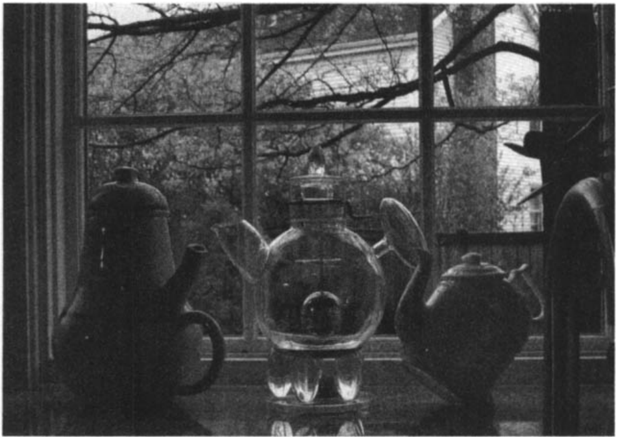
Beginning with the story of three teapots, this piece explores the importance of emotional design across multiple dimensions. The author weaves personal anecdotes into an examination of how usability, aesthetics, practicality, and emotion determine a product's value. Ultimately, the message is that the union of emotion and cognition creates the truly authentic user experience.
1. Keep Only What Is Useful or Beautiful in Your Home
At the outset, the author quotes William Morris to introduce a fundamental design principle:
"If you need a golden rule that works for everyone, here it is: Have nothing in your houses that you do not know to be useful or believe to be beautiful."
This statement underscores that both functionality and beauty matter in a product.
2. The Story of Three Teapots: Usability, Beauty, and Meaning
The author introduces three teapots from their personal collection and explains each one's unique characteristics.
-
The Carelman Teapot
- Created by French artist Jacques Carelman, this piece has the handle and spout on the same side, making it completely unusable.
- The author calls it a "coffeepot for masochists" and displays it simply as a satire on useless objects.
-
The Nanna Teapot
- Designed by architect Michael Graves, it looks chunky and blunt but is actually quite functional.
- It strikes a notable balance between visual appeal and usability.
-
The Tilting Teapot
- Made by the German company Ronnefeldt, it is designed to be tilted at different stages of the brewing process.
- The act of using it delivers a sense of functional delight.
In practice, the author's daily choice is none of these three but rather a Japanese hot-water dispenser and a metal tea strainer, prioritizing speed and convenience above all. The author displays the teapots and reflects:
"Why am I so attached to my teapots? Why do I keep them on the kitchen windowsill where I can see them, even though I rarely use them?"
In the end, the answer is that the personal meaning, memories, and sculptural beauty contained in the teapots are what justify owning and displaying them.
3. Three Aspects of Design: Visceral, Behavioral, and Reflective
The teapot stories illustrate the visceral, behavioral, and reflective dimensions of design.
- Visceral Design: The attraction felt from an object's sheer appearance -- color, shape, and mood, as experienced with the Nanna teapot.
- Behavioral Design: The pleasure and efficiency of use, the satisfaction felt when actually handling something. The tilting teapot and the metal tea strainer are prime examples.
- Reflective Design:
The meaning carried by an object's story, the narrative you tell yourself, connected to personal identity and pride.
"The masochist's teapot is neither beautiful nor useful, but it holds an absolutely wonderful story!"
These three dimensions intertwine, each driving emotion and thought in its own way.
4. Emotion and Cognition Cannot Be Separated
Most people think of logic and emotion as separate things, but the author is emphatic:
"Nonsense! Emotion is inseparable from thought, and an absolutely necessary part of it."
Emotion unconsciously guides our judgment and behavior, constantly calibrating the cognitive process. That is why emotion must permeate product design for it to carry genuine meaning.
Like the impression the BMW MINI Cooper makes on people, emotional response can elevate a product's value regardless of practicality.
"Few new cars in recent memory have provoked as many smiles as the MINI Cooper."
An anecdote from a radio show -- where a listener said, "The Alessi teapot may be hard to use, but it makes me smile every morning just looking at it" -- further emphasizes that beauty that stirs emotion can deliver satisfaction beyond mere utility.
5. Reason, Emotion, and the Experience of Color
Looking back on his own past, the author reflects on a time when he neglected emotion and aesthetics in design.
He acknowledges that a purely mechanical, logical approach cannot win a product genuine affection, and that an excessively utilitarian design can even draw criticism.
"Easy to use but ugly. That's a harsh verdict, but the criticism was fair."
Using the example of color on computer screens, he notes that even when something seems logically unnecessary, emotionally appealing beauty has a profound effect on actual experience. Just as the shift from black-and-white TV and film to color demonstrated, the emotional power of color cannot be explained by logic or cost alone.
6. Neuroscience and the Function of Emotion
Citing recent neuroscience research, the author explains that beautiful, pleasing objects actually improve our ability to work.
"We now have evidence that products and systems that make us feel good are easier to deal with and produce more harmonious results."
Here, the author also explains the subtle distinction between affect and emotion, revealing that an emotional judgment system -- whether conscious or unconscious -- is always at work influencing our behavior.
7. Emotion Drives Behavior and Decision-Making
As illustrated by the plank example, emotion often acts first, with cognition adding explanations after the fact. Additionally, research by neuroscientist Antonio Damasio underscores that people whose emotional systems are damaged cannot make effective decisions.
"Without emotion, you can barely make decisions at all. Everything looks the same, and you can't rely on 'it just felt right.'"
Ultimately, emotion is intimately tied to rapid judgment, readiness to act, and even physical response.
8. Emotion Is Needed in Machines and Future Design Too
The author argues that robots and artificial intelligence of the future will also need emotion. Even if their emotional expression differs from a human's, an emotional function is necessary to elicit "appropriate responses."
"Emotion is not only essential to human behavior, but equally indispensable for the intelligent machines of the future."
Finally, the author summarizes: cognition (logic) interprets the world, while emotion enables rapid decisions -- and previews that the discussion will now enter "the science of affect and emotion" in earnest.
Conclusion
This piece vividly shows how usability, beauty, and emotion come together within a single product and a single experience. True design must go beyond mere convenience or prettiness to achieve an emotional connection with the user -- a message worth remembering. It reminds us once more that the harmony of emotion and cognition is the most important force driving our choices, our lives, and the technology of the future.