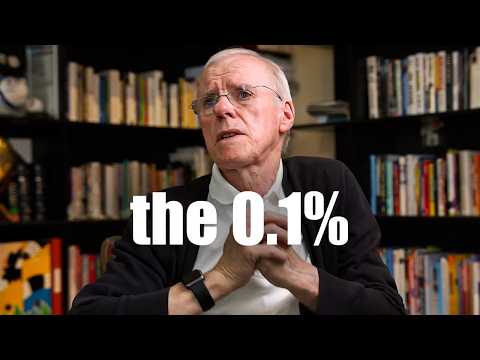
Bill Beswick, one of the world's leading sports psychologists, argues that outstanding performance requires an attitude that goes beyond simply taking part or winning — an intent to dominate the contest. He says that attitude and mental strength, which you get to choose for yourself, decide success in sport and in life more than genetic talent does, and he urges people to leave victim thinking behind and face life as a fighter. In the end, the high level of discipline and mental management learned in sport becomes a powerful foundation for overcoming every challenge in daily life and growing into a better person.
1. The four levels that separate athletes, and three core questions
Beswick explains that athletes can be divided into roughly four types. There is the athlete who simply shows up, trains as much as required, and goes home; the competitor, who pushes a little harder to be the best within the group; and the athlete who trains to win, working daily in order to win on match day. And finally there is the athlete who trains to dominate, a level only a very few ever reach. These athletes absorb training so overwhelming that winning on match day becomes inevitable.
"There are a very small number of athletes who train so fiercely that winning on match day becomes inevitable — they overwhelm and dominate their opponents."
Whenever he works with athletes, he asks three fundamental questions that run through all of life.
- What do you want?
- How badly do you want it?
- How much are you willing to suffer?
Many people go through their days without ever clarifying what they truly want from life. But if you want to be genuinely the best, you have to be ready to pay the price that comes with it. Gold medalists and champions willingly accept the pain, taking on enormous training and sacrifice every day to reach the goal they want.
2. Choose the fighter's mentality over a thousand excuses
Every morning when we open our eyes, we decide for ourselves what kind of person we will be that day. Beswick, who lives with Parkinson's disease, admits that even an ordinary act like getting up and getting dressed is not easy for him — and that in every moment he chooses whether to remain a victim or to fight as a fighter.
"Genetics deals the cards, but environment plays the hand."
The moment people step into the challenge zone, they manufacture countless excuses to escape back to the familiar, comfortable comfort zone. Out come excuses like "I'm too tired," "It's too hard," "I'm not feeling it today."
- There are a thousand excuses, but not a single legitimate reason to quit.
- Even if your talent is B-grade, an A-grade attitude can carry you to success on the biggest stages, such as the Premier League.
- You may not be able to change your genetic conditions, but mindset and attitude are areas anyone can control and develop for themselves.
3. The unseen sweat that makes champions, and four elements
On match day the stadium looks glamorous, filled with cheering crowds, camera lights, and the support of family and friends. But it is the moments the public never sees — alone at 6 a.m., sweating and fighting your own limits — that accumulate and finally produce a true champion.
For an athlete to deliver a complete performance, the following four core elements must work in harmony.
- Physical: strength, speed, endurance, nutrition, sleep, health management
- Technical: mastering the specialized skills the sport demands
- Tactical: understanding the game plan and executing your position and role according to the flow of the match (whether you are winning or losing)
- Mental: the conviction and confidence to walk out of the tunnel onto the field unshaken, believing that you are a champion
4. Extending the wisdom of sport into life
The principles of mental coaching learned in sport apply just as well to everyday life. When Beswick was diagnosed with Parkinson's disease and fell into discouragement and a victim mentality, his son and his family researched the disease thoroughly, then held a family strategy meeting that led him back to a solid fighter's mentality.
All of us are high performers in life, earning a living, maintaining relationships, meeting our responsibilities, and raising children every day.
"Our ultimate goal is not only to build better athletes, but to build better people who can write their own life story in a more positive and productive way."
The territory sports psychology deals with — belief, confidence — is intangible and invisible, yet it exerts a decisive force capable of changing an entire life.
Conclusion
Real victory does not begin with being born talented. It comes from a solid attitude that willingly endures the pain you meet every day and chooses training over excuses. We are all players living our lives in our own arenas. When we shake off the temptation of excuses and equip ourselves with a fighter's mentality, we can finish our own story beautifully — not only in sport, but on the far larger stage of life. 🥊