In the medical AI market, "early detection" is the most promising area, but it faces the challenge of proving positive impact on treatment outcomes to receive reimbursement. This market divides into four areas based on structuralization level and the reality of the target disease, each requiring different strategies and difficulty levels for proving value. To survive, startups must go beyond technical innovation and either prove value in the language demanded by medical institutions or pivot toward B2C wellness markets.
1. Crossing the Valley of Death: The Early Detection Market's Dilemma
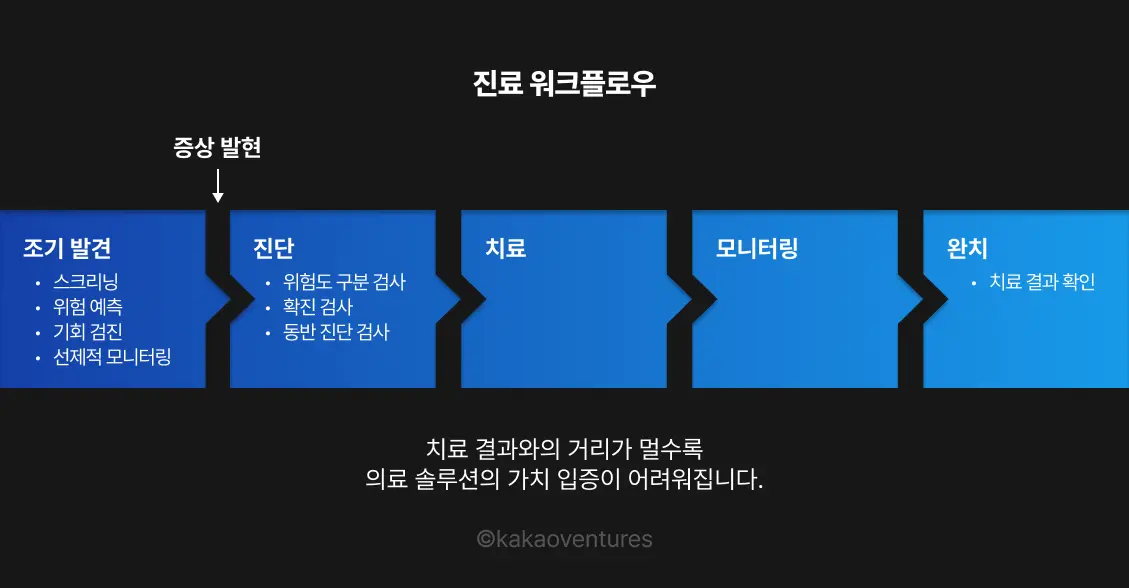
Early detection sounds universally beneficial -- finding disease before symptoms appear could improve survival rates and reduce national healthcare costs. But from a business perspective, it's a "valley of death" for startups. To earn reimbursement, the technology must prove positive impact on treatment outcomes. The problem is that early detection sits furthest from the final outcome of "treatment" or "cure" in the clinical workflow, making causal attribution extremely difficult.
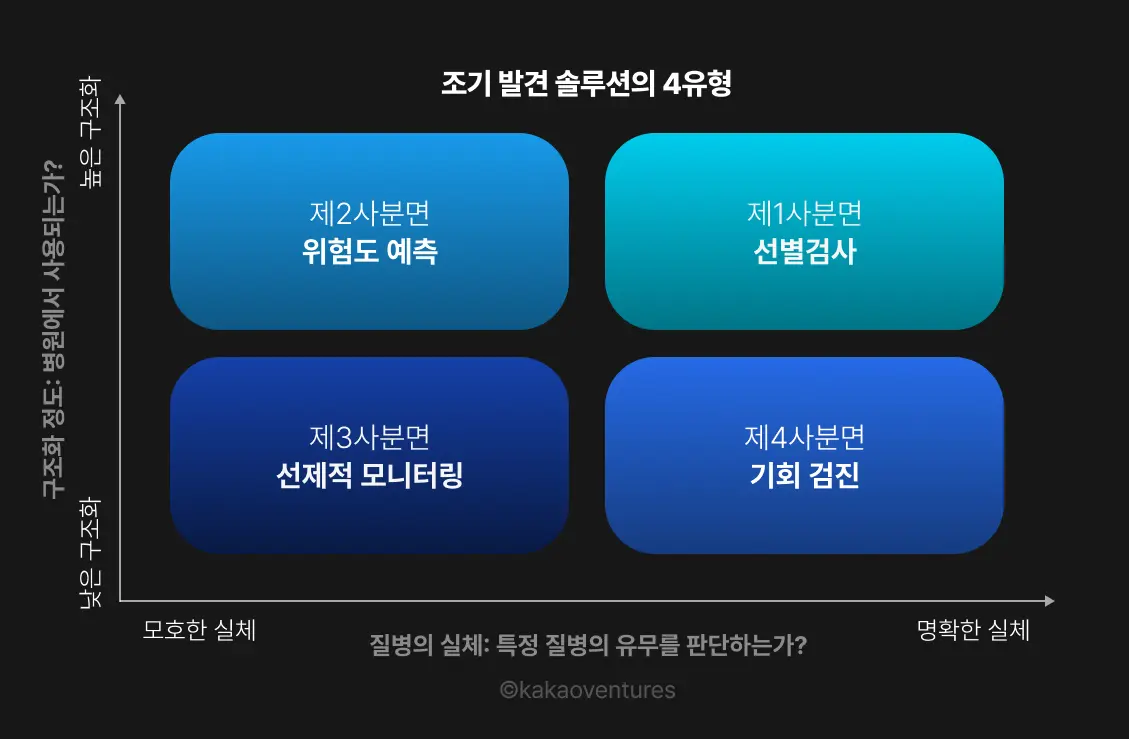
Kakao Ventures classifies the early detection market by two criteria: structuralization level (how well the technology integrates into standard clinical workflows) and disease reality (whether results are clear "disease present/absent" or probabilistic "15% risk").
2. Quadrant 1 -- Screening: Laying AI on an Already-Paved Road
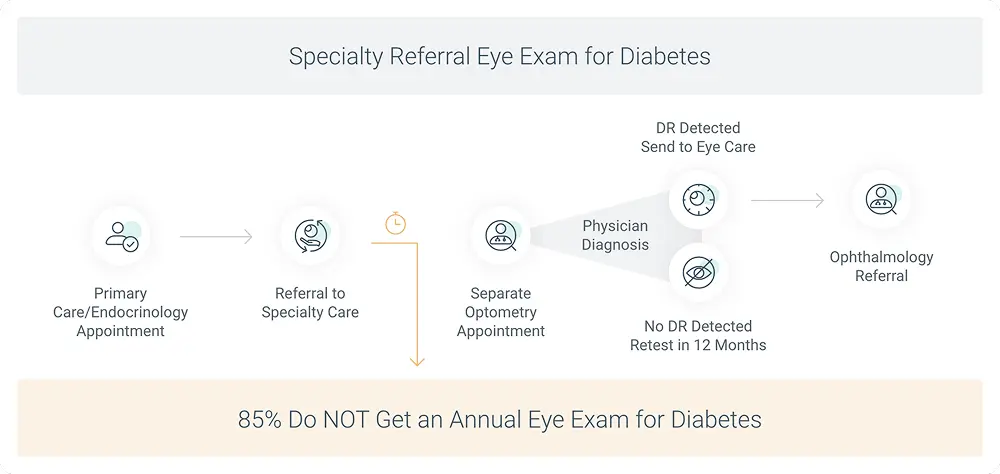
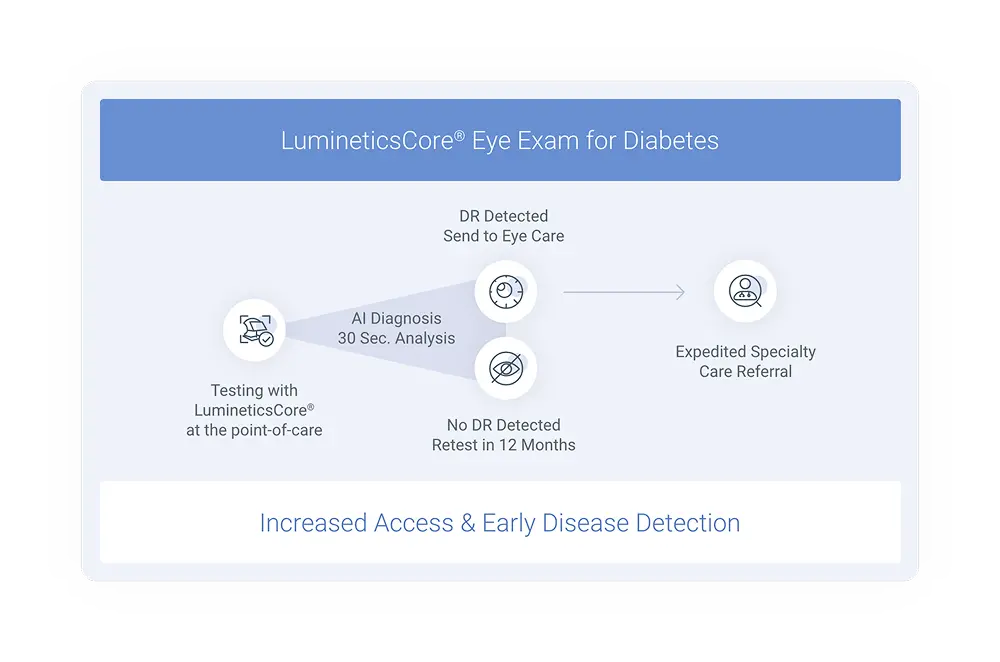
Screening covers periodic tests like endoscopy or mammography. This quadrant has clear disease targets and established hospital systems, making it the most likely area to receive reimbursement. Digital Diagnostics' LumineticsCore, which diagnoses diabetic retinopathy, is a prime success example -- it clearly proved value by enabling primary care facilities to perform tests previously requiring ophthalmologists, improving medical accessibility and reducing costs.
3. Quadrant 2 -- Risk Prediction: Beyond Warnings to Driving Action
When a test says "you don't have cancer now, but your 5-year risk is high" -- that's risk prediction. Insurance companies won't pay for risk scores alone without actionable next steps for physicians. Success in this quadrant requires entering standard clinical guidelines -- like iCAD and Lunit, whose AI scores give doctors medical grounds to order additional MRIs. The key is providing a clear action plan beyond probability calculations.
4. Quadrant 3 & 4 -- Proactive Monitoring and Opportunistic Screening
Quadrant 3 (Proactive Monitoring) covers healthy people using wearables to check vitals outside hospitals. Medical interest is lowest here; the realistic strategy is approaching it as an attractive wellness service where consumers pay directly.
Quadrant 4 (Opportunistic Screening) involves incidentally discovering other diseases -- like finding osteoporosis during a lung CT scan. AI can now analyze previously discarded imaging data for such discoveries. Success requires that early detection value is already proven for the discovered condition and that immediate intervention is possible.

5. Conclusion: Translate Innovation into the Language of the System
The most stable revenue area is Quadrant 1 (Screening). For startups in other quadrants, two survival strategies exist: pursuing institutional entry through clinical trials to become part of standard screening procedures, or leveraging Quadrant 3 characteristics to build consumer-facing wellness services. No matter how advanced the technology, it alone cannot open medical market doors. The ability to translate technological innovation into logic that medical institutions can understand and accept is the most essential capability for digital healthcare founders.