When you work in the startup scene, you hear the term 'data-based decision-making' like you breathe it. Look at indicators, formulate hypotheses, experiment, and learn from the results. This process, which I take for granted when creating a product, suddenly occurred to me that I wanted to apply it to myself.
"Why do I manage my body only with persimmons?"
We react sensitively to even a 1% change in a product's DAU (daily active users) or retention, while our own physical condition asks, "Am I a little tired today?" It relies on a sense of bluntness. So it started. I decided to think of my body as a product and debug the person I am through data.
HRV, my body's stress dashboard
The first thing we needed was a reliable indicator. Rather than consequential numbers like weight or steps taken, I needed leading indicators that would show my body's current state and resilience.
The answer was Heart Rate Variability (HRV).
HRV is an indicator of how irregular the time intervals between heartbeats are. Paradoxically, a healthy heart does not beat steadily like a metronome. Rather, it responds immediately to external stimuli and beats slightly irregularly. Medically, HRV is considered a reliable non-invasive biomarker that indicates the flexibility of the autonomic nervous system (ANS). The higher the HRV, the better the body's resilience.
I decided to collect this HRV data through Apple Watch and a self-made app and test the hypotheses proven in academia by applying them to my daily life.
Hypothesis verification through data
Instead of vague guesses, we developed hypotheses based on research papers and conducted 25 experiments. Among them, the results of three useful and interesting experiments are as follows.
Experiment 1. HRV and biological aging
The first hypothesis is that HRV can predict lifespan. According to studies published in the European Heart Journal, decreased HRV is directly related to aging, and low HRV is correlated with increased all-cause mortality.
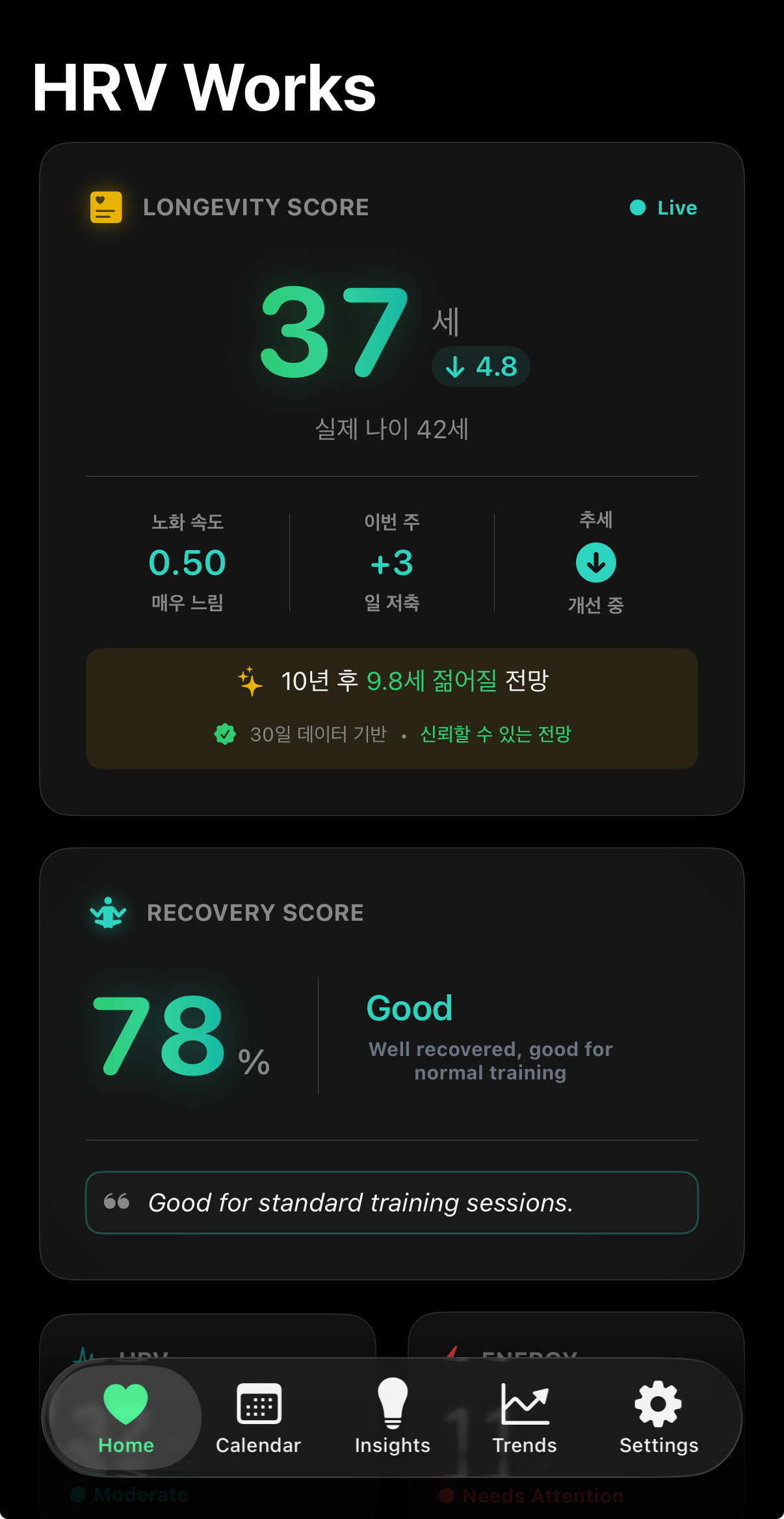
In addition to HRV, VO2 Max, resting heart rate, activity level, and sleep quality, which are known indicators of predicting lifespan, were used to calculate the Longevity Score using white papers published by Apple and Whoop and formulas from related studies.
Showing on the first screen of the dashboard how biomarkers change depending on my lifestyle habits and how this will affect life expectancy was more effective than expected. Using this as a scoreboard, I came out and took care of my life even more.
Experiment 2. Cognitive load and stress response
The second hypothesis is that the work environment affects physiological indicators. A study by Frontiers in Neuroscience explains that high 'cognitive load' increases the sympathetic nervous system and lowers HRV.
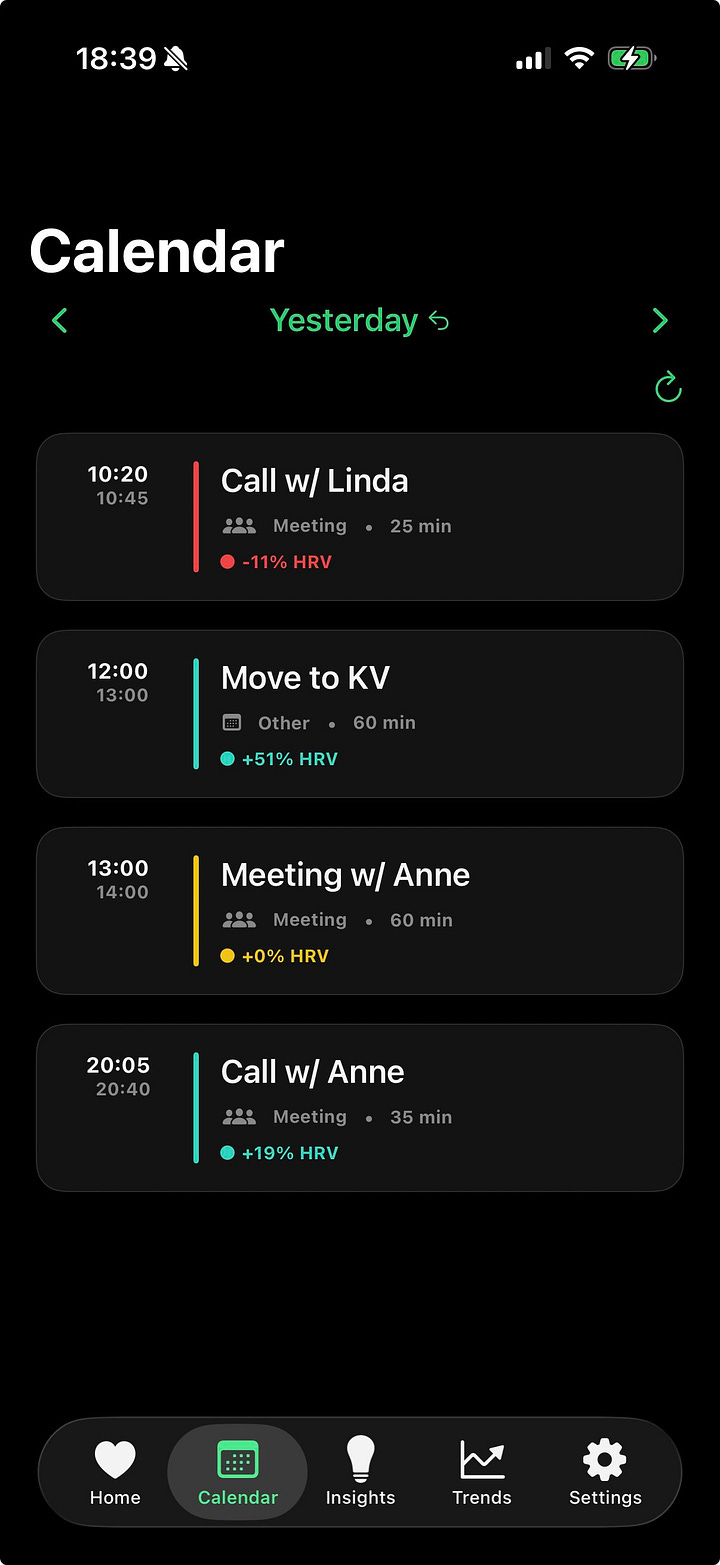
Through 'calendar linkage', we tracked schedules such as meetings, calls, meals, and changes in HRV.
- Interpersonal Relationships: We discovered a pattern in which stress levels rose significantly during meetings with specific people. A study came to mind showing that interpersonal conflict increases inflammatory responses.
- Meeting Density: On days when relay meetings lasted more than 4 hours in a row, HRV dropped sharply. This showed that cognitive fatigue leads to physical stress.
Based on this, a system was introduced to prevent overactivation of the sympathetic nervous system by arranging 15-minute breaks between meetings as much as possible. If there is an unavoidable long meeting, there is a study that shows that if you exercise or eat a pleasant meal before the meeting, the inertia will reduce the stress of the next meeting, and if you schedule something to increase your HRV such as exercise, hobby, or meal after the meeting, the stress of the meeting before that will be lowered. This is being put into practice.
Experiment 3. Exercise efficiency and resilience
The third hypothesis is that adjusting exercise intensity based on HRV is efficient. Sports science studies report that HRV-guided training is more effective than fixed schedules in improving aerobic capacity.
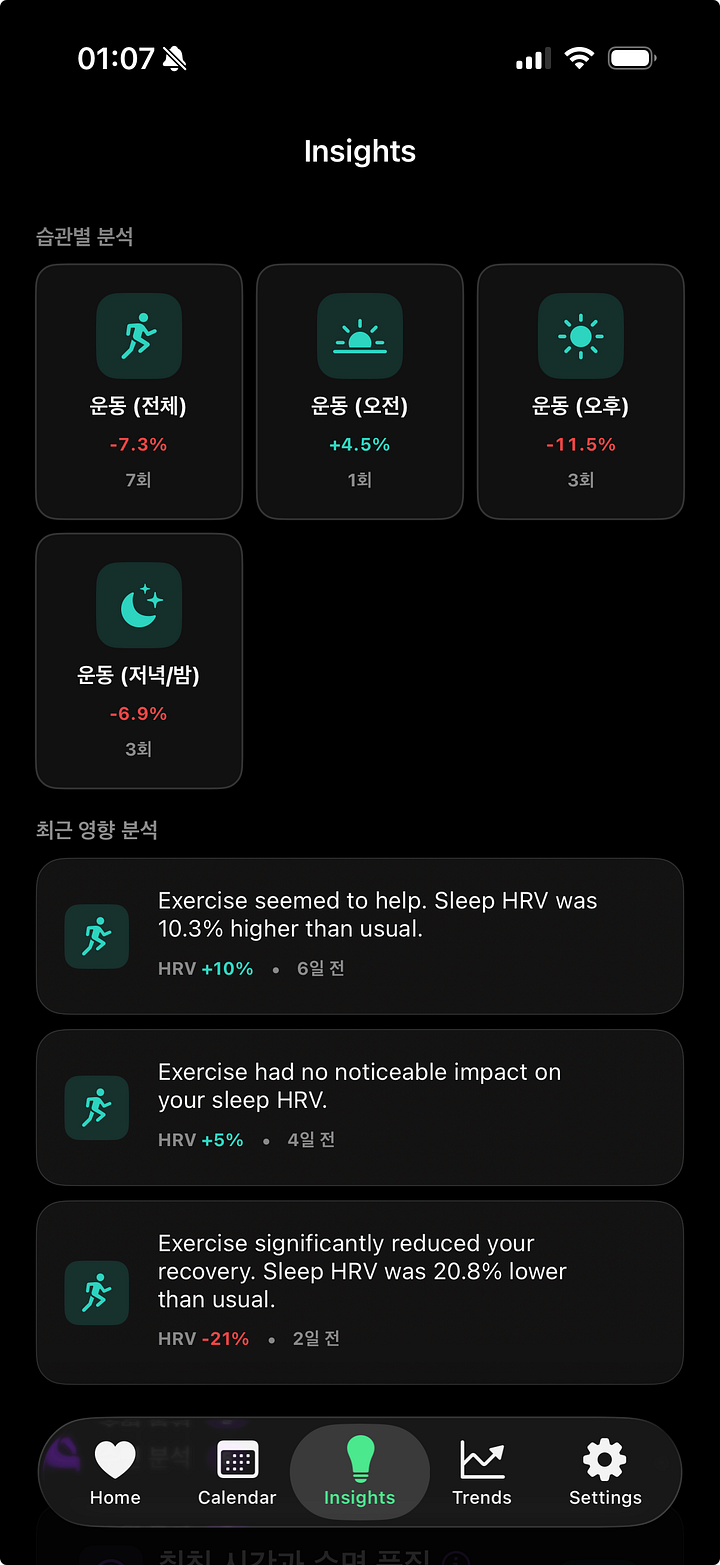
Every morning, I checked 'training readiness' and decided the intensity of the exercise. On days when HRV was low, I chose active rest moving between Zones 1 and 2 instead of high-intensity exercise. As a result, I was able to maintain a high energy level without deteriorating my condition in my daily life after exercise, and 'HR Recovery' immediately after exercise also improved. The 'excess recovery' phenomenon, in which HRV rebounds when resting after three consecutive days of high-intensity exercise, was also confirmed in the data.
Facts confirmed in daily life
In addition to major experiments, minor lifestyle habits could be confirmed through physiological data.
- Effects of Alcohol: When drinking alcohol, HRV during sleep drops sharply. It's really drastic. If you look at Reddit and YouTube, the people who saw this weren't just surprised and declared to abstain from alcohol.
- Importance of sleep: Total sleep time and sleep quality were essential to maintaining high HRV the next day.
- Breathing control: When practicing resonant breathing 6 times per minute in a stressful situation, HRV increased in real time. Although HRV and stress are a correlation, not a causal relationship, it was a new discovery that 1-2 minutes of breathing was as effective as meditation.
Conclusion: Finding personal life balance with biomarkers
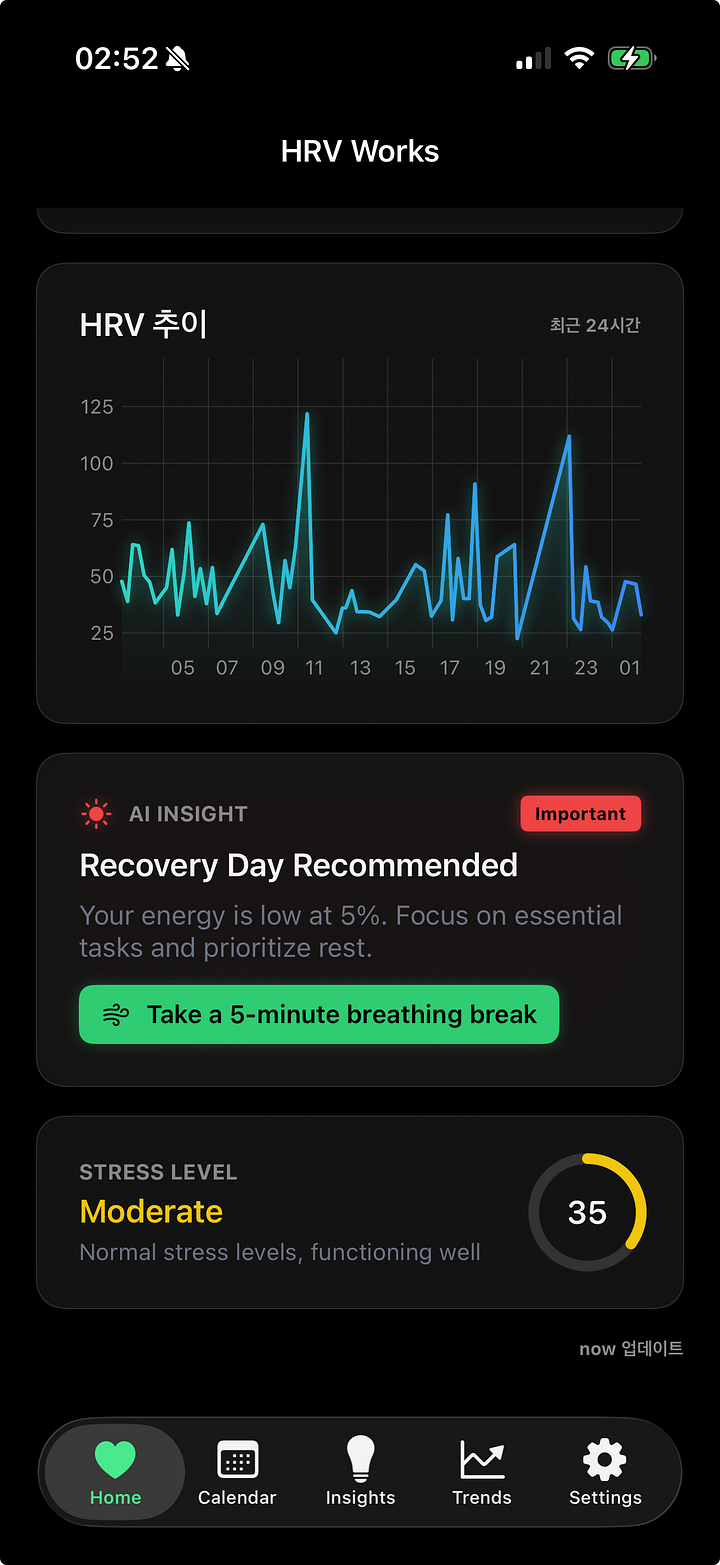
The purpose of data analysis is not simply recording, but improving. The past process of observing my body through HRV replaced abstract 'feelings' with concrete 'indicators.' In fact, there were quite a few times when my feelings were different from HRV.
"The levels are low today, so take a break." "Because the indicators are good, I use high exercise intensity." "I have a meeting with an energy vampire, so I recognize it and manage it before going in."
This decision-making method reduces unnecessary anxiety and increases the efficiency of life. Just as startups find PMF (Product-Market Fit) through data, wouldn't individuals also be able to find the 'Life-Fit' that suits them by using data as a compass? There is ample possibility to lead ourselves in the desired direction by converting the situational awareness signals our body sends into data.
Today we covered a biomarker called HRV, but there are various biomarkers such as grip strength, VO2Max, RHR, blood sugar, and respiratory CO2 that can be easily measured with wearables or small Bluetooth devices. As AI synthesizes these data and develops advanced models that remove noise, the predictive effectiveness of measured values will also increase.
We live in a world where people even say that aging is a disease and that a medicine that prevents aging can be found. But aren't these the high ROI investments you can make while waiting for that time?