There is a "cooking hypothesis" that says the moment humans began using fire to cook food was a key driver behind the rapid development and evolution of the brain. (Harvard professor Richard Wrangham)
The idea is that cooked food is easier to digest and gives us more energy from the same amount of food. That let the digestive system shrink, freeing energy for brain development and for maintaining a large brain. If we only ate raw food, we would have to spend most of the day chewing like chimpanzees. Cooking shortens mealtime and frees up time for social interaction, toolmaking, and cooperation.
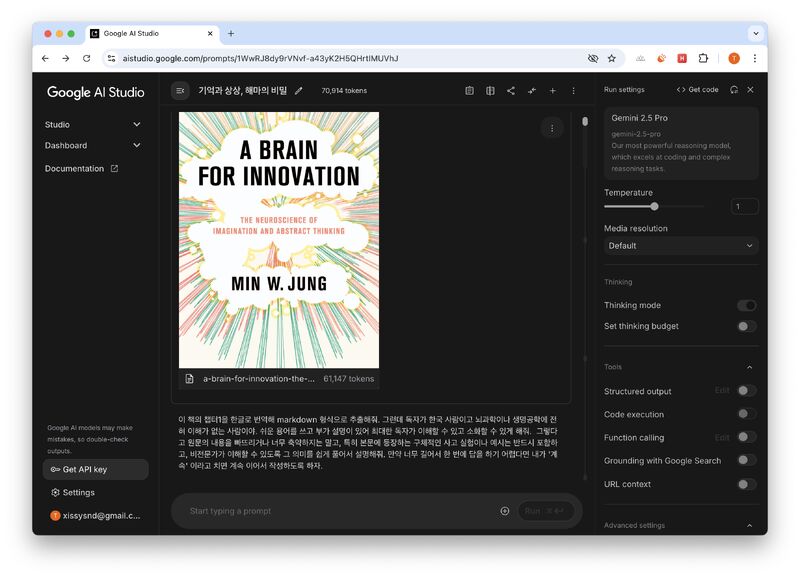
These days, I cook knowledge before consuming it. For example, reading an original English-language book requires a lot of time spent chewing. With an LLM, I can cut the material down, draw out the stock, and season it into something I can digest easily.
"Please translate Chapter 1 of this book into Korean and extract it in markdown format. The reader is Korean and has no background at all in neuroscience or biotechnology. Use simple terms, add supporting explanations, and make it as understandable and digestible as possible. ... If it gets too long to answer at once, when I type 'continue,' keep going from where you left off."
That is the kind of prompt I use. Of course, the ideal is to read every original source and understand it fully without omission. But my willpower is precious, and the utility of cooked knowledge helps me focus, ask better questions, and go look for more.
If we can cook knowledge like this so we can digest it faster and spend the time we save on social interaction, toolmaking, and collaborative work, then we should gladly do it.
(The book in the screenshot, A Brain For Innovation, was the easiest and most enjoyable one I read while trying to understand how memory works in the brain because I had become interested in designing memory layers for LLMs. I paid a lot for the original edition, but just today a Korean translation was released under the title The Future of Memory. Maybe I should order that too, so it makes its way into long-term memory.)