
McKinsey surveyed more than 9,000 consumers in China, Germany, the United Kingdom, and the United States and found that wellness is shifting from an occasional activity to a personalized daily habit. Gen Z and millennials spend more on wellness than their share of the population would suggest and are creating broad demand not only for health and sleep, but for appearance, mental health, gut health, and digital health. The report's central conclusion is that companies must tailor integrated solutions, scientific credibility, and substantive value to distinct consumer segments.
1. Wellness Becomes Part of Daily Life
Wellness is no longer an occasional purchase or hobby for a small group. Particularly for millennials and Gen Z, it is becoming a personalized way of life practiced every day. This shift is expanding the roughly $2 trillion global wellness industry beyond core categories such as health foods, exercise, and beauty.
McKinsey examined wellness across six dimensions: health, sleep, nutrition, fitness, appearance, and mindfulness. Two developments stood out. First, younger generations are redefining what wellness means. Second, wellness is appearing in more services and everyday settings.
"Wellness continues to evolve from a niche interest into a mainstream lifestyle priority."
The report divides today's wellness consumers into five segments and identifies six areas with strong growth potential: functional nutrition, healthy aging, appearance and aesthetics, in-person wellness services, weight management, and mindfulness.
2. Younger Generations Drive Wellness Spending
Annual wellness spending in the United States alone is estimated at more than $500 billion and is growing about 4–5% per year. Despite volatility in the macroeconomic environment during the first half of 2025, McKinsey views wellness as a relatively resilient market.
The share of consumers calling wellness a "top" or "important" priority reached 84% in the United States, 79% in the United Kingdom, and 94% in China. The rise is especially pronounced among Gen Z and millennials. Almost 30% of US Gen Z and millennial respondents said wellness was "much more" important to them than one year earlier, compared with no more than 23% among older age groups.
Several factors underlie the pattern. Younger generations report burnout and declining health more often than older ones, while social media exposes them to far more health-related content. This can also make them more susceptible to wellness purchase recommendations and trends.
Their importance is visible in actual spending. Gen Z and millennials make up just over 36% of US adults but generate more than 41% of annual wellness spending. Consumers aged 58 and older represent 35% of adults but only 28% of spending. Older consumers nonetheless remain an important growth opportunity in developed countries with aging populations.
3. Generational Priorities and Unmet Needs
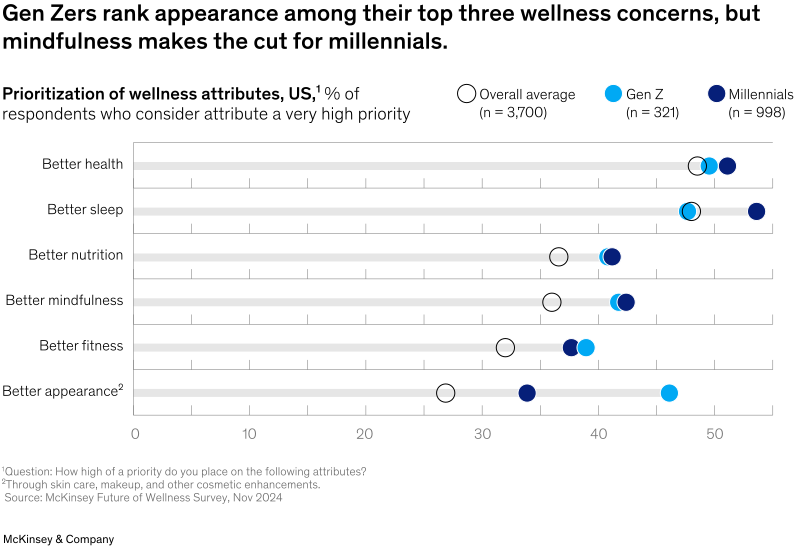
Both Gen Z and millennials name sleep and health as their leading wellness concerns, but their detailed rankings differ. After sleep and health, Gen Z places greater importance on looking better, while millennials rank mindfulness more highly.
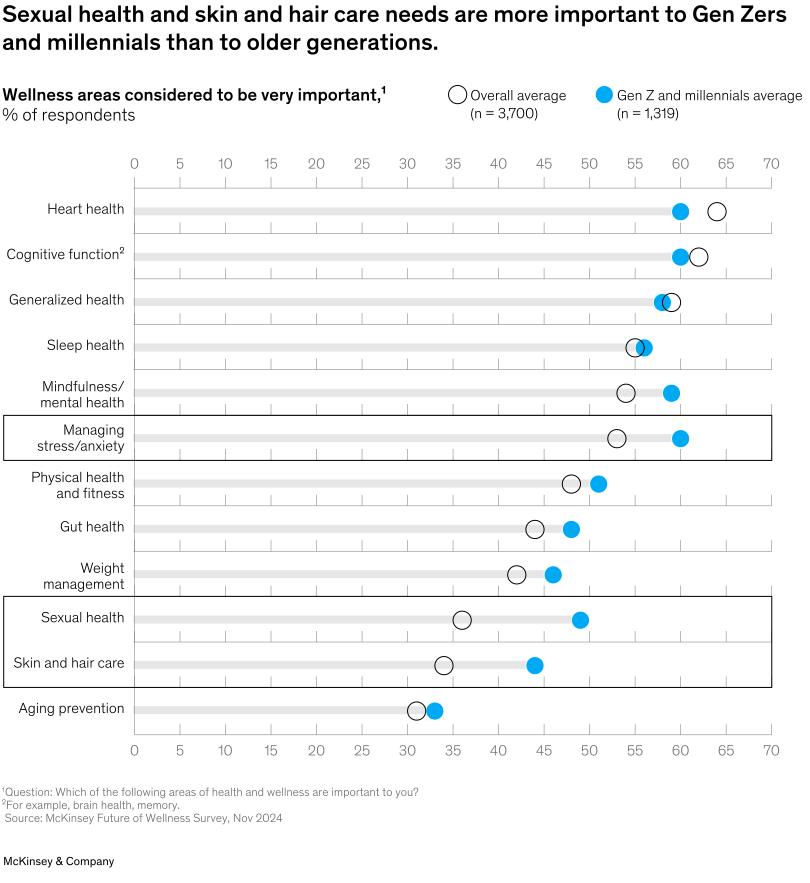
Younger generations as a whole view sexual health and skin and hair care as more important areas of wellness than Gen X and baby boomers do. They understand wellness not merely as preventing disease or maintaining physical fitness, but as encompassing appearance, identity, and satisfaction with life.
Despite market growth, many needs remain unresolved. Consumers especially find current products and services insufficient in cognitive health, mindfulness and mental health, and longevity. Gen Z feels larger gaps than other generations in mental, cognitive, heart, and gut health.
Among US Gen Z respondents, 40% said they were "almost always stressed," compared with a 23% average across all consumers. That high stress level may be linked to dissatisfaction with current mental-health solutions. Products for heart and cognitive health are also often marketed chiefly to older people, causing messaging to miss younger consumers who have real demand. Social media further elevates the perceived importance of subcategories such as gut health.
"Younger consumers, especially Gen Z, feel unmet needs more strongly in mental, cognitive, heart, and gut health."
4. Younger Consumers Experiment More Broadly
Purchase rates for basic consumer-health products—oral care, cold remedies, and personal hygiene—do not differ greatly by generation. Younger generations, however, spend across a far wider range of discretionary wellness categories. Their purchases include health-tracking devices, massage tools, IV infusion services, beauty apps, and mindfulness apps. 🧘♀️📱
Older consumers tend to concentrate on familiar, narrower categories such as vitamins, pain relievers, and eye care. One reason may be lower awareness and familiarity with newer wellness services and digital products.
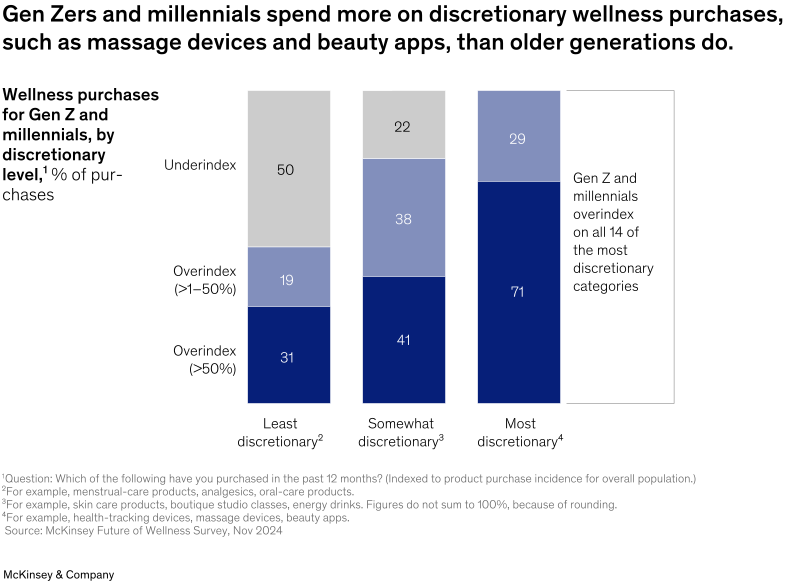
The important question is whether Gen Z will eventually consume like preceding generations as it ages, or whether its habits will become the market's new standard. The findings suggest the latter is also possible.
Spending on life-stage products such as infant or menstrual care may naturally decline over time. Consumers of every age, however, spend on products and services unrelated to a specific life stage, including health trackers, wellness retreats, and energy drinks. This suggests a broader cultural change in how people view wellness.
Younger generations, for example, choose wellness retreat travel for mental, physical, and spiritual well-being more often. At the same time, the travel industry is expanding offerings for older people, such as off-season wellness-retreat packages aimed at retirees. Many preferences led by younger consumers today may therefore spread across all age groups.
5. Five Wellness Consumer Segments
Companies entering or growing in wellness need more than generational analysis. McKinsey divides consumers into five segments based on attitudes toward health, practices, price sensitivity, and technology adoption, ordered by how passionately they prioritize wellness.
Maximalist Optimizers
Maximalist optimizers make up about 25% of wellness consumers but account for more than 40% of market spending. They are especially common among Gen Z and millennials, are comfortable with digital technology, and actively experiment with a wide variety of health and wellness products.
They research extensively to find what works, value scientific evidence and physician advice, and are influenced by social media more strongly than other groups. They are about twice as likely as average to use natural or alternative products, cutting-edge digital technology, and health trackers. They still need confidence that a product will work for them.
This group considers quality more important than price and seeks products that precisely meet its needs and provide sufficient value.
Confident Enthusiasts
Confident enthusiasts are the smallest group, at 11% of consumers, but generate 15% of market spending. They consider wellness extremely important but feel more certain about their approach to health than maximalist optimizers do.
They are particularly passionate about fitness and purchase gym memberships, fitness apps, home-workout equipment, and sports nutrition more frequently than other groups. They research thoroughly before buying but keep using products and services that work. Once a brand enters their routine, they can become valuable long-term customers.
To reach these first two segments, companies should explain scientific evidence accessibly and build trust through the channels they use frequently: video content, online customer reviews, and social-media advertising.
"Scientific evidence should be communicated in language consumers can understand."
Health Traditionalists
Health traditionalists represent 20% of consumers and 13% of market spending. They are generally older and consider health important, but favor simplicity and practicality over complexity.
They focus on healthy meals, vitamins and supplements, and regular exercise. They are less open to new or unfamiliar technologies and solutions such as prescription weight-management drugs, telehealth, and AI-powered products. Messages about ingredients, nutritional information, quality, and clean inputs persuade them more than claims that something is new and exciting.
Health Strugglers and Wellness Shirkers
Health strugglers account for 24% of consumers and 22% of spending. They spend somewhat more on wellness than traditionalists but feel stressed by health problems and struggle especially to sustain motivation for maintaining or losing weight. They have health goals but find them difficult to reach.
The key is making health management easier and less burdensome. Companies can divide services into small steps or add mechanisms for reward and accountability. Gamification, for example, can provide points, rewards, and competition as users meet goals in an app.
Wellness shirkers, by contrast, make up 20% of consumers and 10% of spending. They show little interest in tracking their health, purchase only essentials, and are highly price-sensitive. Essential functions and clear price competitiveness matter more to them than complex or premium proposals.
6. Growth Areas and Three Tasks for Companies
Women's health, health at home, and biomonitoring, highlighted in earlier surveys, remain important. The 2025 research additionally identifies six particularly promising growth areas:
- Functional nutrition: Food and beverages expected to provide health benefits beyond satiety and taste
- Healthy aging: Products and services focused not only on living longer, but aging in good health
- Appearance and aesthetics: The combination of health with skin, hair, and beauty care
- In-person wellness services: Direct experiences such as retreats, massage, and offline counseling
- Weight management: Integrated management including diet, exercise, prescriptions, and digital coaching
- Mindfulness: Products and services supporting stress management, mental health, meditation, and emotional recovery
McKinsey recommends three principles for wellness companies seeking results.
-
Break down barriers.
Consumers care less about product categories than whether a solution addresses their problem. Companies should connect products, services, and digital tools instead of offering each separately. A weight-loss solution might combine an app, real-time dietitian consultations, and a healthy-food subscription in one service. -
Demonstrate expertise.
Consumers are moving toward brands that show scientific expertise and trustworthiness. Claims grounded in science or data and recommendations from credible experts can differentiate a product. Evidence must also be explained in language consumers understand. -
Deliver substantive value.
Value does not simply mean a low price. Consumers jointly assess quality, satisfaction for the price, effectiveness, and purchasing convenience. Companies should focus on genuinely solving unresolved consumer problems rather than pursuing only price increases or revenue growth.
"Value includes not only price, but product quality, value for money, effectiveness, and accessibility."
7. Conclusion
At the center of the 2025 wellness market is the broad and active approach younger generations take to health management. They are expanding wellness beyond sleep and exercise into appearance, mental health, sexual health, gut health, digital measurement, and travel experiences.
The companies that become competitive will precisely identify unmet consumer needs, explain their solutions with credible expertise, and deliver integrated value that genuinely improves individual lives. 🌿