
This article provides a detailed guide to launching a product successfully on X (Twitter). The essentials are a video that shows the product working within three seconds without sound, a one-line explanation of what it is, active participation in replies during the first hour, and valuable material for people reposting it. The playbook covers everything from writing the post and making the video to the strategy for the week after launch.
1. What Does Launching a Product on X Really Mean?
Launching on X means announcing a new product, feature, or company through the founder's account. Typically, the post includes a short native video, with active replies and reposts in the first hour helping keep it visible. 🚀
The launch is not a long, twelve-post thread or a link to a blog post. It should be one post people can understand in the brief moment they spend scrolling past it. If the video and opening sentence cannot convey the message independently, no amount of reposting will help. When those two elements are strong, the remaining tactics focus on reaching more people during the first hour.
2. Writing a Successful Launch Post
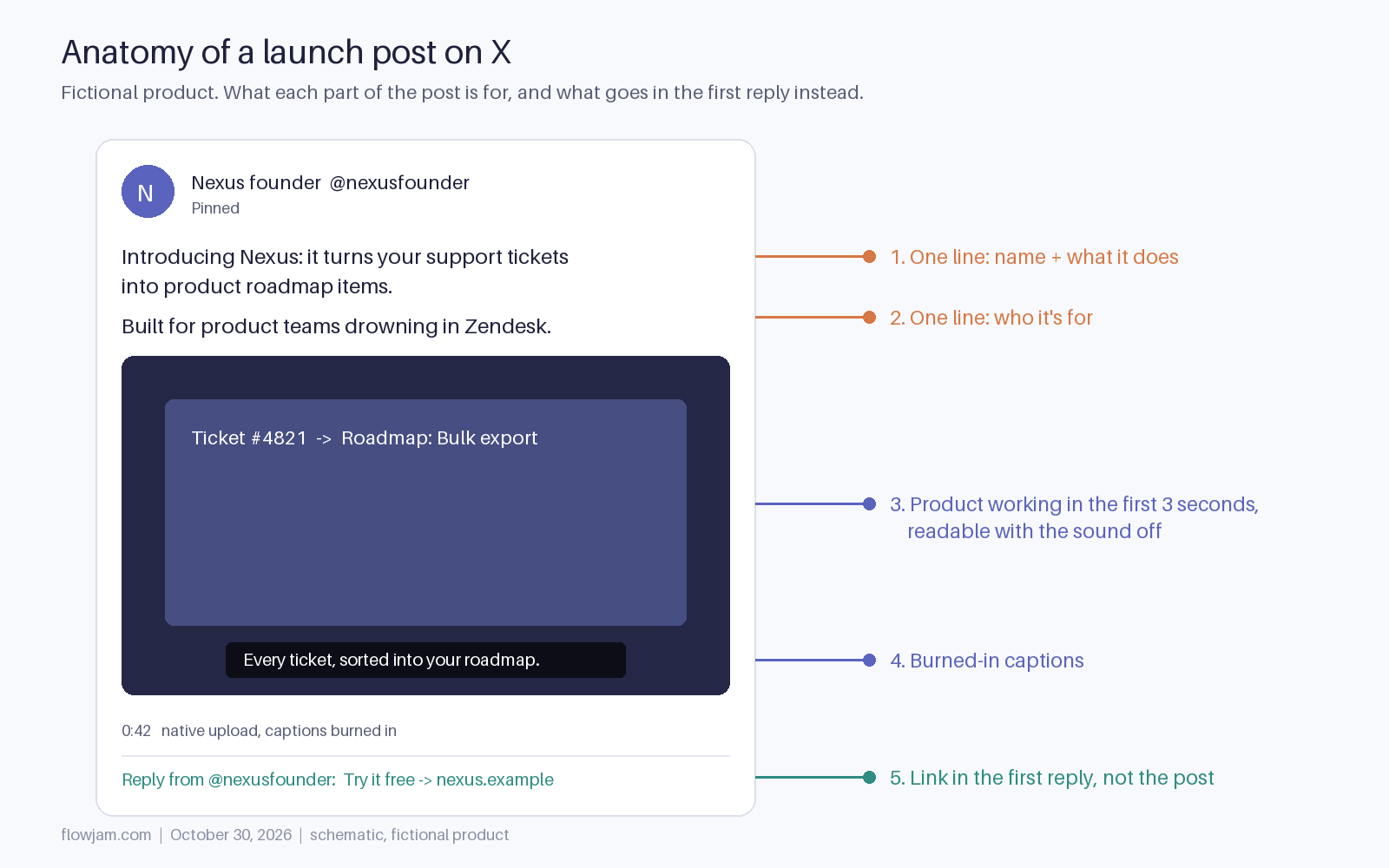
A successful launch post should be deliberately brief and clear. It needs an opening sentence naming the product and what it does ("Introducing Nexus: turn support tickets into product roadmap items"), a sentence explaining whom it is for, and the video. That is all.
Three decisions matter more than the wording itself:
- Upload the video natively. YouTube and Vimeo links appear as cards that require a click; native uploads autoplay in the feed. Autoplay is the point!
- Put the link in your first reply. Whether X reduces reach for posts with external links remains disputed, but moving the link to the first reply has little downside, so do it.
- Pin it immediately. Everyone visiting your profile during launch week should immediately see the launch post.
Skip introductory jokes and lines such as "We've been working on something special." People scrolling X give you one second to explain what the product is. Use it to describe the product. Founders who communicate clearly get more reach.
3. Launch Videos: Specifications and the First Three Seconds
X supports MP4 and MOV files. Standard accounts can upload videos up to 2 minutes 20 seconds long and 512 MB. Supported aspect ratios range from 1:3 to 3:1; 16:9, 1:1, 4:5, and 9:16 all display cleanly on the timeline.
For software products, 16:9 or 1:1 is a good choice. Product UIs are wide, so cropping them to 9:16 can turn what you are selling into an unreadable strip. Use 9:16 when the founder speaks to camera or the product runs on a phone.
Where most launch videos fail is length. A free account permits 2 minutes 20 seconds, but the ideal length is the shortest time needed to show the product working. Most launch videos should run 30–75 seconds.
Follow these rules:
- Show the product working within three seconds. No logo intro or close-up of the founder's face is needed.
- Burn captions into the video. Most people watch with sound off.
- Give each scene one idea. Cut or remake any scene that cannot be understood without narration.
- End with the product name and one line explaining where to get it. Do not end on a montage.
4. Why the First Hour Belongs in the Replies
When Twitter published its ranking code in 2023, a like counted for 0.5 points, a reply for 13.5, and the author's response to a reply for 75—150 times a like. The system has since changed to a Grok-based model, so those exact numbers differ, but the broader principle likely remains: conversation and author participation help keep posts in the feed.
The first-hour rule is therefore simple. The founder should stay at the keyboard and respond to every non-spam reply with a thoughtful sentence. Instead of "Thanks!", offer an answer, a detail, or a question in return. One reply becomes a short conversation, and those conversations are what ranking systems reward.
Three tips for the first hour:
- Prepare replies with short clips or screenshots of the most frequently asked-about feature. You will need them within twenty minutes.
- Quote-post the best reactions from real users or respected accounts, adding a line of your own.
- Do not publish unrelated posts. Keep all attention on this one post.
5. Recruit Reposters Two Weeks Ahead and Disclose Paid Posts
Launches that spread successfully rarely depend solely on the founder's followers. Arrange for other accounts to repost or quote-post during the first hour: friends, investors, customers, fellow founders, and sometimes paid creators in the field.
Consider the following:
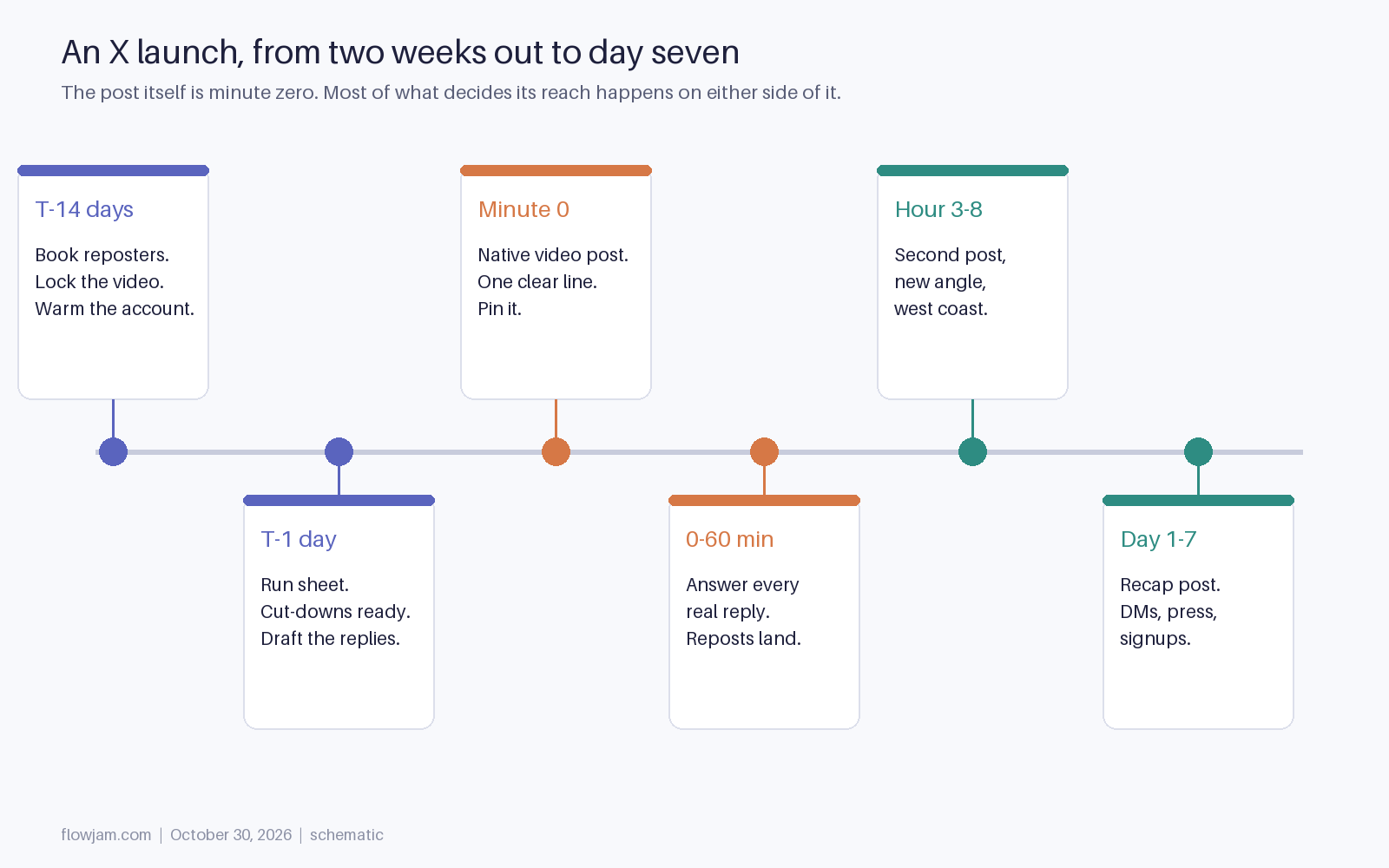
- Ask two weeks ahead. People with large followings plan their posts and may turn down last-minute requests. Send the video in advance so they know what they will be reposting.
- Favor accounts your buyers follow. A repost from an account with 15,000 relevant followers is far more useful than one with 500,000 followers who will never use the product.
- Ask for a quote-post with a real opinion rather than a bare repost. Quote-posts generate their own replies; simple reposts do not.
- Disclose paid posts. Under FTC endorsement rules, someone receiving money or something of value to post about a launch must clearly disclose it near the beginning, for example with "#ad." Paid reposts disguised as organic enthusiasm fall within these rules.
6. Timing the Launch and Planning the Following Week
If buyers are in the US, launch Tuesday, Wednesday, or Thursday morning in Eastern Time. Founders, operators, and investors are likely to be at their desks and able to repost, while the same day can reach the West Coast later. Avoid Fridays and weekends. There is no magic in exactly 8 a.m.; choose a time when the founder can spend an hour focused on replies.
Plan the following week as follows:
- Three to eight hours later: Publish a second post from a different angle, such as a short clip of a specific feature or the story behind building the product. Use the same video or a shorter edit, but never identical text.
- The evening of day one: Share a brief recap with real numbers worth sharing: sign-ups, waitlist size, or the best feedback. People repost honest numbers.
- Days two through seven: Respond to every DM and serious reply, and post one useful clip each day. Most sign-ups occur after launch day, from people who have seen the post twice.
7. Mistakes That Ruin X Launches
Several common mistakes recur:
- A cold account: If the founder has not posted for months, nobody is waiting. Post regularly in the weeks before launch, even if it is only progress clips.
- A video that requires sound: If viewers cannot understand what the product does with the sound muted, the video is unfinished.
- A thread instead of one post: Threads work for behind-the-scenes stories, but belong in replies rather than replacing the launch post itself.
- A founder who leaves after ten minutes: You cannot get that crucial first hour back.
- Launching Friday afternoon because the build is ready: Wait until Tuesday.
Closing Thoughts
A successful product launch on X (Twitter) requires clear, concise messaging, a visually strong video, and active conversation. May this playbook help more people discover your product! ✨