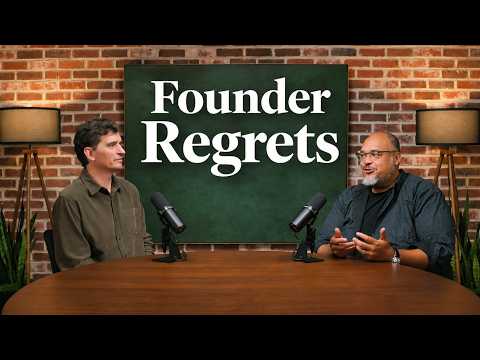
Dalton Caldwell and Michael Seibel discuss regrets they have heard repeatedly in countless startup postmortems. Founders generally regret not confronting problems early, not fully testing the core hypothesis, and leaving team problems unresolved more than failure itself. Their advice is simple: imagine the company closes a year from now, then make the changes today that you would wish you had made then.
1. What Becomes Clear Only at the End
The two explain that a YC partner's role does not end with helping a startup get started. Once they invest, they should stand beside founders in difficult times as well as good ones. Conducting a postmortem when the company closes is part of that commitment.
Dalton says he has had these conversations with hundreds of founders over many years. Just as people approaching the end of life describe similar regrets, founders approaching shutdown return to recurring themes. Both make clear, however, that a startup's closure is nowhere near as consequential as a person's death.
One of the most common regrets is "I wish I could go back a year." Founders accept the difficult reality in the final months before shutdown, yet later acknowledge that the signs were already clear a year earlier.
"If I had faced that hard truth with a year of cash in the bank, rather than three months, I could have given my startup a better chance."
Dalton connects this to the sunk-cost trap: because of the time and money already invested, or a host of other excuses, founders keep doing something else instead of what they know they should do.
2. A Startup Is a Hypothesis to Test
Both say founders have far more choices than they realize. Startups are inherently risky, and people around them understand the possibility of failure. Yet even when founders know they need a pivot, they often delay because they fear looking foolish to investors or authority figures.
Dalton recalls telling YC founders:
"Many of you need to pivot. Do it as soon as possible. You will not lose face with me."
Michael likens a startup to a scientific hypothesis. Scientists' hypotheses are not always correct; discovering that a founder's initial expectation was wrong is likewise a natural experimental outcome.
"A startup is a hypothesis. You are running an experiment. It is okay if things do not go as expected."
But another major regret sits at the opposite extreme: running a company for two to four years without properly testing its original core hypothesis. Founders never actually deliver the product or service they believed customers wanted, distracted by other work as time slips away.
They cannot even conclude, "We ran an experiment, got a result, and learned something." What remains is less a conclusion of failure than the unease of an experiment left half finished.
Here the speakers emphasize agency. Sometimes founders act as though things merely happen to them instead of seeing themselves as protagonists in their own story. At shutdown, they finally have to make the decision themselves—and realize how much authority they had all along.
3. The Cost of Neglecting Cofounder and Team Problems
The most common regrets Dalton encounters concern people and teams. Founders often select a cofounder too quickly and carry the burden of that relationship for years.
"Maybe I should have spent more than two hours finding a cofounder."
They may start a company with someone encountered at a meetup or hackathon without getting to know them sufficiently, then struggle with the long, intense cofounder relationship. Michael says this is painful because it can feel as though the seeds of collapse were planted at the beginning. Many founders say they would choose a different team for their next company.
The problem extends beyond cofounders. Founders may recognize damaging relationships with key employees or even investors but fail to act, eventually exhausting themselves.
Michael describes a recurring hiring and spending pattern: the company hires people expecting particular results, but changes nothing when those results fail to materialize.
"If you spent money hiring people and expanding management, and it is not working, you need to unwind some of those decisions."
Again, the speakers stress founder agency. You might think someone should have solved the problem, but you are the one hiring and running the company. Being a kind manager with good intentions is insufficient. What matters is whether the team actually works.
"There is no hidden observer somewhere grading you. You are the person taking action."
4. Change Strategy Early Instead of Hoping for a Last-Minute Miracle
Companies nearing shutdown often attempt a Hail Mary: like a desperate long pass in American football, a low-probability attempt to rescue the company in one stroke.
It can take many forms: repeated abrupt changes of direction, or the belief that one more funding round, one press article, or one product launch will fix everything.
Michael describes it as telling yourself an overnight zero-to-hero story disconnected from reality and the facts.
"A Hail Mary is telling yourself a story about going from zero to hero overnight without properly accounting for reality and facts."
What founders usually regret is not failing to take that final gamble. They wish they had paused with a year of runway remaining, thought deeply about a strategy, and committed to executing it properly. Better still, they could have cut costs earlier and given themselves two years instead of one.
Michael cites stories suggesting AI coding tool Cursor grew revenue from essentially nothing to infinity in six weeks. He says he can confirm such stories are untrue and argues that founders waste time believing these myths, imagining they too can produce a miracle when their companies are nearly finished.
5. Protect the Founder's Health Bar
Dalton compares a founder's energy to a video game's health bar. You must avoid exhausting it before finding the right solution. Health here includes motivation and mental capacity, not just physical fatigue.
"You reach a moment where your insight is 99, but your health is 1%."
Even if you finally discover what to do, you cannot easily act on that insight without energy left to try. Making hard decisions early is therefore a way to preserve energy.
If a cofounder must change, act before the relationship wrecks your entire life. If the team must change, adjust it before becoming more exhausted. Set boundaries with draining investors, and do not postpone a necessary pivot.
"You have to do the hard things quickly, before burning out. It is like racing burnout. That is your clock."
6. Guilt About Returning Investors' Money
Another recurring regret is unnecessarily extending the company's life through a mistaken understanding of obligations to investors. Michael often sees founders believe they must do anything necessary to return the money invested.
He understands the feeling. Everyday life rarely involves receiving a large sum without being required to repay it. But startup investors fund high-risk experiments and, he explains, often understand the odds better than founders do.
Michael summarizes the questions founders should ask themselves:
"Did you spend the money well? Did you act ethically? Did you do your best?"
If founders can answer those questions honestly, he believes they have fulfilled their responsibility. Yet some keep operating for the final year or two even after losing faith in success, driven by a profound obligation to repay investors.
Neither speaker considers the outcome good. Founders lose more energy, and employees may miss opportunities to work elsewhere or pursue new challenges. Investors, meanwhile, may have diversified their risk across many investments.
When founders finally announce shutdown, investors may say, "It is okay," ask what they will do next, or even express interest in investing in the next company. Founders then realize, "I could have started the next thing two years earlier."
Dalton says investors might also have preferred an earlier change of direction or, if necessary, an earlier shutdown. Either choice means the founder takes the reins instead of letting the situation drift.
7. The Regret Is Lost Agency More Than Failure
The recurring theme is agency. Founders may not have known they had choices or may have felt powerless to exercise them. Looking back at shutdown, however, they wish they had acted more instead of letting circumstances happen to them.
There is one thing Michael almost never hears:
"I do not hear people say they regret starting a startup at all."
Building a company can be among the hardest, most stressful, and most painful experiences of someone's life. Yet in the speakers' experience, founders often regret individual decisions without regretting the journey itself.
One reason is substantial personal growth. Even without business success, founders gain a different perspective on the world and business, becoming stronger by solving difficult problems themselves. Michael compares it to becoming a small superhero.
"You do not become Superman, but you become much stronger than when you started. Two years of working out will not make you the world's strongest person, but you will be far stronger than before."
Founding experience can also be valuable when seeking employment. Some companies appreciate people who have spoken directly with users, improved products quickly, and endured adversity.
Michael recalls asking a product person from a large company whether they had talked to users and hearing, "Legal will not allow it." Someone was building a consumer product without ever speaking to an actual user. He contrasts that with the user conversations and rapid iteration founders learn in practice.
8. The Next Startup May Be Easier
Both say raising money for a second startup is often far easier after founding once. Dalton puts his subjective estimate at around 90%, and Michael agrees that it frequently becomes much easier.
This surprises founders at shutdown. They feel weak and defeated, while investors around them ask, "What will you do next?" Such reactions can help them realize they need not see themselves as complete failures.
"You have demonstrated persistence and determination and learned so much that you might be more investable now than when you first started."
Michael adds that it is likely, rather than merely possible. Postmortems often end more positively than outsiders imagine. Founders are usually exhausted, but they also discuss what they gained and what they can do next.
9. Turn Next Year's Regrets into Today's Actions
The speakers made this video because people hearing these regrets still have time to change things. Just as reading the regrets of people approaching death might prompt someone to spend more time with family, hearing other founders' postmortems can change decisions today.
With a year of runway remaining, founders still have substantial agency. They recommend asking immediately:
"Imagine running out of money and having to close the company. What lessons would you learn? What would you wish you had done differently?"
Whether the answer involves a cofounder or team decision, a pivot, cost reductions, or properly testing the core hypothesis, act instead of postponing it.
"Nobody is stopping you. We give you permission. Change today the things you will wish you had changed at the end."