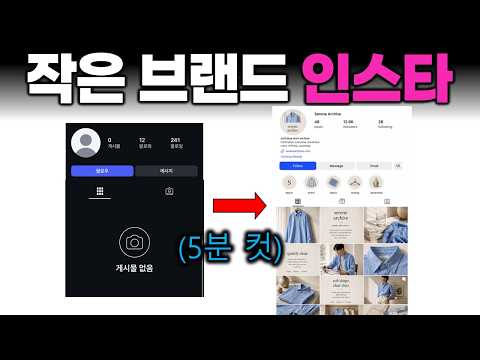
For a small brand, content is not merely a way to make Instagram look attractive. It is the essential bridge between a good product and real revenue. The priority is not spectacular visuals from day one, but honestly and clearly answering questions customers actually have and building a system that can continue for six months to a year or longer. The easiest first step is to write down ten customer questions, choose one, and film the answer on a smartphone. 📱
1. A Good Product Alone Does Not Generate Revenue
The video begins by confronting the belief that "a good product will sell itself." How carefully the founder made the product and how many nights they stayed awake preparing it may matter inside the brand. To a new customer, however, it is one item among many, and the founder's effort is not itself a reason to buy.
"Having a good product and making money are clearly separate things."
"Customers do not care about the founder's sincerity in itself."
Customers want evidence that the product is right for them, trustworthy, and unlikely to disappoint. To close the gap between product strength and sales, a small brand must continually show customers something they can use to judge. That is the role of content.
Social posts, advertising creative, product-detail pages, blogs, and brand assets all require content in different forms. Yet many one- to three-person brand founders rarely even take photos and are unfamiliar with shooting and editing. The video promises a practical explanation beginning with the question, "What on earth should I film?"
2. Build a Sustainable Structure Before Grand Content
Beginners often picture professional editorial photos, model videos, polished Reels, and a perfectly unified feed. Cost, skill, and time then prevent them from beginning.
"You do not need to make that kind of content from the start."
In a small brand, one founder may handle product planning, customer service, packing and shipping, product-page updates, vendors, ads, social media, and a blog. With little staff, tight budgets, and limited marketing experience, maintaining large-brand visuals from the beginning is unrealistic.
An outsourced launch shoot may produce 20 or 30 photos for Instagram and the product page. But social media is not a one-time publication. Posting consistently for months builds reach, recognition, and trust. A brand cannot hire a photographer, studio, model, and video crew for every weekly post.
"The core of small-brand content is not maximum quality, but a structure that lets you keep making it."
Beautiful, polished work may be useful, but first ask: "Can I continue this method for six months?" One or two sustainable weekly pieces matter more than a single magnificent production.
3. Ads and Social Media Both Compete Through Content
A founder might ask, "Why not use ads instead of social media?" The video says small brands should learn controllable advertising such as search, Meta, Naver, or Coupang ads, which can be tested with only ₩10,000 or ₩20,000 per day.
Advertising, however, is not simply pressing a "promote" button. Conversion requires campaigns in an ad manager, segmented targets, multiple creative tests, and data analysis. Yet the more fundamental issue is not technical operation of the system.
"Advertising is content in the end."
Ads are about learning which images make customers respond, which phrases stop them, and what they want to click. No matter how sophisticated the settings, customers see the creative. Without an arresting image, clickable line, or message touching an anxiety, the budget may simply disappear.
Content is therefore necessary not only for social growth, but to improve advertising efficiency, strengthen product-page persuasion, and receive search and external traffic.
Social media costs less money but rarely produces easy results. Anyone can create an account and post, making competition fierce. Immediate breakout after a few posts is exceptional.
"Free does not mean easy. Free makes it harder."
"If you seriously want to build something through social media, plan for at least six months to a year."
Low financial cost requires time and repetition before results. A founder should ask not "Is this pretty?" but:
"Have I chosen a method I can keep using for six months?"
4. Three Operating Strategies That Fit Different Brands
The video divides small-brand social operation into three approaches, chosen according to category, visual sensibility, founder temperament, and resources.
1) Run the Main Account as a Showroom
In fashion, living, fragrance, beauty, premium products, crafts, and lifestyle, sensibility and visuals matter especially. The main account can operate as a brand showroom, with a clean feed centered on formal product photography and mood shots from outsourced shoots.
An account containing only beautiful photos may give people little reason to follow, however. This model needs separate traffic from advertising, search, and outside channels.
Do not respond to low budgets by secretly inserting promotional posts into communities. People recognize advertising quickly, and the brand may be criticized or banned.
Group-buying is not automatically good either. Once influencer fees, sales commissions, and discounts are counted, an early brand with high cost of goods may retain almost nothing. Calculate the margin structure, not merely headline revenue.
2) Separate the Main Account from a Founder or Secondary Account
The video particularly recommends this approach. Keep the main account as a polished showroom focused on product photos, brand images, and philosophy. Use the founder's account or a separate secondary account for freer, more human content.
Possible subjects include:
- Why the brand was created
- Product development and behind-the-scenes production
- The founder's thinking and industry observations
- Answers to customer questions
- Failures and the process of improvement
- Things customers commonly misunderstand
- The founder's own product experience
Trust can grow when people see the real person behind a small brand. Systems and scale create trust for a corporation; for a small brand, the founder making, selling, and meeting customers becomes evidence of trustworthiness.
"Systems create trust for big companies, but people create trust for small brands."
3) Begin Directly on the Brand Account
The third approach is to begin posting on the brand account without excessive concern for feed polish. Imperfect photography, weak editing, and awkward speech are acceptable. Continuing matters most.
"The greatest danger for an early brand is not poor content, but making no content at all."
"Poor content can be improved. Content that does not exist has zero chance of bringing a customer."
Weak work can improve next time. Posting nothing eliminates the opportunity for discovery. For small brands, stopping is more dangerous than imperfection.
5. When You Do Not Know What to Film, Begin with Customer Questions
Founders often hear that a smartphone is enough, but turning on the camera leaves the question, "What do I film?" For a founder or casual brand account, the video first recommends creating basic introduction content.
Explain the philosophy that started the brand, what it values, who the founder is, and the care behind the product. Few people may seek this initially, but visitors arriving through later content can then examine the brand's history and beliefs.
The real center, however, is content that solves customer problems. Customers care more about their own anxieties than the brand's circumstances. Before spending, they want to avoid failure, confirm they are choosing well, and avoid loss or deception.
The video gives sample customer questions:
- What standard determines asset division in a divorce?
- How do I make dental implants last?
- What can a corporation legitimately treat as an expense?
- Will a delivery spoil if it sits outside in summer?
- What should I check to avoid being overcharged for curtain installation?
- Is this price high or reasonable?
- Why does my dog keep stopping on walks?
- What should I check when choosing summer clothes for a baby with sensitive skin?
Address customers' discomfort, confusion, pre-purchase checks, and lack of comparison criteria.
"Write down 30 questions customers ask frequently."
Find them in actual inquiries, comments, DMs, consultations, recurring review language, return and exchange reasons, hesitation before purchase, questions from people to whom you described the product, and questions in online communities. If 30 feels burdensome, ten is enough to begin.
Most importantly, do not rewrite customer language into impressive founder language.
"Do not turn the customer's words into a polished version in your own language. Use the expression customers actually use."
If someone asks, "Will my package spoil if it sits outside in summer?" do not transform it into "A premium packaging system designed for seasonal shipping stability." People stop when they see the question already in their heads.
"A good sentence is not an impressive sentence. It is one the customer recognizes."
6. A Formula for Turning One Question into One Piece of Content
Once you have the question, use this simple formula:
- Display the customer's exact question as text on the first screen.
- State the conclusion briefly first.
- Explain one or two reasons.
- State precautions or something the customer needs to do.
- Explain how the brand addresses the problem.
For a refrigerated-food brand, begin:
"Will a package spoil if it sits outside in summer?"
Answer first: "Four to five hours is generally fine, but beyond that requires caution." Explain the ice packs, insulation, and avoidance of midday dispatch. Then honestly note that even excellent packaging cannot prevent harm after hours in direct sun, and ask the customer to retrieve the package quickly after receiving the alert.
The essential point is not guaranteeing "There is no problem," but honestly stating the safe range and limits.
"If the solution is not absolute, honest explanation can itself be a marketing method."
"No matter how well we pack it, hours in direct sun after delivery will inevitably have an effect."
Honesty reduces anxiety and builds trust that the brand does not exaggerate. A leather brand can answer, "What should I do if leather gets wet?" and advise slow drying in the shade rather than a hair dryer to reduce cracking. Removing water marks from wood furniture, using cosmetics on oily skin, and deciding whether to size shoes up by half all become content.
One customer question becomes one piece of content. Mastering this method creates a continuing source of subjects.
7. A Hook Is Not Provocation, but the Feeling "This Is About Me"
The first one to three seconds matter in Shorts and Reels. Platforms distribute content that holds attention, and most abandonment occurs at the beginning.
"If people swipe away at the start, they never see the good material later."
Founders mistakenly equate a hook with provocative clickbait. Lines such as "A fact 99% of people do not know," "You will fail if you miss this," "The shocking truth," and "Never buy this" are not always wrong, but constant use can make a small brand feel shallow.
A simpler and stronger hook displays the customer's real problem on the first screen.
"A hook is not the same as clickbait."
Examples include:
"What should a straight body type wear on a June blind date?"
"If your dog keeps stopping on walks, check the harness first."
"Do not put new clothes straight onto a baby with sensitive skin."
The right customer immediately thinks, "This is about me." The best opening does not manufacture surprise; it touches the exact problem of the exact person.
Content should not be too bland either. Rounded statements everyone accepts may avoid opposition but also disappear from memory. Clear founder standards and opinions make people think, "This person sees it differently" or "I should save this."
"A small brand should not try to say something agreeable to everyone."
"Content for everyone ultimately lands with no one."
This does not mean speaking aggressively. Explain the situation and standards behind the judgment. Narrowing a market can become the beginning of expansion. A restaurant known first for an exceptionally good Margherita pizza may later be recognized for wood-fired pizza, then for Italian food more broadly.
8. The Right Format Differs by Industry
Consulting examples show that content format should follow brand differentiation and customer anxiety rather than fashion.
A Tool-Vest Brand That Needed to Show Field Experience
One founder designed construction tool vests not by adding a logo to an off-the-shelf item, but from frustrations experienced while working on sites. The true differentiator was not specifications, but the founder's direct experience of the field problem and its improvement.
The needed content was not a grand brand film. The founder could record work on a smartphone and continually document what was inconvenient in existing products, why pocket positions changed, what went wrong in actual use, and how the next version improved it.
"Use photos only as supporting evidence. The important part is explaining the work in writing."
Excellent shooting is unnecessary. A continuing record of the process lets customers see that the person has genuinely done the work.
A Curtain-Installation Brand That Needed to Reduce Anxiety
Customers find curtain prices and quality hard to compare and worry about fair quotes, after-sales support, and being exploited. The brand therefore needs information that reduces anxiety, not only emotional installation photos.
Examples include:
- Three things to check in a curtain quote
- Quotes that deserve a follow-up question
- Common causes of after-sales problems
- Essential criteria for comparing fabrics
Even when industry conditions prevent full price disclosure, accumulated information can make customers trust the brand.
"At least I will feel less anxious hiring this person. I will not be taken advantage of."
A Bespoke-Suit Brand Whose Customers Want Depth
For bespoke suits, customer volume is low but each buyer researches deeply and spends heavily. Short Reels may not be the answer. Customers seeking detailed information on fabrics, body shapes, fit, and failure cases may prefer 15- to 20-minute YouTube videos.
The meaningful result is not 100,000 views, but ten highly interested viewers becoming inquiries.
"Telling every brand to make Reels is not the answer."
A production journal, before-and-after work, a founder account, or long-form YouTube may fit different brands. Choose not the fashionable format but the one that reveals your differentiation best.
9. AI Helps Execution; It Does Not Replace Planning
The video takes a practical view of AI. AI-led content is not yet consistently good enough to replace human planning. But a brand without an outsourcing budget and with only a few product photos and a logo can use AI to establish the basic shape of an Instagram feed.
Provide product photos and a logo and first ask AI to extract:
- Three color palettes and HEX codes derived from product and packaging colors
- Three brand mood keywords
- An atmosphere the target customer will like
- Suitable AI-generatable props and backgrounds
- Characteristics of the logo's typography and shape
Using that brand DNA, create a nine-tile feed mixing product photos, text cards, mood images, and lifestyle imagery. Alternate product, text, and mood while unifying color, brightness, type, and lighting direction.
AI still offers no single-click solution.
"There is no one-click solution with AI either."
"People who use AI well do not hand it everything. They give it good constraints."
Good output requires explicit detail about the customer, their problem, the product's solution, and the tone of voice. A founder who does not understand customer and brand deeply can only produce shallow AI results.
Never use an AI image that makes the real product look different. If color, form, or texture diverges from reality, customers feel deceived and trust collapses.
10. Content Is a Process of Building Trust, Not a Single Breakout
Founders often expect revenue too quickly after posting. They write one blog post without inquiries or publish one Reel without sales and become disappointed. Revenue matters, but one piece of content rarely produces immediate purchase.
"One post does not create a structure where purchases instantly explode."
Customers rarely buy after seeing an unfamiliar brand once. They need repeated exposure to recognize it, reduce doubt, and find reasons for trust. Content continually supplies those reasons.
"Content is not a game of one big hit. It accumulates and reduces customer doubt."
The video discusses channels and artists that appear to become suddenly famous. One video may seem to trigger an algorithmic explosion, but years of broadcasting, entertainment appearances, YouTube, livestreams, and regional events often came first. At one moment, a character, world, and music align and break through.
"The trigger fired now, but without everything accumulated before it, the trigger could not have produced this scale."
The same is true for a small brand. The first video may receive 200 views, and ten posts may produce no response. That process is still meaningful. Beginners are naturally unskilled, and continuing builds embodied taste and ability.
"Even poor work has great meaning when you complete and upload each piece."
Creating content also changes how you view others' work. You begin analyzing why the opening line works, why the product was not shown immediately, and why an ordinary video holds attention. Every other brand's post becomes marketing study material.
11. The First Piece of Content to Make Today
The video closes by reducing today's work to one task: write down just ten questions customers ask frequently, preserving the language from real inquiries, comments, DMs, and reviews.
Choose the easiest question and film in this order:
- Display the customer's exact question as the opening text.
- Begin, "To give you the conclusion first…"
- Explain roughly two reasons.
- End by explaining how the brand solves the problem.
- Film on a smartphone and upload immediately.
"It is fine if you film badly. It is a hundred times better than not filming."
"You can fix poor work later. If you do nothing, nothing happens."
Small brands cannot perfect all marketing with limited budget and staff. Begin with what is possible. Whether the content fuels ads, social growth, product pages, or a blog, choose the most sustainable method.
Build a system that can produce one or two pieces every week for at least six months to a year. Rather than obsessing over perfectly unified visuals, focus on touching and resolving customer questions and anxieties in precise language.
Conclusion
The video's central message is that small brands should prioritize continuing to make content over "making it well." The brand should ask itself:
"Whose problem am I solving, and what is it?"
"Am I stopped because I only think about making it well, or am I making it even when it is imperfect?"
If the answer is unclear, that may be what is missing from the brand's content. Find one customer question, turn on the smartphone, and answer it. That is the most practical and powerful starting point for small-brand content.