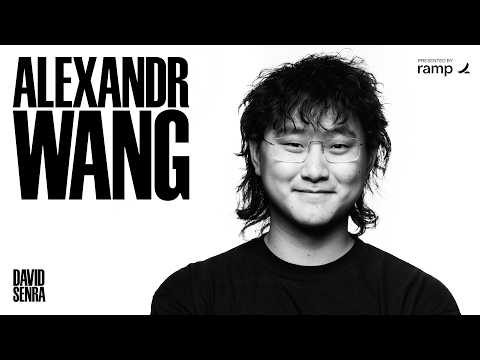
Alexandr Wang, Meta's chief AI officer and a co-founder of Scale AI, sees the personal AI agent Muse not as a mere chatbot, but as a "second mind" that turns people's desires and goals into real action. He spent seven months relentlessly refining the product and model to create trustworthy consumer AI, and subsequently redesigned Meta's AI research organization around small teams, dense concentrations of talent, and minimal bureaucracy. This conversation ranges from product philosophy to meme marketing, Mark Zuckerberg's leadership, and a future in which AI rekindles human ambition.
1. Starting with Personal Superintelligence
Muse's story begins with the vision of Personal Super Intelligence established at the launch of Meta Superintelligence Labs (MSL). The central question in an early memo written by Alexandr Wang, Nat Friedman, Mark Zuckerberg, and others was simple: "How can powerful AI actually make everyone's life better?"
Their idea of AI went beyond a tool that handles work for people. It would expand the human experience itself and enable people to do more of what they wanted. This idea was already being discussed inside Meta in June 2025, before agents had gained mainstream adoption.
"How do we build powerful AI that actually makes our lives better? More broadly, how do we build something that elevates the human experience?"
Building frontier AI models, however, is a long process. It requires creating data, pretraining, post-training, and building the entire supporting system. Meta set that lengthy model-development pipeline in motion first, while ultimately working toward AI agents deeply integrated into individuals' lives.
2. The Promise and Fear of Agents Revealed by OpenClaw
Agent experiences involving Opus 4.5 and OpenClaw changed the atmosphere. Nat Friedman, in particular, was among the first people inside MSL to use OpenClaw enthusiastically, and his experience is described as "somewhere between euphoria and terror."
Nat told his AI that he wanted to drink more water and configured it to check security-camera footage to see whether he actually drank, then praise him. The example sounds somewhat strange and intrusive, but it also showed the possibility of AI understanding the context of someone's life and intervening in their behavior.
"The experience was frightening in a way, and euphoric too."
"The AI checked security footage to see whether I was drinking water and told me, 'Good job.'"
Alexandr soon began using OpenClaw extensively as well. Trying a self-analysis prompt Nat had created was particularly powerful. The AI accessed various sources of information about him, including email and photos, connected patterns, and asked a series of psychological questions.
"It was probably like compressing three years of therapy into an instant."
He says the process left him feeling very vulnerable. Yet that very vulnerability and immersion convinced him that personal agents could mean much more than simple productivity tools. Around February 2026, the two each sent a memo to Meta's board. Alexandr saw this as something close to "the ultimate consumer product," while Nat wrote the memorably titled "The Claw, the Law, and Trust Is a Must." That final phrase, "trust is a must," became a central principle in Muse's design.
3. From Prototype to a Trustworthy Product
Once convinced, the team moved quickly. They built a prototype in just one to two weeks and demonstrated it to the board. Many core elements of the final product were already present in that first prototype, including Muse's signature character, Jollybot, and an early version of Muse Charm.
But the prototype was "occasionally magical, but mostly didn't work." The seven months leading up to launch were spent turning that magic into a repeatable product experience.
"Sometimes it worked and felt magical, but mostly it didn't, and it kept breaking."
Mark Zuckerberg also experienced both the product's possibilities and its problems firsthand as a user. He used it for household tasks, tried it with his children, and even showed the AI footage of his MMA training to get advice on improving. Sharing "what strange experiences have you had with your agent?" became something of a topic at internal Meta meetings.
The OpenClaw phenomenon, however, attracted explosive attention for a while and then faded. Alexandr saw a clear reason: people experienced remarkable moments, but the product was generally unreliable. If an agent works miraculously once and disastrously the next time, users soon leave.
"There were magical moments, but most of the time it didn't work well."
Muse's differentiation was not about disparaging competitors. He respects OpenClaw creator Peter Steinberger and its contributors, describing OpenClaw itself as a visionary creation. What Meta did, by contrast, was less glamorous but decisive: relentlessly smooth out countless rough edges between the model and the product.
"The perhaps less glamorous part of making Muse magical was really obsessively grinding through every detail."
4. Why Choose Personal AI over the Coding Race?
The prevailing view in the AI industry at the time was that coding agents were the most important form of AI. Claude and the Opus family were leading the industry through their strength in coding, and many companies rushed in that direction. Meta could also have committed fully to the coding-AI race, but Alexandr chose personal agents instead.
That judgment rested on Meta's unique position. He believes AI's progress will reduce the time people spend on things they "have to do," leaving more time for things they "really want to do." Meta products such as Instagram, WhatsApp, and Facebook fundamentally occupy the part of life where people follow their interests and hobbies, friends and family, and live the lives they want.
"The promise of AI is that we'll spend almost no time on things we have to do, and spend our time on things we want to do."
"Meta's products are about the things people want to do."
Meta has apps used by roughly 3.5 billion people every day. He therefore saw the greatest potential for something distinctive in personal, consumer AI, rather than work-oriented or coding-centered AI.
"It's not work, and it's not coding. It's personal."
5. Testing Quality against More Than 100 Criteria
Trust is central to a personal agent. Models are inherently probabilistic, and agents can easily fail because they carry out a wide range of external actions. If users repeatedly experience failures, they will consider even a highly promising product useless.
"If it reliably delivers magical experiences, it could be one of the greatest consumer products in history. But if it's unreliable, people just think it's trash."
The Muse team therefore listed more than 100 behaviors and capabilities an ideal personal agent should have. They created evaluation criteria for each, tracked the model's weaknesses, and repeated training and improvements. They were managing product quality through both metrics and user experience.
The launch decision was not based on intuition alone. Each item had a minimum launch-blocking threshold and a "good" threshold. At an earlier checkpoint, around 80 items passed but 20 fell short, so they did not launch. Finally, when a specially trained version of MusePark 1.3 cleared every threshold, they judged it ready to launch on the numbers as well.
"For each of the more than 100 items, we set a launch-blocking threshold and a good threshold."
They also observed many new users downloading and using the app for the first time. Because Muse is an agent that actually does things, rather than a conventional chatbot, helping users understand that difference and onboarding them naturally was important. Even small changes in model performance could substantially disrupt the product experience, so the team continually ran A/B tests.
Surprisingly, this substantial product was built by fewer than 200 people across both model and product teams—a very small team for a company like Meta. Alexandr describes this as a deliberate choice. Especially for an important product, too many people can make it unfocused and prevent it from delivering a cohesive experience like a work of art.
6. A Product Needs a Single Point of View
Alexandr sharply criticizes a problem with products made in large organizations. When many people and PMs push their own requirements into a product, the result can easily become a jumbled monster rather than a unified whole.
"Products from large organizations often become Frankenstein-like creations combining many people's points of view and visions."
"Users can feel it. They can tell that people with different goals each forced something into it."
He describes this as something close to PM hell. When everyone tries to add a feature, the product ends up blended into a "smoothie," and nobody gets a clear experience. Muse had to be the opposite: it needed to give users one clear point of view and one coherent experience.
This reminds the host of Steve Jobs. As in the description of Apple as "a company made of 10,000 copies of Steve Jobs's life," great consumer products need to retain their creator's taste and perspective throughout. Alexandr says Nat Friedman's taste and sensibility were particularly influential in shaping Muse's direction.
Muse publicly stated that it had attracted millions of users. By retweeting growth charts circulating around him, Alexandr also hinted that Muse might be the fastest-growing consumer AI app ever. He did not disclose exact figures, however.
7. Making Meta Cool Again with Memes
After Muse launched, Alexandr's activity on X became highly distinctive. Rather than merely explaining product features, he actively created and spread memes. The strategy began with the recognition that Muse needed to break through culturally amid a flood of AI product launches.
"People are constantly being bombarded with new AI products, new startups, and new models."
Meta has enormous distribution power. But Alexandr thought simply making lots of people aware of the product was not enough. People needed to find it entertaining, talk about it, and share screenshots. He says he picked up his instincts from friends deeply immersed in online meme culture, jokingly calling them "my schizo friends."
His posts were not memes automatically generated by a team. He wrote most himself, becoming so absorbed that even during meetings, a meme idea could make him feel compelled to post it.
"If a meme came to me during a meeting, I'd think, 'Oh, I have to post this.'"
"The internet rewards risk, and it rewards the unexpected."
Another goal was "making Meta cool again." He felt that despite owning culturally enormous products such as Instagram and Facebook, Meta itself had long failed to seem cool. Muse's little mascot, "Jolly," provided good material. On his commute, he made an image of Jolly carrying a briefcase and posted a "me going to work on Monday" meme, realizing that the character could fit into many different contexts.
An important marketing principle emerges here as well. Consumers are not particularly interested in a company's AI research or technical standing. What matters is "What does this product do for me?"
"People don't care about you or your company. What they care about is what this does for them."
Citing the classic advertising book Scientific Advertising, the host emphasizes that advertising should show the results consumers get, rather than boast about the product. Alexandr agrees, saying that retweeting interesting things Muse users had actually accomplished was the most effective approach.
8. Trust in AI Begins with Small Successes
Memes and screenshots can drive app downloads. But what keeps people using an app is ultimately accumulated trust. Alexandr compares using Muse to a "trust fall" with AI.
At first, users delegate something very small and low-risk. If the AI succeeds, they give it something a little bigger. Then they entrust it with more complex and important problems. As these small successes repeat, users grant the AI more autonomy.
"At first you don't trust it, but you're interested. So you give it a little bite. Then you give it something bigger, and bigger, and bigger."
"Successful Muse users give it increasingly bigger things to do, and experience it working each time."
Some college students reportedly pour out their thoughts in voice memos, then let the AI organize them into plans and next actions. But this depth of trust does not exist from the start. It develops only when AI keeps communicating accurately, asks follow-up questions when things are ambiguous, and carries real tasks through to completion.
Muse's word of mouth also spread strongly through screenshots. An acquaintance of the host left an ID aboard a private jet and handed the entire process to Muse. The request was essentially, "I don't want to be involved in this process at all. Handle everything yourself." Muse proceeded through locating the ID, figuring out how to retrieve it, arranging a courier, and navigating office security and the handoff procedure. A few screenshots of that conversation were more powerful than any advertisement.
"Modern consumer products have to work in screenshots."
When Jolly appears in a screenshot, people immediately recognize it as a Muse experience. This was not deliberately designed, but it created a structure in which sharing the product also spreads the brand.
9. Can AI Rekindle Human Ambition?
Alexandr personally uses Muse across various workflows and as a second brain. This is not merely a productivity metaphor; it reveals how he sees the relationship between AI and humans.
Rather than a future where AI rules over people, he believes in one where it helps individuals realize their desires, dreams, and plans. Humans naturally want things and dream, and AI agents can become a bridge that turns those aspirations into reality.
"Personal agents will be the mechanism and bridge that help us achieve what we want and dream of."
"Humans will dream bigger and bigger."
He says children may someday dream of having their own star system, and AI could become the tool that makes it possible. The important point is that AI does more than eliminate annoyances. It can help people hold on, even as adults, to the big dreams they had as children.
"Muse can give everyone the adult life they dreamed of as a child."
Alexandr believes that as people finish school, enter working life, and face responsibilities and constraints, they gradually lose their dreams and ambitions. The host puts it more bluntly: "It doesn't just drain out of you; it gets beaten out of you." Both agree that many adults live without their sense of agency and ambition.
"We don't fully realize how much we're all living like zombies."
AI's promise is not merely handling life's obstacles, gatekeepers, and tedious procedures. It can be an "upward escalator" that increases people's agency throughout their lives: dream big as a child, achieve it with AI's help, then dream bigger still.
"You dream big, achieve it, dream bigger, and achieve that too."
He says the world has so far been changed by a small number of relentless people turning their desires into reality. But we have never seen a world where the agency of all billions of people is activated. If abundant intelligence becomes available to everyone, the world could become explosively interesting in strange, diverse, and creative ways.
10. Mark Zuckerberg's Call and the Decision to Leave Scale AI
The conversation returns to Alexandr's time running Scale AI. One day, Mark Zuckerberg sent him a message: "Do you have time for a call?" They were not complete strangers. Longtime Meta executive Alex Schultz had connected them around 2021 or 2022 to discuss AI, and it reportedly took almost a year after that introduction just to arrange their first meeting.
Alexandr describes Mark as someone who devotes substantial time to important matters despite an enormous schedule, and who quickly sends long, meticulous WhatsApp replies when advising founders.
"He writes these long WhatsApp responses incredibly quickly and rigorously. It's a really impressive ability."
The serious conversations began after Meta's Llama 4 failed to get on the hoped-for trajectory. At a time when AI was becoming critical to Meta's future, Llama 4 was internally regarded as a disappointment. Mark asked Alexandr, "What should we do?" and "What should we focus on?"
Alexandr calls this one of Mark's important strengths. Despite already being an enormously successful founder, he continually seeks advice from world-class entrepreneurs. The host adds that he has also heard how actively Mark uses his "informal advisory board."
The Scale AI–Meta deal took around five to six weeks from initial contact to announcement. Alexandr had not initially expected Meta to propose acquiring Scale AI or working together. Unlike the Instagram and WhatsApp acquisitions, which had clear consumer-product logic, Scale AI was a data business serving enterprises and governments.
What Mark primarily wanted, however, was talent and leadership to rebuild the AI organization and the Llama program.
"He wanted the talent."
The resulting structure had Meta hold a 49% stake in Scale AI through an investment, while Scale AI continued operating independently and Alexandr and some key personnel joined Meta. He saw it as a rare win-win-win benefiting everyone involved: Scale's shareholders received compensation, Scale could keep growing, and Meta could rebuild its AI capabilities.
Emotionally, however, it was not easy. For nine years, Alexandr had considered Scale AI his "life's work."
"Throughout my time running Scale, I genuinely thought it was my life's work."
What finally moved him was that Meta appeared to be something of a "damaged asset" in AI at the time. That situation actually stirred his entrepreneurial instincts. Rather than joining an organization already running smoothly, he saw an opportunity to rebuild a broken foundation and create principles and culture from scratch.
"It was effectively like refounding this lab."
11. Refounding Meta's AI Lab
The core principle Alexandr shared with Mark was small, flat, technically exceptional teams. He believes that, as Elon Musk has demonstrated at various times, a small team of extraordinarily strong technical people can accomplish enormous things by moving quickly.
"A small, unbelievably talented, technical team operating very flat can do enormous things very quickly."
Mark Zuckerberg is also described as someone who, after careful consideration and a decision, commits fully without hesitation. The host connects this to Napoleon's saying, "Hesitation is fatal." Mark cares more about how big a win could be if it succeeds than about failure itself, and believes that in a changing world, the greatest risk is taking no risks.
"In a constantly changing world, the biggest risk is not taking any risk."
Alexandr says Meta could have become slow and bureaucratic like Google, but Mark's willingness to take risks keeps the organization alive and moving.
12. From Founder to Coach and Designer of the Environment
At Scale AI, Alexandr was a founder who felt he needed to be able to do every job. He had strong views on the company's smallest details and ran it so that his standards were reflected throughout the organization. He thinks this approach can improve a first-time founder's chances of success. However, it also creates the problem of the founder becoming the organization's bottleneck.
"I internalized the idea that to be a good founder, you have to be able to do everything."
His role at Meta was different. There was too much to accomplish in too little time, and Alexandr himself was neither an AI researcher nor a product designer. His first task therefore became recruiting the very best people in each field and creating an environment where they could do their best work.
This was also what made MSL's founding moment attractive. They could build a lab from scratch with a very small team, have the strong direction of personal superintelligence, and attempt big things without the constraints startups commonly face, thanks to Meta's compute, infrastructure, and distribution.
"It was an opportunity not to be bottlenecked by compute, infrastructure, or distribution."
He also explains why Meta spends large sums to recruit a small number of exceptional people. The best talent attracts more of the best talent. Moreover, early employees at companies such as OpenAI and Anthropic could already receive substantial compensation through rising equity values, so he does not see Meta's compensation as necessarily abnormally high.
Alexandr's job now is not to provide every right answer himself, but to establish a north-star direction and bring out exceptional people's full abilities.
"My job is to set the north star and direction, identify the extraordinary talent on the team, and give them the environment and resources to perform at their fullest."
He describes this as closer to being a coach. Large companies have many talented people, but if those people are not empowered to do their best work, they eventually leave for smaller companies or startups. AI research in particular remains uncharted territory where humanity does not yet know models' limits, so it must not be managed like a predetermined production process. It requires trial and error, free exploration, and exceptional insight.
13. The Difference between Mining Diamonds and Constructing Buildings
Alexandr explains business and organizational management through two categories: building skyscrapers and mining diamonds.
Building skyscrapers has a relatively linear payoff structure. Operational efficiency matters in businesses such as data labeling, data services, and Amazon Prime delivery. Here, you maximize the efficiency of the overall system by improving a process by 2%, then another 1%, then another 0.5%.
Diamond mining, by contrast, is governed by a power law. Most attempts may yield little, but a tiny number of successes create such enormous value that they overwhelm all the failures. Venture capital is a prime example.
"Most attempts may not be worth much, but some can be a million times more valuable than everything else."
AI research is also closer to diamond mining. Team members therefore need to be encouraged to try all kinds of wild ideas and develop those that show promise. Whereas he optimized operations like a skyscraper builder at Scale AI, at Meta he is more like someone creating an environment for diamond mining.
On this subject, the host brings up Alexandr's 19th birthday party. As an MIT freshman, he did a winter internship at the trading firm HRT. That gathering included exceptional people such as Jeffrey Yan, who later founded Hyperliquid; Scott Wu, who founded Cognition; Jesse Zhang, who founded Decagon; and Anthropic researcher Vicky Ye.
"We should have just made seed investments in those interns."
Alexandr says it feels deeply surreal to watch people he met as a child through math, science, and computer science competitions and Olympiads go on to achieve enormous success.
14. More Than 200 Direct Reports and an Anti-Bureaucratic Organization
Alexandr says more than 200 people currently report directly to him. Conventional management wisdom would consider this an excessively broad span of control, but it is a deliberate choice under MSL's design principles.
Researchers in TBD, the research group he leads, effectively report directly to him. This does not mean he intends to manage each person in detail; it is a declaration that he will minimize bureaucracy. Having recruited researchers with proven records of outstanding achievement, what they need is not micromanagement, but a good environment, direction, resources, and a structure that enables technical debate.
"These aren't people who need managers. They just need a great environment."
Technical leadership does exist, of course. Different pods have technical leaders who resolve disagreements on technical decisions. But people-management and administrative layers are deliberately kept thin. The team operates by discussing important problems together and listening to as many different perspectives from exceptional people as possible.
Alexandr frankly acknowledges that he may not be the best manager of more than 200 people. But the key to this organization is that its members are not people who need to be managed. They are already exceptional; what they need is room to do their best work.
"They're all exceptional and highly capable. They just need room to run."
Conclusion
Throughout the conversation, Alexandr Wang repeatedly emphasizes trust, a point of view, and human agency, rather than technology itself. Muse aims to move beyond a chatbot that talks well and become a personal agent that successfully completes small delegated tasks, helping users attempt larger life goals.
At the same time, rebuilding Meta AI is an experiment not in making an enormous organization more complicated, but in creating a small, flat organization where the best talent can explore freely. His vision of AI's future does not make humans passive; it enables more people to pursue the ambitions they held as children all the way through.