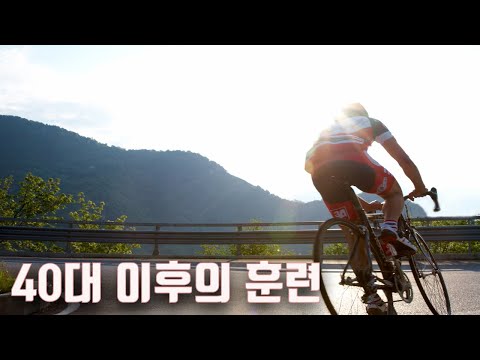
Have you ever wondered how much athletic performance inevitably declines as you get older? This video takes a close look at how athletes in their 30s, 40s, and beyond can perform as well as younger competitors—or sometimes even better—while continuing to train in a healthy way. Drawing on research by Dr. Stephen Seiler, it explains the physical changes that come with age and introduces training strategies that can turn some of those changes into an advantage in endurance events. It is a guide to training intelligently enough to protect both health and performance.
1. How the Body Changes with Age 📉
The lecture begins with three major physical changes that come with age and the realities they create for master athletes.
The first is a decline in maximum heart rate. Many people know the formula that subtracts age from 220, but the speaker says it differs considerably from what athletes actually experience. Newer formulas and athlete data also show that maximum heart rate varies by sport. Activities that engage the whole body, such as running, swimming, and rowing, can produce higher heart rates.
"Heart rate is higher in running than in cycling, and higher in swimming than in running. It may be different for people who have never truly reached their maximum, but this isn't just my personal theory. It is what sports scientists say."
The second change is a loss of muscle mass, especially the loss of fast-twitch, or Type II, muscle fibers needed for explosive power. This reduces not only strength but also muscular elasticity, which can place additional strain on ligaments and bones. The familiar claim that "fat turns into muscle and muscle turns into fat" is a misconception. What actually happens is that muscle decreases while fat increases, changing overall body composition.
The third change is a general decline in performance caused by the combined effects of the first two. It is more than a simple loss of strength; it involves a broader decline in how the body functions as a whole.
2. The Master Athlete's Advantage: Endurance 🏃♀️
Despite these changes, the video offers an encouraging message for master athletes. Dr. Stephen Seiler's research suggests that athletes can maintain—and in some cases improve—their performance as they age.
The research began with three broad hypotheses, although the experiments described in the video focused on the first two.
- Hypothesis 1: Divide master-category athletes into groups in their 40s, 50s, and 60s, then observe how their bodies and training hours change with age. The results showed a tendency for training time to increase as athletes grew older.
- Hypothesis 2: Compare younger and master athletes of similar ability, then add a third group of younger high-performing riders and observe how athletic capacity differs across the three groups.
The most interesting result was that threshold performance rises with age while endurance does not decline. As the quantity and quality of mitochondria improve and capillary density increases, oxygen can be delivered more efficiently. In other words, oxygen metabolism—and therefore aerobic capacity—can improve.
"The older you get, the more of an advantage you can have over long distances. Explosive power over a short period may be harder, but for something like a one-hour FTP effort... I used to wonder why riders in their 40s and 50s sometimes posted better results than riders in their 30s. This helps explain it."
This means older athletes may be better suited to long-distance events such as marathons, ultramarathons, and triathlons than to short races. Some athletes have even shown greater capillary density and higher levels of mitochondrial enzymes than younger competitors. Efficiency can offset some of the disadvantages of aging and allow older athletes to develop even stronger endurance.
3. Efficient Training: Managing Stimulus and Stress 🧠❤️💪
The final point is that performance can continue to improve with age when consistent training is paired with adequate rest. The key, however, is not to train as much as possible. It is to pursue optimized training.
The brain, heart, and muscles all work together during exercise. Training provides the stimulus that drives processes such as protein synthesis and mitochondrial growth, but it also creates stress in the body. That stress may appear as muscle damage, inflammation, depression, or reduced immune function.
"The stimulus is beneficial, but negative stress develops alongside it. The goal is to maximize the stimulus while minimizing the stress—or at least keeping the stress within a level you can handle..."
Training recklessly under a "no pain, no gain" mindset, or following a program without considering the condition of your own body, can therefore be dangerous. Every body responds differently, so each athlete needs to find the training approach that works best for them. That is the most sensible way to improve performance while protecting long-term health.
Closing: The Value of a Community for Health and Performance 🤝
Drawing on his own experience and Dr. Stephen Seiler's research, Coach Go offers master athletes a way to maintain or improve performance without becoming discouraged by age. The video closes by introducing The Lync, an online community where people can share training experiences, find answers to their questions, and improve together.
"Ultimately, what matters is that we stay healthy and enjoy exercising..."
Riding faster and buying a better bicycle can be rewarding, but the message that matters most is to enjoy exercise in a healthy way. I hope the community helps more people find reliable information and motivation, so they can continue to experience the joy and accomplishment of exercise regardless of age. 🥳