This piece follows Ryan Serhant, the New York star real estate broker who became a CEO, as he learned to treat time like an asset and turn opportunity into a "system" rather than a matter of "luck." The core idea is to define the time you can actually use in a day as 1,000 minutes (= $1,000), cut emotional waste, and run the day by splitting it into roles. In the end, the message is that time management is not a tool for making more money but a skill for reclaiming control over your own life.
1. From "Crybaby" to the Storyteller Who Shook New York 🎭
Ryan Serhant was born in 1984 in Houston, Texas, and grew up constantly moving because of his father's job (in finance). A life of always having to adapt to unfamiliar environments made him shrink further into himself, and he remembers himself as an overweight, timid kid who struggled socially.
"I was overweight, extremely shy, and bad at socializing… My confidence was always rock-bottom. I even had the nickname 'Crybaby Ryan.'"
What gave him room to breathe was acting class. Living as a "character" instead of as "himself" put his mind at ease. He eventually majored in theater in college, and in 2006, at twenty-two, he left for New York dreaming of Broadway.
But reality was cold. He kept failing auditions, his livelihood was shaky, and when even his side gig as a hand model hit a wall, he finally decided in 2008 to go for a real estate broker's license. The interesting part is that even though he started for the money, the work suited him surprisingly well. Ryan approached real estate sales like "acting."
"I knew nothing about real estate, but I knew how to act… I realized sales is just acting. A kind of 'improv,' if you will."
He thought of clients as an "audience," and believed that no matter the day, he had to hide his emotions and condition and put on a great performance every single time.
"In the world of sales, there's no such thing as a 'bad day'… They're an audience that bought a ticket to see a 'great show,' and I have to nail every line every time."
This "storytelling-style sales" gained explosive momentum through his appearance on the TV reality show "Million Dollar Listing: New York." A signature moment came when, in order to sell a luxury Times Square apartment—a place people saw only as a "noisy, unlivable tourist trap"—he even dressed up as the Statue of Liberty and delivered his message from atop a double-decker bus.
"Most New Yorkers think Times Square isn't a good place to live… But that's exactly why this shouldn't be a chaotic place to escape from—it should become our home."
After the show aired, he drew the attention of wealthy clients, started handling bigger deals, and began walking the path of a "star broker" in earnest.

2. What He Realized When Success Stalled: "My Results Were Just Luck" 🎲
But even after getting noticed on TV, the next deal didn't keep coming. A full four-month dry spell arrived, and Ryan reached a painful conclusion.
"Everything I've achieved so far wasn't skill—it was nothing more than luck."
A life of waiting for luck to come around again is anxious. So he decided to build "a system that makes opportunity roll in." The starting point was the idea of converting time into money.
"So I started converting time into money."
He set a simple rule: 1 minute = $1. Out of the 1,440 minutes in a day, he subtracted the 440 minutes spent on sleep, rest, and meals, and calculated that the "asset he can actually operate" is 1,000 minutes. Every morning when he opens his eyes, it's as if he begins the day having been handed $1,000.
3. The Heart of the "1000-Minute Rule": Cutting Off Emotional Waste 😤➡️⏱️
The first "money leak" Ryan tried to plug was none other than emotional drain. Real estate brokering is full of rejection and failure, and deals worth billions of won fall through all the time.
In the past, when a deal collapsed he would drink and stay depressed for a long time, but once he applied the 1000-minute rule, the math changed. For example, he felt that moping for 2 hours meant $120 going up in smoke. If only out of how unfair that felt, he set a principle.
- After a failed deal, frustration gets exactly 10 minutes
- Then immediately contact the next client
- He actually sets a 10-minute timer to enforce it
The analogy Ryan offers here is striking.
"If someone stole $10 or $20 from your wallet, you'd chase them down to catch them. But when people casually steal 10 or 20 minutes of your day, why do you just sit there? Time is money."
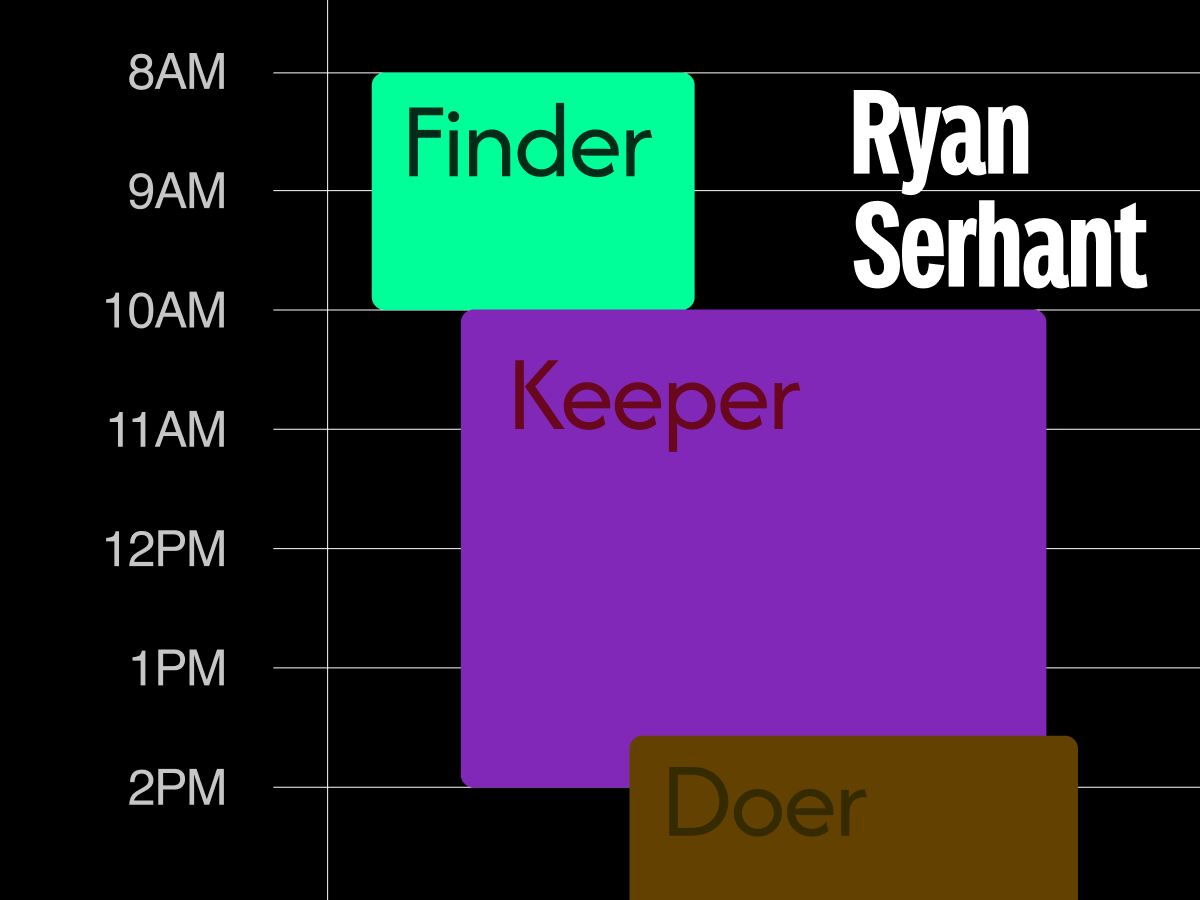
To put the 1,000 minutes he secured this way to even more efficient use, he created his next tool: the FKD method (Finder, Keeper, Doer).

4. The FKD Method: Splitting the Day into 3 "Roles" 🧩
Instead of simply spending his day "being busy," Ryan increased its density by completely switching roles depending on the time of day. He explains this with a three-tier Finder–Keeper–Doer structure.
5. Finder: In the Morning, Focus Only on "Discovering Opportunities" 🔎
Ryan fixes 8 to 10 a.m. as Finder time, using it solely to find new listings and new clients. The key point is that he creates opportunities first, "before the day starts and gets hectic."
Looking back, he says that when he started his day by going out to see listings and sending emails from a café, he ended up trapped in "trying to sell only what's right in front of me"—a state of being busy just moving around. So in the morning, he focuses on setting up the "board."
For example, if he sets a goal like "let's target Forbes billionaires," he doesn't just start making calls blindly—he first designs "how can I reach them." In fact, he took an approach like obtaining, through a data company, the emails of wealthy people moving into the Upper East Side.
There's a sentence of his that sums up this scene.
"I wanted to take the initiative and move forward. To do that, I had to keep as many balls in the air at once as possible. Each ball means a deal, a possibility, a chance to grow further."
6. Keeper: Set Limits by the Numbers to Control "Losses" 📊
From 10 a.m. to lunch is Keeper time. If Finder is about intuition and expansion, Keeper is closer to verification and management. During this time Ryan reviews budgets, return on investment (ROI), and cost leaks, and especially emphasizes setting limits.
The representative caps he set look like this.
- Ad spend cap: only up to $200 per day
- Time cap: showing listings only up to 10 hours per week
By setting such a "line in the sand," even if a home doesn't sell, he can predict how far the loss will go, and the logic is that if it sells within the limit, he can make big returns from a small investment. And above all, the important thing is that he doesn't put off financial decisions—he makes the call himself during Keeper time.
"If you want to grow a business, you can't put off decisions about finances… I judge every expense myself during keeper time."
7. Doer: In the Afternoon, Build Trust Through "Steady Execution" 🏃♂️
From 2 p.m. on is Doer time. It's the time to go out and personally execute what he designed and verified in the morning. Here Ryan emphasizes that frequency and density matter more than "a single big hit."
A representative case is a couple he met in 2012. They spent a year touring homes with a $3 million budget, but no deal materialized, and an ordinary broker would have cut the relationship in that situation. Ryan, however, kept the relationship alive by sending a newsletter once every three weeks. Those emails piled up to a remarkable 417 messages over more than 5 years, and in 2017 a reply finally came.
"Ryan, how are you doing? Our financial situation has changed a lot since then. Our budget has grown from $3 million to $15–20 million."
The deal ultimately closed, and he received a $510,000 commission. The time he put into the newsletter was about 20 minutes a day, so "sustaining a small action for a long time" came back as a large return.
8. 3 Devices to Break "Lazy Perfectionism" 🛠️
If you've read this far you might think, "Isn't this only possible for someone with extreme willpower?" But Ryan says, on the contrary, don't rely on willpower—build an environment where you encounter fewer temptations. He introduces three tools.
9. Time Review: Logging Even Screen Time "Like a Household Ledger" 📱✍️
The first is time review. People often feel busy but don't actually know where their time goes, so before interpreting or reflecting, record it exactly as it is. In particular, he even checks his smartphone's Instagram, YouTube, and messenger screen time and writes it down in his calendar.
"Record the big and small things you do in your calendar… Don't rush to interpret or reflect on it—just record it as it is first."
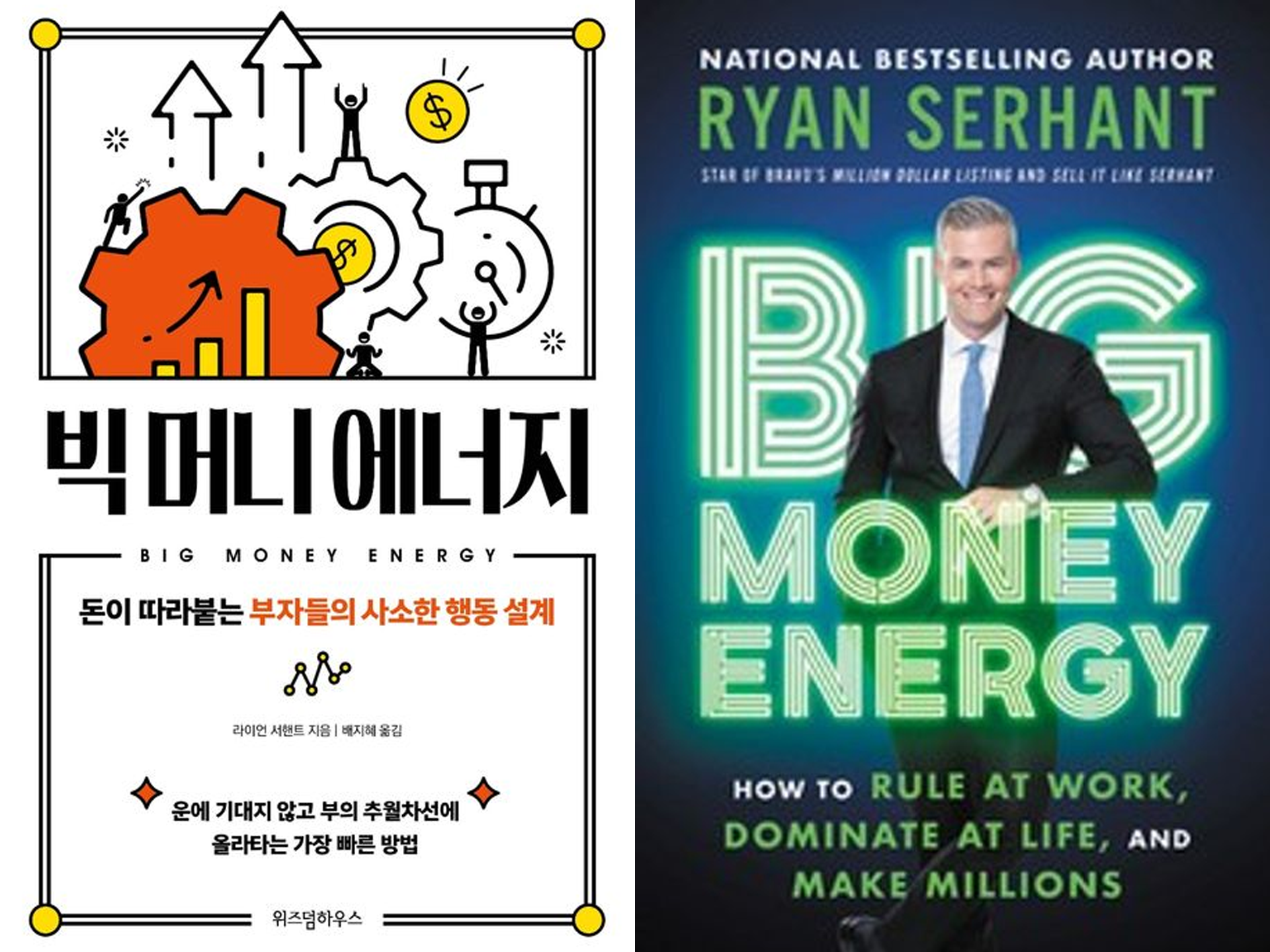
Through this process, Ryan repeatedly confirmed the pattern that he "puts off exercise and sleep because of work," cleared out unnecessary habits, and used the time he freed up to start writing books. As a result, he published 3 books starting in 2018, and all of them became bestsellers.
10. Parkinson's Law: Designing Work to Finish Within a "Time Limit" ⏳
The second is a method of using Parkinson's Law in reverse. It's the principle that "work expands to fill all the time given to it." Ryan sees perfectionism as endlessly stretching work, so he puts a forced time limit on each task.
- Email replies: 2 minutes
- First draft of a proposal: 30 minutes
- Presentation work: 1 hour
The explanation is that when you set a short time, the brain gives up on "perfection" and focuses on core execution.
11. Bonus Time: Filling Unexpected 10 Minutes with "Small Tasks" Instead of Social Media 🎁
The third is making use of spare moments. When a meeting ends early or you arrive at an appointment early, most people scroll social media, but Ryan treats this time as bonus time and fills it with a "small-task list" he prepared in advance.
"I always carry a list of small tasks to handle… so I don't spend the time checking social media."
What he does then isn't grand. Things like a quick check-in call to a client, or a memo jotting down a content idea for a new listing. But the perspective is that when these 10-minute chunks accumulate, they ultimately become a competitive edge.

12. Time Management Is, in the End, a Question of "Control Over Your Life" 🎬
The piece's ending starts with the question, "Do you really have to chop up your life this much to succeed?" and turns toward the real reason Ryan controlled his time. He says he obsessed over time management not merely to make more money, but to refuse to let his life flow along a script someone else handed him.
His core declaration is this.
"I don't want to waste time, and I don't want to use it carelessly… I will spend it lavishly only on the things that genuinely fill me with excitement."
In other words, meticulous time management isn't a punishment of squeezing yourself—it's closer to "securing the option to spend time on what I want." That's why C, the Longblack Friends writer of this piece, says their question changed too. Not "Do I really have to go this far?" but "Who is in charge of my day right now?"

Closing
Rather than packaging Ryan Serhant's success story as a tale of "grit," this piece unpacks it as a concrete system for seeing time as a 1,000-minute asset, cutting waste, and designing opportunity. What stays with you above all is the way he calculates emotional drain as a cost and cuts it off, the structure of running his day as Finder–Keeper–Doer, and the environmental devices that break perfectionism. In the end, the most important message is that time management is less about productivity itself and more about the control to direct your own day.