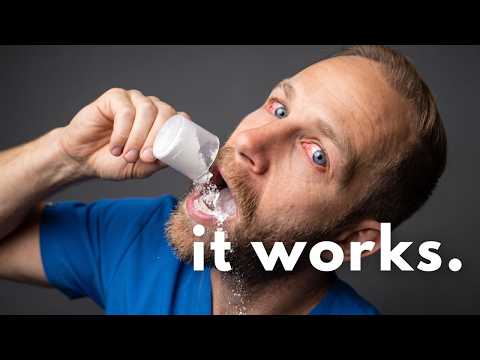
On a severely sleep-deprived day, begin by acknowledging that your attention, working memory, and emotional regulation are substantially impaired. You can defend cognitive function with evidence-based measures such as morning sunlight, properly timed caffeine, a short nap of around twenty minutes, and high-dose creatine. The most important objective is to get through today safely while protecting tonight's sleep and breaking the vicious cycle.
1. What Actually Happens to Your Brain After Poor Sleep 🧠
Feeling exhausted after a bad night is not merely subjective. Dr. Seth Capehart, an emergency physician and former Delta Force operator, explains that sleep deprivation produces measurable deterioration across several brain systems.
"Your brain is running like a laptop with forty tabs open, three of them frozen, and only four percent battery remaining."
Three major areas of brain function break down when you do not get enough sleep.
- Reduced attention and processing speed: Basic actions that are normally automatic—driving, following a conversation, or walking without hitting a doorframe—begin to require deliberate effort. This cognitive slowdown is why drowsy driving can cause fatal accidents.
- Impaired working memory: You may enter a room, open the refrigerator, and blankly wonder, "Why am I standing here?" This is not early dementia; your brain's short-term storage has reached its limit.
- Breakdown of emotional regulation and impulse control: Sleep loss sharply reduces patience, making you quicker to anger and more likely to make impulsive decisions.
"Saying, 'I got no sleep, so don't mess with me,' is not mere whining. It is a legitimate warning label. Treat it as one."
On a sleep-deprived day, it is therefore wise to postpone major decisions, serious conversations with your partner, and emotionally charged email replies until the next day.
2. Scientifically Supported Ways to Manage Sleep Loss ⚡
Nothing can fully replace sleep, but several proven methods can meaningfully reduce the damage.
A Short 20–30 Minute Nap
A brief nap can partly restore attention and working memory after sleep loss. This is a real, measurable improvement, not a placebo effect. Keep the nap to 20–30 minutes and take it no later than early afternoon. A longer nap may carry you into deep sleep, leaving you even groggier and more irritable when you wake.
Morning Sunlight
This costs nothing and is highly effective. Getting 10–15 minutes of outdoor sunlight immediately after waking can suppress lingering sleep pressure in the brain and promote alertness. It helps far more than sitting in a dark room, looking at your phone, and blaming yourself.
Strategic Caffeine
Caffeine reliably increases alertness, but it is a double-edged sword. Research suggests that caffeine taken while sleep deprived can disrupt the extra deep sleep your body attempts to obtain that night for recovery. Concentrate caffeine intake in the morning and early part of the day, and stop no later than 1–2 p.m.
High-Dose Creatine: Emerging Evidence
Recent research found that a single high dose of creatine at 0.35 grams per kilogram of body weight—roughly 20–30 grams for a typical adult—noticeably improved cognition during sleep deprivation. The effect peaks around four hours after ingestion and is especially helpful for processing speed and short-term memory. Be cautious, however, because a large creatine dose can cause gastrointestinal distress.
3. Ineffective Supplements and the Fatal Myth of Catch-Up Sleep 🚫
Many recovery supplements claim to fix fatigue and sleep deprivation instantly, but apart from caffeine and creatine, very few have meaningful scientific support.
Many people also believe they can make up on the weekend for sleep missed during the week. That is mistaken.
"Sleep is not a bank account where you can run a deficit on weekdays and repay it by passing out for eleven hours on Saturday."
Extra sleep on the weekend may help a little, but it cannot fully reverse the cognitive and metabolic damage accumulated over a week. This belief resembles promising yourself every week that you will eat just one more pizza and start dieting afterward. It ultimately creates chronic sleep deprivation and a vicious cycle of poor health.
4. A Practical Timeline for Getting Through a Sleep-Deprived Day 📋
Use this schedule to make it safely through the day and return to normal sleep tonight.
- Morning:
- Go outside as soon as you wake and get 10–15 minutes of sunlight.
- Have morning coffee if needed. If you plan to use creatine, take it early so it does not affect the night's sleep.
- Afternoon:
- Stop caffeine completely after 1–2 p.m. Caffeine has a half-life of five to six hours, so coffee consumed at 3 p.m. remains in your system at 9 p.m. and may disrupt sleep.
- If possible, set an alarm and take a 20–30 minute nap in the early afternoon.
- Throughout the day:
- Avoid important conversations and decisions, and lower your expectations of yourself.
- Drink enough water, because dehydration compounds fatigue.
- Avoid high-sugar foods to prevent a sharp blood-sugar crash.
- Evening:
- Your ultimate goal for the day is to protect tonight's sleep.
- Keep the room dark and cool, put down your phone earlier than usual, and go to bed at a consistent time.
5. Closing 🌙
One bad night does not ruin your entire life. How you respond today determines whether the mistake remains a one-day incident or becomes the opening act of a terrible week.
"None of the methods introduced today is a cheat code that restores you to one hundred percent. They help you function through today while preserving the opportunity to solve the problem properly tonight."
Do not strive for perfection. Get through the day safely, sleep well tonight, and restore your normal circadian rhythm.