Brian's Continuing Story: Taeho's Insight #29
This is my calendar from a few years ago, when I was working as a manager.
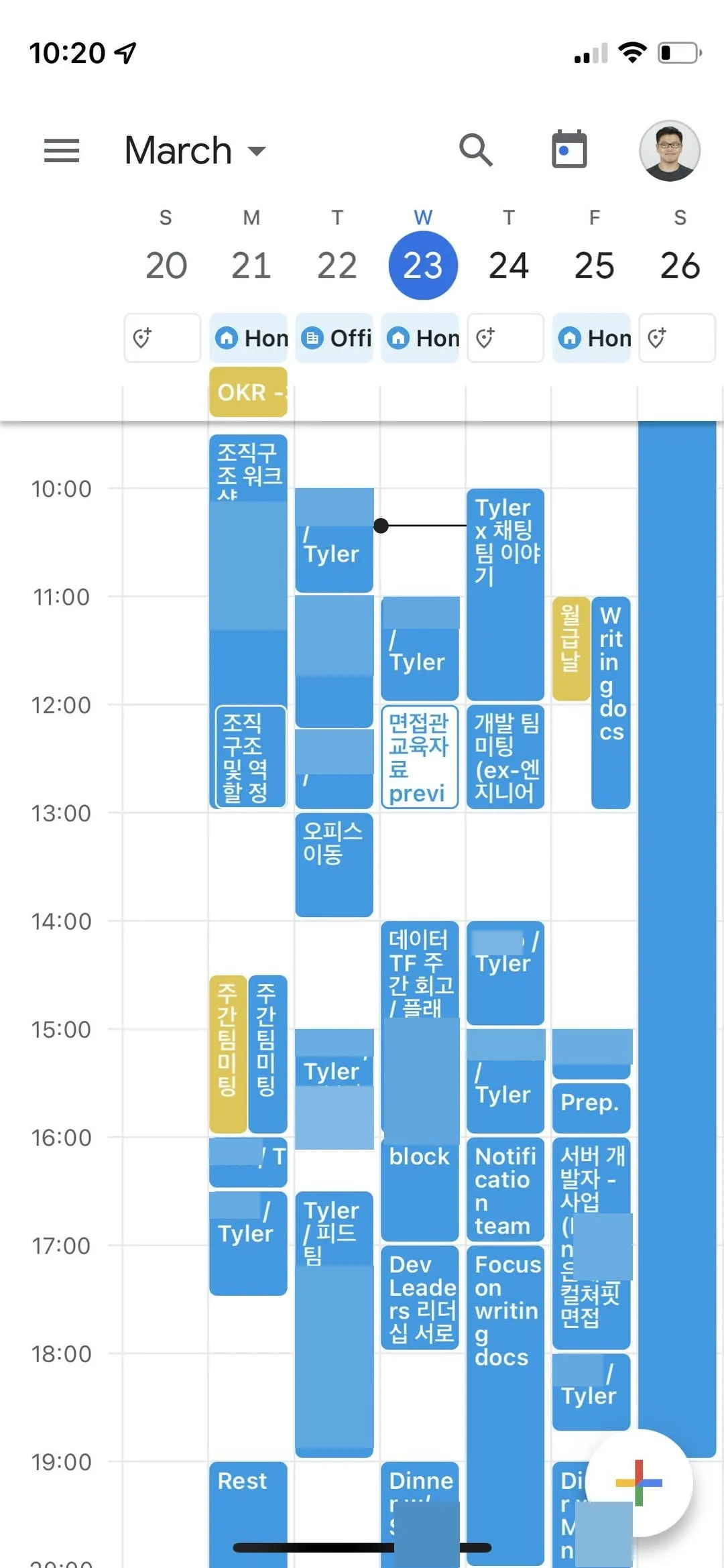
From Monday through Saturday, meetings and tasks fill every gap. It does look like the calendar of someone living hard. I'd been a founder, then an executive and manager at startups, so a brutal schedule like this every week wasn't unusual. There was always something urgent at the company, people were always looking for me, and I tried to live up to those expectations.
What I see only now is that this dense schedule was entirely company work. I have a family — a wife and kids — yet looking at that calendar, I'm doing company work 24/7. My wife handled family events, or I'd squeeze them in by carving out time I didn't have. Meanwhile, the toll on my body and mind was something I treated as something an adult should just endure.
Of course daily life felt grinding. Of course staying sane was barely possible. Forget good decisions — being lucky enough to avoid burnout would have been a win.
When I became a manager of managers, I saw many people voicing similar struggles.
If you're 1) in your mid-to-late 30s or older, 2) at team-lead level or above at the company, and 3) a head-of-household or have kids — odds are high you're exhausted. On the surface everyone acts fine. They run meetings, do reviews, hire, and somehow make it to family events. But dig a little deeper and they all say the same thing: I'm too tired. My head doesn't work. I should be making good decisions but I'm just barely holding on. I was, of course, one of them.
We wanted to do good work. We wanted to fulfill our responsibilities. We wanted the company to thrive, our teammates to grow, and our work to deliver results. The problem was that all of those kept pushing the other important things in our lives aside. Sleep got cut, meals got rushed, exercise got postponed, and time with family was treated as a luxury.
The choices made to do work well were quietly building a body and mind incapable of doing work well over the long run.
Then LLMs and AI agents arrived.
At first, like most people, I saw them as productivity tools. Faster coding, faster research, faster report drafts, fewer repetitive tasks. That alone was already remarkable. But after using them for a while, something more important became clear.
The point is that I no longer have to be sitting at my desk for work to make progress. In the morning I focus for a few hours to set the day's goal and direction, then hand the work off to AI agents. After that I check in periodically and intervene only when needed. Some tasks I leave running overnight and review in the morning. From sheer repetition, I've developed a sense of how long a given task takes and what shape it comes back in.
My calendar now looks like this.
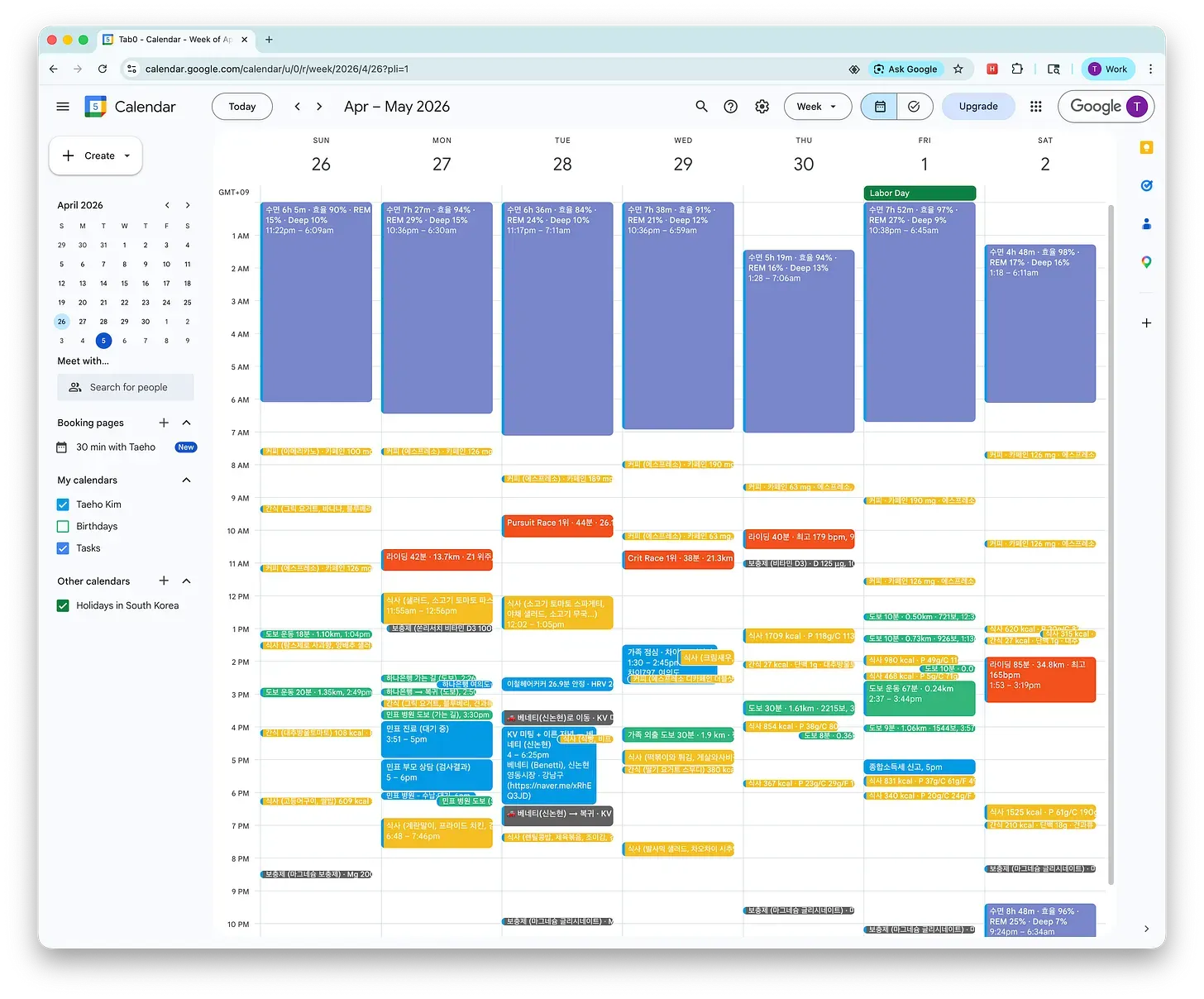
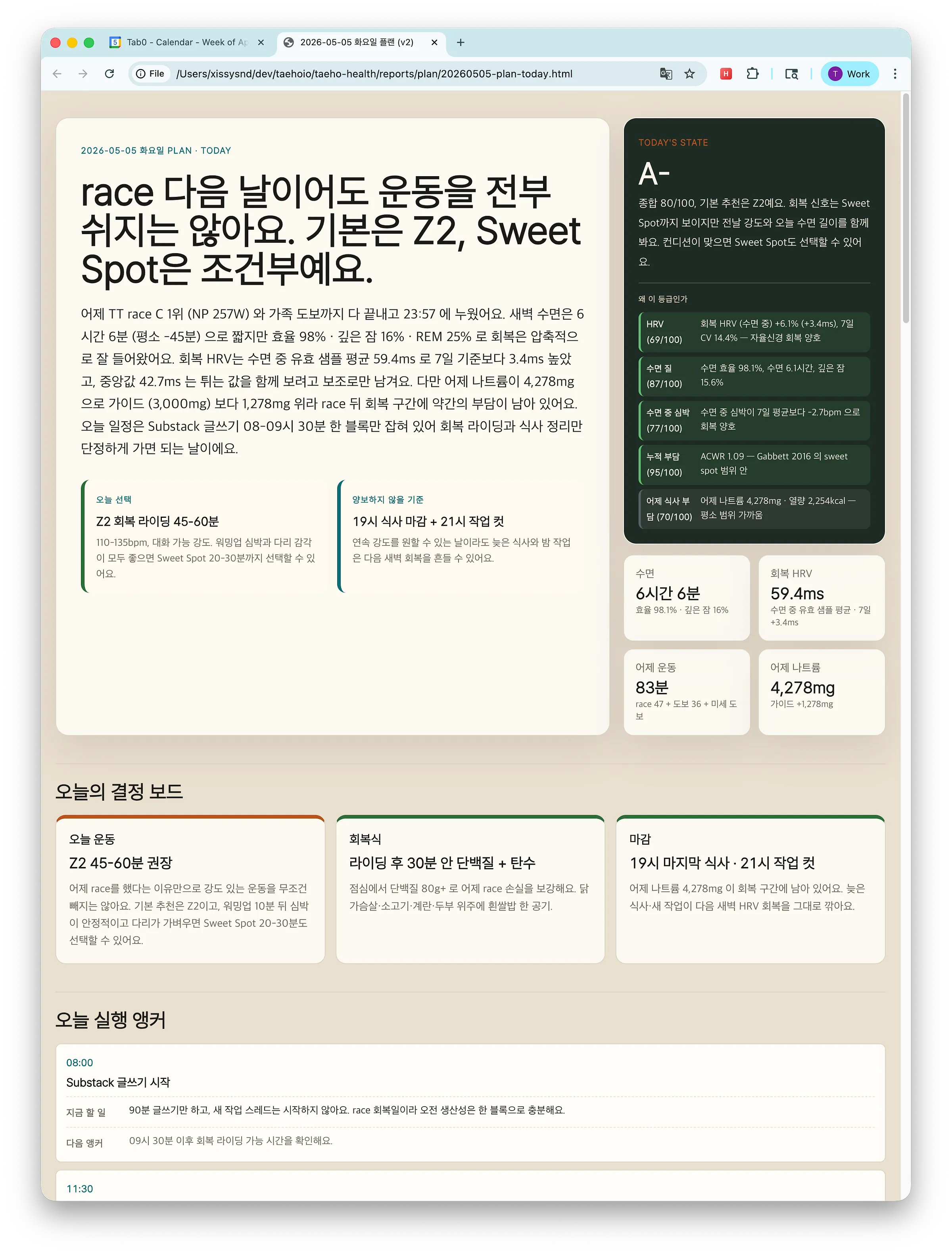
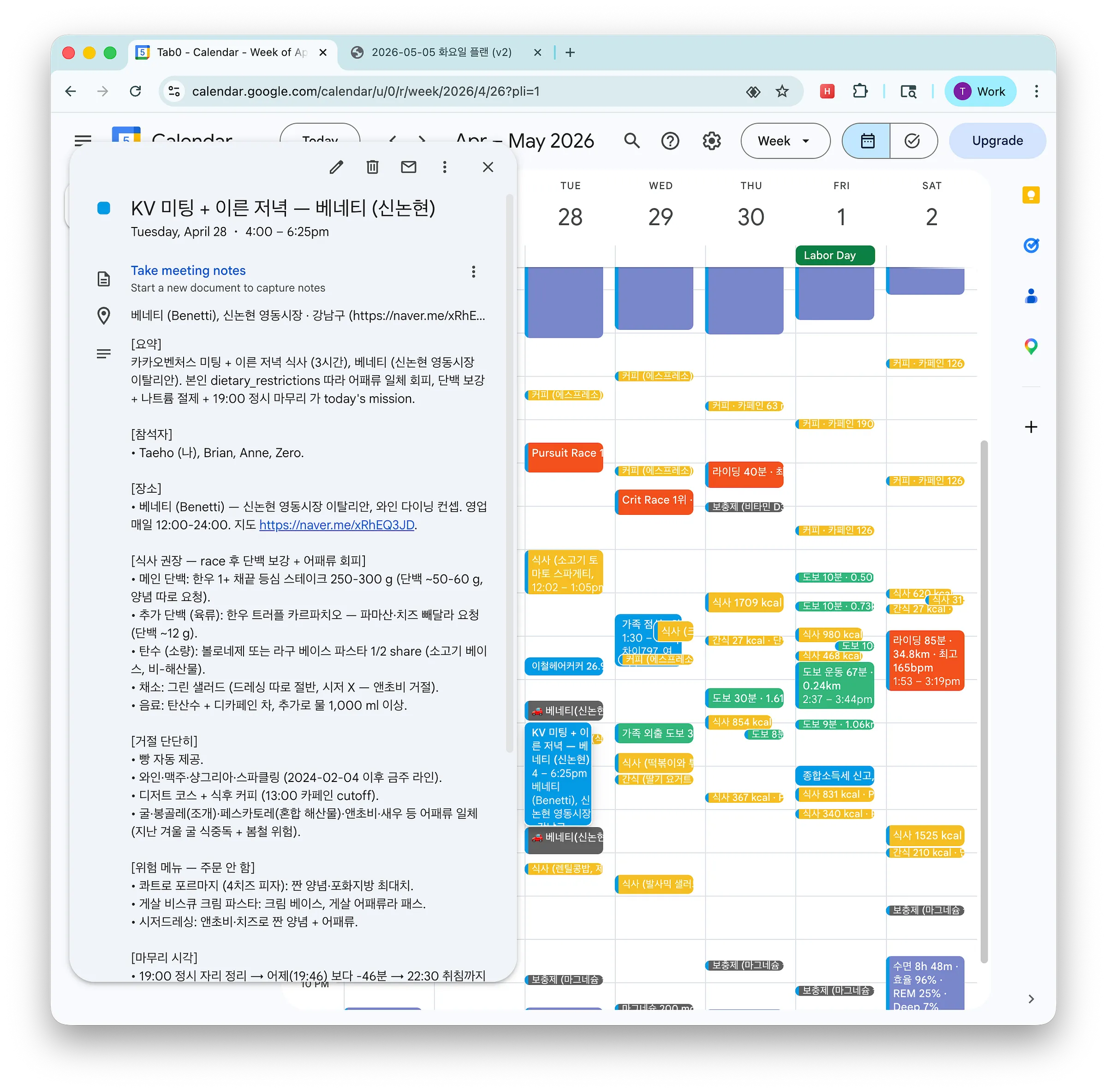
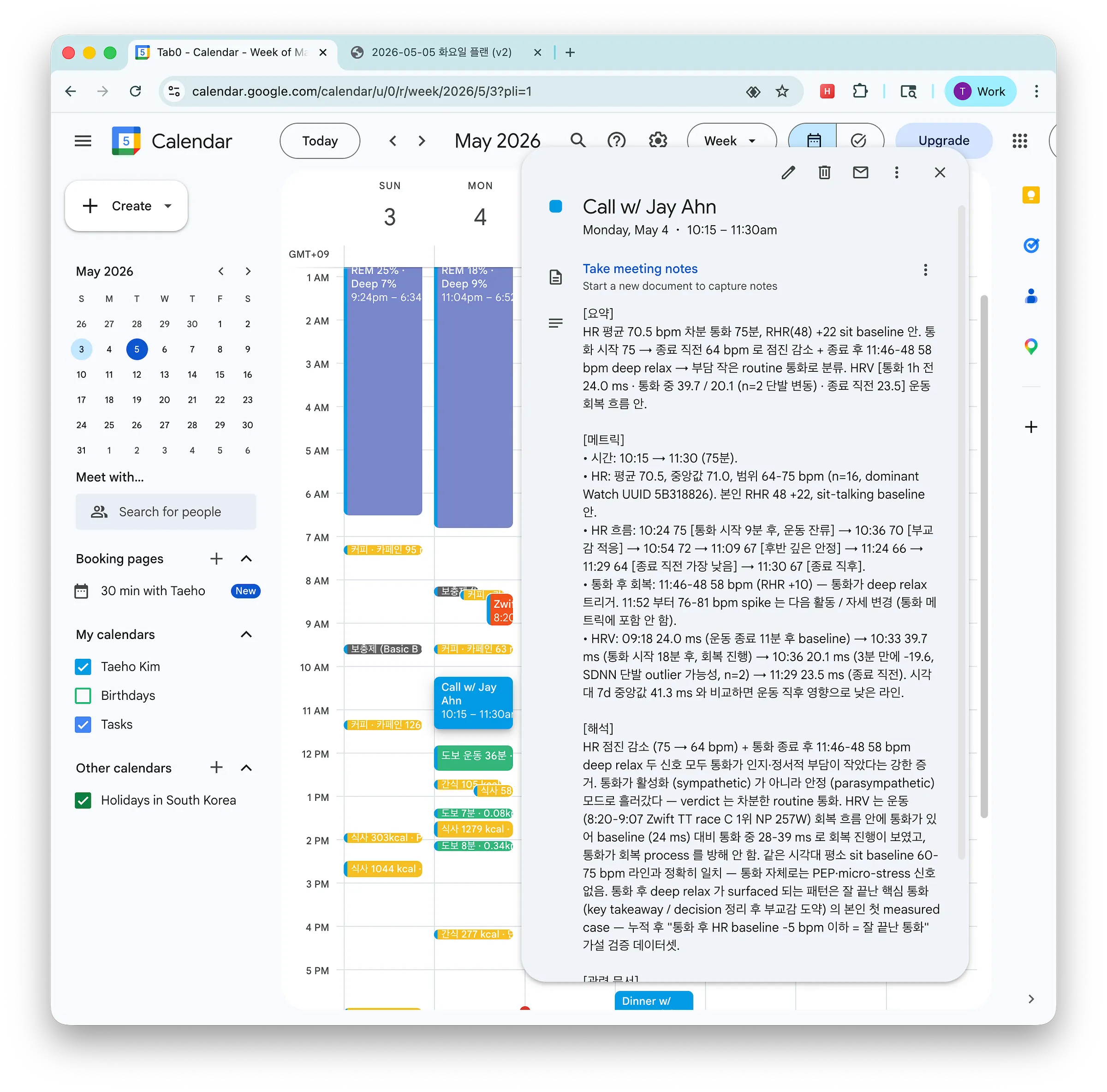
Completely different. Not packed wall-to-wall with work and meetings like before. Sleep, nutrition, and exercise come first, with the larger meetings and appointments fitted around them.
And work keeps running in between. Even without packing my calendar with task blocks, AI agents keep going during the empty hours. They run while I exercise, while I cook, while I'm with my kids, and while I sleep.
Now I get enough sleep without working through the night. I can stick to my meal schedule and even cook for myself. I no longer force exercise into the day — I exercise first, then start work. And there's more. I spend more time with my family, listen to their concerns better, work through them together with AI, and have become a more loved husband, father, and son. I'm becoming a better me.
Recently, several hard things in life all hit at once.
In the past, with already 120% of me going to company work, having tough family things stack on top would have meant a complete meltdown. But this time I handled it smoothly. Even in the crisis, I felt I could give it a real shot. Showing up calm and making good decisions in moments like that — that's exactly why I'd been exercising consistently, sleeping well, and eating right.
Keeping a clear head and aggressively delegating work to AI agents kept me from being cornered into either-or trade-offs. It wasn't easy. Others wouldn't know, and to my family I probably looked like the same dependable head of household I always am — but I know. I know it wasn't easy. And I know it's something to feel proud of.
At this point, I've come to feel deeply grateful to AI. AI agents used to be tools I paid for to boost development and work productivity. But now I realize that through AI, I'm finally living more like the human I always wanted to be.
I used to live as a founder/developer/manager and nothing else. Now, by creating and using these smart extensions of myself called AI agents, I've grown into a more mature human and play my roles better. That, I'm grateful for.
This is where AI's real power lies. Productivity doesn't scale linearly with how many hours I grip work each day. AI lets us live like humans and still raise and sustain productivity. That's what I've been feeling lately. It might not be true for everyone, but I think this direction is more than worth doubling down on.
Thank you.