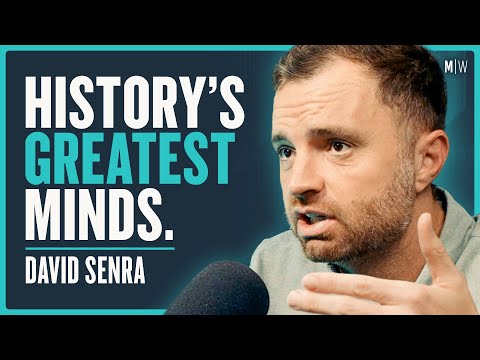
In this video, David Senra shares 15 key lessons from history's greatest entrepreneurs, gleaned from numerous biographies and autobiographies. He emphasizes that success is not simply talent or luck, but a process of enduring pain, constantly learning, and persistently working with a sense of purpose. In particular, it provides practical advice for success, such as turning problems into opportunities, building strong relationships, acting with confidence, and avoiding self-pity.
1. Ability to endure pain 🧘♂️
David says Excellence is the ability to endure pain, and emphasizes that overcoming pain is essential. He cites the story of Izzy Sharp, founder of Four Seasons Hotels, as an example. Despite having no experience in the hotel business, Izzy Sharp set his sights on creating the world's best hotel collection. Although he suffered from numerous problems and lost sleep at night, he did not give up.
"Excellence is the ability to endure pain."
David talks about the struggles that Easy Sharp faced, and tells us that he once said, "Excellence is the ability to endure pain." He adds that what he realized after reading more than 180 biographies is that every successful life story consists of overcoming endless problems, obstacles, and pain. There are no easy goals, and only when you overcome pain can you achieve truly meaningful goals.
Amazon's Jeff Bezos delivers a similar message when he says, "Nothing worth bragging about to your grandchildren comes easy." Apple's Tim Cook says the idea that "if you do what you love, it doesn't feel like you've worked your whole life" is "complete bullshit" and that working at Apple is much harder. But, he added, "the tools will feel light."
On the other hand, Steve Jobs said "You have to do what you love because it's too hard and painful" or you'll give up. He emphasizes that half the difference between successful entrepreneurs and those who are not is pure perseverance. All of these ideas are interconnected: the ability to endure pain is excellence, and doing what you love is what allows you to keep going even through pain.
David considers Phil Knight's autobiography Shoe Dog to be one of the best entrepreneurial autobiographies. This book deals with Nike's struggle until its IPO, and it is said that 90% of the story is about 'struggle' that readers can relate to. Phil Knight says the advice to "never give up" is bullshit. Sometimes, if you're on the wrong path, it's best to give up, but that shouldn't stop you from trying to achieve what you really want.
Elon Musk is also introduced as a person who shows a high ability to tolerate pain. He invested most of the money he earned from PayPal into SpaceX and Tesla, and even suffered the failure of SpaceX's rocket launch while working day and night while suffering from malaria. He showed tremendous willpower by shouting after the third failed rocket launch, "Come hell or come flood, we will make it!"
David emphasizes that what all of history's great entrepreneurs have in common is willpower and the belief that the course of history can be changed through the power of one individual.
2. Problems are just opportunities 💡
David quotes Henry Kaiser as saying, "Problems are just opportunities in everyday clothes," and says business is problem solving. The best companies are effective problem-solving machines.
"Problems are just opportunities dressed in everyday clothes."
Henry Kaiser was as famous as Elon Musk at the time, establishing numerous companies and building the Hoover Dam during World War II. He was an optimistic person by nature and was happy to face problems every morning. People usually complain when faced with problems, but entrepreneurs realize that problems are opportunities. If you can solve other people's problems, it can be a business. We emphasize that a company that effectively solves problems is a sustainable company.
David mentions the protests against Jeff Bezos and points out that while some people think it's unfair that he got rich, they overlook the hard work he did to create the "magic button" that allowed people to get what they wanted in just two days. He criticizes the protesters' actions as simply trying to take his money, ignoring his efforts to build numerous successful businesses, including Amazon Web Services (AWS), Kindle, and advertising businesses, as motivated by jealousy.
"Greed does not run the world, but envy runs the world." (Charlie Munger)
David says that because of this jealousy, many people do not see the hardships and efforts of successful people and mistakenly believe that their success was easily achieved. He adds that we should not forget that even successful people faced many difficulties in the beginning.
3. Great entrepreneurs to learn from history 📚
David says "There are billion-dollar ideas in a $30 history book", emphasizing that all of history's great entrepreneurs learned from their predecessors. He says he admires Charlie Munger and gives an example of how he got to know Henry Singleton by reading the books he recommended. Henry Singleton, highly praised by Charlie Munger and Warren Buffett, was not studied in business schools at the time, but his ideas had a great influence on the success of Buffett and Munger.
Henry Singleton read Alfred Sloan's book and used it to expand his business by acquiring financial institutions. In this way, "book to book", ideas are passed down, showing how the wisdom of seniors contributes to the success of juniors.
David points to the example of Steve Jobs studying how Alexander Graham Bell marketed the telephone during the development of the Macintosh, emphasizing that great entrepreneurs study and learn from their businesses by placing them in historical context. It also introduces an anecdote from the early days of Space Elon Musk also gained knowledge by reading biographies of rocket engineers after a failed rocket launch.
4. Relationships move the world 🤝
David says "Relationships run the world, and a trusted personal network can be the most valuable asset in the world." He is said to have experienced this teaching first-hand through an encounter with Charlie Munger. Charlie Munger, like Benjamin Franklin, emphasized the importance of building relationships with talented people regardless of age. Just as Charlie Munger himself met Warren Buffett when he was 35 and he was 28, creating a "web of trust that will never be broken."
David explains that companies should not be viewed simply as organizations, but rather as relationships with the people within them. Even giant companies like Spotify are ultimately made up of individuals like Daniel Ek, people on the board, and the head of the podcast, and it's through those relationships that things get done.
He brings up the story of another mentor, Sam Zell. Sam Zell heard David's podcast and contacted him to meet him in person, and during a dinner with Zell, David read the autobiography of William Zindorf that he had mentioned. From this book, Zell took the idea of the "Hawaiian Technique" and applied it to real estate and business acquisitions, making billions of dollars. This technique involves separating a building's components and selling each part to the highest bidder, thus increasing the overall value.
In William Zindorf's book, David discovers the analogy, "When you get to the top of a mountain, you see other peaks, and these peaks are connected by small paths, and you can't access these paths unless you climb the mountain." This means that relationships with powerful people pave the way for success.
David offers his own maxim: "Make yourself easy to deal with". He says that he spent 8 years and 2 months reading 400 biographies and investing hundreds of thousands of hours to create the podcast, and that he simply provided content out of service without asking for anything in the process. This becomes his way of relating to other successful people. This allows others to perceive him as a serious person and trust his expertise.
Charlie Munger said "Learning from history is a form of leverage". Billionaire Charlie Munger still reads biographies because he believes it's the most valuable use of his time. David is proud to say that his podcast is rated by successful entrepreneurs as "It's like talking to 50 of the greatest entrepreneurs of all time at the same time". He never asks for anything, he builds relationships solely through his knowledge and effort.
Chris Williamson also emphasizes the importance of "giving and giving", saying that many of his team members started working for free. David and Chris say they felt camaraderie as they discovered "a different version of themselves" in each other.
5. Should we lead our children to success? 👨👩👧👦
David shares a realization inspired by Francis Ford Coppola's biography: "To understand your son, you have to know your father's story." Coppola's father was a failed musician who frustrated his son by saying, "There is only one genius in the family, me." This experience served as a strong motivation for Coppola to succeed as a film director.
But David says he doesn't want to force success on his children. Walmart founder Sam Walton also didn't push his children, saying, "I'm a pretty active person. I don't want my kids to be like me." He says he just wants his children to be happy.
"We can understand our fathers through our children's stories, and our father's stories are inscribed on our sons. The desire to not be like our fathers is a powerful source of extreme motivation."
Chris says that most high performers are motivated by insufficiency. Rather than coming from perfectly balanced needs, success is sought to fill an inner emptiness or feelings of being unloved. He points out that there are many people who try to find happiness through success, and says that it is important to pursue happiness directly rather than success.
David says there are many people like him and Chris who are trying to "break the cycle of generational trauma." He says he wants to bring happiness to his children, but at the same time he confesses an unfulfilled emptiness within himself and a mission to be a "generational inflection point" for his family. He says he doesn't want his children to be "workaholics" like he was, but he hopes they find meaning for themselves by seeing their father work hard to serve the world.
David refers to the adage "Money comes naturally as a result of service", explaining that as you solve problems and serve more people, wealth will naturally follow.
6. Actions reveal priorities 👣
David says "We are what we do, not what we say", emphasizing that people's actions reveal their true priorities. He says Chris's priorities are evident in his health and his passion for his podcast.
"Actions express priorities. We are not what we say, we are what we do."
Great entrepreneurs continue to work well beyond the need to make money. For them, money is just a means to achieve their goals, and time is their most precious resource.
Steve Jobs believed that Apple devices would have a positive impact on the world, so he thought everyone should own an Apple device. To achieve this, he considered marketing important, personally participating in three-hour marketing meetings every Wednesday, and "obsessively obsessed with details." He personally approved even the smallest advertisement, demonstrating his priorities through action.
David says demonstrating these priorities through action is important not only in business but in all areas of life. If you want to be a good father, you have to spend time with your children.
Chris wonders where to draw the line on this obsession. Since we cannot be perfect at everything, we need the wisdom to let go of the unimportant parts through "deliberate deoptimization". Steve Jobs was also obsessed with products, but left supply chain management to experts like Tim Cook. It is important to focus on a few important things and be willing to give up on others.
7. Silent villains 🤫
David introduces the saying "Bad Boys Move in Silence", inspired by hip-hop lyrics. This means "When you see an advantage, keep your mouth shut. Talking invites competition, and competition destroys profits." He explains this principle using the example of John D. Rockefeller.
Rockefeller kept Standard Oil a closely guarded secret while building it. He did not tell his competitors how profitable his business was and even secretly acquired them through secret ownership. As such, he remained silent in order to maximize his profits without provoking competition.
"Silent villains. When you see an advantage, keep your mouth shut. Talking invites competition, and competition destroys profits."
Steve Jobs also ran Pixar and completely hid the profitability of the animation business. The reason there was no book that explained the profit model of the animation market was because Disney kept its profitability a secret. Disney made huge profits by re-releasing old animated films on new technologies (VHS, DVD) and kept this fact hidden to prevent competitors from jumping in.
David gives the example of a friend of his who runs a successful business, and says that an older businessman advised him, "Now that you're doing well, keep your mouth shut. Don't give interviews, don't talk about strategy. I created a lot of competitors because I didn't hide what I was doing successfully." In this way, success can bring greater benefits when it is achieved quietly and without being revealed.
8. Faith comes before ability ✨
David says "Belief comes before ability. The outside world knows this backwards. Believing you can do something is a prerequisite to trying." He brings up the story of Izzy Sharp, the founder of the Four Seasons Hotel, and emphasizes that he was able to succeed despite the doubts of those around him because he had a firm belief that he would create the best hotel in the world.
"Belief comes before ability. The outside world knows this backwards. Believing that you can do something is a prerequisite to trying."
When Elon Musk also started Space Of course, having faith does not mean that you don't have to make any effort. David emphasizes "You have to put in the effort necessary to achieve what you want".
Chris reads an article for people who lack self-confidence and says, "Self-confidence is overrated. Generate evidence." He admits that he once suffered from self-doubt and anxiety, but these feelings disappeared as he continued to work hard and achieve results. As numerous success experiences accumulated, you could no longer doubt your abilities.
David points out that while many people accuse entrepreneurs of being arrogant, we are actually experiencing an "epidemic of people who don't believe in themselves." He explains that people who listen to his podcast "feel at home" because they see themselves in the stories of entrepreneurs working hard. The life stories of great entrepreneurs are not simply their stories, but a process of understanding ourselves within them.
9. Conquer with patience ⛰️
David quotes explorer Ernest Shackleton's family motto, "By Endurance We Conquer," and emphasizes that Consistency is more important than Intensity. While many entrepreneurs try to rush to success, he explains the importance of "going slow and going faster later"**.
"Perseverance conquers. Time carries most of the weight. It's hard to defeat someone who never stops."
He gives the example of a 70-year-old female billionaire entrepreneur. She ran her own company for 40 years, fending off competitors. Instead of spending $200 million to acquire a competitor, she invested that money into improving the customer experience. And after 40 years, most of the competitors have disappeared and only one remains. She said "I didn't take over, I improved my customer experience and slowly ruined them".
Charlie Munger says it's important to master a few key ideas and apply them consistently. From this, David created his own maxim: "Time carries most of the weight". This means that success comes through consistent effort and perseverance rather than genius or luck.
Peter Thiel's book 『Zero to One』 also emphasizes that Durability must be prioritized over growth. Since most profits are made after 10, 15, or 20 years, you need to build your business from a long-term perspective. The fact that most of Warren Buffett's wealth was built after age 60 also demonstrates the magic of compound interest and the importance of taking a long-term view.
David says he wants to podcast until he dies, focusing on sustainability rather than short-term success.
10. Stay in the details of your business 🔍
David says "If you know your business from A to Z, there is no problem you can't solve. The best entrepreneurs dwell on the details of their business." He refers to his friend George Mack's emphasis on 'high agency', and says that all the entrepreneurs he read about had high agency.
"If you know your business from A to Z, there is no problem you can't solve. The best entrepreneurs stay in the details of their business."
Samuel Zemurray was a Russian immigrant who came to the United States and founded a banana empire. He competed with then-giant United Fruit and eventually acquired the company. While competitors' executives operated remotely from Boston, Zemurray personally cleared the jungle with a machete, built railroads, built ships, and checked inventory.
He believed that any problem could be solved by knowing all the details. Others called him a "micromanager", but he understood every aspect of the business perfectly. One time, it was discovered while checking inventory at the port instead of attending an awards ceremony.
David says these great entrepreneurs are deeply involved in every detail of their business, which allows them to find opportunities for innovation and problem-solving. Steve Jobs was obsessed with every detail of his products, but some entrepreneurs, like Larry Ellison, focus on a few important things and leave the rest to the experts. The important thing, he explains, is adjusting the level of detail involvement to suit your situation.
11. Practice times that no one can see 🕰️
David quotes rapper Russ' lyric, "The public praises people for practicing in private," and emphasizes that there is no such thing as "overnight success." All great achievements are built on "years of practice that no one sees"**.
"The public praises people for practicing privately. There is no overnight success. All great deeds are built on years of practice that no one sees."
He goes back to the example of Jeff Bezos and says that people are jealous of his wealth, but they don't see him back in his early days wearing knee pads, packing his own boxes and delivering them to UPS.
Sam Walton of Walmart is a perfect example. He spent his first five years running just one store, learning the ins and outs of retail. When he lost his store due to a mistake in the lease agreement, he was forced to run two stores at the same time. Through this experience, he realized "I can run two stores" and learned how to manage multiple stores efficiently using airplanes. He personally flew a light aircraft to look for new store sites and personally visited hundreds of Wal-Mart stores.
In another story, when hula hoops became so popular, Sam Walton found that his suppliers would not sell them to him, so he sourced the materials himself and made thousands of hula hoops himself. He then loaded the hula hoops on a small boat and delivered them to other stores. These small, basic impromptu attempts piled up to create a huge company.
David explains that this whole process is like "groping to see if you're on the right path." If a small idea succeeds, you try more of it, and if it fails, you avoid it, and this process grows with compound interest over time. In the end, he emphasizes, the public only sees and praises success that comes after years of invisible effort.
12. Self-pity is useless 🗑️
David quotes Charlie Munger's maxim "Self-pity is useless. If you live long enough, bad things will happen to you. Your goal is to use the bad things in life in a constructive way." Charlie Munger divorced at the age of 29 and suffered the tragedy of having to watch his 9-year-old son die from fatal leukemia. Through all this suffering, he did not wallow in self-pity, but instead tried to learn from it and use it in a constructive way.
"Self-pity is useless. As you live longer, bad things will happen to you. Your goal is to use the bad things in life in a constructive way."
David tries to understand Charlie Munger's pain by explaining, in the words of Ryan Reynolds, that love for one's children is incomparable. Charlie Munger said "The response to life's inevitable tragedies and trials is to learn from them and try to use them in a constructive way." It's natural to be sad and mourn, but it's useless to wallow in self-pity and not be able to get out.
13. People who know more do better 🧠
David says "Good people know more. The best people in every industry have gathered so much information that most people would find it irrational." He explains that he lives by this principle and says that while he may never be as smart as Charlie Munger, he believes he can gather more information than anyone else.
"Good people know more. The best people in every industry have gathered so much information that most people would consider it irrational."
Thomas Edison spent several years reading every book in Detroit's libraries while selling newspapers on trains at the age of 12. Edwin Land was the founder of Polaroid, mentored by Steve Jobs. He was fascinated by the science of light and read all the related books in the Harvard Library and even browsed books in the New York Public Library. He even secretly broke into the university to use scientific equipment. These great people acquire unreasonably large amounts of knowledge.
David Ogilvy told young employees at his advertising firm, "Read every document on your Shell Oil customer, read your geology textbook, read your oil exploration textbook, know every Shell executive. On Saturdays, go to the Shell gas station and interview the customers. Within a year you will be ready to take on the boss' job." He believed "He who knows more does better".
David says all of these examples demonstrate the importance of acquiring knowledge "beyond the reasonable." It is said that he reads for hours every day, re-reading important content from the past, and constantly absorbing knowledge. This is likened to "finally achieving 'overnight success' after decades of practice".
14. Money follows naturally as a result of service 🎁
David says "Money comes naturally as a result of service. Business is just an idea to make other people's lives better". He explains that while many people think of business as just a way to make money, true entrepreneurs focus on adding value to the world and solving problems.
"Money comes naturally as a result of service. Business is just an idea to make other people's lives better."
He cites the story of Henry Ford as an example. Henry Ford had one idea: to make automobiles, which at the time only the wealthy could afford, affordable to everyone. After decades of hard work, he created a mass production system to lower the price of cars, eventually becoming one of the wealthiest men in America. His wealth came naturally as a result of "serving people to buy affordable cars."
David criticizes people for saying, "I want to build a $100 billion company," and points out that not even Jeff Bezos or Steve Jobs set such grand goals when starting out. Steve Jobs sold his first Apple product barefoot. His focus was on creating "products that make the world better".
Richard Branson said "Every business is an idea that makes other people's lives better". David emphasizes that as long as human nature remains unchanged, there will always be infinite opportunities to solve problems and make other people's lives better.
15. If you do what you love, death is the only retirement strategy 💀
David says "If you do what you love, death is the only retirement strategy. Retirement can be fatal." He illustrates this concept by comparing the stories of his father and Sam Zell. His father didn't understand, "Why does Sam Zell, who has billions of dollars, still have to work?" But Sam Zell said he still works every day at age 81 and "will trade until he dies." In fact, he worked until his death a few months later.
"If you do what you love, death is the only retirement strategy. Retirement can be fatal."
David says that while many people view work as a painful obligation, he thinks every morning, "I'm glad I can do this." This is because he found his life's work. Many people who reach the highest levels continue to work well beyond the need to make money. For them, work becomes the purpose and meaning of life.
Red Bull founder Dietrich Mateschitz founded Red Bull at age 41 and made billions of dollars, but he turned down multiple offers to sell the company for billions of dollars. He said, "Why should I sell what I love? Then I would have nothing to do."
David says that through his conversations with Sam Zell, he gained a key saying: "Seek freedom".
- If you pursue freedom you can choose what to do.
- You can do what you love if you choose what to do.
- If you do what you love, you can do it for a long time.
- If you do it long enough, you will get very good at it.
- If you do it very well, money will follow.
This is a way of life that pursues freedom and purpose without being tied down by money. Enzo Ferrari, Steve Jobs, Warren Buffett, Charlie Munger, Coco Chanel, Estee Lauder, and many other great people worked until their death to find a purpose in life that went beyond money. For them, work was not just a job, it was the reason for existence.
In conclusion ✨
David Senra and Chris Williamson's conversation provides deep insight into the lives of history's greatest entrepreneurs. They emphasize that success is not just an external achievement, but a process achieved through inner motivation, pain tolerance, continuous learning, and purposeful service. It also shows that true success lies in finding one's calling, loving it, and continuing to do so until death. Their stories remind us of the true meaning of success and give us the courage and inspiration to take charge of our own lives.