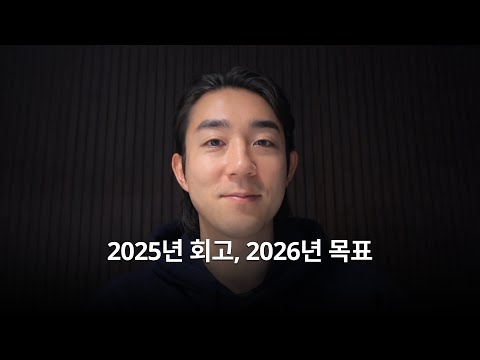
This reflection looks back on a year of intense experimentation with AI and Claude Code. Despite not coming from a traditional engineering background, the author built more than ten products and experienced a dramatic expansion in creative and technical output. But that productivity boom came with side effects: restless multitasking, compulsive context switching, and a kind of dopamine dependence on fast AI-assisted execution. In response, the goal for 2026 is not simply to produce more, but to build better systems, recover deep thinking, and create a way of working that expands the person rather than just the workload.
1. 2025: The Year AI Turned Me into a Builder
The biggest shift of the year was becoming someone who could actually build products directly. With a design background, visual work had always been accessible, but development had long felt like a domain that required other people.
AI changed that. Through what the author calls "vibe coding," code increasingly became something that could be produced, tested, and improved through language. Over six months of using Claude Code, the author built apps, internal tools, and websites with a level of autonomy that previously seemed unreachable.
The important shift was not mastery of every technical detail, but the growing confidence that unfamiliar things could still be figured out. AI made it possible to ask, test, repair, and continue until something worked.
That changed both productivity and mindset. Instead of reacting with "that probably won't work," the new instinct became, "it might take time, but it can probably be done."
2. The Shadow Side: Dopamine and Multitasking
The reflection is honest that this new speed came with serious downsides.
2.1. Rest Started to Feel Wasteful
Because AI could move so quickly, even short breaks began to feel like missed opportunities. When a single extra prompt could generate hundreds of lines of code, resting started to seem inefficient. That created a loop of stimulation, urgency, and quiet anxiety.
2.2. Multitasking Became the Default
Instead of waiting for one AI response and staying with one problem, the author began opening multiple windows and juggling four or five projects at once. The machine was productive, but the mind was getting fragmented.
2.3. Context Switching Became Expensive
The result was a growing sense that quantity was increasing while depth was shrinking. More tasks were getting done, but fewer thoughts were being carried all the way through. The author noticed the habit of pressing Alt+Tab almost automatically, even during moments that required real concentration.
The conclusion is subtle but important: AI can increase output without necessarily strengthening the human capacity for deep thought. If used carelessly, it can turn the person into a manager of endless task execution.
3. 2026: A Return to Systems and Essence
The answer is not to reject AI, but to use it more deliberately.
3.1. Move from 0-to-1 Thinking to 1-to-100 Systems
The author argues that AI is strongest not at creating the very first spark in a completely unfamiliar domain, but at scaling something that already has a clear structure. That means 2026 will focus more on building systems in familiar areas rather than constantly improvising from scratch.
Instead of repeating the same instructions again and again, the goal is to write better guides, define stronger workflows, and make the process itself reproducible.
3.2. Automate One Thing at a Time
Rather than trying to automate everything at once, the plan is to improve one small piece at a time, such as YouTube research or title generation. This is paired with a commitment to single-tasking: finish one meaningful thing with focus instead of scattering attention across too many active threads.
3.3. Grow YouTube and Recover Deep Thinking
A major goal for 2026 is to grow the YouTube channel toward 50,000 subscribers. But beyond platform growth, the deeper ambition is to rebuild the uniquely human habit of thinking slowly and clearly.
To support that, the author wants to lean more on:
- reading,
- writing,
- and a workflow called DER:
- Define
- Execute
- Refine
The point is to avoid becoming someone who only reacts to AI outputs, and instead become someone whose own thinking is sharpened by the tools.
Conclusion
The piece ends with a broader life goal: to make 2026 a year in which the self expands, not just the task list. That means balancing automation with rest, ambition with health, and speed with reflection.
The most meaningful outcome would not simply be making more money or finishing more projects. It would be becoming a person with stronger judgment, more mental depth, and a healthier relationship with work.
Even if the exact answers are still uncertain, the author sees value in continuing to search, build, and refine. The process itself matters. And in that sense, 2026 is framed as a year of systems, focus, and personal growth alongside AI.