This article explains, with diverse examples, how AI's impact on learning, creation, and professional work is concentrated on raising the 'minimum level (floor)' rather than pushing the 'maximum level (ceiling)' higher. AI helps beginners and intermediate users start and grow more easily, but its impact is limited when it comes to achieving true expert-level mastery, creativity, or in areas that are already well-refined. Here is a field-by-field analysis of AI's actual effects, limitations, and insights about what lies ahead.
1. How AI Changed the Learning Curve: The Arrival of Personalized Learning
In the past, learning materials were created with a specific 'target audience' in mind, making it hard for learners to find materials perfectly suited to them. For example, when you wanted to get started on a topic but had relevant background knowledge, it was difficult to find materials that leveraged that background. Additionally, learners often didn't even know they needed prerequisite knowledge for a subject, and finding materials that addressed exactly where they got stuck at the intermediate level was also challenging.
The traditional learning curve looks something like this:
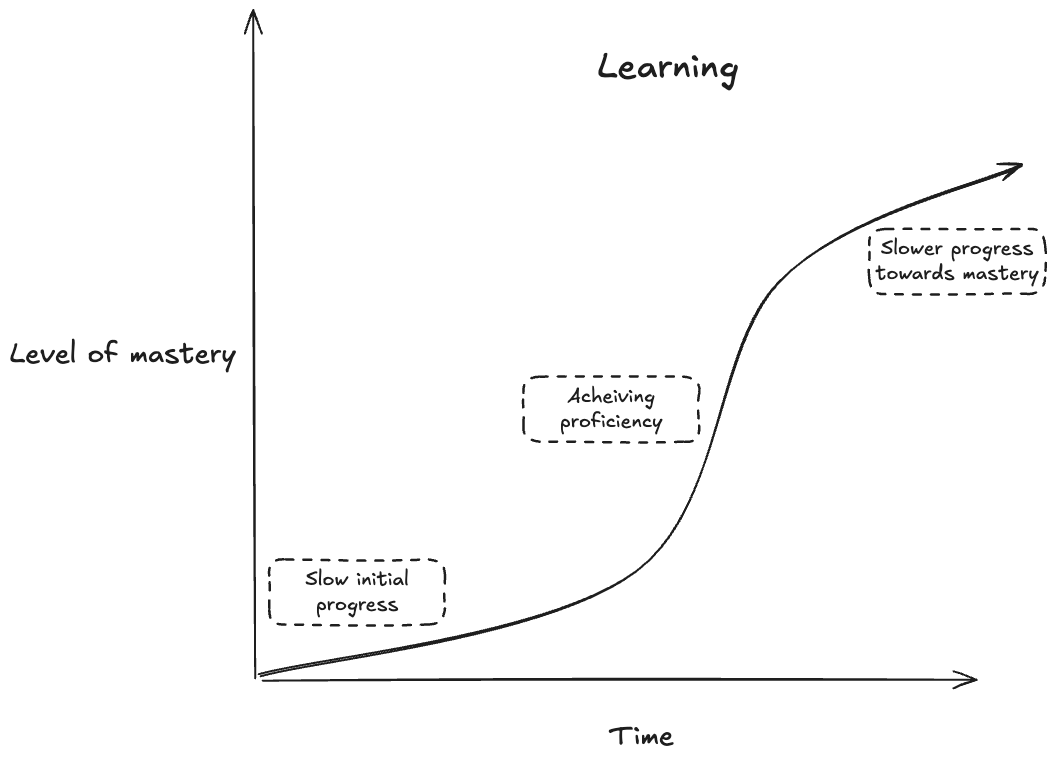
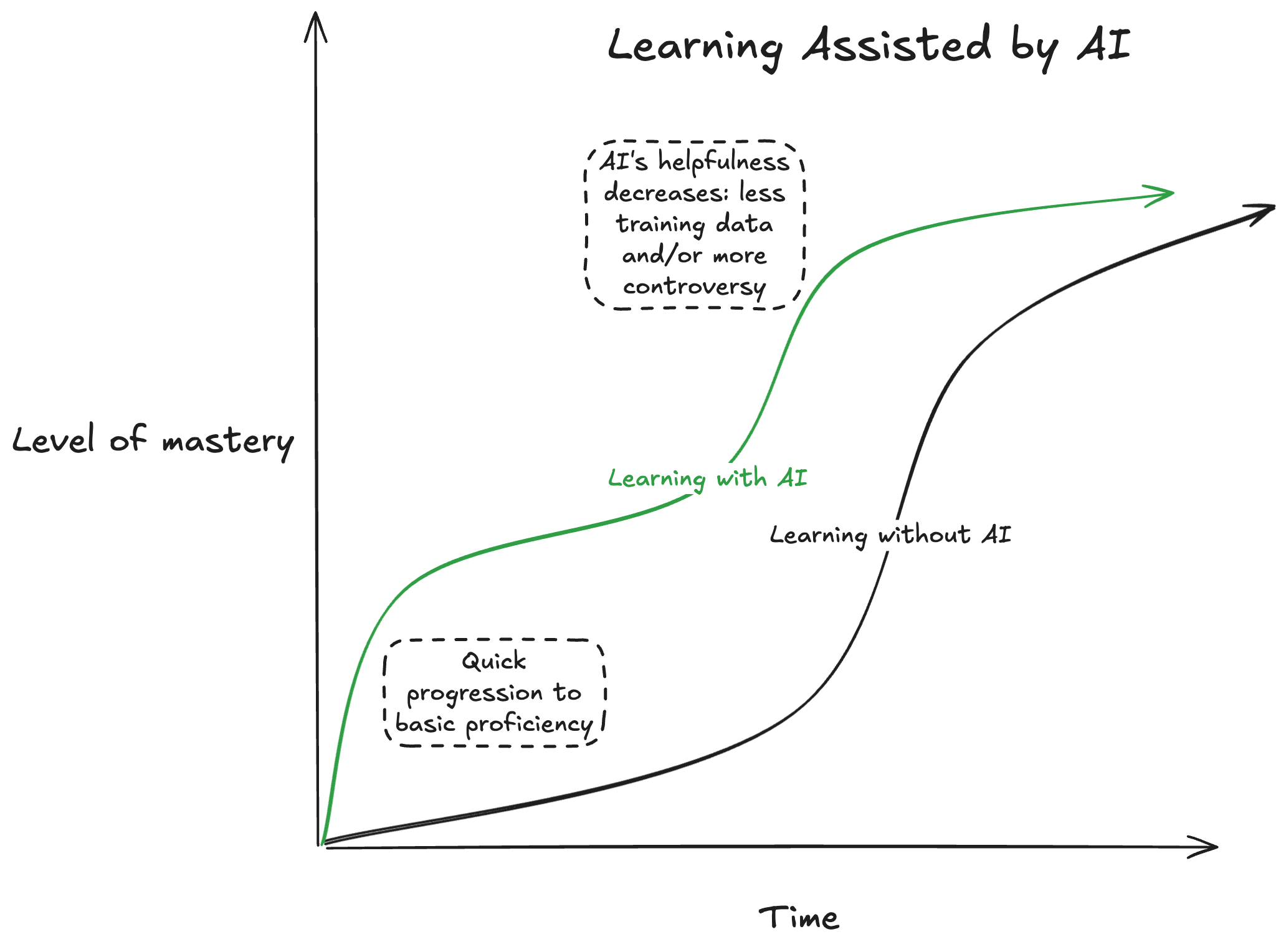
The arrival of AI has significantly changed this. AI can answer questions tailored to the user's current level and handle repetitive tasks on their behalf. In other words, AI can provide help right from the learner's 'current position,' changing the learning curve as follows:
2. The Limits of Mastery: Walls That AI Can't Break Through
While AI is enormously helpful for beginners and intermediate users, reaching true 'expert' level remains difficult. Many experts are skeptical about AI's limitations. As one Hacker News user puts it:
"AI is shallow. The deeper I go, the faster AI becomes useless. Especially when researching complex or contentious topics, AI is almost no help in finding reliable or academic sources."
The reason is simple. AI is strong with popular and consistent data, but in advanced topics or controversial fields, data is scarce or contradictory. That's why true 'mastery' remains elusive.
3. AI and 'Cheating': The Danger of Getting Answers and Stopping
In an era where AI can easily provide answers, the temptation to seek 'answers' instead of 'studying' has grown. For example, asking AI directly for answers--like OpenAI's Study Mode--is a prime example. This approach creates a 'plateau' where users stop growing at the level AI can provide.
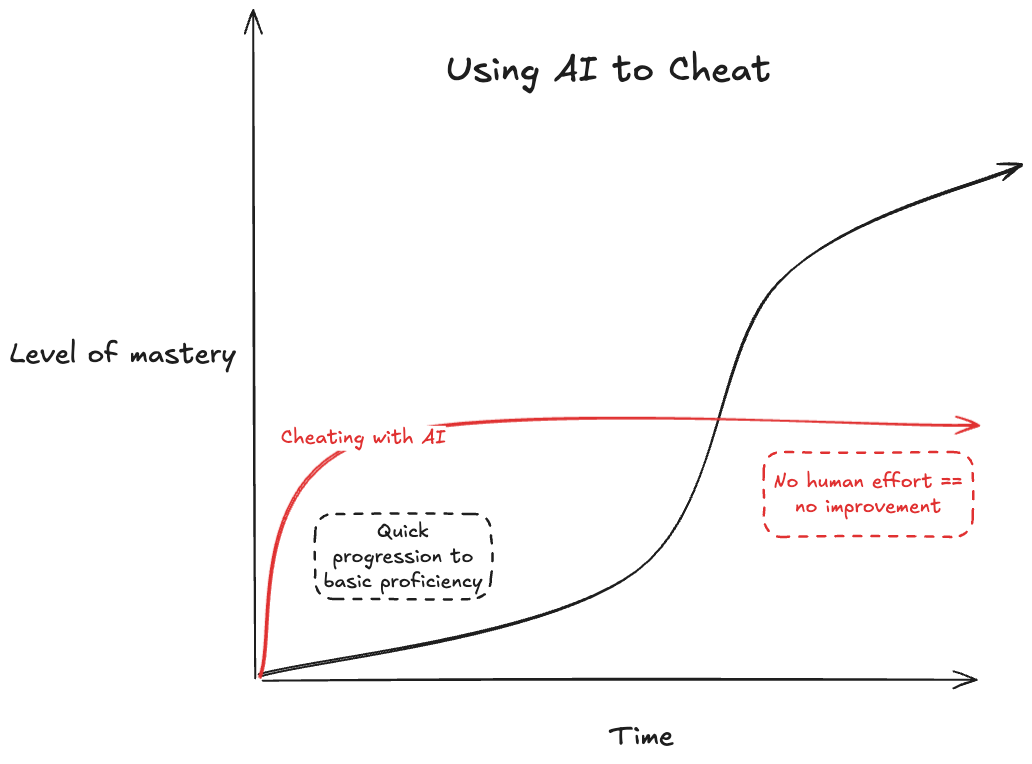
Ultimately, this approach cannot lead to genuine skill improvement or deep understanding. The author emphasizes: "Cheaters never last!"
4. Real Impact of the Changed Learning Curve: A Field-by-Field Look
Technological change always creates 'winners' and 'losers.' AI's impact varies depending on 'the amount of mastery required to produce impactful results.'
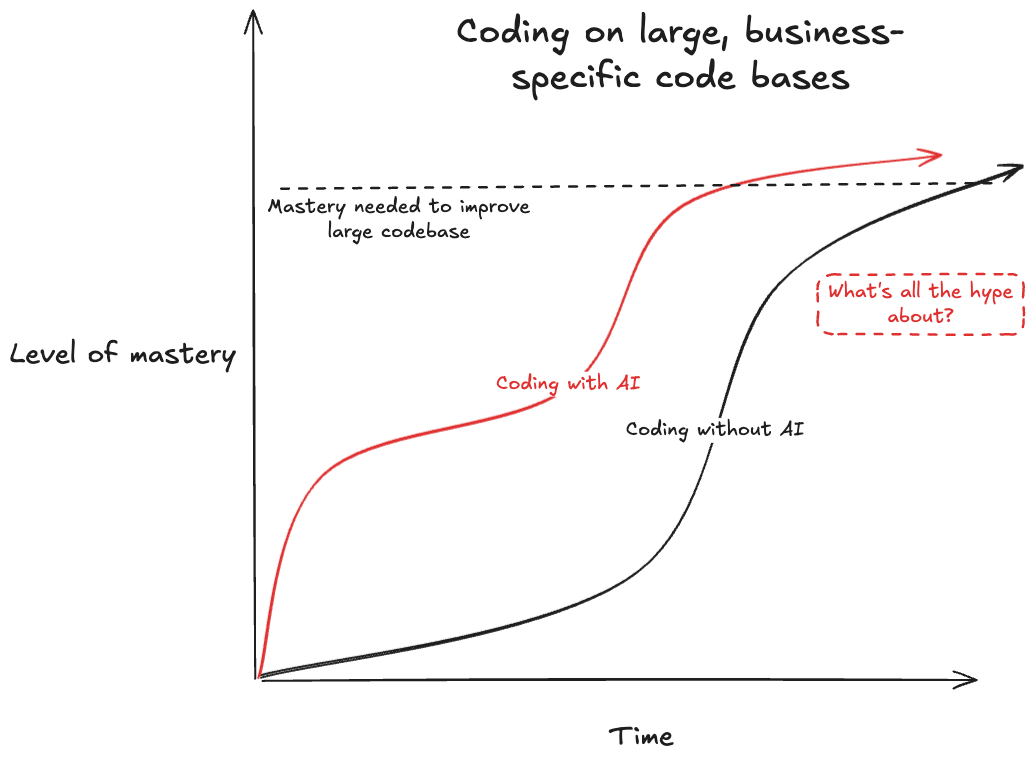
4.1. Coding: A Blessing for Managers, Limited for Large Projects
Engineering managers originally understood the principles of good software but found it difficult to directly work with new frameworks or languages. Thanks to AI, they can now quickly learn the basics and build simple apps. Using their existing knowledge, they can refine AI-generated results into real products.
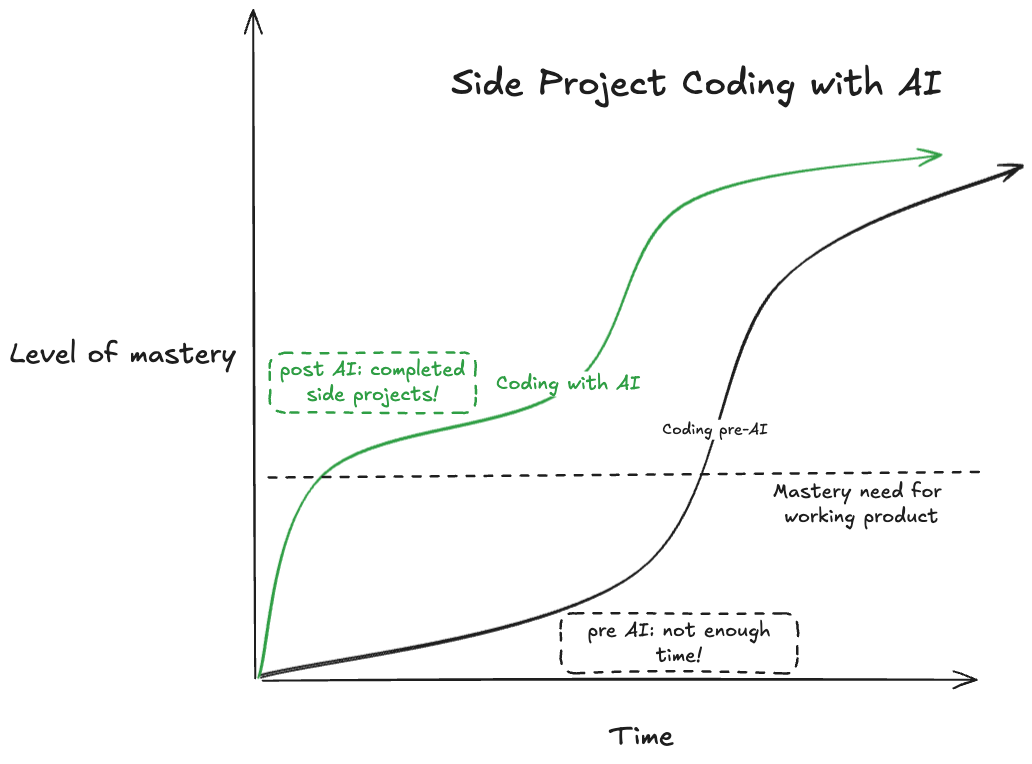
However, for developers already working with complex, large codebases, AI's help is limited. AI struggles to grasp the context and specific implementation details of a particular project.
4.2. Creative Fields: The Competition Barrier and the Importance of 'Novelty'
Many worry that AI will replace creative fields like novels or films, but in practice it's not that simple. Creative fields are fiercely competitive, and 'novelty' is essential. While AI can easily produce images, audio, and text, capturing people's attention requires originality that stands out from the crowd.
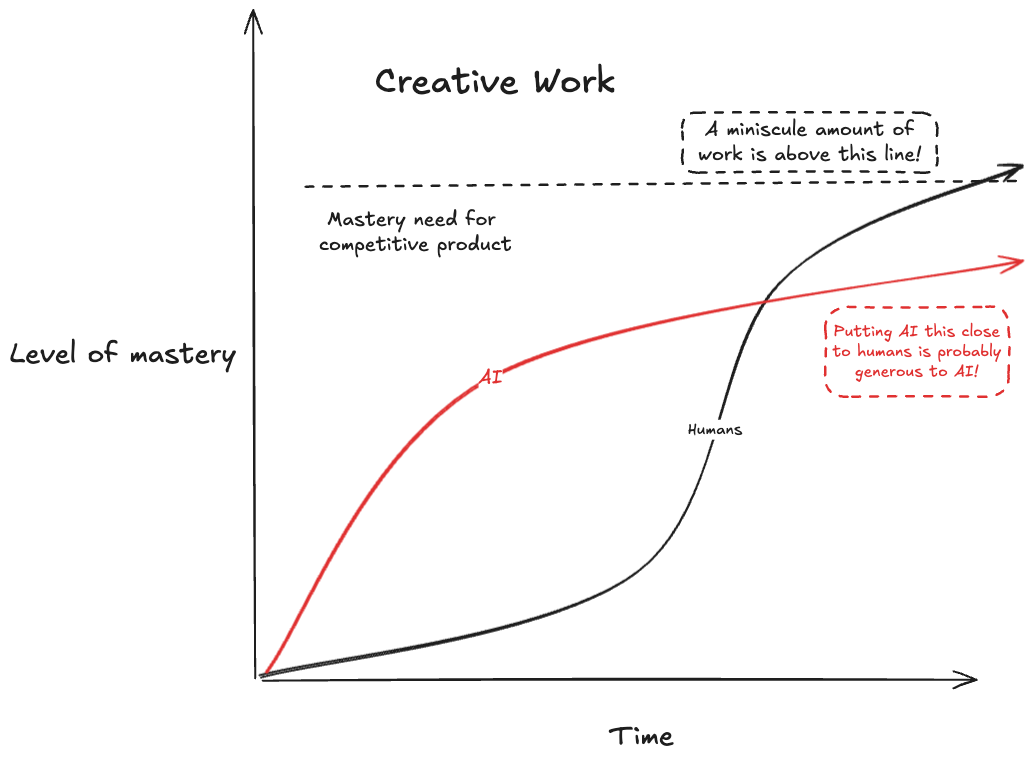
"Novelty is a necessary condition for successful creative work. People quickly notice when something looks similar to what they've already seen."
For example, the 'Ghibli-style' avatar trend was briefly popular, but it never threatened the cultural standing of a work like "Howl's Moving Castle."
4.3. Things Already Done by Apps: Minimal AI Impact
In areas where well-made apps already exist, such as email or food ordering, AI's impact is negligible. For example, email apps already provide various filtering and organizing features, so AI summarization doesn't add much value.
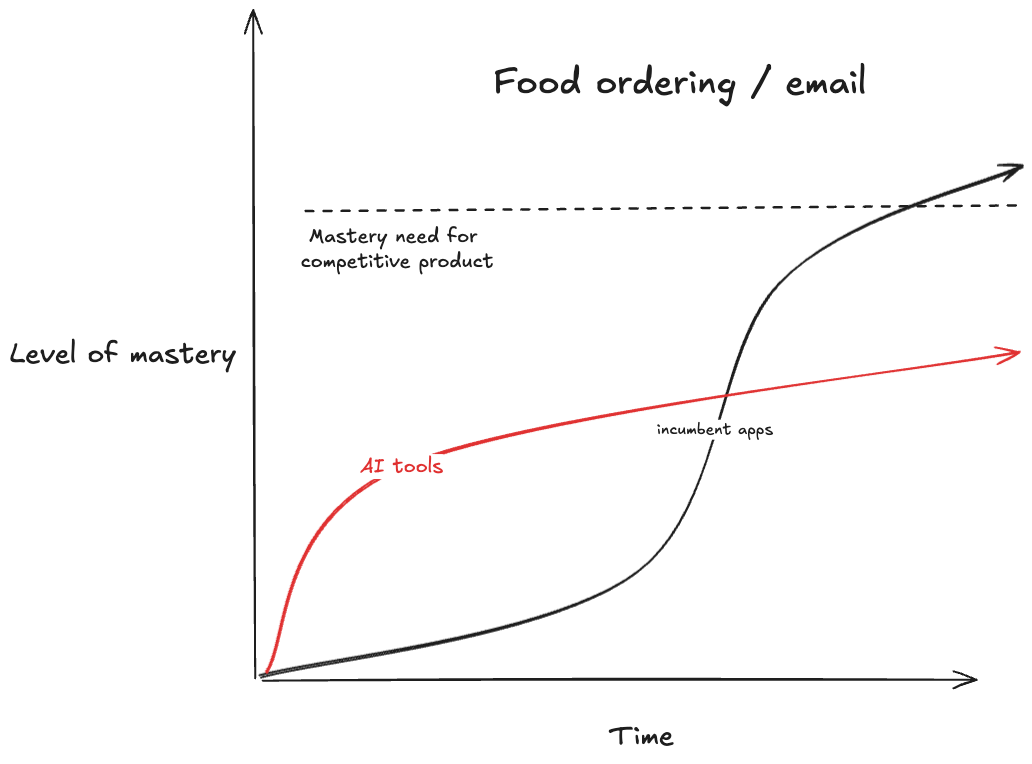
- Spam is already automatically sorted, and summarizing it is pointless.
- For important emails, AI summarization might cause you to miss crucial information, which is undesirable.
- Food ordering apps already balance information, photos, prices, and other factors, making it difficult for AI to create a better interface.
5. AI's Changes Don't Reach Everyone Equally
AI has raised the 'floor' of knowledge work, but this change is not equally significant for everyone. That's why reactions to AI are so varied. Some feel AI has completely transformed their relationship with technology, while others fear being replaced or simply don't find AI particularly useful.
"AI hasn't changed everything, but it's clearly a very powerful technology. Everyone should experiment with it, but if it doesn't seem particularly useful to you, that may genuinely be the case."
Conclusion
AI is serving as a 'floor raiser' that lowers the barrier to entry for learning, professional work, and creation, helping more people get started. However, its impact is limited in areas of true mastery, creativity, and domains that are already well-refined. Since AI's changes don't reach everyone equally, it's important to leverage it according to your own needs and context.