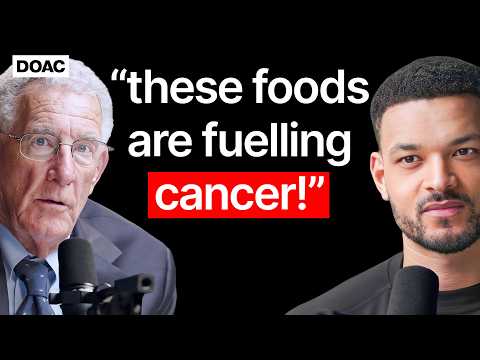
Brief Summary Cancer expert Professor Thomas Seyfried argues that cancer is not simply a genetic disease but a metabolic disease. He traces the primary causes of cancer to our diet and lifestyle -- excessive consumption of modern carbohydrates and processed foods, chronic stress, lack of exercise -- and emphasizes that metabolic therapies such as 'ketogenic diets (low-carb, low-calorie)' that induce ketone body production are important solutions for cancer prevention and management. The video is packed with content that changes the very framework through which we view cancer, including the causes of cancer, the limitations of existing treatments, and practical advice on new approaches.
1. Introduction and a Revolutionary Perspective on Cancer
Although cancer is becoming an increasingly serious problem, Professor Seyfried opens by stating that the medical community still misunderstands the fundamental cause of cancer.
"Cancer is far more preventable than we think. If the medical establishment would acknowledge what I know about the cause and prevention of this disease, cancer would go down as the greatest tragedy in medical history."
About the Professor
Professor Seyfried is a biology, genetics, and biochemistry expert who has spent 30 years scientifically investigating fundamental questions about the origin, prevention, and management of cancer. He has worked to convey new scientific insights beyond conventional cancer theory to both patients and students.
2. The Global Status of Cancer and Major Causes of Death
Today cancer is a global health crisis that continues to worsen worldwide.
"In the United States, nearly 2 million new cancer cases are diagnosed annually, and 1,700 people die from cancer every day. China's situation is even worse, with about 8,000 per day. By 2050, it's expected to be far more severe than today."
Cancer incidence and mortality continue to rise, showing a serious upward trend globally as of 2025. In the United States, heart disease is the leading cause of death, with cancer second.
"Anti-smoking campaigns caused a temporary decrease, but long-term cancer mortality continues to climb. A strategic shift is needed."
Major Cancer Types
Lung cancer ranks first regardless of gender, and pancreatic, breast, and colorectal cancers are also rapidly increasing.
3. The Cause of Cancer: Genetics or Metabolic Dysfunction?
All previous cancer research assumed cancer was caused by genetic mutations, but Professor Seyfried presents an entirely different perspective.
"Cancer is not a genetic disease but a metabolic disease -- a disorder of energy metabolism. Although all cancers have tissue-specific characteristics, they share common metabolic patterns."
Specifically, all cancer cells rely on an ancient fermentation pathway that generates energy even without oxygen.
"Even in the presence of abundant oxygen, cancer cells use the 'ancient fermentation' pathway to break down glucose and glutamine for energy. This is fundamentally caused by mitochondrial inefficiency."
4. Mitochondria, Energy, and the Essence of Cancer
Mitochondria are the energy factories within cells.
"When mitochondria are damaged, cells gradually shift from 'high-efficiency metabolism using oxygen' to 'low-efficiency fermentation,' and this is the essential change underlying cancer."
A scientist named Otto Warburg first discovered in the 1920s that cancer cells rely on fermentation metabolism, and modern research continues to confirm this.
Unlike normal cells, cancer cells:
- Cannot efficiently use oxygen
- Break down large amounts of sugar but cannot fully convert it to energy (hence lactate accumulation)
- Also utilize glutamine
Because of this, cancer cells continue to grow and are difficult to kill.
5. Why Do Cancer Cells Grow Rapidly and Resist Death?
The rapid growth and treatment resistance of cancer cells fundamentally depend on two 'fermentation fuels': glucose and glutamine.
"The solution to managing cancer without toxicity is to simultaneously cut off the supply of these two fuels (glucose and glutamine) while switching the body's entire energy source to fuels that cancer cannot use (fatty acids and ketone bodies)."
What Are Ketone Bodies?
"Ketone bodies are water-soluble small molecule fuels produced from the breakdown of fatty acids. All normal cells in our body (especially brain and heart) can burn them efficiently for energy, but cancer cells cannot."
Ketone metabolism is also highly fuel-efficient and requires less oxygen, which is why it's sometimes called a 'super fuel.'
6. Our Ancestors, Cancer, and Changes in Diet
Interestingly, pre-modern humans and certain traditional societies had extremely rare occurrences of cancer.
"In traditional African tribes, Arctic indigenous peoples, and zoo primates that maintain traditional diets and lifestyles, cancer barely occurs. But as modern food -- especially processed foods -- was introduced, cancer rates exploded."
In other words, modern human diets and environmental changes are the main culprits behind cancer.
7. Exercise and Other Preventive Factors
"Exercise burns glucose and glutamine, reducing cancer's 'fuel,' while maximizing mitochondrial health and energy efficiency."
Additionally, sleep deprivation, chronic stress, processed carbohydrate-heavy diets, and social isolation are pointed out as factors that exacerbate mitochondrial damage and cancer risk.
8. Lifestyle and Environmental Factors That Cause Cancer
The 'metabolic transition' to cancer cells occurs very gradually, promoted by long-term lifestyle habits and repeated exposure.
"Not only carcinogens (asbestos, heavy metals, etc.), but microplastics, talc, processed foods, chronic stress, and various other environmental and lifestyle factors continuously stress individual cells/tissues until the mitochondria eventually break down."
Key Terms
- Carcinogens
- Processed foods and high carbohydrates
- Lack of exercise
- Chronic stress, sleep deprivation
- Microplastics and other environmental pollutants
9. Limitations of the Cancer Gene Theory and a New Paradigm
In an in-depth discussion, Professor Seyfried cites multiple experimental findings to argue that genetic mutations (so-called 'driver mutations') are not the 'cause' of cancer.
"Genetic mutations in cancer cells are merely the 'result' of damaged mitochondrial metabolism, not the cause. If you put a cancer cell nucleus into a normal cell, it returns to normal, but if you put a normal cell nucleus into a cancer cell, cancer continues."
This finding means that the core of cancer lies not in the 'nucleus' but in the 'mitochondria.'
When such 'paradigm shifts' occur, they are met with strong resistance from the existing academic establishment, and enormous industrial interests also work to prevent change.
10. Limitations and Side Effects of Conventional Treatments (Chemotherapy, Radiation, Surgery)
A critical perspective on the actual effectiveness of modern standard cancer treatments (surgery, radiation, chemotherapy) is presented.
"Many new drugs are approved simply for 'slowing disease progression.' The actual difference in overall survival is only a few months."
"Chemotherapy and radiation are extremely toxic, and many survivors suffer lifelong complications or cancer recurrence. In contrast, metabolic therapy has virtually no toxicity."
11. Metabolic Therapy -- The Key to Cancer Prevention and Non-Toxic Management
Metabolic therapy (calorie/carbohydrate restriction, ketogenic diet, exercise, etc.) is central to both cancer treatment and prevention, presented alongside numerous real examples.
"Decades of money poured into genomic research, yet cancer mortality rates remain unchanged. Now, mitochondrial and metabolic management is essential."
"Caloric restriction, intermittent fasting, exercise, low-carb diets, entering ketosis -- all of these benefit mitochondrial health."
Specific Practical Advice
- Periodic fasting or caloric restriction
- Making exercise a habit
- A diet centered on low-carbohydrate, minimally processed foods
- Monitoring the Glucose-Ketone Index (GKI):
"Maintaining a 'GKI' (blood glucose divided by ketone level) below 2.0 slows cancer cell growth."
12. Real Cases: Results Observed in Humans and Animals
The professor shares actual cases he personally observed:
- Natural cancer treatment in a pet dog:
"Through dietary modification alone (caloric restriction, raw chicken), the tumor disappeared. The dog eventually died of old age."
- British man Pablo Kelly:
"A patient with the most deadly brain tumor (glioblastoma) survived for 10 years through metabolic therapy and dietary management without radiation/chemotherapy. He ultimately died not from cancer but from a brain hemorrhage during surgery."
- Multiple remission/long-term survival cases:
"After an 18-day water fast, the cancer disappeared, and chronic conditions like diabetes and hypertension also improved -- multiple such cases have been reported."
13. Genetic Predisposition and Environmental Interaction
While genetics can play a role in cancer, environment and lifestyle habits have a far greater effect.
"It's not determined by family history alone. Similar environments and dietary habits within the same family are often the more critical factors."
14. Fasting and Ketosis: How to Enter and Its Effects
Concrete, relatable advice on fasting is also provided:
"When you enter a fast, your brain becomes sharper and energy efficiency is maximized. This is why our ancestors experienced heightened focus before hunting."
"If a complete fast is too difficult, you can enter ketosis with a zero-carb diet (meat, fish, eggs) for 10-14 days. Using a blood glucose-ketone monitor is recommended."
Practical Tips:
- "With devices like Keto Mojo, you can check your GKI right at home!"
- "In today's world of overwhelming temptation, consistent self-discipline (exercise, quasi-fasting, modest eating, intermittent enjoyment) is key."
15. Real-World Advice: Social Environment and Human Attitude
Honest, realistic perspectives are also shared:
"I don't live a perfectly metabolically ideal life either. I occasionally enjoy donuts, beer, and wine. But frequency and habits are what matter."
Rather than government-level food regulation, the emphasis is on the importance of individual awareness and efforts to protect one's own health.
"Real meaningful change comes from each individual recognizing responsibility for their own health and life, and practicing accordingly."
16. Hope and Future Outlook
Professor Seyfried sees hope in the growing number of people gradually adopting his approach.
"If this metabolic paradigm is accepted, cancer mortality rates will definitely decrease dramatically. I see hope in the many survivors I'm directly helping and in the gradual changes in academia."
"I don't seek personal wealth or fame. Seeing scientific principles create positive change in patients' lives is the real reward."
Closing
Cancer can no longer be viewed solely as an incomprehensible, fateful 'unknown terror' inscribed in our genes. Metabolic therapy for cancer prevention and management -- reforming lifestyle habits to manage our body's energy system -- is the most powerful weapon available to everyone, and this video clearly conveys that message.
Key Terms
- Cancer is a metabolic disease
- Changed diets accelerate cancer's birth
- Exercise, fasting, and low-carb diets are key preventive measures
- Limitations of conventional cancer treatment and a new paradigm
- Practice is difficult, but the expected effects are clear
- Anyone can start by measuring their GKI right now!
One-Line Summary Starting today, eat a little less, move a little more, and pay attention to your body's real energy sources -- that's the first step to beating cancer.