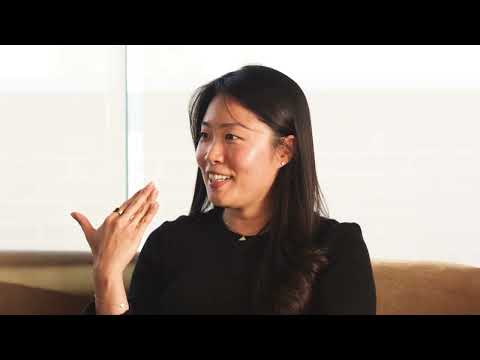
This conversation explores the characteristics of "hedgehog founders" in Altos Ventures' philosophy and how to recognize them. Such founders stay immersed in one important problem for a long time while continually learning and changing their products and business models to solve it better. The investors say founders' true nature emerges over time and through adversity, and emphasize being partners for the long journey.
1. Where the Hedgehog Idea Began
Host Brittany Hargest, who works in investor relations at Altos Ventures, begins the discussion with investment-team members Ho Nam, Dillon Krasnigor, and Cathy Anderson. Ho explains what led him to write a blog post about hedgehogs 20 years earlier.
It began with a trip to Omaha for Berkshire Hathaway's shareholder meeting in 1999, at the height of the dot-com bubble. He met longtime attendees and closely observed Warren Buffett and Charlie Munger, trying to understand what kind of people they were. He was particularly struck that Buffett, successful enough never to need to work for money, still delighted in going to work every day at nearly 70.
"Buffett hasn't needed to work for money since he was 25, but at almost 70 he still says he tap-dances to work every day. What gives him that much joy?"
That question led him to Walmart founder Sam Walton. Ho wondered what gave Walton joy as he built the company over decades. He began calling people like them hedgehog founders and discussing Silicon Valley's foxes and hedgehogs. When he says he eventually wrote a blog post because he was tired of repeating himself, his colleagues laugh at the explanation that writing saved him from saying the same thing again.
2. The Core Characteristics of Hedgehog Founders
Dillon explains that hedgehog founders do not all look alike, but share recognizable traits. First is a deep motivation to make a problem their life's work and stay with it for a long time. Purpose, obsession, and passion are needed to withstand decades of obstacles.
"You need to understand the deep motivation behind wanting to build something for decades and make it your life's work. Getting through the obstacles over that time requires that sense of purpose, obsession, and passion."
Second is the capacity to learn and adapt, continually growing as a founder. Markets, technology, and business conditions change, so sustaining a business requires the founder to change too. But adaptation does not mean wandering without direction. Cathy adds that even if the product, revenue model, or entire company changes, what matters is whether the founder is solving the problem they care about more deeply.
"The product can change, the revenue model can change, even the whole company can change. What matters is whether the insights accumulated over time deepen the product and the problem you wanted to solve."
An essential trait is therefore maintaining commitment to the core problem while continually evolving the solution.
3. Distinguishing Foxes from Hedgehogs
The contrasting type is the fox. Cathy says fox founders may tailor themselves to what investors or markets want to hear, making their true nature difficult to discern initially. She therefore looks at past actions and choices, not only current words. Did they try to leave the company in difficult times? Did they repeatedly shift attention to fashionable new opportunities? These are important clues.
Dillon identifies a distracting fixation on short-term growth as another risk. A founder might become absorbed in the idea that one new feature will dramatically increase revenue, drifting from the long-term problem. Hedgehog founders consider how they are solving the problem in stages rather than chasing each immediate growth opportunity.
"We look at what distracts a founder. Are they fixated on one feature that could double revenue and chasing short-term growth, or thinking about how to solve the problem over the long term?"
Ho says he does not try to force this philosophy on founders. By honestly explaining what kind of investor Altos is, founders who connect with its perspective and those who do not naturally separate. Dillon adds that some founders do not relate to it at all, while others read the blog and respond, "It feels like meeting someone who speaks my language."
4. Why Time Reveals the Real Person
Invoking Lincoln, Ho says you can fool some people for a while, but not everyone forever. True character and standards eventually become visible. Pursuing what a founder sees as their life's work is not only a business journey but also a spiritual journey of discovering who they are.
"It is a journey of finding a solution to a big problem while also discovering who you are. You are tested along the way and eventually find out what you truly care about."
Founders now start younger, and companies grow and raise funding faster. Dillon believes that despite this acceleration, the essence remains unchanged. An investor must decide whether they want to join a journey that could last more than ten years. With enough potential and conviction, they should begin the relationship and observe over time whether the potential becomes reality.
It is especially hard to assume that a young founder already knows their life's work. The team looks for past experiences of sustained immersion, evidence of sticking with something, or distinctive accomplishments. Even then, they do not declare someone a fully formed hedgehog after a third meeting; they discuss hedgehog potential that may emerge over time.
"It is very hard to know from the beginning whether someone really is that person. Rather than declaring, 'This person is a hedgehog,' we look for reasons to believe they can realize that potential over the next ten years."
5. Signals in Early Meetings and Choices in Hard Times
Cathy describes three signals she watches for in an initial meeting.
First is how deeply the founder can explore details that appear trivial or tedious. A deep understanding of customer workflows may reveal needs customers have not explicitly expressed. A fox may be good at attracting attention, but a hedgehog can talk for an hour about one problem everyone else considers too small.
"What matters is what they notice that everyone else overlooks. A hedgehog founder can talk at length about something everyone thinks is trivial."
Second is genuine interest and care. Borrowing language from Ho's old blog, it is learning to genuinely care about a problem. That attitude can spread through customer support, sales, operations, finance, and the rest of the organization. Cathy sees it as particularly important because genuine care is difficult to preserve as an organization grows.
Third is where founders direct their attention when things go differently than expected. Do they only blame factors outside their control, such as markets or timing, or first examine what they can learn and change? This connects to another Altos essay's principle of focusing on what you can control.
The team does not automatically see difficult periods as negative signals. Without adversity, it is hard to know how someone will respond. Even if a company struggled, a founder who endured that period gives investors a clearer view of their behavior in a crisis.
Past decisions are also important evidence. Investors examine why a decision was made, how hiring choices were evaluated, and whether choices served short-term gains or long-term growth. Since a founder-CEO's accumulated decisions determine the company's direction, they listen closely even to the language and thinking used to explain those choices.
6. The Value Investors Offer and Long-Term Partnership
Ho candidly says hedgehog founders do not necessarily need Altos, and some would succeed without investor help. What they value in Altos, however, is consistency. It stubbornly and persistently emphasizes a long-term perspective and staying with the mission. Sometimes it repeats advice different from other investors', hoping to help founders trust their own judgment.
Dillon does not see Altos's "deal champion" role as taking credit for a company's success. Standing by a founder when the company struggles matters more than boasting about contributions when things go well.
"Rather than emphasizing how much we helped when the company succeeds, we want to be beside the founder when things aren't going well. That is what being a champion means to us."
Because adversity is inevitable, investors aim to provide not only business advice but also a partnership founders can lean on when they want support.
7. Long-Lasting Founders and Examples of Hedgehogs
Asked what has changed in the philosophy over 20 years, Ho says hedgehog founders have become even more important. He cites Nvidia founder Jensen Huang, who has led the company for 33 years and was a hedgehog then as he is now. Long-serving Nvidia board members Tench Coxe and Mark Stevens are also cited as hedgehog investors participating in the same long journey.
Ho's favorite example is Sam Walton. He sees Walton not only as a great entrepreneur, but as someone who lived authentically, rather than performing for others. Walton did what made him happy, to the point that his family had to accept him as he was.
Within Altos's portfolio, he highlights Roblox founder David Baszucki. Altos has worked with him for 18 years. Ho published his hedgehog essay in 2006 and did not invest in Baszucki until 2008, but recalls that meeting him felt like meeting the person he had already described.
Dillon introduces Steve Seibel, cofounder of used-car company Clutch—Canada's equivalent of Carvana—as someone becoming a hedgehog. Seibel started the company at 25, personally visiting customers' homes to sell used cars. The company experienced repeated ups and downs, but nine years after founding it, he still says it is early and there is much left to build. Dillon learned from him that success requires staying in the game long enough to seize opportunities when they arrive.
Cathy discusses Lee Seung-gun, founder and CEO of Korea's leading fintech super app Toss. She learned from him that hedgehog persistence is not mere stubbornness. It means distinguishing what to preserve from what to change, and changing continuously when necessary. Toss has expanded and altered its products and business models, but even after ten years, Lee has not let go of the question, "Why should something as basic as managing money be so difficult?"
"What matters is not being stubborn, but knowing what to hold onto, what to change, and what to keep changing."
8. A Message to Hedgehog Founders
Ho's final message to hedgehog founders is "You are not alone." Founders can feel crazy or fear they alone are missing opportunities while everyone else moves differently. Others may urge them to raise large sums and behave like their peers, while their instincts say that path is wrong.
He encourages them to trust their judgment and keep doing what they believe is right.
"You are not alone. Follow your instincts and keep doing what you believe is right."
The conversation ends with a wish to spend another 20 years finding hedgehog founders. Its central message is to find a problem worth staying with, keep changing how you solve it, and recognize that true character emerges through time and adversity.