I put the Fitbit Air—the screenless smart band launched at the disruptive price of $99—through a thorough two-week test. I directly compared it against a range of devices, evaluating heart rate, sleep, and GPS performance, as well as its AI coaching feature powered by Google Gemini. Here's the bottom line on whether this product is worth opening your wallet for over its pricier competitors.
1. The $99 Fitbit Air's Challenge
A lot of people are really into health and fitness these days, right? For about two weeks, I wore this small, lightweight Fitbit Air as I went about my daily life. To properly verify its accuracy, I ran tests while simultaneously wearing the Apple Watch Ultra 3, the WHOOP 5.0 MG, the Oura Ring, the Eight Sleep, and even a sleep-specialized EEG headband that measures brainwaves (the Somnee). For outdoor running and cycling, I also wore a Garmin HRM-Pro chest strap heart rate monitor as a reference baseline. 🏃♂️
"This product launched at the ridiculous price of $99. It's especially astonishing when you compare it to the WHOOP 5.0 MG."
2. Heart Rate Accuracy: Comparing Against the Chest Strap and Apple Watch
The fundamental, foundational data point for any health tracker is heart rate. Heart rate has to be accurate, because all the analytical data built on top of it—calorie burn, physical recovery, AI coaching—only earns trust if that base is reliable. To get straight to the point: the Fitbit Air's heart rate sensor was better than expected. ❤️
Analyzing the outdoor running data plots, when the Garmin chest strap showed an average heart rate of 158 BPM, the Fitbit Air and Apple Watch both recorded 156 BPM. The flow of the graph also nearly matched the chest strap. There were occasional moments early in a run where the band was loosely fastened and the reading temporarily spiked, but as long as it was secured well, it was very accurate.
The real plot twist came during the swimming test in the water.
"While swimming, the Apple Watch struggled the most, whereas the Fitbit Air and the Form goggles showed nearly identical results. The smaller a device is, the less it gets pushed around by the water, allowing it to capture more accurate data."
A bulky smartwatch like the Apple Watch easily lifts off the skin from the resistance of the water while swimming, and water getting in between the sensors destabilizes heart rate detection. The Fitbit Air, on the other hand, is small and stays snug against the skin, so it produced a very stable heart rate graph even while swimming. During rowing exercises, the vigorous arm movement did introduce an error of about 2–3 BPM, but for overall fitness monitoring it was reliable enough to trust.
3. The Limits of GPS Performance and Practical Usage Tips
To cut weight and lower the price, the Fitbit Air does not include built-in GPS. Instead, it uses a Connected GPS approach that borrows the smartphone's GPS. 📱
So when you run with your phone in a pocket or bag, distance errors can occur depending on the state of the phone's sensors. In a dense urban jungle of skyscrapers like New York, it can be somewhat inaccurate. If you're a serious runner preparing for a marathon or triathlon, you're better off using a dedicated sports watch that can lock onto GPS signals on its own. But if you're an everyday user who enjoys light neighborhood walks or bike rides, the phone-linked distance measurement is more than satisfactory.
4. The Reliability of Sleep Stage and HRV Measurement
This is the sleep tracking feature many people are curious about. Using a medical-grade sleep EEG headband (the Somnee) that measures brainwaves accurately as the reference, I compared the sleep stage measurements (deep sleep, light sleep, etc.) of various wearables. 💤
Surprisingly, the results varied wildly from device to device. When measuring deep sleep time, one device said 28 minutes while another recorded over 3 hours—and this was the same body on the same night. WHOOP tended to mistake time spent watching a movie in bed as sleep, overestimating sleep duration well beyond reality. The Fitbit Air, by contrast, generally showed a stable sleep cycle graph that was quite close to the actual brainwave measurements.
"I only treat sleep stage data as a reference and don't make any big decisions based on it. But considering the $99 price, the Fitbit Air's sleep tracking performance is truly astonishing."
Heart rate variability (HRV) is the same story. Because each device uses a different measurement method and algorithm, there are differences in the absolute numbers, but for grasping the overall long-term trend (whether it's rising or falling), the Fitbit Air did an excellent job too.
5. Daily Step Count and the 'Today's Readiness' Score That Tells You How Your Body Is Doing
For step count—which intuitively shows your daily activity level—the Apple Watch and Fitbit Air recorded nearly identical numbers, demonstrating excellent accuracy. A $99 device serves as just as good a pedometer as an Apple Watch costing over $800. 🚶♀️
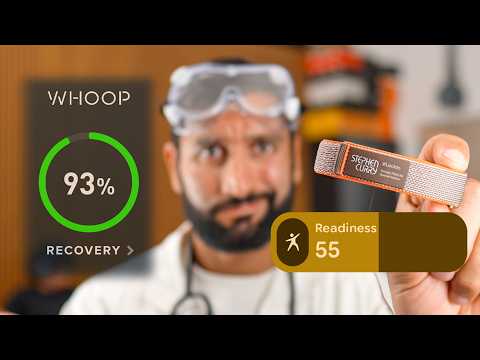
However, the Readiness Score, which converts your physical recovery state into a number, needs to be taken with more flexibility. Even on a morning after the exact same sleep, the Oura Ring gave a readiness score of 48 (low) while the Fitbit Air gave 90 (high) and WHOOP gave 90 (high)—showing stark differences between devices.
"Don't ruin your day just because your recovery score or readiness score is low. It's far better to simply think every morning, 'Today is going to be a great day!' and enjoy the positive placebo effect."
Rather than blindly believing that any one device's recovery score is absolutely correct, treating it as a light reference is healthier for your mental well-being.
6. The Astonishing Capabilities of Gemini AI Coaching
The Fitbit Air's real weapon lies in its software. With the $9.99/month Google Health Premium plan, you gain access to an AI coach powered by Gemini, Google's powerful generative artificial intelligence. 🤖
"The AI coaching backed by Gemini is truly incredible. It doesn't just chat with you—it understands the user's long-term goals and offers customized workout plans and even diet suggestions."
For example, if you say, "I want to finish a full marathon in under 3 hours," the AI analyzes your current fitness level, sleep data, and cardiorespiratory endurance to build you a week's worth of running schedule and an appropriate pace. Diet management is easy too. Snap a photo of the food you ate and upload it, and the AI automatically logs the calories and nutritional content.
What's more, when you finish a run on a scorching day, it intelligently recognizes the situation and advises, "Today's temperature was over 30°C—you really pushed yourself. The reason your fatigue is elevated could be the heat." If you tell it you're coming down with a cold or got injured, it immediately recommends lowering your workout intensity, showing a flexibility on par with a human coach.
There are still minor bugs—it sometimes mistakes walking for running, or misidentifies a light warm-up as dancing—but as you train it through conversation, it gradually comes to understand you better.
7. Fitbit Air vs. WHOOP 5.0 MG
Many people compare this product to WHOOP, the original screenless health tracker. I calculated the cost assuming you use each device for 3 years. 💰
- Fitbit Air: $99 device + premium subscription ($99/year) x 3 years = $396 total
- WHOOP 5.0 MG: subscription ($239/year) x 3 years = $717 total
The Fitbit Air is almost half as cheap over the long term. WHOOP's battery life is longer at 14 days (the Fitbit Air's is 7 days), but the Fitbit Air is about half the size and lighter, with less surface area touching the skin. Even when you sweat it dries much faster, and the Fitbit Air was far more comfortable for 24-hour wear.
8. Who to Recommend It To, and Who Not To
👍 You should definitely buy this if:
- You want to track your health lightly all day with a device you barely notice you're wearing, instead of a heavy, flashy smartwatch
- You want to experience world-class sleep analysis at an approachable price ($99)
- You want to receive customized workout and diet feedback using Google Gemini AI
- You normally wear an analog wristwatch and want to discreetly collect health data on your other wrist
👎 Look at other products if:
- You need to instantly check the real-time clock, notification messages, or precise workout pace on a watch screen
- You're a professional athlete or runner who needs to record high-precision outdoor GPS routes standalone, without a smartphone
- You're not tech-savvy and find it hard to tolerate Bluetooth connection issues or early software update processes
Conclusion: The Best Value Health Tracker for the Masses
"Among the $99 fitness and sleep trackers money can buy, it's far and away the best. It's not perfect, but it will play a big role in changing the public's health habits."
The Fitbit Air has no screen and does have some technical limitations, but it's an excellent tool that knocks down the $99 price barrier so anyone can easily monitor their own body's data. Through this device, more people will be able to drink less, improve their sleep environment, build healthy habits, and change their lives.
If a future update adds integration with Apple Health, it could create the ultimate 'sleep-tracking combo'—wearing the Apple Watch by day and the comfortable Fitbit Air to sleep at night. As a first step toward your healthy lifestyle, the Fitbit Air will make an excellent companion! 😊