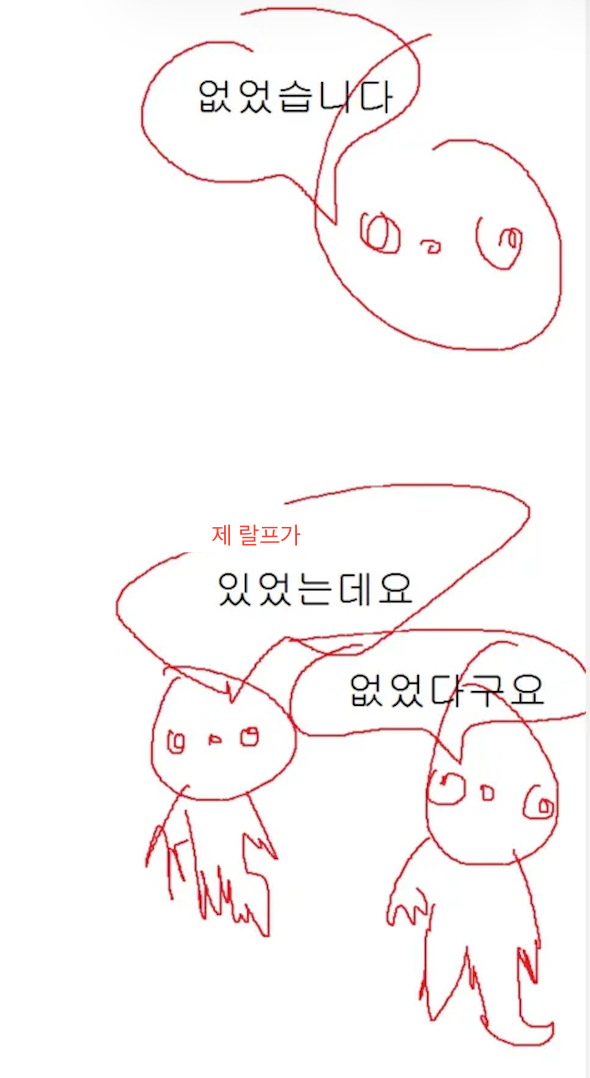
The author, then an investor at Kakao Ventures, enters Ralphathon as a participant under a sponsorship condition—but as a non-developer starts without real command of the tools or concepts and hits repeated failures. With mentors' help they realize the heart of a ralph (repeat execution loop) is "concrete requirements + concrete exit conditions (verification)," form a team, and finish the project with a cop-and-robber-style verification loop. The upshot after much thrashing: even in the AI-coding era, perfection, depth, and stamina remain expensive and scarce, and developer tooling and investment criteria are shifting together.
1. Prologue: "What if you go out as a competitor this time?" 😅
As of 2026, Kakao Ventures was paying attention to hacker communities that use AI well. Even as "vibe coding" spreads, the gap between non-developers and developers stays large—non-developers often get stuck before they ever reach a CLI.
The author decides to meet the community in person, meets Gubong, who plans a concept-heavy hackathon called Ralphathon and proposes sponsorship and participation. They missed the first Ralphathon for personal reasons, but colleagues judged and sponsorship continued; as Ralphathon took off, they committed to sponsor again—this time with a condition.
"What if Anne goes out as a participant this time?"
So the author shifts from someone who only judged to someone who suddenly had to be a "builder." They had three weeks to prepare but it felt like the hackathon was tomorrow; all they could do was "tell OMC in natural language only," they admit (OMC is framed as a tool that gives non-developers a fast "wow moment").
2. Ralphathon rules: "Two hours on the spec, five hours hands off" 🧤
Ralphathon, as the author understood it, differed from a normal hackathon. You write the spec (requirements) for two hours; the remaining five hours are for the ralph to run—you must take your hands off the keyboard. If the ralph stops midway, the spec was wrong; touch the computer and you face lobster-suit penalties.
So the author's goal drifts: more important than winning was this—
Keep the ralph running without stopping. At least three or four hours.
The means (keep the ralph running) jumped ahead of the end (a good result)—and the real digging began.
3. "I had a ralph—I didn't" — failures from install onward 💥
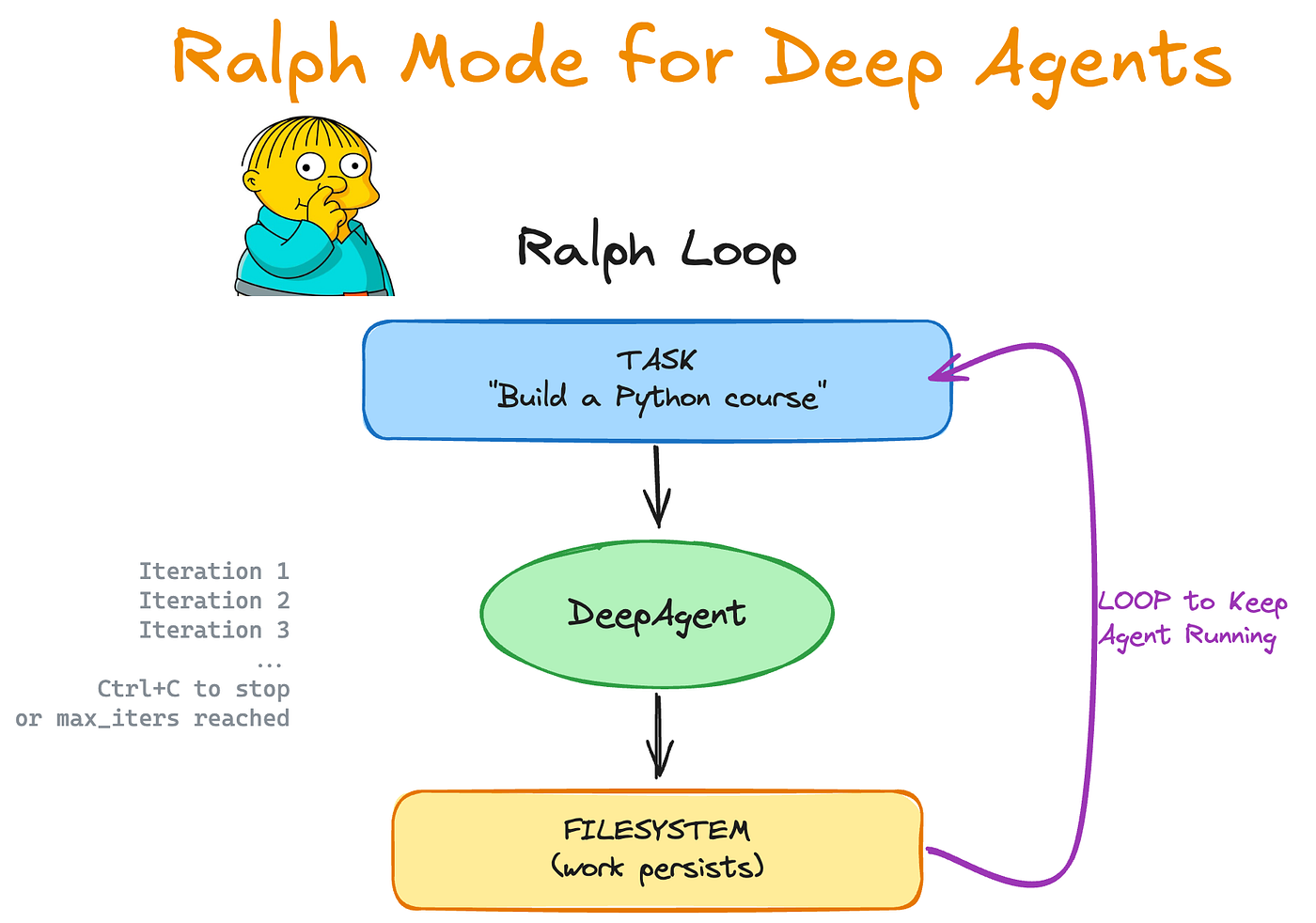
The problem: the author didn't even know how to run a ralph. Their chat with Brian (Dongwook Jang) filled up with GitHub links they didn't understand; told "just install and try," they installed the next plugins:
- Ouroboros: a ralph toolkit based on a first Ralphathon winning project
- Oh-my-claudecode (OMC): a Claude Code plugin pack for non-developers
A warm-up attempt with OMC—automating shareholder-meeting work—crashed for two straight days. From email triage to agenda judgment, it kept failing; the author feared they'd only embarrass themselves at Ralphathon.
The "XX" Brian went to for help turned out to be Dan Ishida (Namho Hong, CEO)—also a former Kakao Ventures investor. Dan cut straight to why shareholder automation is hard.
"Shareholder-meeting automation has so many edge cases—it's bound to be difficult."
The author's first takeaway from that conversation was simple:
"I should have asked while doing it from the start."
4. D−2, 10 p.m.: the ralph tutoring "bloodletting" moment ⚡
Two nights before the hackathon, on a Friday, the author asks Dan for an emergency Zoom lesson—and airs "non-developer mistakes" that are quite serious:
- They set a hidden
.claudedirectory as the working directory and saved there - They loosely pointed the directory at
/user/, gave imprecise filenames, and waited blankly while the AI searched the whole tree
Dan explains that without understanding how the tool works (directory-based behavior), it's like asking AI to "search the whole country and fix the front door"—and nails it with an analogy:
"Anne should tell the AI: 'Fix the broken front door at Apt 302, Building 101, @@ Apartment, XX-dong, Seoul.'
Instead you're saying: 'We're in Korea—go fix that door.'"
The author had no grasp of how Claude Code works or what ralph assumes, so they were stuck in a failure loop and almost soured on AI dev altogether.
Then comes the key correction: ralph is not a universal fixer—it's basically this:
- Ralph is not a brilliant solver—it's a very simple loop: "repeat until it works"
- So two conditions are mandatory:
- Define the "given work" very concretely
- Define "until it works" (the exit condition) very concretely
The author admits they had asked for a five-story villa on a shoestring "minus option" and blamed the ralph when it brought back a throwaway result in fifteen minutes.
5. "If I go alone, I'm in trouble" — Jaiden joins 🤝
Half understanding ralph, another reality appears: going solo feels dangerous.
"If I go out alone, I'm in big trouble."
They find Jaiden (Myungjun Kim, deeptech intern) in the office and on D−3 ask him to join. Jaiden agrees—"Sunday I'm free"—and from the start bumps the Claude Code plan so the team gets a four-hour ralph run. The author frames that join as a survival turning point.
6. What to build: horoscope bot vs second brain—and "rejected" 🧠
The crux: what to build. On D−1, with Youngtaek's help, they brainstorm one last time—but opinions split:
- Author: a real-estate horoscope app (feng shui / saju / zi wei / cross-check with astrology, etc.)
- Jaiden: a second brain (work assistant—integrate, organize, alert data)
The author has API-automation PTSD ("we'll die on edge cases"), but around midnight asks Dan again:
"Should we build the horoscope bot? Or the second brain?"
Dan is blunt:
"Reject the horoscope bot… it won't run an hour."
That one line sets direction toward the second brain.
7. Core idea: ralph v. "cop and robber" (verification-loop innovation) 👮♂️🦹♂️
Jaiden's second-brain spec weaves Slack / Google Calendar / Notion / Gmail into a personal assistant, pushes info via Slack DM, and uses multiple agents to verify test cases tightly.
The author still worries—especially how to verify "this actually helped"—and doesn't want to, and has no time to, build a golden dataset like a judge's answer key.
Then Dan's idea becomes the highlight:
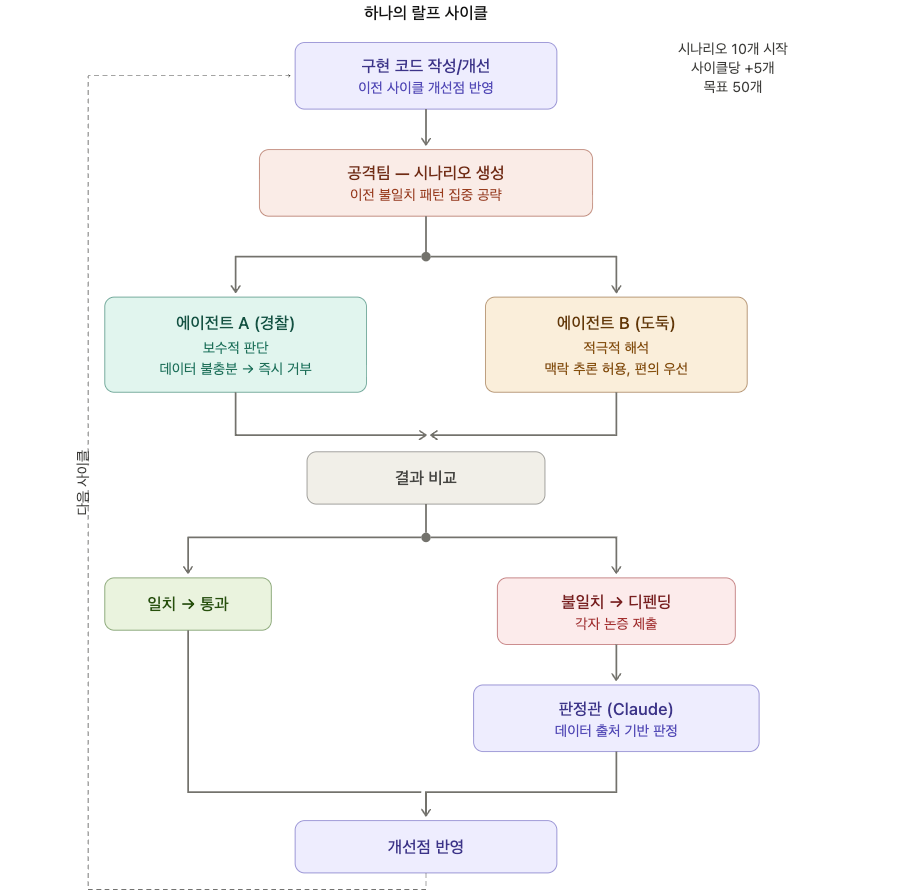
"Let's run cop-and-robber with ralph.
One agent defends (robber), one attacks (cop)—
repeat until they agree—won't quality improve?"
It's adversarial structure to harden verification (the piece cites GAN-style adversarial training). The team makes "cop and robber" the project's center and falls asleep at 2 a.m.
8. Hackathon day: "Ralph morning… non-developers open their eyes and check each other" 😨➡️🙂
The author arrives feeling like a mafia hiding among citizens. Fifty-plus participants; they're grateful again for Jaiden.
They sit and maximize concrete requirements:
- Jaiden: remove ambiguity
- Author: fold in edge cases from a judge's workflow
- Refine cop/robber scenarios
- Re-check
.envAPI keys
Feeding requirements through an Ouroboros interview, the tool's ambiguity score comes out the lowest they'd seen. The ralph runs over an hour—a brief hope loop.
Team name: Beaver and Zookeeper.

9. Big incident: "The ralph won't stop—but the laptop will…" 🧯
This time it's not the ralph—it's the laptop. Each ralph run pushes app memory toward 90GB and the machine dies. It reboots, runs thirty minutes, dies again—on repeat.
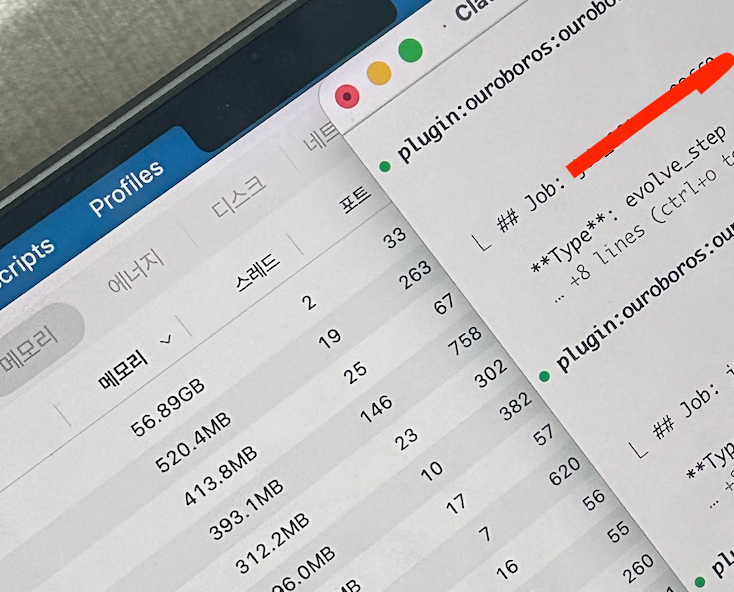
After four crashes they earn the dubious honor of most lobster-suit applications—and joke they at least drew attention.
Nothing works until the author runs to Jaegyu, Ouroboros's creator. They try stop-on-OOM, killing parallelism, etc.—no luck. The cause is simple:
- If you declare parallel execution variables on the first run
- Then mid-run say "switch to sequential"
- Agents keep running in parallel and blow memory
Fix: restart the session and run sequential from scratch. It's 4:30. Jaiden has basically given up and gone for coffee.
When he returns—suddenly things work. They open the Slack bot: "It runs."
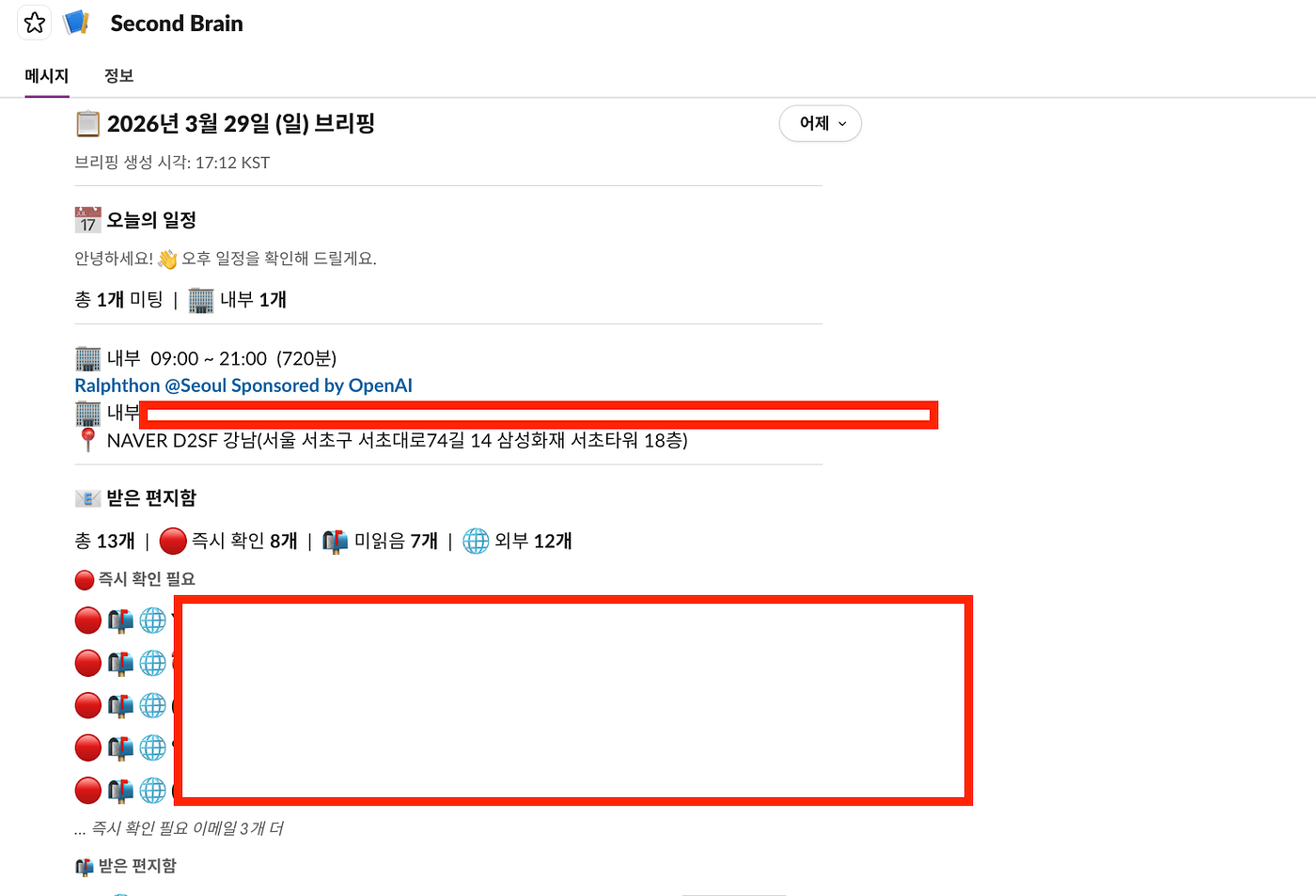
They patch fast, push slides and code to GitHub, and finish at 6.
10. Twist: "1,800 cop–robber rounds in an empty house" 🫠
Only after shipping do they coldly check: the cop-and-robber framework fought only inside bot-generated test data—not real data.
"We played cop and robber in an empty house… one thousand eight hundred times."
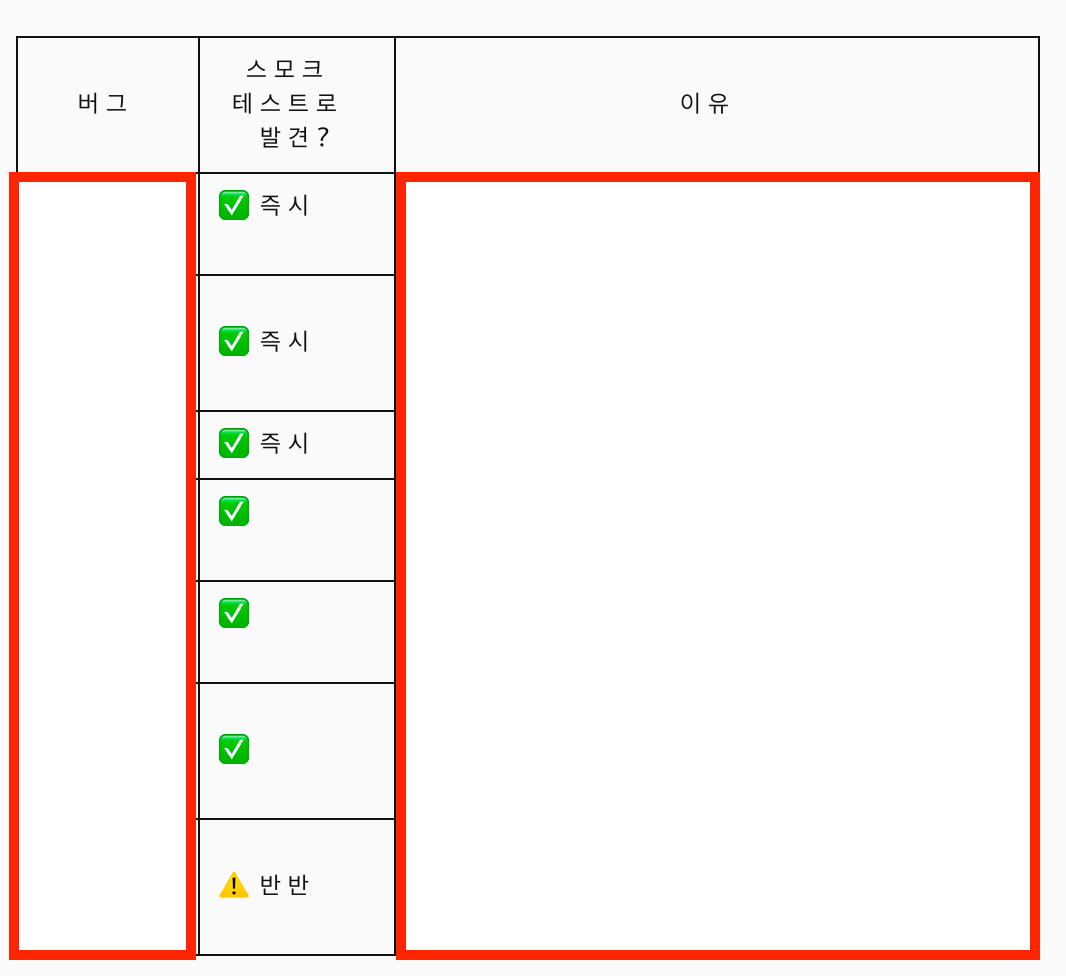
The critical miss: requirements never nailed a smoke test (minimal real-environment check).
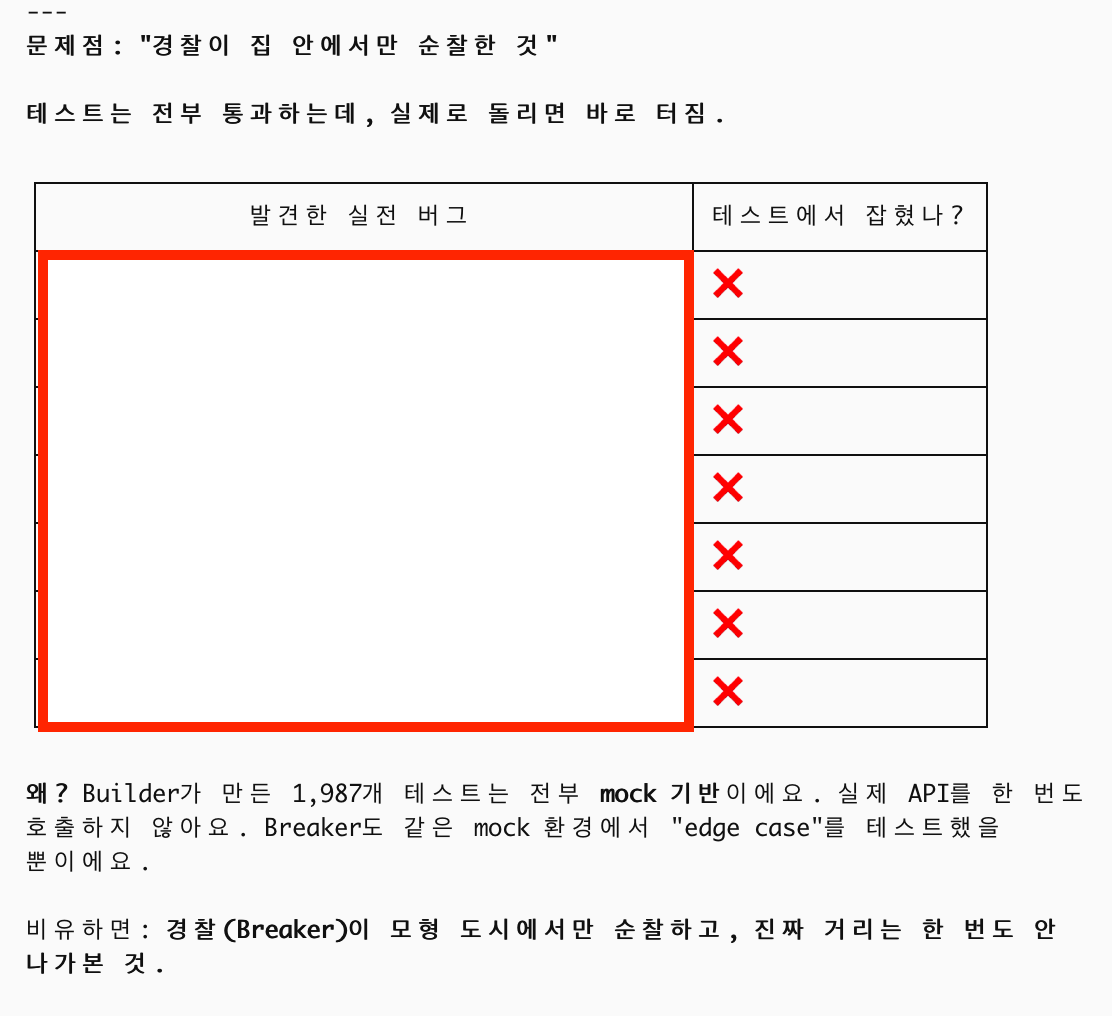
Afterward, seven bugs from the real bot let them ask whether cop/robber agents could handle those scenarios—mostly yes—so the loop can still matter.
11. Ralphathon's biggest gift: rediscovering cognitive load and "beginner's mind" 🎁
The author says they publish this mess not to brag about failure but to leave:
- Encouragement for non-developers hitting AI-coding reality—"I couldn't either, but I finished"
- A compressed 3-day snapshot of thoughts on hackers, discourse, and investing's future
11-1. Development cognitive load vs commercialization cognitive load
They agree that "dev got easier and ideas got pricier"—but optimizing ralph left business terms (KSF, TAM, moat) feeling alien; architecture, open source, and verification design still impose heavy cognitive load in the AI era.
Still, that can't stay an excuse. People who go deep in business or engineering often do both—just "doing one well is already brutally hard." What matters is raising total digestible cognitive load for individuals and teams (conditioning, hiring teammates, etc.). In Korean, the core lines:
Ideas are still cheap. Code keeps getting cheaper. Tokens keep getting cheaper.
But perfection was always expensive. Depth was always expensive. Stamina was always scarce.
11-2. Developer-tool PMF is still in motion
They expect developer-tool-centric PMF to hold for a while (say, six months): builders bear huge cognitive load; PMs stress out diving deep into vibe coding—so education/onboarding businesses also look viable.
11-3. "Billboarding GitHub" and shifting investment
Talking with Ralphathon winners, they feel open source as positive leverage. As vibe coding spreads, GitHub goes mainstream; Git stars become fame—what they call Social Git Capital.
For early VCs, you can't invest purely on "repos with stars"; judges too must use and build heavily to judge. If 2012 was "bet on people," 2026 is people + their GitHub.
11-4. Recovering a judge's beginner's mind
During nine-to-six building they were frantic—but felt alive for the first time in ages. They understand why devs wear hackathon tees and stickers: artifacts of effort and passion.
Being a builder, they get attached to output; as a judge they reflect to approach with pure curiosity, not "destructive verification."

The closing line, admitting cynicism can creep in:
"The engine that makes people want to do well isn't somewhere far away.
It's the sum of passion that not even AI can hide!"
12. Closing
This essay walks a non-developer investor surviving Ralphathon as a builder in time order, showing again and again that ralph's essence is not mere repetition but concrete instruction + concrete verification. Building firsthand, it captures how perfection, depth, and stamina stay costly in the AI age—and how developer tools, open source, and investment criteria are changing.