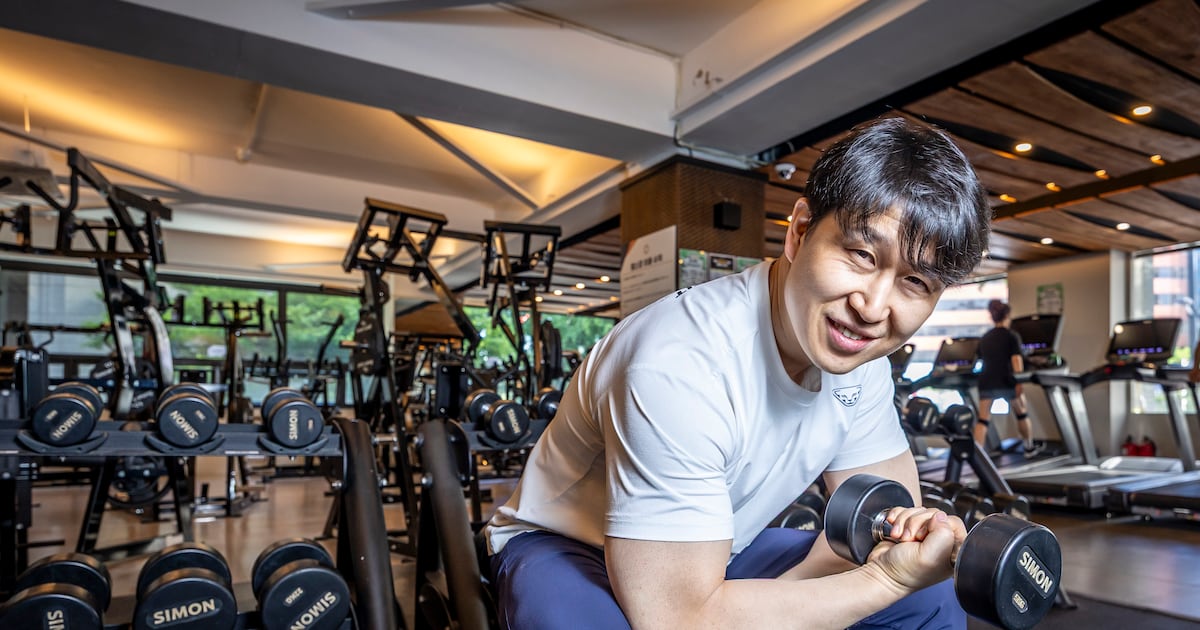
This article introduces the health-management habits of Korean conglomerate leaders through an interview with trainer Cho Young-ki, who has worked for more than 20 years with families of major corporate chairmen. The interview explains how seriously these leaders treat exercise and diet, and how they use a stable body and mind as core assets for business leadership. It also offers health principles and a five-minute quick workout that anyone can apply, emphasizing that health is a highest-value asset money cannot simply buy.
1. The Special Thing About Chaebol Health Is Consistency
Trainer Cho Young-ki says he spent 20 years managing the exercise and diet of two chairmen from Korea's four largest conglomerate groups. He says the lives of the country's top corporate leaders are not simply luxurious; they are more like intense battlefields. The most important force supporting their judgment and drive is ultimately the body. Clear thinking and stable condition are needed to avoid missing decisive moments, and unwavering health becomes a company's core strategic asset.
Cho is firm that there is no secret trick in chaebol health management. The special thing is continuing without stopping the things everyone already knows.
"A chairman's unwavering health is truly a company's core strategic asset."
2. Entering the 0.001% World: Becoming a Chaebol Trainer
In 2004, when he was 28, Cho saw a job posting for a dedicated trainer for the chairman of Group A, applied, and passed the formal hiring process. After serving Chairman A for two years, he joined an affiliate of Group B as an in-house trainer, later moved to headquarters, and managed Chairman B for 13 years. He now works as an in-house trainer at an architecture firm while personally training relatives and acquaintances of Chairman B and other VIP clients. His own background began with bodybuilding in middle school, and after military service he worked at the Seoul Sports Council planning and operating sports events.
Corporate chairmen are extremely selective when evaluating people. Cho explains that they value knowledge sharpened in the field and an attitude of growth. To answer their questions, he continuously studied not only exercise theory, but also physiology, immunology, nutrition, psychology, and current affairs. Discretion, of course, was essential.
3. Exercise as a Desperate Fight for Survival
For chaebol leaders, Cho says exercise is not a hobby but a desperate fight tied to survival. They exercise for an hour at the fitness center as soon as they arrive at work in the early morning. When busy, they still sweat for 10-20 minutes to raise their condition. Even after coming home at midnight, they do exercises to release tension before sleeping. Even on business trips, they run in the rain. Exercise is treated like a daily essential task.
The public may imagine chaebol chairmen enjoying glamorous lives, but in reality it is a battlefield. Even during workouts, executives line up and urge them for reports, and sometimes they have to run out without even washing off their sweat.
"People think chaebol chairmen enjoy glamorous lives and occasionally give orders. In reality it is a battlefield. Even while they exercise, executives line up saying they need to report. They sometimes rush out without washing off their sweat. It feels less like one person's body and more like the company's strategic asset."
The reason they exercise so intensely is that a body and mind that do not collapse are the final weapon. One decision can affect tens of thousands of lives and trillions of won, so the pressure is hard to imagine. If the body hurts or the mind is foggy, important decisions become difficult. Business leaders cannot afford to postpone judgment, so they train their stamina to stay calm and focused in decisive moments.
4. Exercise Continued Even in Prison: The Power of Consistency
The chairmen's workouts are not built on special secrets. They are basic exercises everyone knows: cardio, strength training, and stretching. Before important meetings, they may add a short meditation to movements that improve blood circulation.
Cho emphasizes that what makes chaebol leaders special is continuing even small, simple routines without interruption. They build exercise systems that work in any situation and protect even five minutes. Because they are not exercising to show off, they do not use "I'm too busy" as an excuse.
"We sometimes raise the intensity or change the method, but they do not have the luxury to spend long hours or try unusual things. What is special about chairmen is that even small and simple routines are continued without stopping."
Chairman B reportedly continued exercising even while detained over a management issue. Cho designed workouts using only items allowed in a prison cell of barely one pyeong and checked progress during visits. Chairman B used dozens of magazines wrapped in a blanket as a step box, books tied with prison clothes as dumbbells, a towel rolled into socks as a massage ball, and towels wrapped around bars. He also bought canned tuna with prison funds to supplement protein. The willpower is remarkable.
Cho says this consistency is not a privilege reserved for the rich. "A system is a habit. The power of habit does not distinguish by status." An exercise system is not completed by expensive facilities or a dedicated trainer. If you start simply and small and turn it into a habit, anyone can do it.
"I do not think only chaebol chairmen should do this. Unemployed young people, elderly people living alone, and residents in tiny rooms can all protect their lives if they train their bodies as their greatest asset. It is not that you invest in your body because you are rich. I believe that if you manage your body first, the path to becoming rich opens."
5. Refusing the Compromise of Easy Pleasure: Investing in Future Value
Cho says everyone wants health, but rich and non-rich people approach it differently. Based on his personal-training experience, rich people look at future value, while non-rich people focus on immediate benefits. Rich people respond to the promise of building a body that lets them live 10 or 20 years longer in health, and once they confirm results, they do not hesitate to invest. For a chaebol chairman, he adds, the time horizon may extend 100 years ahead.
Rich people also do not blindly copy what others do, and they do not fall deeply into unhealthy food, alcohol, or cigarettes. They do not skip exercise, but they also do not abuse their bodies. They constantly observe their own condition and stop before they collapse.
Diet is also extremely important. Their view is that food directly determines condition. Good food here does not mean expensive ingredients so much as natural food and eating lightly. Instead of tonics, they value nutritious meals that design the day's energy flow.
Cho gives an example of a daily diet for a conglomerate chairman:
- Breakfast: Nuts, blueberries, and oatmeal to support brain activity.
- Lunch: Salmon steak, brown rice, and avocado salad for sustained energy and heart health.
- Dinner: Chicken breast and grilled vegetables to support recovery and sleep.
- Snacks: Boiled eggs, vegetable canapes, a little fruit, and dark chocolate.
You do not see these leaders publicly enjoying fried chicken, pork belly, and somaek. They do not relieve stress through food.
Of course, chaebol leaders also diet. In Chairman B's case, because frequent business trips and dinners made weight management difficult, he designated one weekend day as a "clean eating day" and followed a strict diet excluding processed foods, sugar, and flour. For 60 days a year, he entered a clean reset at the cellular level, focusing for two months on intermittent fasting, low-carb high-protein meals, and no alcohol, losing more than 10 kg. During this period Cho lived at the chairman's home for intensive management, with medical observation as well.
6. Exercise for Chaebol Children: Building Habits Early
Cho says he has almost never seen children from chaebol families who did not exercise systematically from an early age. They may do expensive sports such as horseback riding, but sons and daughters alike are made to practice everyday body-training exercises such as table tennis, swimming, weight training, and running. If children develop fun exercise habits from elementary school, by high school they begin finding exercises that fit them and actively use trainers. Cho says he also makes his own children exercise every day, just like children in chaebol families.
Exercise supports brain development and relieves adolescent stress. Just 20 minutes of morning exercise can improve concentration. He also notes that teenagers who participate in team sports are less exposed to school violence. Women in chaebol families also exercise seriously, not only to maintain a body that suits formal dresses, but to preserve inner strength and calm needed to perform many roles.
7. Start with Recovery Before Exercise: Misunderstandings and Truths
Cho says one common misunderstanding ordinary people have about exercise is the belief that exercise must be long and intense to work. The idea that a gym visit must last one or two hours, or that everyone must walk 10,000 steps every day, is not well grounded. Long, high-intensity exercise is a path to failure, because exercise that drains the body cannot be sustained. Chaebol chairmen see the body as an asset to manage for life, so they do not simply push harder.
"People think exercise has to be long and hard to be effective. They think one gym visit should last one or two hours, or they must walk 10,000 steps every day. Those ideas are baseless. Long, high-intensity exercise is the path to failure."
He advises that exercise can be short and light. One day you might do an hour, the next day five minutes of squats, and the day after that 20 minutes of walking. Flexibility is fine. The brain remembers frequency, not exercise time or intensity, so it is important to teach the body, "I am someone who keeps exercising."
Any exercise is fine if it fits your body and feels good, but blindly following trends is not wise. Real exercise does not depend on trends, so invest in exercise you can continue in daily life.
If you are just starting, first check whether your body is ready to exercise. In other words, look first at whether you are usually recovering well. Are you sleeping well? Eating well? Do you have pain? Are you under heavy stress? If any one of these is broken, he warns against rushing into exercise. An unhealthy person does not automatically become healthy by suddenly exercising. Cho has seen many people get into serious trouble by forcing exercise when recovery was poor. Exercise is not the goal itself; it is a means for recovering body and mind.
Cho says the greatest enemy of modern health is overload: excessive work, information overload from smartphones, too many calories, lack of sleep, and a body that never gets to rest.
8. Anyone Can Exercise Like a Chaebol: Age-Based Management
Cho Young-ki says everyone needs to be healthy and anyone can exercise like a chaebol. His age-based body-management principles are as follows:
-
Middle age, 40s and beyond: What determines life after 40 is stamina. But middle age is also a period with heavy overload and urgent need for recovery, so he advises reducing everything: exercise intensity, meal size, and things to worry about. Save energy and invest it into stamina.
- Middle-age weight and belly fat: Belly fat is all about diet. Cut carbohydrates in half and double protein. If that still does not work, check the recovery system: sleep shortage, stress, and related issues.
-
Old age, 70s and beyond: Focus on three things: balance, light strength, and steady movement. Aim for a body that does not fall and can move independently. Many elderly people lose self-esteem and decline rapidly not because of disease itself, but because they can no longer move on their own.
On personal training, Cho advises that if you can afford it, use PT as a flint to objectively assess your body and learn accurate movement. If you cannot receive PT, do not blindly depend on YouTube workout videos. It is important to choose a trainer who carefully understands your body and living environment. Avoid trainers who only talk about themselves or make you do too many complicated things.
Through managing chaebol bodies, Cho learned that health cannot be bought with money or power; even chaebol leaders must work fiercely to earn it. He hopes to use this experience to develop and spread health methods for people who are sick or struggling.
9. The Chaebol Five-Minute Quick Workout
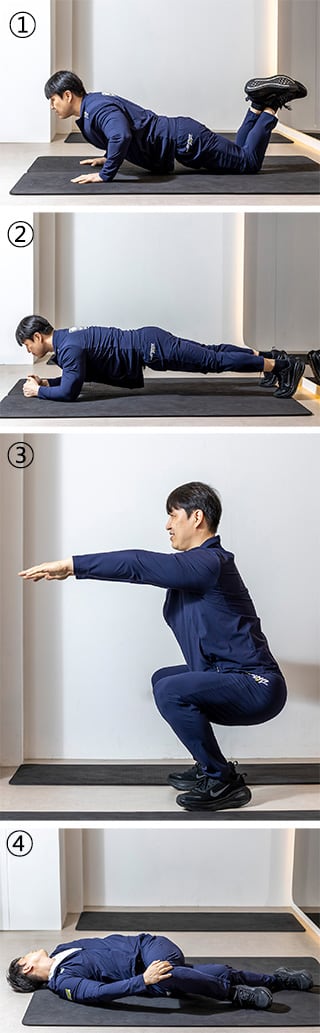
For a major corporate chairman with only five minutes before an important meeting, Cho recommends a session composed of three full-body strength exercises that quickly send oxygen and nutrients to the brain and heart, plus stretching to release spinal tension. These are essential movements chairmen often do, and anyone can follow them in limited time and space.
-
Push-up for a strong chest: Do three sets of 15. Be careful not to lift the elbows too high, which can injure the shoulders. Knee push-ups reduce joint strain.
-
Plank for the back, abs, and core: Hold a straight line from head to feet without sagging or rising. Start with 30 seconds, then build toward 1 minute for women and 2 minutes for men.
-
Squat for the lower body: Do three sets of 15. Keep the back straight, and when sitting down make sure the knees do not move past the toes.
-
Lower-back stretch: Alternately stretch each side for 5-10 seconds several times, lengthening the spine while calming the breath.
Conclusion
Cho Young-ki's experience shows that chaebol leaders' health management is not merely about taking care of the body. It is a core strategic asset for corporate leadership. Through consistent exercise and disciplined diet, they maintain a stable body and mind, which are essential for important decisions. These health practices are not secrets reserved for one class. They are based on universal principles: consistency and habit formation. The advice to check your condition and prioritize recovery before starting exercise is especially important for a healthy lifestyle. We can also treat body and mind as our greatest assets and build the habit of managing them consistently.