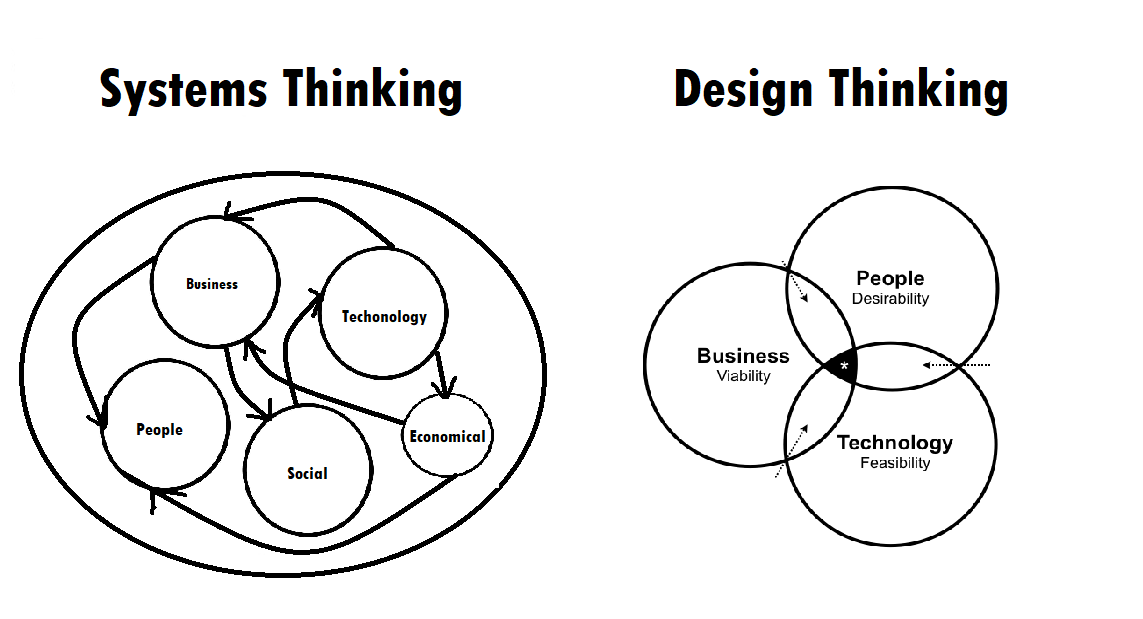
This article explains what Systems Thinking and Design Thinking are, and clearly shows how the two ways of thinking can complement each other to improve user-centered problem solving. The process of deeply understanding the overall context and needs of customers through systems thinking and deriving innovative solutions through design thinking is explained with effective examples.
1. What is a system?
First of all, system refers to a set of elements that are connected and interact with each other. ✨ Changing one part of the system affects other parts and the entire system, and is characterized by predictable behavior patterns.
2. What is system thinking?
Systems thinking is a way of thinking that approaches a problem from a holistic perspective, unlike the traditional method of breaking down and analyzing problems into individual elements. That is, it focuses on how the elements within a system are connected to each other, and how this interconnectivity creates new effects in the system over time. 🧐 While traditional thinking deconstructs complexity and divides it into small components, systems thinking recognizes that all systems are dynamic and complex and seeks a holistic understanding.
3. The importance of system mapping
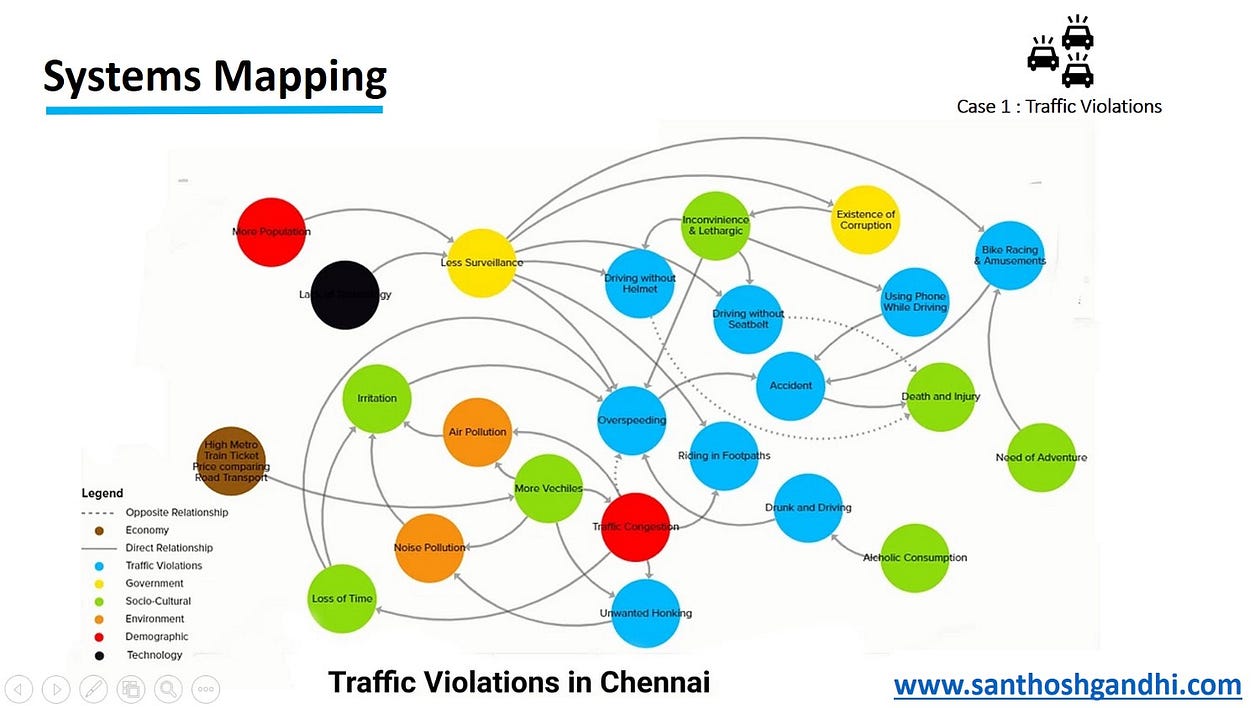
Systems Mapping is one of the key tools in systems thinking. 🗺️ There are many different methods, from analog cluster mapping to complex digital feedback analysis, but the basic principle is the same. By identifying and mapping the various 'elements' within a system, we can understand how they are connected and interact with each other. This provides unique insights and discoveries that can help us effectively intervene in systems, drive change, and inform policy decisions.
"By identifying and mapping elements, we can understand how they interconnect, relate and act within complex systems, and use the unique insights and discoveries from these to develop interventions, transformations or policy decisions that can most effectively change the system."
For example, when analyzing traffic violations in Chennai, systems mapping can be used to see at a glance how socio-cultural, environmental, demographic, and technological factors are connected to traffic violations. The image below is a good example of this complex network!
4. What is design thinking?
Design Thinking is a human-centered approach that focuses on understanding customer needs, quickly creating prototypes, and generating creative ideas. 🎨 Through this, you can innovate products, services, processes, and organizations. Design thinking helps you make decisions based on what customers really want, avoiding risky decisions based solely on past data or intuition.
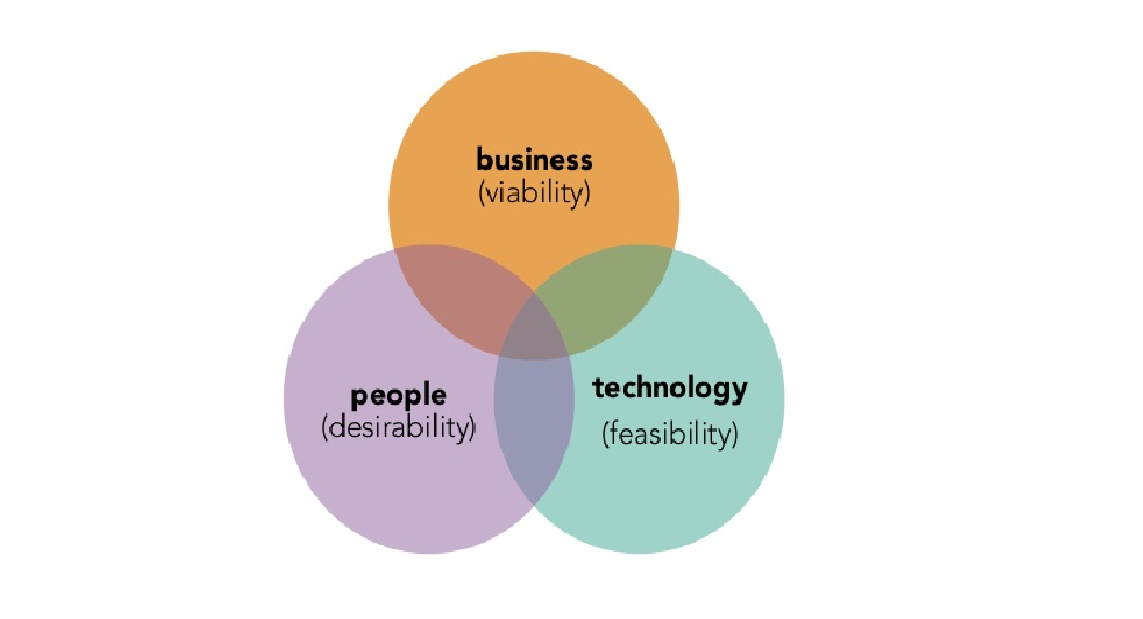
Design thinking comes into play when three key elements are in harmony.
- Desirability: What is reasonable and good for people?
- Feasibility: What is technologically possible in the near future?
- Viability: What is likely to be part of a sustainable business model?
5. How does systems thinking help design thinking?
Systems thinking helps us shift our thinking from a linear perspective to a circular perspective. 🔄 The fundamental principle of this transition is that "everything is interconnected."
5.1. Deepening understanding of customer/user needs
While design thinking is based on understanding customer needs, systems thinking is crucial for understanding the entire system that affects those customers. While design thinking puts a lot of effort into understanding user mindsets, systems thinking shows that the user's world is a mappable system, within which we can find the root causes of pain points, problems, and needs.
"The customer's world is a mappable system where you can find the root causes of their pain points, problems, and needs."
The clarity gained from mapping these systems is enormous. 🤩 It provides a broader perspective and will be of great help to researchers when constructing theories, making recommendations, or analyzing qualitative data. I strongly recommend using system maps, especially at the basic research stage.
5.2. Understanding systems thinking and design thinking through the Marvel Cinematic Universe 🎬
To understand these concepts more easily, let's look at an example from the movie.
Think of the Marvel Cinematic Universe (MCU) as a system. And each Marvel movie is an element of this system. Each movie, such as Iron Man 1 and Avengers: Endgame, is organically connected to each other to create an overall story flow.
- Systems Thinking is like watching all of these movies together and getting a holistic understanding of how all the characters, the overall plot, and each subplot are connected and interact. 😮

- On the other hand, Design Thinking is the process of finding solutions to specific problems within the system. For example, let's say War Machine is paralyzed from a fall, and Iron Man falls into the ocean and shivers from the cold. Understanding the past and present "pain points" of these other superheroes, Iron Man uses this knowledge to design a user-centric superhero suit for the new superhero Spider-Man. 🕷️ This suit includes a parachute to prevent falls and a heater to keep you warm in the cold sea. This is an example of design thinking!
In conclusion
Systems thinking provides a fundamental understanding of how everything is interconnected, helping design thinking gain a deeper and broader understanding of customer needs. In order to solve complex problems and create innovative solutions, it is very important that these two ways of thinking complement each other. 😉