
This article traces the author's journey from struggling to find new content ideas every week to building a custom AI-powered content intelligence system. Rather than using AI as a simple idea generator, the author trained it as a "research assistant" that understands their voice and expertise, filtering for only the ideas truly worth writing about. The system captures both trends and authenticity while significantly boosting creative efficiency and satisfaction.
1. The Weekly Pain of Idea Drought
The author once thought they had every aspect of content creation systematically organized. Prompts were optimized, research processes and publishing schedules were locked down -- yet every Monday morning, the same paralyzing question returned: "What should I write about?"
Like a weekly ritual, the author would ask AI to generate 20 newsletter ideas based on past articles, but the results were always predictable and generic:
"10 ChatGPT Tips" "AI Productivity Hacks That Actually Work" "The Future of Work in the AI Era"
This left the author facing a dilemma: chase trends and say the same things as everyone else, or stay true to their own voice and risk writing for no one. Meanwhile, the anxiety of losing touch with what readers actually wanted kept growing.
2. The Turning Point: AI as a "Research Assistant"
A few months earlier, the author faced yet another Monday morning with a newsletter deadline on Thursday. After three hours and 37 browser tabs of research, only stale ideas remained in Notion.
That's when the realization hit: "Instead of asking AI to blindly generate ideas, I should train it as my own research assistant." The shift was to have AI deeply understand the author's interests and expertise, then surface only the opportunities worth paying attention to.
"It's like having a research assistant who understands your interests so well that they only bring you the conversations and questions worth engaging with. You still decide which conversations to join."
3. Building the Four-Layer "Content Intelligence System"
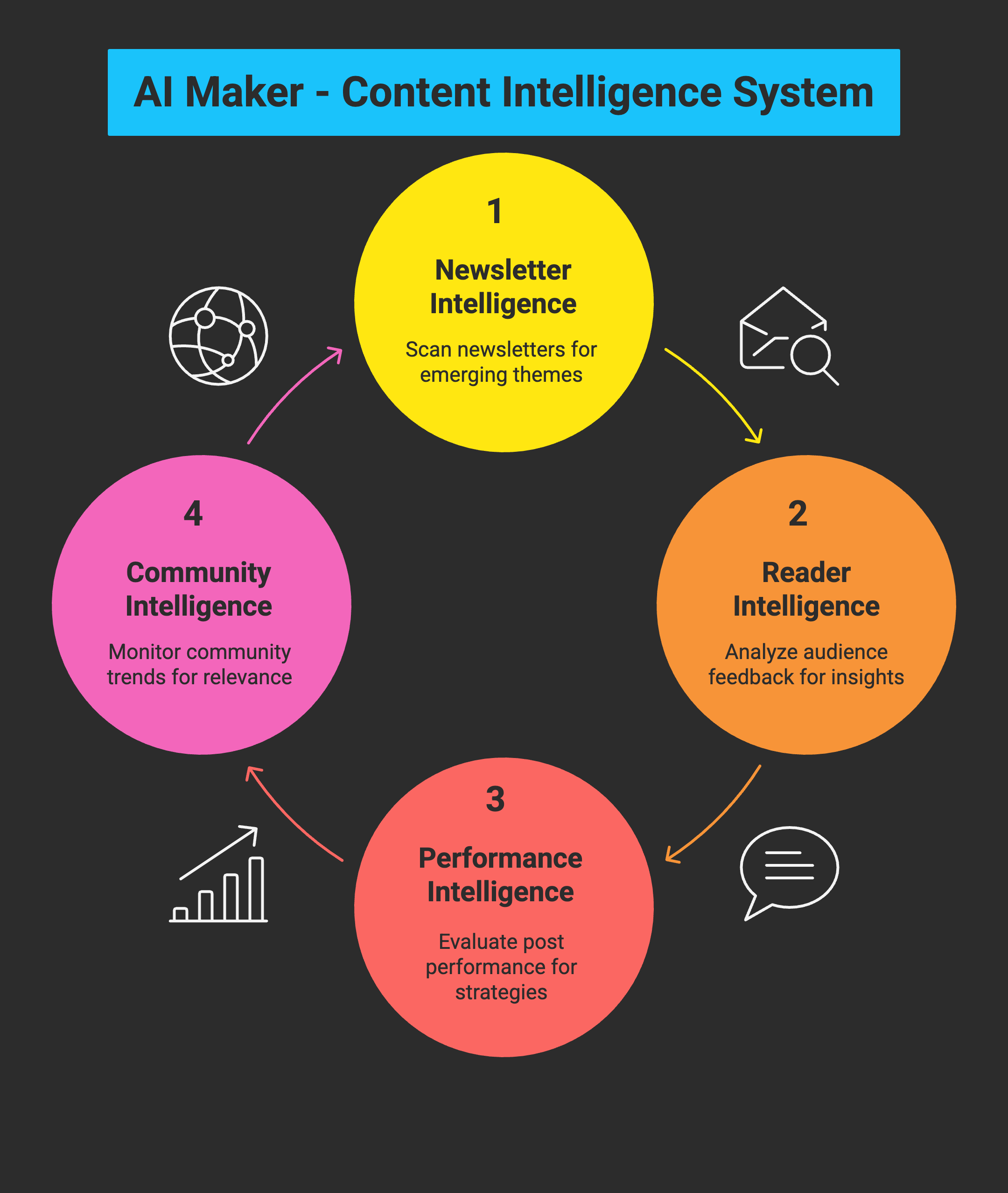
Over two weeks of focused effort, the author built a four-layer content intelligence system. Each layer follows the principle of "surfacing relevant information without ever overriding my own instincts."
3.1. AI Newsletter Trend Analysis
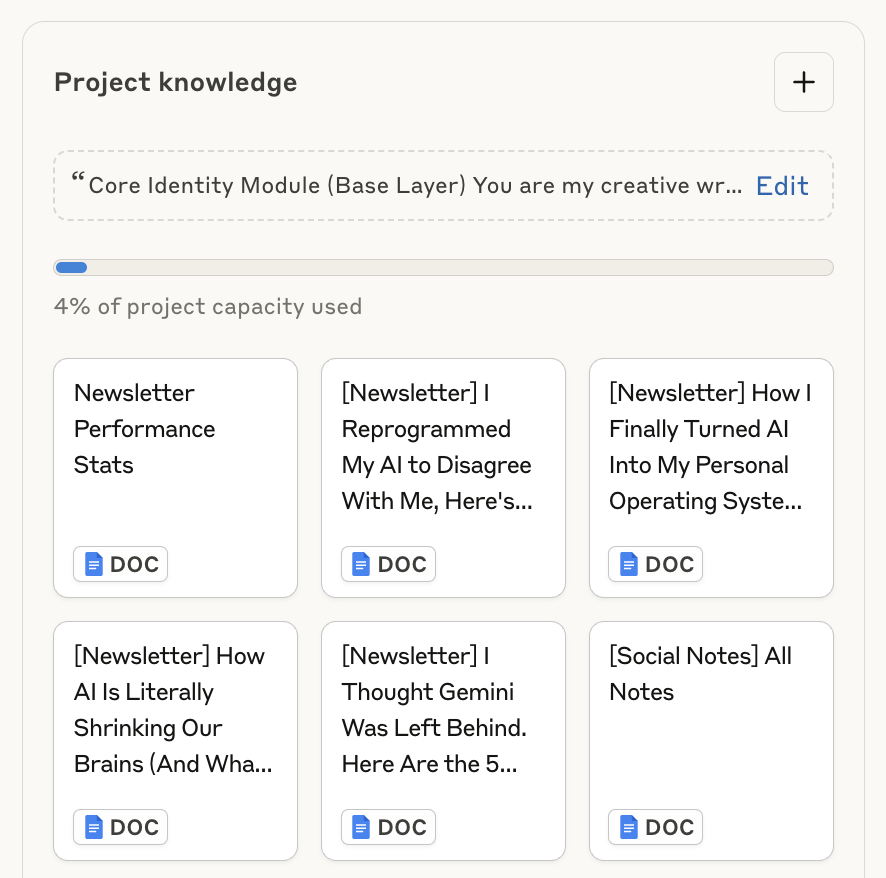
First, the author connected Gmail to Claude (generative AI) to scan subscribed AI newsletters. The goal wasn't to copy ideas, but to identify which topics and conversations were emerging in the industry. Since Claude had already been trained on the author's writing and notes as "project knowledge," it could filter trends for relevance.
3.2. Reader Feedback Analysis
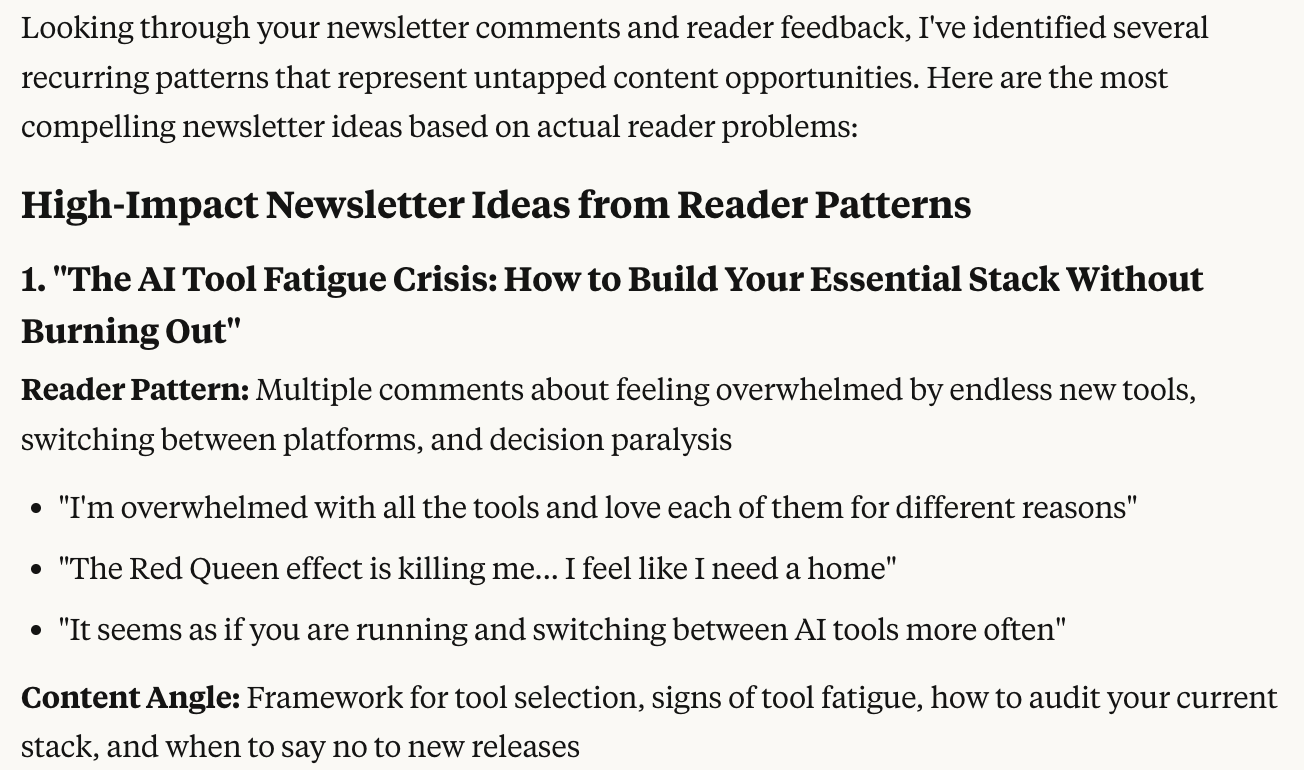
Claude analyzed comments from the author's newsletter and social media to identify what readers were genuinely curious about. Now ideas could come directly from readers' own words.
"Claude suggests 8 content ideas with specific angles based on readers' actual questions and concerns. This information makes it clear whether an idea is worth pursuing."
3.3. Performance Data-Driven Recommendations
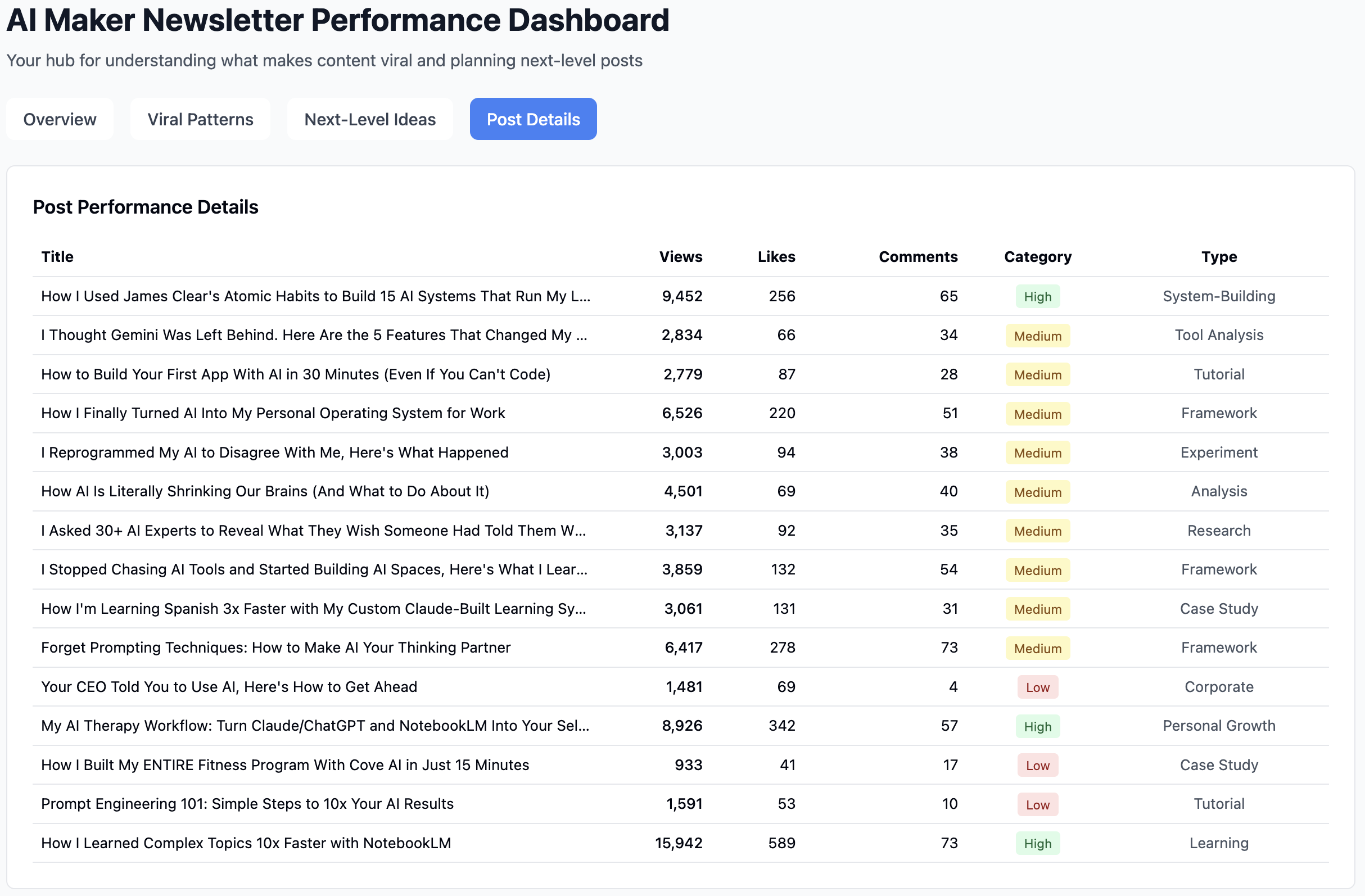
Each week, performance data -- views, likes, comments -- was uploaded to Claude. Claude would trace back which posts performed well and suggest new approaches or topics in a similar vein.
"Your 'personal experiment' posts always perform well. Try applying this format to this week's trending AI topic."
Using Claude's artifact feature, a data dashboard was built to visualize viral patterns and differentiated ideas at a glance.
3.4. Automated AI Community Trend Collection
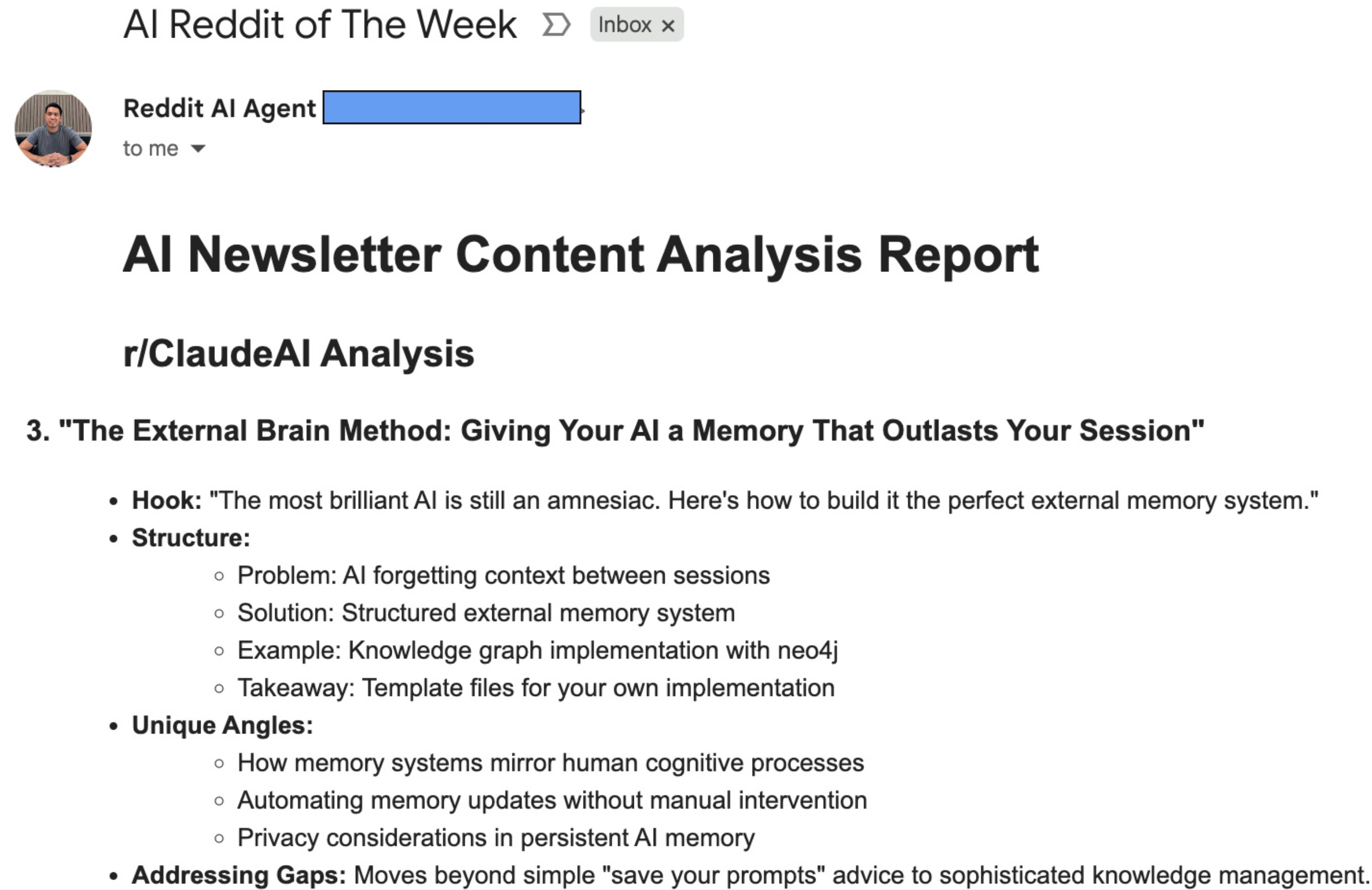
Using a tool called Gumloop, the author set up automated weekly emails with popular posts from AI-related subreddits. Again, the topics were filtered to match the author's expertise and style rather than simply listing trends.
"Every week, it summarizes what's trending in the AI community and how you can uniquely contribute to the conversation."
4. What the System Changed
After running this system for several months, the author found that the improvement wasn't just about finding ideas faster -- it was about finding better ideas. Energy was no longer spent on "what should I write?" but on "what unique perspective can I bring to this conversation?"
"Creative struggle is still necessary, but now that energy goes only toward ideas that are worth it."
Key changes the author experienced:
- Higher quality ideas: Topics emerged at the intersection of trends and reader needs, resonating more deeply
- Greater confidence: AI would provide context like "this topic connects with your practical AI implementation experience," making it easier to tackle previously "too niche" subjects
- Joy of creation restored: No matter what the data recommended, the author could freely reject anything that didn't genuinely spark interest
"What truly matters is that data shows you which conversations are happening, but your experience determines which conversations you can actually contribute to."
5. Building Your Own Content Intelligence System
The author also provides a practical guide for anyone who wants to build a similar system.
-
Teach Claude your voice
- Upload your 10 best-performing recent posts, a document explaining your expertise and perspective, and examples of others' content you love or dislike
- Help Claude distinguish between "this sounds like you" and "this is generic"
-
Automate newsletter trend analysis
- Connect Gmail to Claude to extract trends from subscriptions that match your niche and style
- Example prompt:
"Scan my AI newsletter subscriptions from this week. Identify emerging themes and questions I could contribute to, given my writing style and expertise. Format as theme, significance, and my unique angle."
-
Analyze reader feedback
- Copy recent comments from your last 5 posts into Claude
- Example prompt:
"What questions and pain points do you see in these reader comments? What topics haven't I addressed yet, and what frustrations are readers experiencing?"
-
Automate AI community trend collection
- Use Gumloop to scrape relevant subreddits and receive weekly popular posts via email
- Use GummySearch to easily find subreddits aligned with your interests
- Ongoing maintenance
- Invest 15-20 minutes weekly to add new content and data to the knowledge base
- Keep the system evolving alongside your growth
"The most important thing is that you still decide which ideas to write, how to angle them, and how to execute. You just don't have to start from scratch every week."
6. Capturing Both Authenticity and Trends
The author closes by emphasizing that the supposed choice between "authenticity" and "trends" is a false dilemma.
"Data shows you which conversations are happening, but your experience determines which ones you can truly contribute to. What really matters is starting from what you know and love."
This system, grounded in the author's own voice and expertise, helps find the right idea at the right time. No more wandering aimlessly for ideas each week -- just more meaningful, energized creation.
Conclusion
This article demonstrates how AI can be used to overcome the pain of content ideation and build a system that captures both authenticity and trends. From the author's own trial and error to concrete methods and restored creative confidence, it's packed with practical tips anyone can follow.