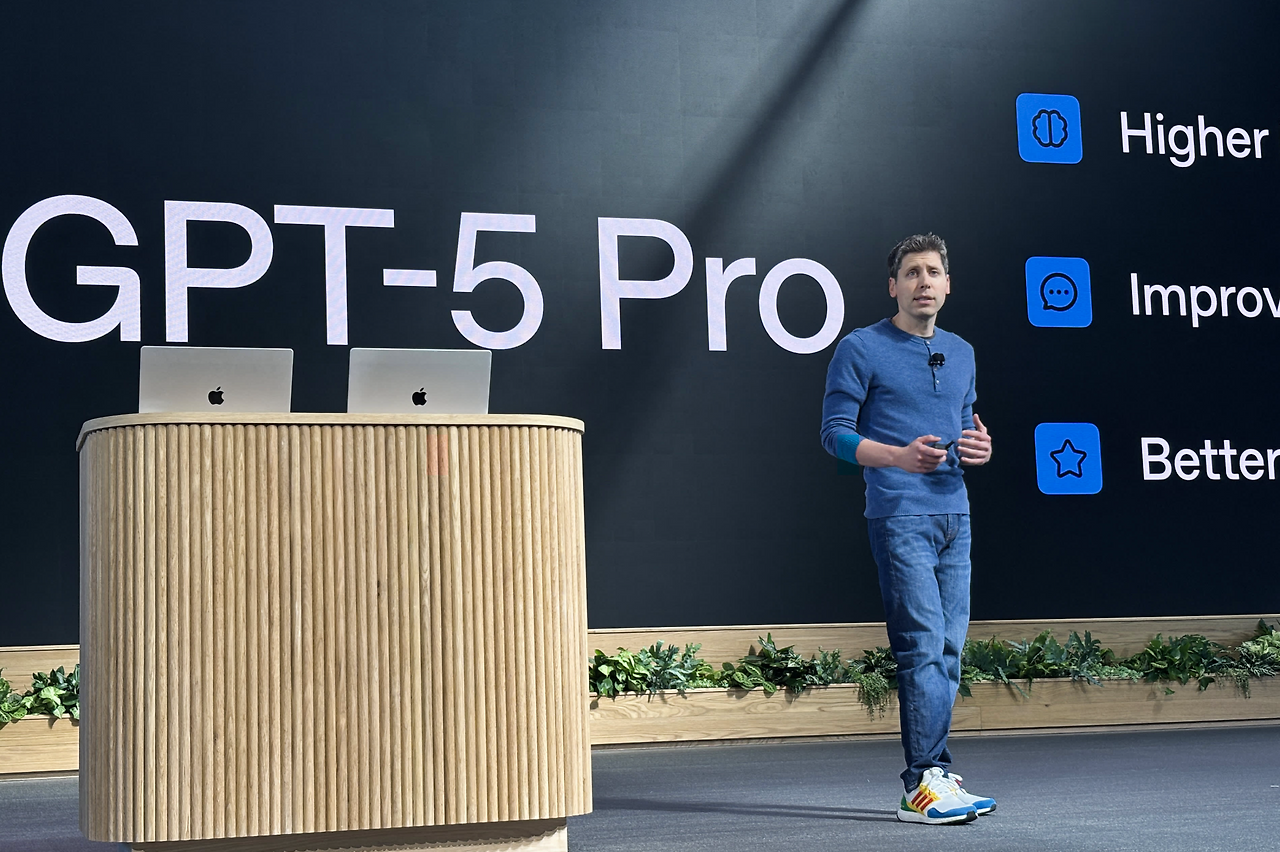
Sam Altman's (OpenAI CEO) presentation style goes beyond simply conveying information -- it is considered an exemplary case of presentations that captivate audiences and leave lasting impressions. This article meticulously organizes the core principles and practical presentation tips that Sam Altman follows, centered on his presentation approach. From actionable techniques to common mistakes, it contains practical know-how that can help anyone struggling with presentations.
1. First Impressions of Sam Altman's Presentations
Watching Sam Altman's presentation at the 2025 OpenAI DevDay was a major revelation. His presentations are so impressive that one could say, "Steve Jobs was once the face of presentations, but now it's Sam Altman."
Watching his presentation reminded me of Y Combinator's presentation guide. As a former president of YC, Sam Altman seemed to be practicing his own experience and principles directly on stage.
"A presentation isn't just a product description -- it's a story. It's the process of organizing your core message, opportunity, and product."
The reason for writing this article is also to help those who are thinking about their presentations.
2. The Essence of Presentations: Four Core Elements
A good presentation must have four elements:
- Clarity: The message must be clearly communicated in simple language so the audience can understand.
- Excitement: The "opportunity" must appear attractive enough that the audience pays attention.
- Informativeness: The audience should learn something new from the presentation.
- Memorability: Key points that remain vivid even after time has passed are essential.
These four elements form the backbone of a presentation.
"A story that stays in memory even after hearing it -- that's the best presentation."
3. 3-4 Messages: Building the Spine of Your Presentation
Since audiences cannot remember an entire presentation, it's important to leave only 3-4 messages as the core takeaways. These are called the "Vertebrae" (spine).
Ebbinghaus's forgetting curve is helpful in understanding why this matters.
The four Socratic questions for organizing this spine are:
- What are we building, and for whom?
- Why has no one done this before?
- Why can we do it?
- Why is now the opportunity?
Using these four questions allows the listener to naturally accept the necessity.
"Persuasion isn't about what I say -- it's about making the listener realize it themselves."
Toss CEO Seunggun Lee is also mentioned as a master of this approach.
4. Communicating with the Audience: First Impressions and Persuasion
Investors (or audiences) quickly judge whether a team is "one they can't afford to miss." It's crucial to firmly establish in the first impression that you are an unmissable team.
"What if missing this team means missing the next Airbnb?"
The team must be imprinted as one you "can't afford to miss (Fear of Missing Out)" to lead to follow-up meetings.
5. Presentation Structure: The Importance of Flow and Leading
A typical presentation structure is:
- Intro
- Problem
- Product/Customer
- Market Opportunity
- Traction (Growth)
- Team
- Conclusion
There's one key point to note:
"If you have strong traction, put it right at the front of the presentation. Capturing the audience is your number one mission."
6. Intro: Short and Clear
The intro should be concise and intuitive, like an elevator pitch. Complex marketing-style language is off-limits.
"We deliver groceries to your door." Never write "Next-gen AI-powered grocery needs solution."
The "We are X for Y" formula is also useful:
Example: "We are Uber for Pets."
7. Problem: Clear and Relatable
The core problem that your product solves must be communicated instantly in one or two sentences. Don't just list problem descriptions -- the listener should feel, "This is my problem!"
"How much time is your team spending on this problem?"
After presenting the problem, quickly explaining the solution is the key.
8. Product and Customer: Specific and Concise
Explain directly what product you're building, who your customers are, and what value you provide. Short, clear explanations are often more effective than live demos.
"Our product works this way and provides this value to customers."
9. Market Opportunity: Credible Numbers
Present market opportunity without unnecessary inflation, in a way that builds trust.
- Bottom-up: Number of customers x unit price = market size
- Top-down ("1% of a massive market" style) can lack credibility.
"Multiplying the number of customers in the market by our product's price gives us approximately X billion won in market size."
In other words, a specific and realistic approach leads to trust.
10. Traction: The Power of Numbers and Growth
Real user count, revenue, growth rate and other visually verifiable results build the greatest trust. In early stages, emphasize team capabilities and execution.
"3x user growth last quarter, 75% repeat purchase rate."
Rather than sharing every number, select and emphasize just one or two metrics that must be known.
11. Team: Why We Can Do It
You must appeal briefly and powerfully with enough expertise and focus that investors feel confident entrusting you. Not just listing profiles, but conveying "this is why we're different from others."
"We all have 10 years of experience in the financial industry, personally experienced the problem, and created the solution."
12. Conclusion: One Sentence, Powerful
In the closing, it's good to repeat the "spine" or the 4 core questions from earlier. Don't end vaguely without tying up the argument.
"We are solving this problem, right now, in this way."
13. Slide Design: Message Simplification and Design
Slides are only supporting tools. Each slide must contain only one message! Excessive text and graphs easily disrupt the flow.
- Readability: Large font, clean colors, important information at the top
- No more than 7 words in the body (use images instead of text when possible)
- Quotes should be read aloud and emphasized
- Avoid cumulative graphs and other potentially misleading materials
"When there's too much information on a slide, the audience watches the slide, not you."
14. Preparation and Practice: Self-Review Is the Answer
The most effective way to practice presentations is recording and reviewing. The cycle of rehearsal, feedback, and revision is essential. Being able to objectively view your own presentation footage is crucial.
15. Who Should Be the Presenter?
It doesn't have to be the CEO, but it should be the person who can communicate best. For startups, however, the founder presenting directly is recommended because it builds trust.
"Real trust comes from the founder showing their expertise and passion for the business."
16. Technique: Voice, Eye Contact, Rhythm, Gestures
- Confident voice and clear enunciation
- Smile and natural gestures
- Eye contact with the audience
- Natural rhythm and use of pauses and slowing down
- It's okay to look nerdy. As long as you can earn the audience's trust, don't get hung up on style.
"Showing my passion is the essence of presenting."
17. Movement: Balance of Focus and Energy
Movement on stage should be neither too much nor too little.
- Stand firmly on both feet and move naturally
- Avoid excessive gestures and repetitive movements
- Get comfortable using a clicker
Movement should also be corrected through repeated practice.
18. Common Mistakes: What to Absolutely Avoid
- Unclear problem/solution
- Jargon and complex sentences
- Exaggerated or inflated data
- Slide-focused rather than audience-focused
- Fast speaking, lack of enthusiasm
- Unnecessary movement
- Overuse of videos, complex graphs
"If the message isn't clear, it doesn't matter how well you speak English."
Always remind the audience from start to finish: "Why am I important?"
19. Closing Thoughts: Story and Message
While paths to success vary, the story of great product - customer love - scale is what matters. Demo day is the clearest first version of that story.
"Every startup must have its own story of 'what we do and why we do it.'"
Conclusion
The path to presenting like Sam Altman is open to everyone. Creating your own story with clarity, persuasion, information, and memorable messages is what leads to the best presentations. Always ask yourself who you're speaking to, what you're doing, why, and how -- and create your best presentation through repeated practice