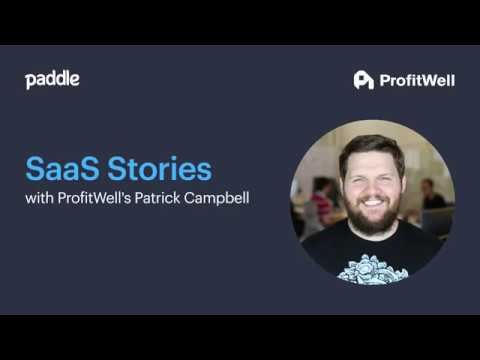
1. Starting and Challenging a SaaS Startup
Patrick Campbell shares the early difficulties and lessons from founding ProfitWell (formerly Price Intelligently). He confesses that starting with part-time co-founders led to many conflicts and problems.
- "Part-time co-founders are the worst. They always said 'I'll go full-time next quarter,' but that promise was never kept."
- He experienced conflicts threatening the company due to failed expectation-setting and vesting schedule issues with co-founders, saying it took four years to resolve.
- Lessons:
- Clear expectation-setting with co-founders is essential.
- Emotional maturity and relationship management are crucial in the startup process.
- "These relationships should be treated as real 'relationships,' not just business partnerships."
2. Bootstrap vs. Venture Funding: Different Growth Paths
ProfitWell grew through bootstrapping (self-funded operations) and currently operates a team of 60. Meanwhile, the conversation partner shares experiences growing to 140+ people through venture funding.
- Patrick explains that bootstrapping helped solve early problems and strengthen intrinsic motivation.
- "We had a vision that we could solve big problems without outside investment. That's what kept us going."
- In contrast, venture-funded companies experience external expectations and pressure for rapid growth.
- Lessons:
- Bootstrapping provides autonomy but may have constraints in speed and resources.
- Venture funding enables rapid growth but requires managing external pressure and expectations.
3. The Value of the Freemium Model
ProfitWell adopted a freemium model to attract customers and convert them into paying users. Patrick emphasizes that freemium should be viewed not as a pricing strategy but as a customer acquisition channel.
- "Freemium isn't a pricing model — it's a customer acquisition model. Think of it like a free eBook."
- Conditions for a successful freemium model:
- The free product must be better than competing paid products.
- The free product must deliver real value to customers.
- Lessons:
- The freemium model is effective for building long-term customer relationships.
- Sufficient resources must be invested in free product development early on.
4. Team Scaling and Culture Management
As companies grow and team sizes increase, maintaining organizational culture and team alignment becomes critical. Patrick shares problems encountered during team expansion and strategies for addressing them.
- "We once argued about snacks for 45 minutes. It wasn't about snacks — it was a signal that team alignment had broken down."
- Lessons:
- Repeatedly share the company's mission and vision to maintain team alignment.
- "When new team members join, you need to think about how to convey the four years of context they missed."
- Build a feedback culture and establish the principle that "feedback is non-negotiable."
5. Growth as a Founder
Patrick emphasizes personal growth and the importance of leadership as a founder. He shares experiences where anxiety and overreaction negatively affected his team early on.
- "At first, I thought every problem threatened the entire company. But now I try to ask seven questions and assess the situation."
- He also realized the negative impact of public arguments on the team and worked to avoid them.
- Lessons:
- Founders must be aware of how their emotions and reactions affect the team.
- Providing clear and consistent feedback to team members is important.
6. Stress and Burnout Management
Patrick says that personal conversations with team members and clear expectation-setting are crucial for preventing stress and burnout.
- "I ask team members, 'What could happen that would make you resent me or the company?' I try to maintain balance based on those answers."
- The company also provides a meditation room and operates an anonymous feedback channel so team members can share opinions comfortably.
- Lessons:
- Stress management requires a personalized approach.
- Leaders must be careful not to project their own stress onto the team.
7. Closing: The Startup Journey
Patrick emphasizes that entrepreneurship is not just about building products — it's about building relationships, solving problems, and continuously learning. He leaves founders with this message: "Don't fear failure — focus on relationships and culture."
- "We all make mistakes. What matters is learning from them and building a better company."
Key Themes Summary
- Expectation-setting with co-founders
- Bootstrap vs. venture funding
- Value of the freemium model
- Team alignment and organizational culture
- Founder leadership and growth
- Stress and burnout management
- Building a feedback culture
This video provides practical lessons and inspiration for SaaS founders, vividly showcasing the challenges and growth in the startup journey.