AI has moved beyond being a simple tool to become an expert-level colleague, rapidly transforming corporate organizational structures and the very nature of work. In an era where middle managers are disappearing and small teams execute massive projects, the human role is shifting from "execution" to "definition and evaluation." Three experts emphasize that to survive in this changing landscape, domain expertise, systems thinking, and the ability to direct AI are essential.
1. AI Is Now a Fulfilled Prophecy
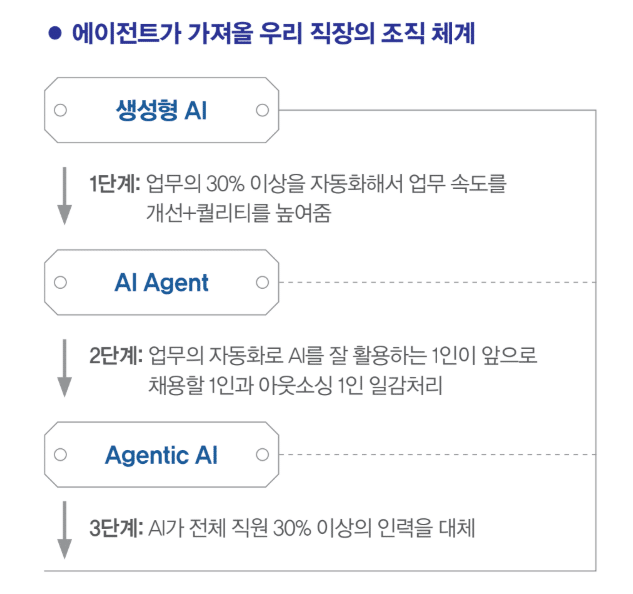
As of 2025, Nvidia CEO Jensen Huang's statement that "every company's IT department will become an HR department powered by AI agents" is no longer an exaggeration -- it is reality. According to recent OpenAI evaluation results, AI models have demonstrated capabilities equal to or surpassing those of human experts with an average of 14 years of experience in practical tasks across law, finance, marketing, and other major industries.
In knowledge work areas such as report writing and data analysis, AI has already reached expert level, and the field is changing rapidly. Large corporations are flattening their organizations by reducing middle managers, and at startups, a single developer collaborating with multiple AI agents is accomplishing work that previously required a team of ten.
"The core of the change is the 'redefinition of work.' As AI takes over the domain of 'Execution,' the value of humans has shifted to the role of defining 'what should be done' (Definition) and evaluating 'whether it was done correctly' (Evaluation)."
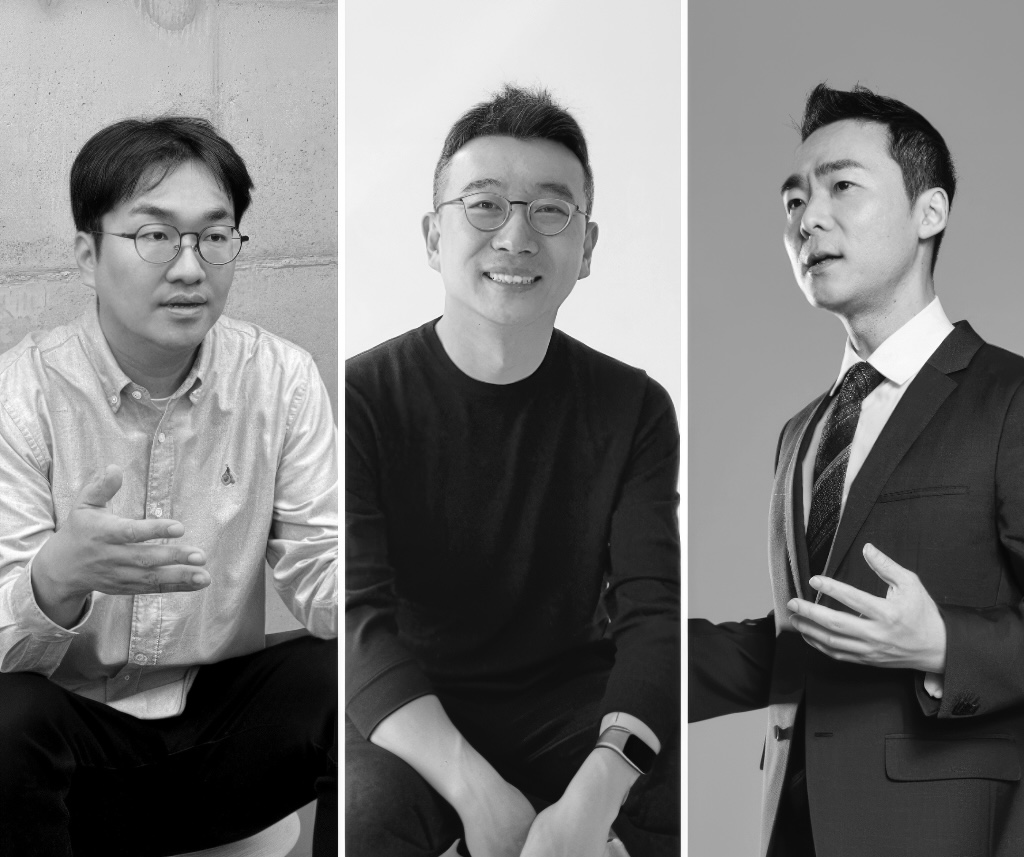
In this rapidly changing period, three IT industry experts -- Kim Jihyun, Vice President of SK Management & Economics Research Institute, Roh Jungsuk, CEO of BFactory, and Ha Yongho, CEO of DataOven -- gathered for an in-depth conversation about how AI is changing the essence of work and what survival strategies look like.
2. AI as a Colleague, and the Great Organizational Overhaul
The first change that occurred as AI was elevated from tool to "colleague" was the reorganization of corporate structures. The experts unanimously predicted the disappearance of middle managers. In the past, middle managers were essential for relaying executive directives and organizing reports, but now AI is taking over that role.
VP Kim Jihyun emphasized the changing role of team leaders. Now, a team leader's core responsibility is managing AI agents and making strategic decisions. CEO Ha Yongho also cited examples of big tech companies like Microsoft already converting middle managers into hands-on workers, explaining that the emerging structure consists of a few humans and many AI agents forming a single team.
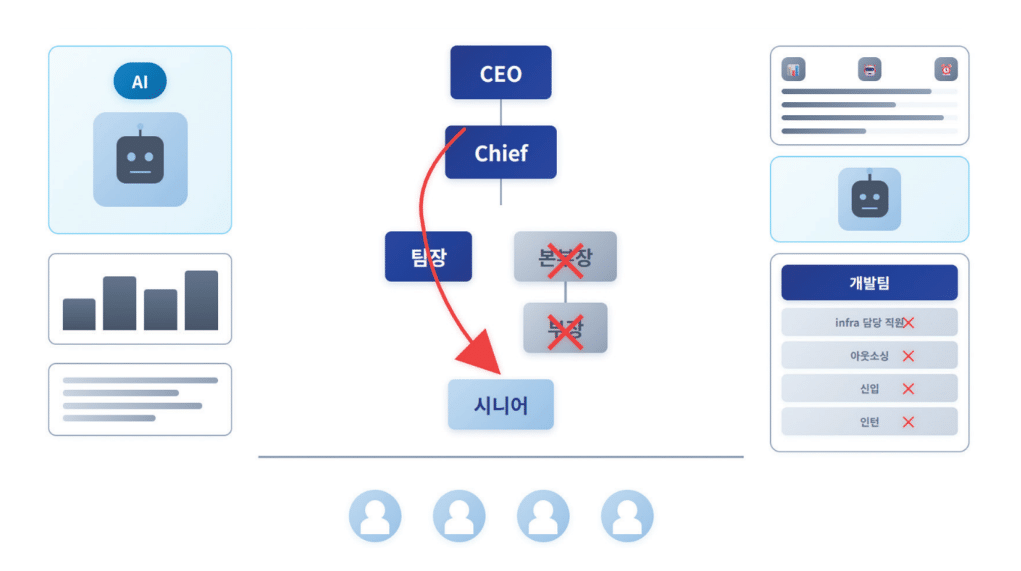
This shift leads to the possibility of "one-person unicorn" companies. CEO Roh Jungsuk strongly affirmed this.
"One person is doing what ten used to do. Project velocity has accelerated beyond imagination, and individual accomplishment is maximized. The one-person unicorn era is a matter of timing -- whether it arrives in 3 months, 3 years, or 10 years."
In practice, Roh's company dissolved teams and switched to individual-based projects, where a single engineer handles everything from planning to deployment, maximizing productivity. VP Kim Jihyun also cited a case where a report that used to take 6 people 3 weeks was completed by 2 people in 1 week, adding that AI is making talent more versatile.
3. AI Executes; Humans Judge and Define
So how is the definition of "work" changing in the AI era? CEO Ha Yongho broke work down into layers. Lower-layer routine tasks are being replaced by AI, so humans must focus on "designing and delivering value." In other words, the era no longer calls for mindlessly hauling bricks but rather for contemplating "what value does this house provide?"
CEO Roh Jungsuk defined the future of work as "Orchestration."
"The future of 'work' is 'a high-level intellectual activity of setting goals, orchestrating AI, and verifying results.' ... Work doesn't start with coding -- it starts with creating specs (Tech Specs) and execution plans together with AI."
Now, crafting design documents with AI has become more important than writing code directly. VP Kim Jihyun pointed out that while the technology has changed, the fundamental meaning of work (the Why) has not, and predicted that humans freed from repetitive tasks will engage in more strategic and complex judgment.
This change is clearly visible in practice. CEO Ha Yongho uses his own AI assistant agent to grasp and manage 140 work tickets handled by 14 team members in just 10 minutes. Because AI reads and summarizes everything, it has become possible to handle work across multiple companies simultaneously.
4. The Weapons We Need to Survive
What capabilities must individuals develop to survive in this rapidly changing environment? The three experts offered core competencies from different perspectives.
- VP Kim Jihyun: Emphasized persistent questioning and personal agency. Don't settle for a single answer -- keep asking "Why?" and digging deeper. Use AI as a learning tool, but ensure that final decisions are always made by a human.
- CEO Roh Jungsuk: Identified domain expertise and unlearning ability. Deep knowledge in your field is essential for effectively directing AI. At the same time, yesterday's winning approach can become obsolete today, so the ability to flexibly shift your thinking is necessary.
- CEO Ha Yongho: Highlighted the PO (Product Owner) mindset and clear communication.
"Getting AI to do good work is similar to getting a week-old junior employee to do good work. It's the ability to explain the context well and clearly convey what a satisfactory deliverable looks like."
Regarding the job market, a sober perspective dominated. CEO Roh Jungsuk predicted that junior-level jobs will decrease in the short term, but in the long run, new opportunities like solo entrepreneurship will explode. CEO Ha Yongho also warned that once AI commoditizes a particular skill (makes it as common as air), that skill alone will no longer generate income, cautioning about job losses and the difficulty of transition.
5. Closing: Now Is the Time to Rebuild Our Systems
In closing, the three experts stressed that we are in a critical golden window.
- Kim Jihyun: "In 2-3 years, people who use AI well will completely replace those who don't. Leaders must actively embrace AI right now."
- Ha Yongho: "Your workforce including AI is 100 people, but isn't your system still built for 20 humans? Rebuilding systems for the growing AI workforce is what true AX (AI Transformation) means."
- Roh Jungsuk: "A tremendous opportunity is coming for individuals with uniquely Korean strengths to grow into unicorn companies."
Ultimately, work in the AI era is not simply a matter of technology. It poses fundamental questions about what we value and what role we will play as humans. To ride the wave of change rather than be swept away by it, now is the time to take the hand of this new colleague called AI and innovate the way we work.