
This article provides a detailed, chronological explanation of the three representative reflexive behaviors that founders unconsciously adopt when facing problems -- engineering, design, and MBA (business) instincts -- covering the strengths and weaknesses of each, key cautions, and guidance on how to balance them effectively.
A Founder's Instinctive Response to Problems
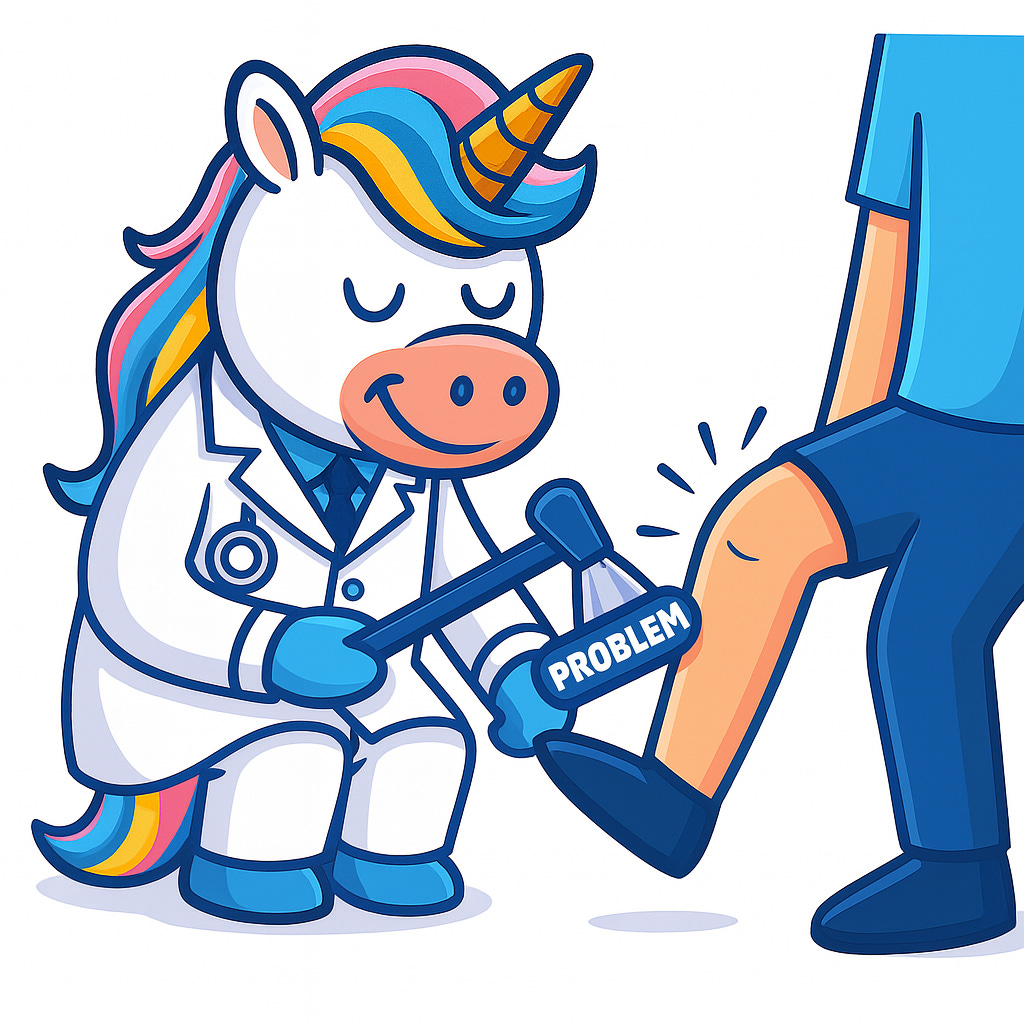
When founders encounter problems, they instinctively react in specific ways without even realizing it. These reflexive behaviors are shaped by personal background, education, and areas of familiarity -- they emerge naturally rather than being consciously chosen.
"What is your problem-solving instinct?"
The author introduces three instincts frequently observed in real startup environments:
- Engineering instinct
- Design instinct
- MBA (business) instinct
Each of these instincts has powerful strengths, but also predictable blind spots. If you fail to recognize your own or your team's instincts, you risk solving the wrong problem, defining problems too narrowly, or optimizing a business that doesn't yet exist.
1. The Engineering Instinct: "What Can I Build to Solve This?"
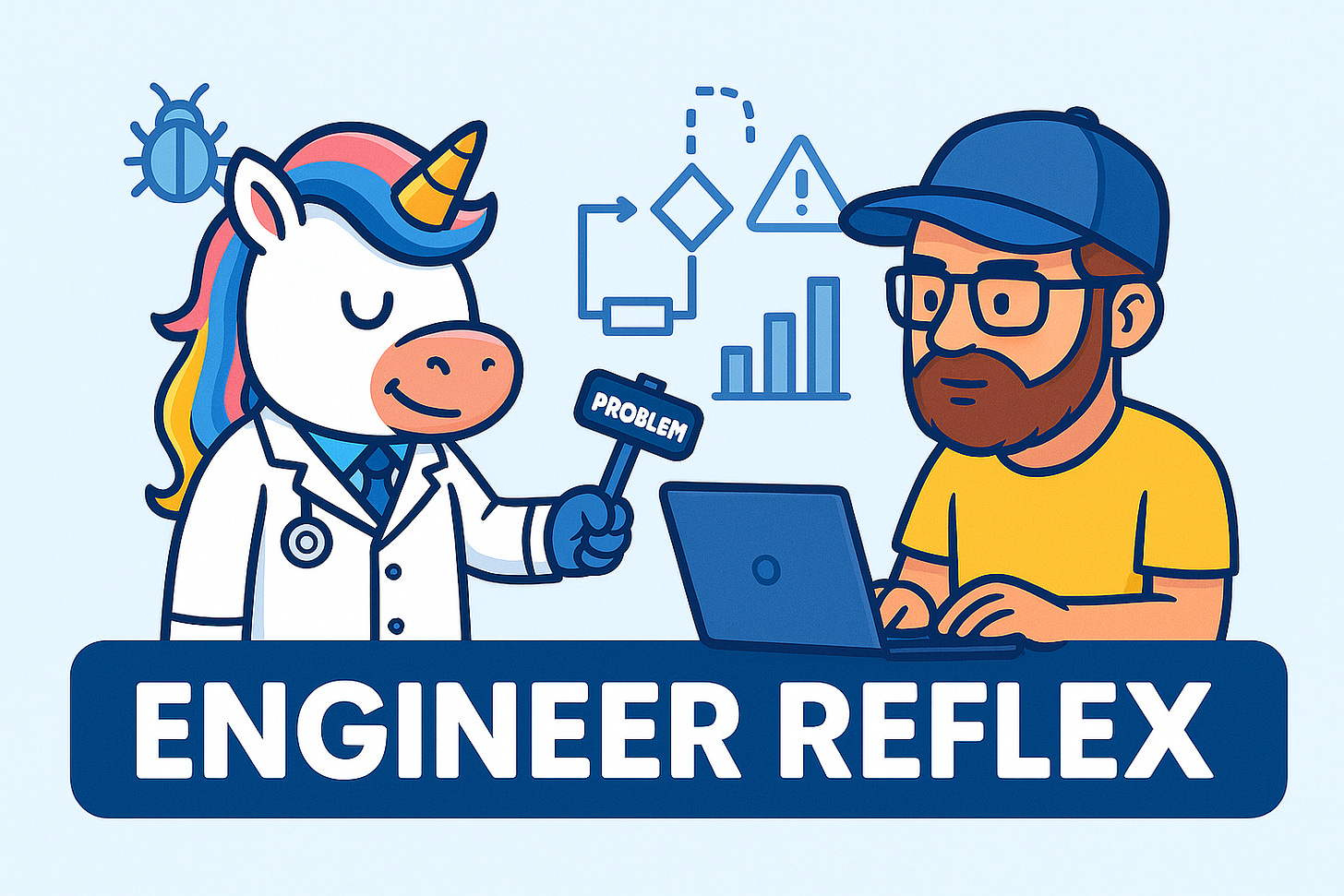
Founders with technical backgrounds instinctively tend to solve problems by building something. Whether it's a CRM issue, a growth problem, or a product adoption challenge, the first thought is always "let's build something for this."
"What can I build to solve this problem?"
This instinct has the major advantage of being able to quickly make abstract problems concrete. However, it also carries the risk of building unnecessary things without understanding the real problem.
Real-World Examples
- A team that builds a dashboard without defining what decisions it needs to support
- Immediately developing an external API integration mentioned in a sales meeting without considering whether it's actually needed for customer conversion
Strengths
- Fast execution: Produces tangible results rather than staying in theory
- Rapidly uncovers technical problems, workflow issues, and edge cases
Weaknesses
- Risk of over-engineering: Building solutions too early can become a liability later
- Treating symptoms only: Missing the truly important problems
- Overlooking human behavior: Engineers often struggle to account for the human element in system design
Caution
"Watch out for building a beautiful machine that nobody needs, or hiding strategic confusion behind technical speed."
2. The Design Instinct: "What's Really Going On Here?"
Founders with a design-thinking mindset have a strong tendency to understand the essence of the problem. Rather than jumping to solutions, they prefer approaches like "let's map the user journey" or "let's understand our users better."
"What's really going on here?"
This instinct is useful for seeing the full picture in complex situations and discovering hidden needs and contexts. However, if you stay stuck in exploration too long, execution gets delayed and nothing gets built.
Real-World Examples
- A team spending two weeks obsessing over vision and landing pages, producing results filled with vague buzzwords
- When shown to potential customers, the response was "I still don't understand what you actually do"
Strengths
- Human-centered understanding: Deep insight into user behavior and context
- Captures hidden needs, contextual shifts, and contradictions in behavior
- Flexible and adaptive: Capable of exploring diverse solutions
Weaknesses
- Slow decision-making: Gets stuck in analysis without moving to execution
- Hard to demonstrate progress: "Understanding" as a result doesn't communicate well to investors or team members
- Lack of execution: Ideas may never get implemented
Caution
"Watch out for getting trapped in an infinite loop of exploration, or using insight-gathering as an excuse to delay execution."
3. The MBA (Business) Instinct: "What's the Business Model Here?"
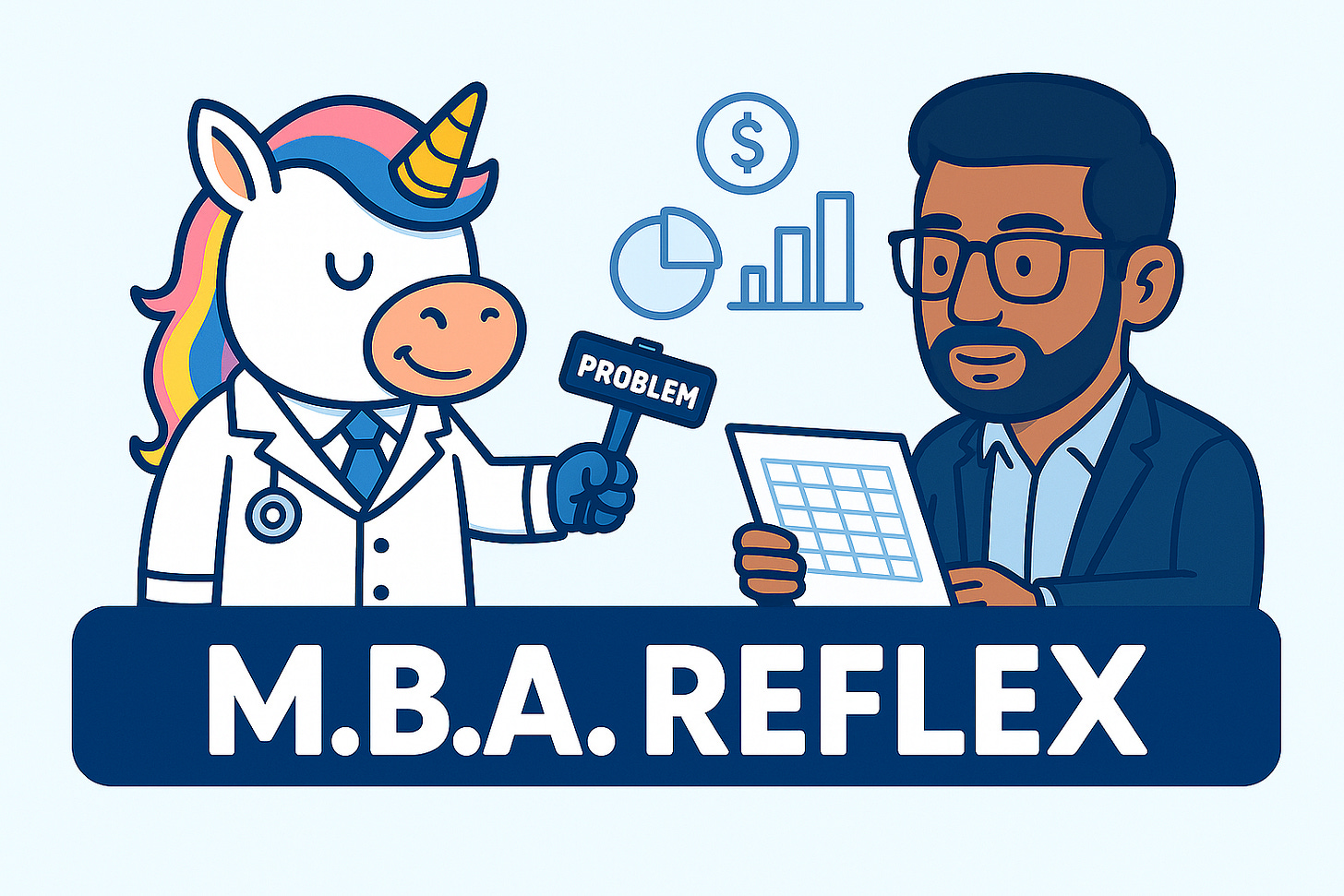
Founders from consulting, finance, or business school backgrounds tend to start by thinking about revenue models, market size, and CAC/LTV -- even when the customer isn't yet clearly defined, they instinctively try to map out the opportunity.
"What's the business model here?"
This instinct has strengths in structural thinking and communicating with investors. However, it also carries the risk of fixating on strategies that haven't been validated in the market.
Real-World Examples
- A founder who built a 5-year financial model and a 1-million-euro investment plan for a product that hadn't even launched yet
- Obsessing over granular plans when the product itself wasn't even defined
Strengths
- Not afraid of spreadsheets
- Forces clear definitions around value, growth, and monetization
- Effective with investors: Fluent in investor language -- market, margins, competitive advantage
- Can think about scalability from the start
Weaknesses
- Too many assumptions: Strategy already presupposes market fit and usability
- Only sees the big picture: Startups need to solve small problems first, but this approach mirrors big-company thinking
- Optimizing for fantasy: Even imaginary businesses with no real demand can look convincing on a spreadsheet
- Ignores real-world complexity: Actual markets are irrational and don't fit neatly into models
Caution
"Watch out for optimizing a business when you haven't even solved a meaningful problem yet."
Balancing the Three Instincts Is Crucial
Each of these three instincts can be a powerful weapon in the right situation. However, when you lean too heavily into one or fail to recognize which instinct has you trapped, problems arise:
- Engineering instinct: Starts building without understanding
- Design instinct: Keeps understanding without ever executing
- MBA instinct: Obsesses over an unvalidated business
"The best teams don't eliminate instincts. They balance them."
If you can recognize your own and your team's instincts and actively leverage different ones as needed, you become a far more adaptive team.
What's Your Instinct?
Finally, the author encourages readers to reflect on their strongest instinct:
- Engineer
- Designer
- MBA
Which instinct drives you? Ask yourself this question and add some balance to your future problem-solving approach