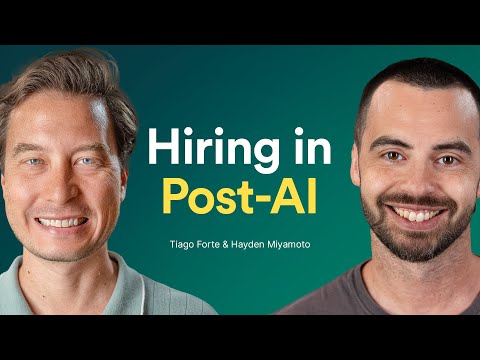
1. Three Systems That Separate Success from Failure
The video opens with the shocking fact that most businesses are burning thousands of dollars each month because they lack an org chart, measurable KPIs, and a standardized hiring process.
"Would you believe that most businesses are burning thousands of dollars every month because they don't have an org chart, measurable KPIs, or even a standardized hiring process?"
Without these three systems, a business is essentially flying blind.
"Without these three systems, your business is essentially flying blind."
If your competitors have these systems in place, your company will inevitably fall behind. All three exist for clarity and communication:
- Company direction
- Each person's role
- The criteria for success
Every team member needs clarity on these three things.
2. What Are KPIs (Key Performance Indicators)?
KPI stands for Key Performance Indicator.
"A KPI is a metric that measures the success of a responsibility."
Many people mistakenly think KPIs measure an individual's performance, but they actually measure the success of responsibilities assigned to a role.
- Role: For example, a "Marketing Manager" role.
- Responsibility: Newsletter distribution, content creation, collaborating with designers, etc.
- KPI: Each responsibility has a KPI to measure its success.
"A role is just the label on the box. What's inside is what really matters."
Qualities of a Good KPI
-
Controllability
- A KPI must be something the responsible person can actually control.
- Example: Don't assign "number of sends" as a KPI to someone who only writes the newsletter.
-
Impact
- A KPI must actually affect business goals or upstream processes.
- Example: Not just "number of sends," but "link clicks" or "consultation bookings" -- metrics that drive real action.
-
Leading Indicator
- It should be a leading indicator that provides fast feedback, not a lagging indicator where results come too late.
- Example: For high-end kitchen furniture sales, "sales from email" is too slow a metric. "Design consultation bookings" is more appropriate.
"A KPI should be something I can control, that has impact, and that serves as a leading indicator."
How AI Affects KPIs
AI changes the scope and measurement of KPIs by automating or expanding the responsibilities within a role. For example, before AI, you might produce only a few newsletters per day, but with AI and automation tools, hundreds or even thousands become possible.
"AI changes the responsibilities of a role and lets people focus more on what humans do best."
3. Hands-on KPI Design with AI
As a practical example, AI is asked to design KPIs for hiring a "YouTube Editor." AI proceeds as follows:
- Gathers context through questions about the current YouTube channel status, goals, budget, and content types
- Proposes KPI examples:
- Uploading videos on schedule (9 per quarter)
- Video completion rate (e.g., 45%)
- Click-through rate (CTR, e.g., 80% -- though the actual YouTube average is 4-6%, making this overly ambitious)
- Email list signups via YouTube (75+ per month)
"Some of the KPIs AI suggests are too aggressive or not truly controllable. You can refine these through conversation with AI."
In this way, AI iterates through a question-answer-refine loop, rapidly producing actionable KPIs, role definitions, job postings, and evaluation criteria for real-world use.
4. The Meaning and Evolution of Org Charts
An org chart is a tool that visualizes an organization's structure, roles, and reporting lines.
- Traditional org charts use a hierarchical structure (CEO -> Department Head -> Manager -> Staff), showing clear authority, reporting lines, and promotion paths.
- However, role-centric structures can lead to unclear responsibilities and slow communication.
"Traditional org charts are simple and clear, but slow feedback loops are why large companies move slowly."
Org Chart Changes in the AI Era
With AI adoption:
- Organizations shift from role-centric to process-centric structures
- One person can own multiple processes
- AI and people execute each process together
"AI can partially replace manager or even CEO roles. AI can understand all the context and make decisions quickly."
AI automates repetitive, data-driven management tasks, while people focus on more creative and human-centered roles.
The Value of Org Chart Visualization
AI can automatically visualize org charts and display KPIs for each role at a glance.
"Through org charts, people can easily understand who does what and the overall structure of the company."
5. The Importance of Standardized Hiring Processes
Systematic hiring isn't just about filling positions -- it's about:
- Using fast feedback loops to quickly filter out poor fits
- Presenting clear roles, KPIs, and expectations to find the right people fast
"When an employee leaves, you lose all the knowledge they built and the opportunity cost. Especially for skilled technical roles, replacement can take months and cost hundreds of thousands in lost opportunity."
Five Steps of Systematic Hiring
- Write a Job Description
- Clearly define roles, responsibilities, KPIs, and targets
- Prepare Supporting Materials
- Job postings, internal/external announcements, referral programs, etc.
- Application Screening
- AI automatically evaluates applications and cover letters against criteria
- Working Interview
- Assign tasks similar to actual work to assess practical skills
- Onboarding
- Provide clear goals and feedback for 1-3 months after joining; strengthen organizational adaptation through referral incentives
"Hiring is exactly like customer acquisition. Talent acquisition has an 'acquisition cost' too."
Cultural Fit vs. Systems
Emphasizing only "cultural fit" can lead to subjective and biased hiring. Instead, clearly define core values and design interview questions around them for systematic evaluation.
"Core values are how you systematize cultural fit."
How AI Transforms the Hiring Process
AI:
- Rapidly and systematically generates job descriptions, evaluation criteria, interview tasks, and onboarding plans
- Automates repetitive, time-consuming tasks
- Improves consistency and fairness in candidate evaluation
"Thanks to AI, half of the 20 candidates filtered themselves out during onboarding. That's much better than firing someone six months later."
6. The Synergy of Three Systems in Practice
These three systems (org chart, KPIs, hiring process) maximize clarity and communication, boosting overall organizational efficiency and performance.
"All three exist for clarity and communication. The company's direction, each person's role, and the criteria for success must all be clear."
- Every team member clearly understands their role and success criteria
- Organizational structure and individual responsibilities are transparently shared
- Systematic hiring and onboarding maximize talent fit
Even small organizations can benefit from adopting these systems:
- Reducing confusion, unclear responsibilities, and communication errors.
"Even in a small team, don't assume everyone knows everything. In reality, people often don't know even the basics."
7. Closing and Practical Resources
At the end of the video:
- The full AI-based hiring SOP (Standard Operating Procedure) is shared for free.
- For deeper learning, an AI-first business training program is recommended.
"If you've applied what you saw in this video, please share your experience in the comments!"
Key Concepts Summary
- Org Chart
- KPI (Key Performance Indicator)
- Standardized Hiring Process
- Clarity
- Communication
- AI Automation
- Roles and Responsibilities
- Leading Indicators
- Core Values
- Onboarding
By adopting these three systems, your business's direction and execution can improve dramatically. Actively leverage AI to build a faster, clearer, and more efficient organization.