This post is a stark warning for startups more than two years old: the assumptions and market conditions that existed at founding have likely shifted so dramatically that your business plan, tech stack, and team composition may already be obsolete. Since 2025, the explosion of AI-focused investment, vibe coding, and agentic AI has transformed the speed, cost, and competitive dynamics of software development. Sticking to the old playbook, Blank argues, means getting beaten in the next funding round or being wiped out by better-capitalized competitors. The conclusion is simple: right now, stop building and take stock — then pivot or course-correct aggressively if you want to survive.
1. "If Your Company Is More Than Two Years Old, Your Assumptions Are Probably Wrong" 😨
The post opens with a blunt warning. If you founded your company more than two years ago, the premises you built on are very likely no longer valid. The right move now, Blank insists, is not to write more code, hire more people, or raise more money — it's to stop and examine what has changed around you. Otherwise, the company dies.
"Stop coding, building, hiring, fundraising… and check what has changed around you. If you don't, your company will die."
2. Chris's Story: "We Had Our Heads Down — and the World Completely Changed" ☕️
Steve Blank opens with a coffee conversation he had with Chris, a founder he invested in six years ago. Chris had been heads-down pursuing:
- A complex autonomy problem, solved 2) in an existing market, using 3) a distinctive business model.
When Chris showed Blank his investor deck as he prepared for his first major funding round, Blank had an uncomfortable realization: the world had changed enormously while Chris was deep in execution.
2-1. The Autonomy Moat Was Rapidly Commoditizing
The defensive moat that Chris had spent five years building in autonomy software was looking less and less special. The war in Ukraine had driven real-world deployment of autonomous drones and ground vehicles, spawning dozens to hundreds of companies attacking the same problem with larger teams and deeper pockets.
"The autonomy software moat he'd spent five years building was starting to look less unique every day."
2-2. An Adjacent Market Had Exploded — and He Didn't Know It
Chris was struggling to drive adoption in his original niche, but while he wasn't watching, defense — the adjacent market — had seen autonomous-technology demand explode. The post notes that defense startup VC investment grew from essentially zero to $20 billion annually over the past five years.
Chris's product was a natural fit for use cases like contested logistics and medical evacuation, yet he had, as Blank puts it, "literally no idea" that those opportunities even existed.
"He literally had no idea these opportunities existed in the defense market."
2-3. The Strengths Are Real — But This Is No Longer the Business He Started
Blank acknowledges that Chris's team had done genuinely differentiated work on systems integration with existing aviation platforms. The conclusion, however, is cold: a business still exists, but it is not the business he started.
"There's still a business here… but it's not the business he started."
3. "Most Startups More Than Two Years Old Are Running Obsolete Business Plans" 🔄
The conversation with Chris leads Blank to a broader generalization. Startups older than two years typically have:
- An outdated business plan
- A tech stack and team that lag behind what the current environment demands
And the harder founders focus on shipping product and finding PMF, the less likely they are to notice the drift.
"Most startups more than two years old have an outdated business plan."
4. What Changed ①: VC Money Tilted Heavily Toward AI in 2025 💸
First: venture capital flows shifted. According to the post, two-thirds of all VC dollars in 2025 went into AI deals. If you're not AI, you're competing for a much smaller pool of capital — and investors will ask you:
"What happens when an AI-native competitor comes in with more money and eats your lunch?"
The key message here is that non-AI startups now need to explain why AI can't disrupt them. "We're not doing AI" is no longer sufficient. You need a defensible argument for why an AI entrant can't undercut your position.
5. What Changed ②: Vibe Coding Shattered the Old Rules for Speed and Team Size ⚡️
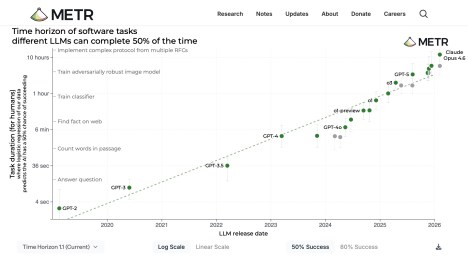
For software founders, the shift is even more direct. AI coding tools (such as Claude Code or OpenAI Codex) have broken the old equations. MVPs that once took months can now be built in days — sometimes hours. That means, paradoxically, "we shipped an MVP" no longer proves team capability.
"Now an MVP can be built in days… sometimes hours. (That means an MVP is no longer proof of team capability.)"
Team composition changes too. Rather than large engineering organizations, the new model calls for fewer people with different profiles — people who design outcomes and work processes, or who hold extremely deep technical expertise. Meanwhile, data that used to be a moat is being rapidly commoditized by foundation models trained on public data, so raw data advantages are harder to sustain.

6. What Changed ③: Even Agile Is Being Redefined — from Serial to Parallel 🧠
One of the most consequential shifts in the post is the redefinition of "agile" itself. The old constraint was: "Do we have the money and time to build this?" The new constraint is:
- Do we know what to test?
- Can we get in front of users fast enough to learn?
And Blank is unequivocal:
"Agile is no longer a serial process."
AI agents can run multiple workstreams simultaneously and in parallel, enabling diverse experiments at the same cost — or less. You can test five price points, ten messages, and twenty UX variants at the same time. More fundamentally, the UI itself no longer needs to be a screen. What you're testing may not be a visual design but rather the prompts and task instructions that get an agent to produce the desired outcome.
In this world, the bottleneck shifts upward — away from engineering and toward judgment, insight into what outcomes customers actually want, and distribution.
7. Agents: From "Software That Shows You Information" to "Software That Does the Work" 🤖
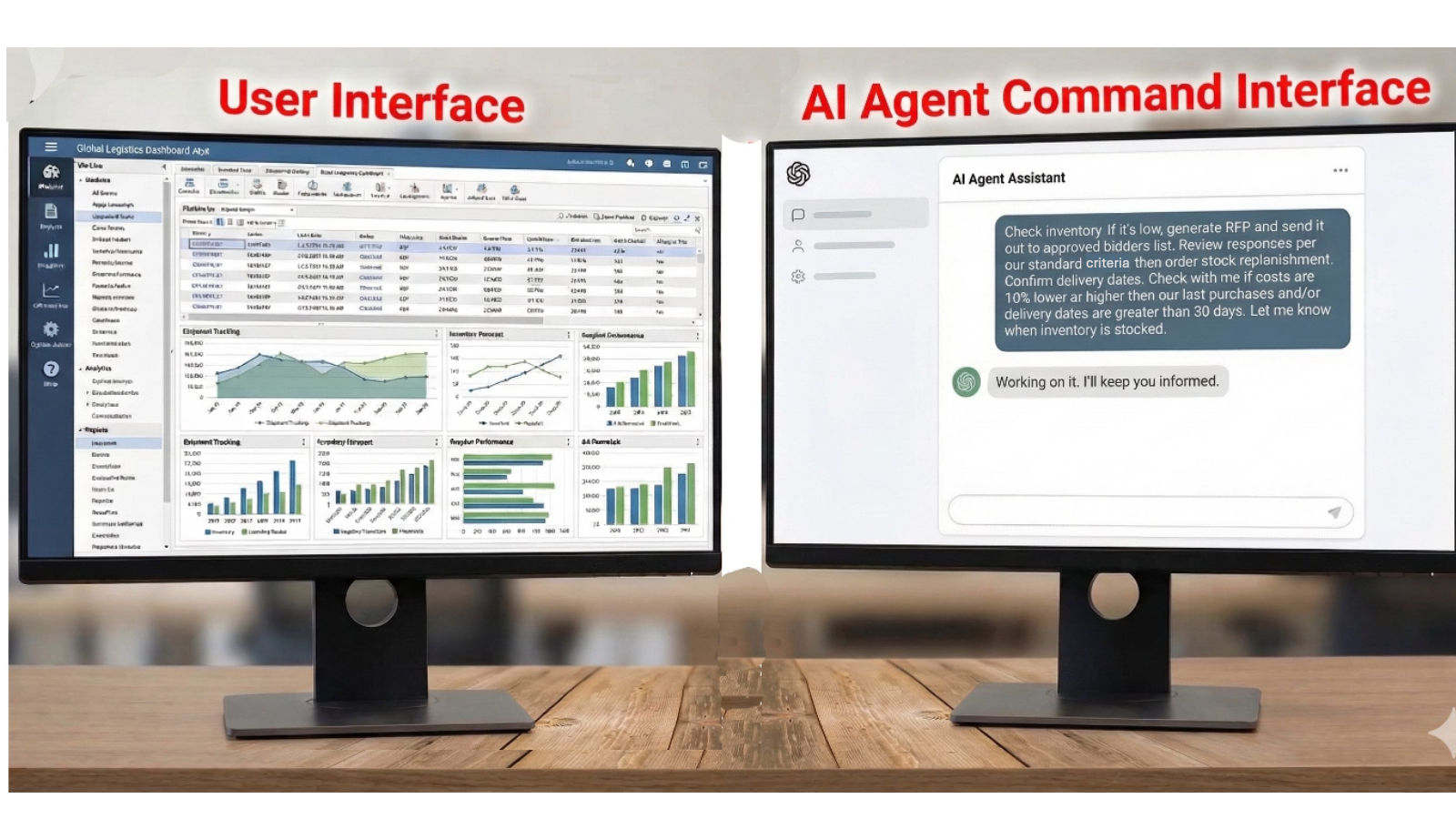
Blank argues that AI agents will transform every software category — including yours. Today's software mostly surfaces information to users, who then act through dashboards, alerts, and reports. But customers don't buy software to look at more screens — they buy it to get work done.
"Customers don't buy software to see more screens. They buy it to get things done."
In the agentic era, products will no longer just tell users what to do next — agents will actually execute the next step. If a competitor's product handles things automatically while yours still waits for a click, you lose the competitive battle.
Agentic products act like employees, for example:
- Resolving support tickets
- Booking meetings
- Qualifying leads
- Reordering inventory
They're oriented toward task completion. As a result, pricing shifts from seat-based to outcome-based.
"Not per seat — per outcome: per ticket resolved, per meeting booked, per lead qualified."
Blank also signals that PMF discovery itself will change: Product/Market Fit → AI Agent/Customer Outcome Fit, and MVP → MPO (Minimum Productive Outcomes).
"The search for product/market fit will become the search for 'AI agent/customer outcome fit.' The MVP will become the MPO — the Minimum Productive Outcome."
8. Hardware: Physics Doesn't Change — But You Can Kill Bad Ideas Faster 🧪
Hardware can't accelerate as freely as software. The constraints of physics, capital, supply chains, and manufacturing cycles remain real — you can't fake your way through cutting metal, building prototypes, or taping out chips.
But AI still brings significant change to hardware. Before physical builds, you can now:
- Simulate far more design variants
- Build digital twins
- Stress-test assumptions faster and more cheaply
This lets teams kill bad ideas sooner — and in startups, "failing fast" is a feature, not a bug.
When AI is embedded in a hardware system, the product definition itself expands. A camera with an AI backend becomes a surveillance system, a vibration sensor, or a predictive maintenance tool. A robot becomes a factory worker. The moat shifts from hardware alone to the combination of sensing (what you detect) + AI (what you decide and act on with that data).
9. The Deadliest Trap: Sunk Cost Prevents the Pivot 🪤
The post then asks why so many teams fail to keep up with change. Startups founded before 2025 often optimized their tech stack and organization for an era when software development was expensive and bespoke. Agile and DevSecOps made companies leaner, but fundamentally those methodologies are serial processes — and teams were sized accordingly.
Now AI is commoditizing large swaths of the tech stack, eroding code-and-feature moats that took years to build. The result: founders find themselves asking investors to fund an outdated business model. But teams buried in shipping product and finding PMF may never see the shift coming.
"When you're heads-down shipping product and looking for PMF, none of this may be obvious."
9-1. "We Can't Throw That Away" — the Belief That Blocks the Pivot
Blank describes how founders trap themselves:
"We've put years into this — we can't just throw it away." "Our VCs invested in this specific idea." "Our customers still want the UI." "The team believes in this roadmap." "Our customers aren't ready yet."
Chris is a perfect example. His technology may be impressive and competitive, but the business model built around that technology must change.
9-2. Sunk Costs Have Both Assets and Liabilities
Blank doesn't say to abandon everything. Some sunk costs remain assets:
- Deep domain knowledge
- Customer relationships
- Proprietary data
- Regulatory approvals
- Physical integration
For Chris specifically, airframe integration is cited as a genuine asset.
But other sunk costs are liabilities:
- A large engineering team optimized for slow software cycles
- Seat-based pricing
- A feature roadmap oriented around features rather than outcomes
These become what Blank calls the "Dead Moose on the Table" — everyone in the room knows it's there, but no one touches it.
10. The Survivor's Question: "If I Were Starting Today, What Would I Actually Build?" 🧭
Blank's formula for survival comes down to one question:
"If I were starting this company today — with today's tools and today's market — what would I actually build?"
The question grows more uncomfortable the more you've already raised money against a particular thesis. But Blank warns of an even more uncomfortable alternative: investors who won't fund the next round, followed by a company that closes its doors because it held too tightly to an obsolete plan.
11. Lessons Learned: Running the 2024 Playbook in 2026 Will Kill You 📌
The post closes with a summary of its core lessons. The thesis: everything has changed, and operating by yesterday's rules is a path to failure.
"You cannot operate in 2026 with a 2024 (or earlier) playbook."
Key points, preserving the structure of the original:
- Funding, technology, and business models have all changed.
- Agile is shifting to parallel development.
- PMF discovery is moving toward "agent/customer outcome fit", and MVPs will become MPOs.
- Sunk-cost thinking can kill a company.
- Defensible moats still exist — examples include proprietary data, deep understanding of customer outcomes, regulatory lock-in, and Program of Record status.
- If you truly understand the severity of what's happening, you can't sleep soundly.
"If you're sleeping well, you haven't understood what's happening yet."
- Founders who survive get out of the building, assess reality, pivot, and correct course.
"Founders who survive… get out of the building, check, pivot, and course-correct."
12. Conclusion: What's Needed Now Is Not More Output — It's a Pause and Redesign ✅
The message of this post is aggressive but honest. The older your startup, the more urgently you need to ask not "are we executing well?" but rather: does the world we built our assumptions on still exist? In 2026, competitive advantage belongs not to the team that builds fastest, but to the team that knows what to experiment on and can sell outcomes — and that can separate sunk-cost assets from liabilities and redesign boldly.