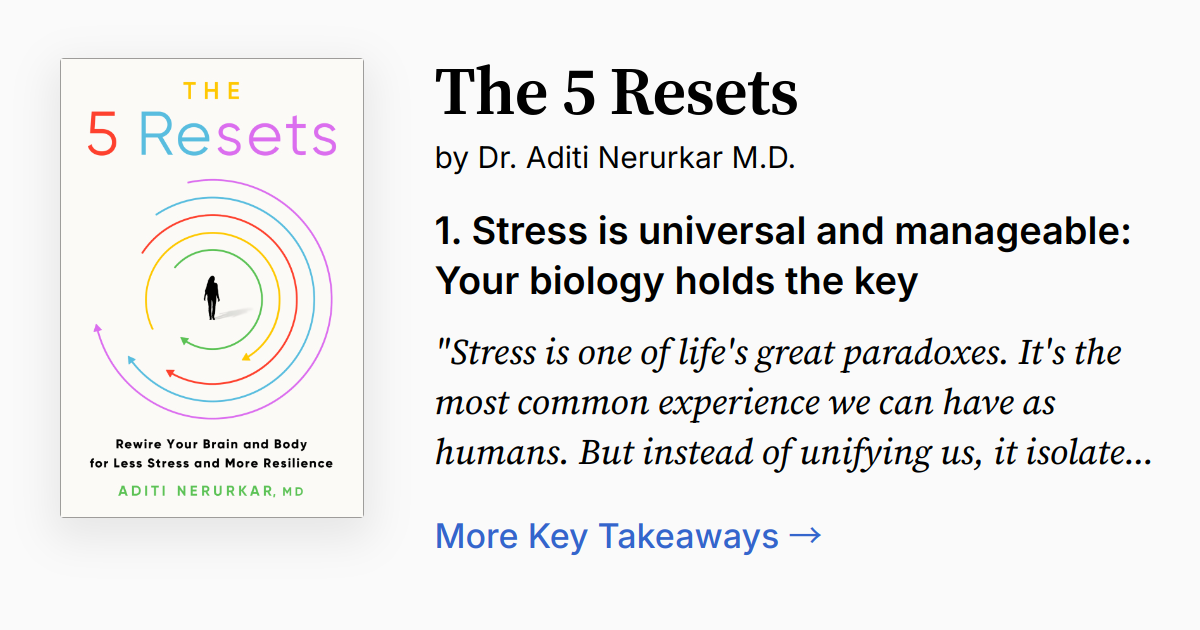
This book emphasizes that chronic stress and burnout can be overcome through small, brain-science-backed behavioral changes. Each chapter walks you step by step through recognizing your own stress signals, making your brain more resilient, and transforming your life through healthy habits. From core stress-management tools to eating, sleep, and digital hygiene, it introduces "reset" strategies you can actually practice in daily life — in an approachable, warm way.
1. Stress Is Human Nature — But It Can Be Managed
"Stress is the most universal experience of being human, yet rather than bringing us together, it makes us lonelier and makes us feel like we're the only ones struggling."
Stress is a natural response that happens to everyone. Our ancestors needed the "fight-or-flight" response for survival, but in the modern world that same response can lead to chronic burnout. The good news: both stress and burnout are reversible!
The book's encouraging message is that by understanding yourself through the lens of neuroscience and steadily stacking small changes, you can fully bounce back.
2. Understanding Your Stress Signals — Your Personal Stress Score and Canary Symptoms
"My pounding heart was the warning signal. It made me sit down, pay attention, and make changes to my life and lifestyle."
The starting point is recognizing your own personal warning signals (canary symptoms)! Common warning signs include:
- Sleep disturbances
- Mood swings or irritability
- Physical tension, headaches
- Digestive problems
- Difficulty concentrating
The book also includes a simple quiz to measure your personal stress score. By checking in regularly and understanding your own stress profile, real change becomes possible.
3. Building Brain Resilience — Neuroplasticity and the Rule of 2
"The brain is a muscle that can grow and change as the conditions of your life change."
Our brains have the ongoing capacity to forge new neural pathways (neuroplasticity) — meaning you can literally rewire your brain to be more stress-resistant through repeated practice.
The key strategy here is the "Rule of Resilience 2": Instead of trying to overhaul every habit at once, attempt just 2 stress-improvement behaviors at a time. This way you build small but real change without overwhelm, and your confidence grows along with it.
4. Finding Your Stress Sweet Spot — The Goldilocks Principle
"The middle of the stress curve — not too much, not too little — is your sweet spot. The right amount of stress keeps you motivated, but too much leads to burnout."
Too little stress and too much stress are both problems. When we're "just right" levels of engaged, we experience peak performance and satisfaction. To stay in that zone, make sure to take short, frequent breaks! Your body and brain can recover, and you protect yourself from burnout.
- Schedule rest time proactively
- Reduce excessive workload and unnecessary stressors
- Find activities that offer just the right level of challenge
5. Quieting Your Inner Critic — Gratitude and Self-Compassion
"Staying with a positive experience just a little longer turns a temporary mental state into a new neural structure. A state of mind becomes a neural trait."
When stressed, the voice of self-criticism tends to grow louder — but gratitude and self-compassion practices can literally change the brain's habits. Start with writing in a daily gratitude journal. Your mood lifts right away, and over time your actual stress resilience increases.
Benefits of a gratitude practice:
- Reduced stress hormones
- Increased satisfaction and happiness
- A shift toward a more positive mindset
6. Syncing Brain and Body — The Power of Breath and Movement
"Breathing is the only physiological process in the body that can be both conscious and unconscious."
Deep breathing calms the "sympathetic nervous system" that actively responds to stress, and even simple exercise (like a 20-minute daily walk) significantly improves mood and cognitive function.
Recommended breathing techniques:
- Diaphragmatic breathing: breathe into your belly
- 4-7-8 breathing: inhale for 4 seconds, hold for 7, exhale for 8
- Heart-centered breathing: place a hand on your chest and breathe slowly
7. Reducing Digital Distractions — Protecting Your Focus
"The solution is one thing only: creating boundaries to protect your most precious resource — your attention."
Information overload from smartphones and computers silently stresses the brain. To avoid "popcorn brain" — a brain constantly stimulated like endlessly popping corn — you need to consciously set time and space boundaries around your digital use.
Healthy digital habits:
- Set specific times to check social media and email
- Designate key spaces (bedroom, dining table) as device-free zones
- Turn off unnecessary notifications; practice regular media fasting
8. Reset Your Brain Every Night — Quality Sleep Comes First
"Sleep affects every cell, muscle, organ, and even your brain."
Sleep is not merely rest — it is literally the time when your brain and body "repair themselves." Prioritizing sleep hygiene — 7–9 hours of regular, quality sleep each night, keeping electronics away before bed — dramatically increases your stress resilience.
9. One Thing at a Time — The Power of Monotasking
"Multitasking is scientifically wrong. In reality, our brains don't do multiple things simultaneously — they just switch between tasks very rapidly."
Trying to handle several things at once actually makes you more exhausted and more error-prone. Practice monotasking — focusing on one thing at a time — and use time-block methods like the Pomodoro technique (25 minutes of focus, 5 minutes of rest).
Benefits:
- Improved focus and work efficiency
- Reduced stress and fatigue
- Higher quality work and greater satisfaction
10. Managing the Gut-Brain Connection — Lowering Stress Through Healthy Eating
"Our gut contains the largest microbial ecosystem in the body — the microbiome."
Gut health profoundly influences your mood, stress levels, and even your brain's resilience. A Mediterranean-style diet (fresh vegetables, omega-3-rich fish, nuts, etc.) along with probiotic foods like yogurt and kimchi benefit both the gut and the brain.
11. Drawing Boundaries — Protecting Rest Time and the Fake Commute
"Every digital device emits blue light, which keeps your brain alert even when you feel sleepy."
In the era of remote work, a clear boundary between work and life is essential. Even without an actual commute, create mental transition points with a "fake commute" — a short walk, meditation, changing clothes, or similar rituals.
12. Choosing Your Future Self — Growth Over Perfection
"Someday when you tell the story of how you overcame your hardships, it will be someone else's survival guide." — Brené Brown
Embrace change and growth itself rather than chasing perfection! Celebrate your small changes, check your personal "stress score" often, and share small wins with a supportive friend or group — and over time you'll become the author of a much larger transformation.
Closing
Stress management, too, begins with consistent practice and small daily actions. With the 12 reset strategies introduced in this book, build your own resilience and take one step at a time toward a healthier, more focused, more at-ease version of yourself. 😊 Above all, remember as you journey through change: "Continuous growth and a generous, compassionate gaze toward yourself" are what matter most.