
PostHog's team shares the importance and practical strategies of pricing learned from real experience. Pricing isn't just about revenue structure -- it's a powerful tool that defines a company's identity, marketing, and sales approach. Through actual case studies, changes at other companies, and lessons learned from trial and error, this piece takes a detailed, chronological look at the essence of pricing and how to operate it, which every startup must consider.
1. PostHog's Pricing Challenges and Starting Point
PostHog has separate pricing policies for more than 14 apps, so the team is constantly thinking about pricing for new and existing products. Guided by the value of "consistently low prices," they reduced prices over the past 12 months for analytics events, session replays, surveys, data pipelines, and other key services. Internally, pricing discussions go far beyond casual exchanges -- heated debates have occurred over 100 times, making pricing the hottest topic.
2. Pricing Means More Than Revenue
PostHog emphasizes that pricing is not simply a way to make money. Pricing determines the product's identity, customer experience, and the entire sales motion.
They illustrate this with two hypothetical "Feature Flag" tools:
"Feature Flags 'R' Us" Case
- Charges by seat count and number of flags created
- Users become very cautious about adding flags and grow more dependent on existing ones
- This model suits enterprises that ship products slowly
- Focuses on enterprise features like audit logs and access control
"Flag Company of New York" Case
- Charges by usage (requests)
- All developers freely create many flags and experiment quickly
- Focuses on flexibility, developer experience (DevEx), and cost control
Key quote: "How you charge matters more than how much you charge."
3. Pricing Design Should Start from Your Ideal Customer Profile (ICP)
The emphasis is that pricing should start from your Ideal Customer Profile.
"Product pricing should be designed to match our ideal customer profile. PostHog's customer profile is fast-growing startups and product engineers, so we designed a self-serve model with usage-based pricing. This lets product engineers take the lead and experiment as much as they want."
4. The Trap of "Free" -- The Risk of Startups Avoiding Pricing
Three common reasons startups delay pricing decisions:
- Fear that nobody will pay
- Fear of getting pricing wrong and killing growth
- Believing user growth is more important
But most startups are far better off introducing paid pricing early (even a small amount) rather than staying free. Paying customers provide feedback that's fundamentally different from and far more valuable than free users.
A cautionary tale is the AI coding startup Kite, which once had 500,000 users but shut down after failing to monetize.
"We never grew into a business. We couldn't monetize the product, and it took us way too long to realize that." -- Kite founder
After seven years without acquiring paying customers, they closed the business. Had they tried charging from the start, they could have gauged product-market fit much faster.
Key lesson: "Testing pricing is similar to shipping a product. The sooner you try, the sooner you get real feedback."
5. Pricing Strategy Must Continuously Evolve: PostHog's Case and Industry Changes
It's natural for startups to get pricing wrong initially, and they must keep iterating and improving.
-
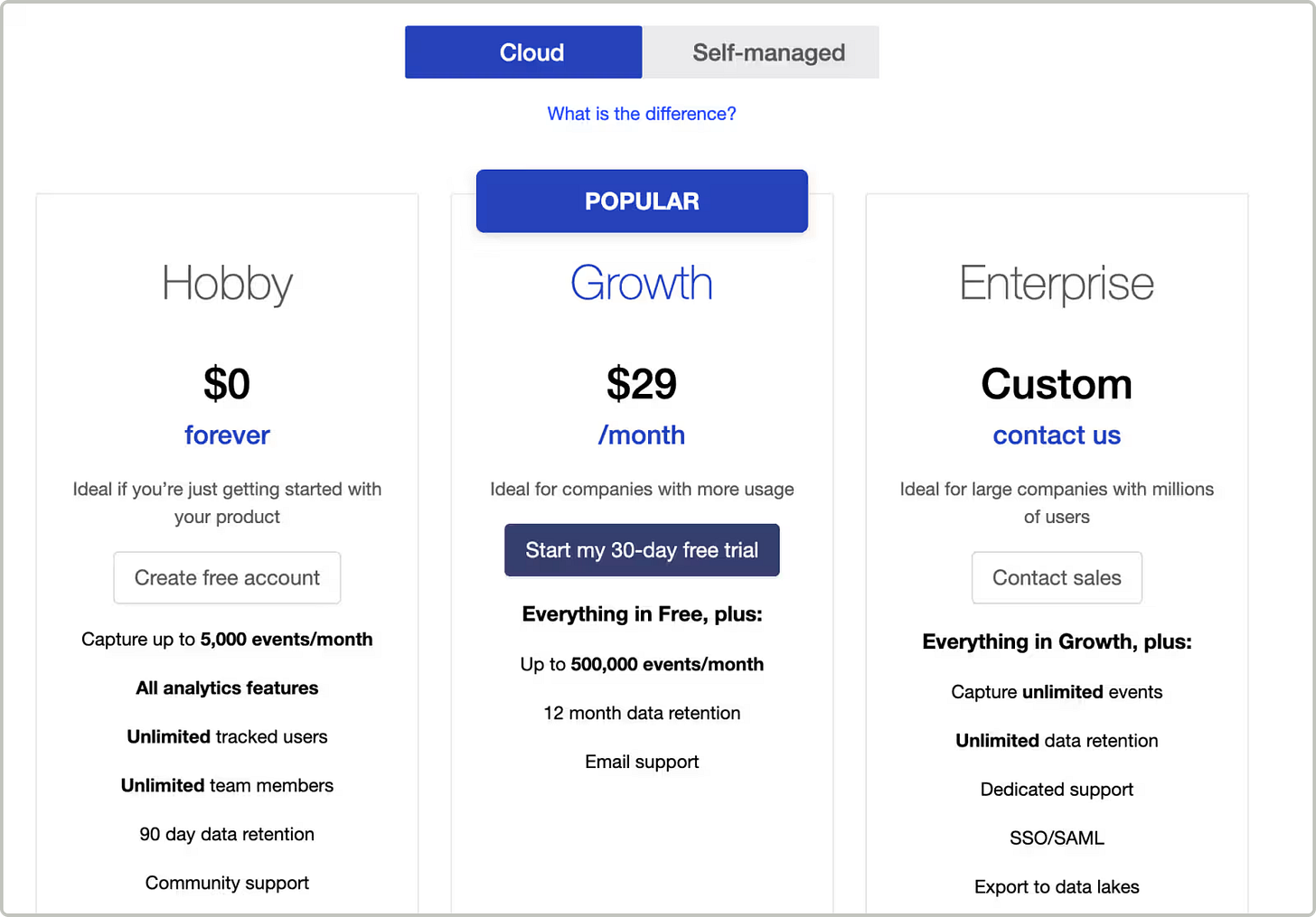
PostHog started in August 2020 with a limited free tier and monthly subscription model
-
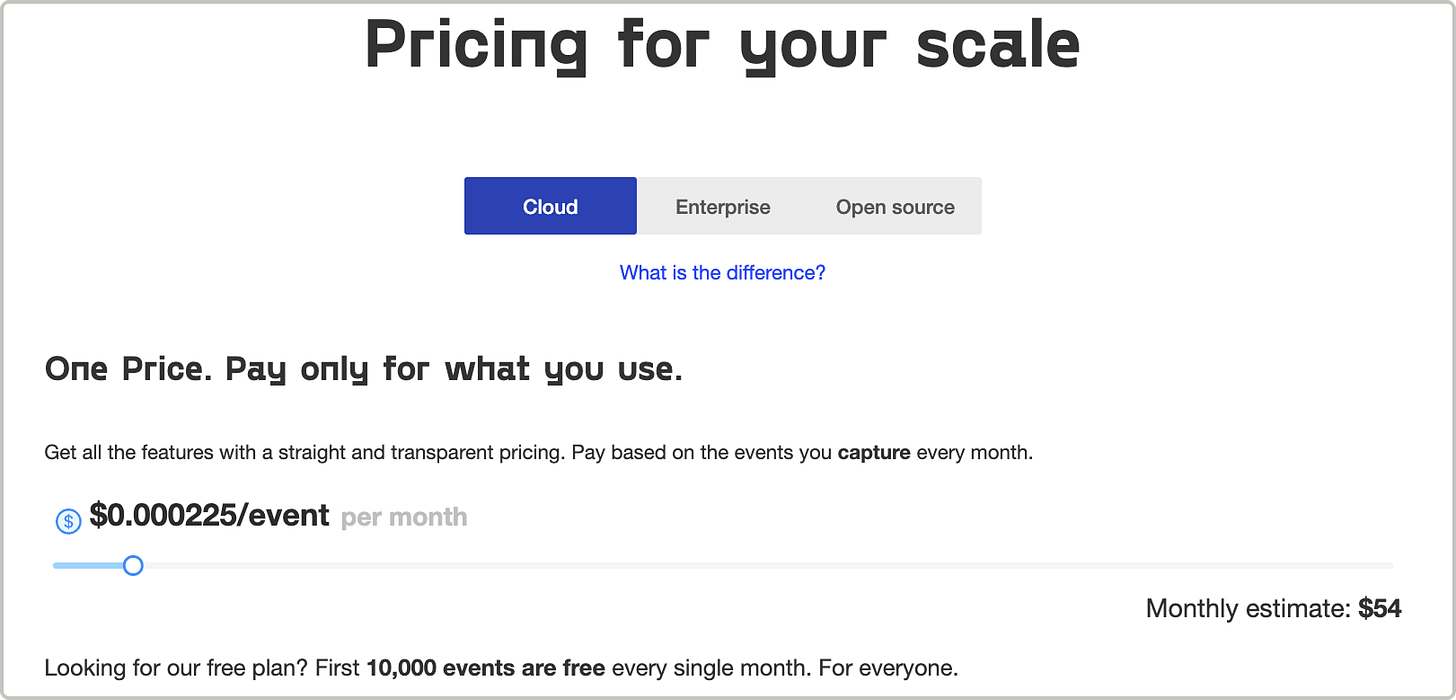
In March 2021, they introduced usage-based pricing and kept experimenting
-
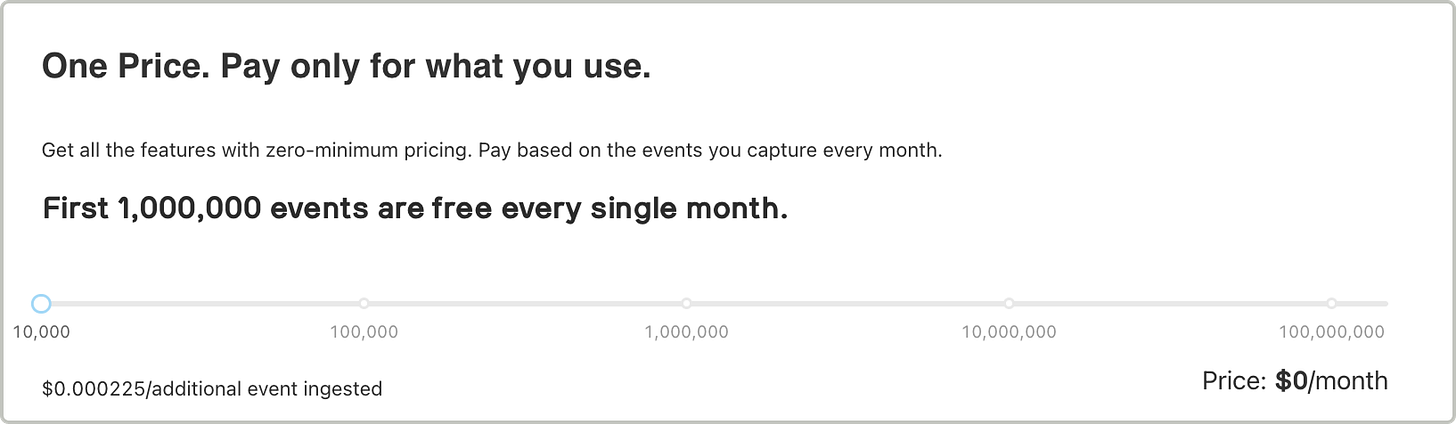
That same May, they expanded the free tier by 100x, and the "generous free + usage-based pricing" combination has been the core ever since
Key changes at other companies:
- Notion: Introduced a free tier for users in 2020, gradually shifted to team-plan focus
- Figma: Launched enterprise plan in 2022, raised prices in 2025
- Intercom: Doubled growth rate by introducing AI-based pricing
"Pricing must be continuously adjusted to match actual user experience and value creation. What matters is providing customers with sufficient advance notice, grace periods, and discounts as protective measures when making changes like price increases."
6. A Sensible Free Policy: Principles Are the Answer
The debate over free tier scope is endless:
- Giving everything away for free
- Or charging for everything
Neither is the answer. The key is establishing and adhering to clear principles. PostHog's principles are:
- Hobbyist developers and early-stage startups can use it for free
- More generous free tier and features than competitors
- Per-product individual pricing and separate free tiers
- Core features that increase lock-in (retention) are free within appropriate limits
Key quote: "Having pricing/free-tier principles prevents endless debates every time someone asks, 'Should we give this feature away for free or not?'"
7. Pricing and Billing Require Engineering-Scale Investment
A single subscription plan can't support a complex revenue model. PostHog maintains a dedicated billing team (currently 4 people + dedicated engineers) to handle various scenarios.
Why this is essential:
- Freely deploy diverse, granular pricing strategies per product/option
- Support special discounts, credits, contracts, and unusual payment methods (checks, etc.)
- Ensure reliability (billing errors = customer churn & revenue loss)
- Enable accurate revenue forecasting for business planning, fundraising, and hiring
Key quote: "Without dedicated billing staff, executing new pricing strategies slows down, incorrect charges increase customer complaints, and all revenue-related decisions become more difficult."
8. Building Customer Trust Through Pricing Transparency
Excessive charges harm not only customers but also the company's reputation and growth. So it's important to make the pricing structure not just "simple" but predictable and transparent.
PostHog's actual approach:
-
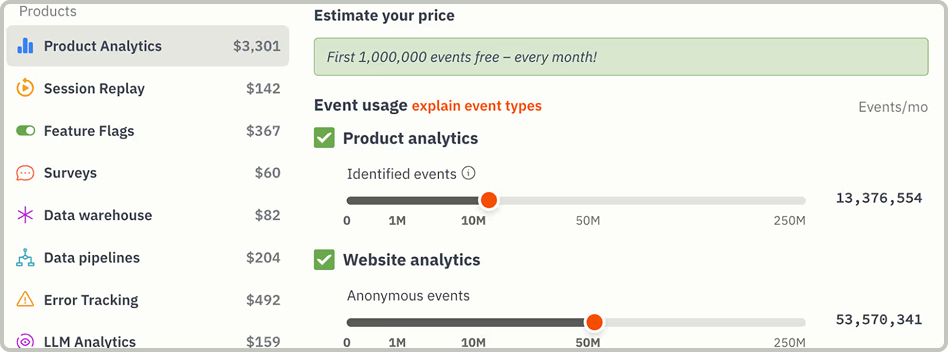
Publicly share detailed price lists and discount policies
-
Provide dashboards showing real-time usage and estimated costs
-
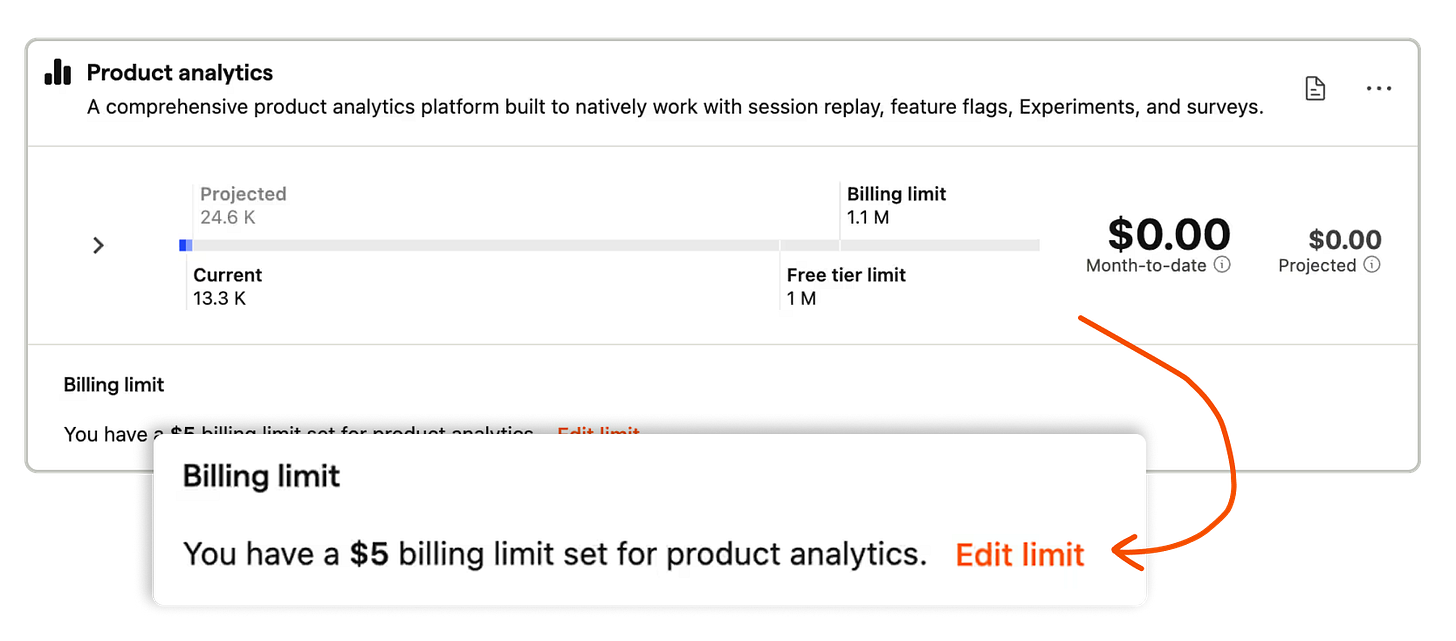
Let users set their own spending caps (with clear notification when limits are exceeded and features are restricted)
-
Cost optimization support (documentation, dashboards, always-available customer support team)
-
Generous refund policies like "side project insurance"
"Even if it means earning less money, a transparent and trusted pricing policy is the true secret to success."
In Closing
PostHog's lesson can be summed up as: "Pricing must be thought about as strategically as the product itself, and it must continuously evolve through principles, investment, and real execution." Finding a value-centered balance between free and paid, simplicity and flexibility, and putting customer trust first is where real growth begins.