
This article tracks what moat startups must build next, now that "a good product" alone is no longer enough to maintain competitive advantage in the AI era. The author defines this as Beyond Product—that is, the way you reach customers, the depth at which you understand them, and the ability to accumulate that understanding as an organizational system. In particular, the article searches for the true nature of Distribution that grows stronger over time in Palantir's FDE system, ultimately concluding that "systems—not tactics—are what endure."
1. In the AI Era, the "Product" Formula Is Breaking Down—and Attention Is Shifting to Distribution 🧭
The article opens with the question: "If AI is doing the coding, what should founders actually do?" The author had already written in August 2025 that we were in the middle of a shift from the age of Product to the age of Distribution, and notes that the change has now reached the point where everyone can feel it.
As AI pushes the cost of development toward effectively zero and copycats can appear within a week, the old formula for success—better features, faster performance, prettier UI—is becoming less and less effective.
"In an era where AI drives building costs to zero and copycats appear within a week—better features, faster performance, prettier UI. This formula is increasingly failing to work."
As a result, attention has shifted toward "distribution," but the author identifies a limitation: the word "Distribution" is typically misunderstood as operating at the level of tactics. Viral campaigns, cold outbound, growth hacking—these approaches do work, but competitors can copy them in three months, and as AI accelerates execution speed, the lifespan of any given tactic grows shorter.
"If AI raises execution speed tenfold, the lifespan of tactics grows shorter."
2. The Author's Name for It: Beyond Product—Building a Moat That Lies Beyond the Product 🧱
The author decides to call this transition "Beyond Product." The "beyond product" in question is not simply marketing, but rather:
- The way you reach customers
- The depth at which you understand them
- The ability to turn that understanding into a repeatable system
The author has also started a podcast with a colleague (a GTM Specialist) who is tracking the same question, and announces plans to deliver updates weekly.
Setting aside the introduction, the article then poses the central question directly:
"What does Distribution that grows stronger over time actually look like?"
3. "When the Product Weakens, What Remains?"—Companies That Are Broad and Build Relationships 👥
The article then turns to companies that remain memorable and continue growing even when their product alone doesn't tell the whole story. Examples like Ajungdang and Wipun (Snack24)—companies with highly diverse product lineups—are cited to argue that "the value of a company's growth doesn't rest in any single product," a reality we have experienced even before the AI era.
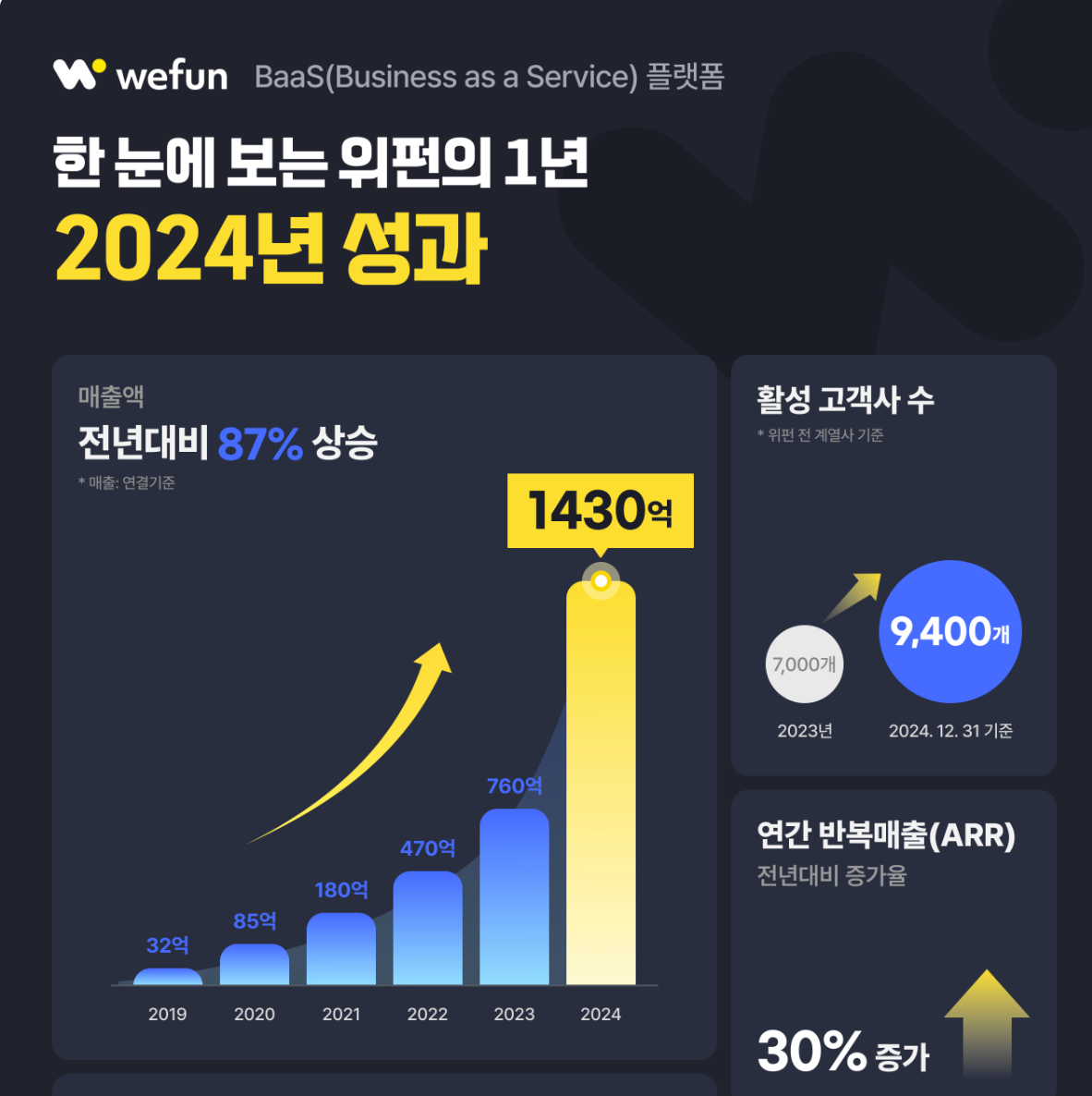
This naturally leads to the next question: "How do these companies deliver value to customers and deepen relationships across so many products?" To find the answer, the company the author digs into as the original model is Palantir.
4. The Company Everyone Complains About but No One Leaves: Palantir—Because the Reason Is the System, Not the Product 🧩
The author highlights how Palantir is sometimes ridiculed on Blind and Reddit as a "terrible platform," yet enterprise customers who adopt it once never leave. If successors continue using the same system their predecessors put in place, that signals something beyond mere inertia—it implies a clear utility that justifies continued use.
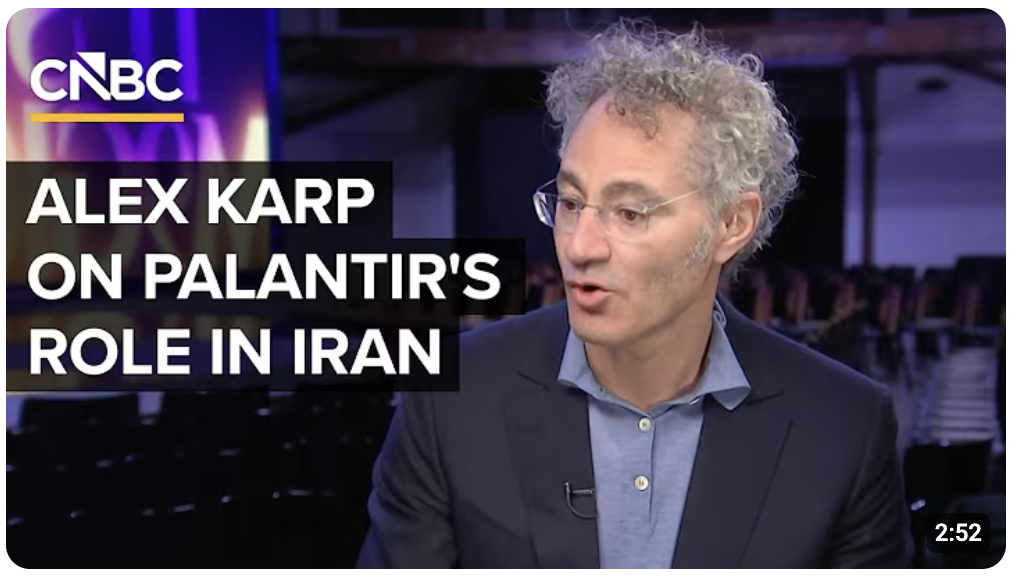
The commonly offered hypotheses are then refuted one by one:
"Because the software is good?" — Users complain about it directly. "Technical lock-in?" — Lock-in alone can't explain renewal rates and expansion revenue. "Great sales?" — You can't sell something at thousands of dollars a day on sales alone.
Instead, the author identifies the core: Palantir is not selling software—it is selling "how much better you will become (outcomes and improvement)."
"This company doesn't sell software. It sells 'how much better you're going to get.'"
After tracing this through podcasts and other sources, the author concludes that what Palantir has built is not a product but a system that creates advocates—a structure in which people and learning accumulate from customer sites back into the organization.
5. FDE Is Not a Job Title—It Is a Six-Layer Development System 🎓
The title most associated with Palantir is FDE (Forward Deployed Engineer). But the author argues that "putting FDE in a job posting doesn't make the same thing happen"—what Palantir built is not a role name but a system that transforms engineers into entrepreneurs operating inside the customer's reality.
"You can only understand this company if you view FDE not as a single job title but as a six-layer development system. Remove any one layer and it becomes just a subcontracted SI shop."
The article then introduces, in chronological order, the four most surprising points that illuminate this system.
5-1. The Five Books You Receive on Day One Include No Coding Books 📚
When you join as an FDE, you receive five books on day one—none of which are coding or data science books. Instead, the list includes books on improv (reading power dynamics), user interviewing (separating words from meaning), the 9/11 intelligence failure (mission context), GTD (managing overload within autonomy), and Dalio's Principles (fact-based reasoning and transparency).
The author reads this not as "engineer onboarding" but as a curriculum for producing people who can read customers.
"This is not engineer onboarding. It's a curriculum to create people who can read customers." "From Day 1, it's not 'write better code'—it installs an operating system of 'find what the customer cannot say.'"
5-2. They Don't Send People Alone—They Send Delta/Echo Pairs 🤝
Palantir doesn't deploy a single FDE—it sends two roles as a pair:
- Delta: a software engineering specialist who writes the code
- Echo (Deployment Strategist): reads and translates the customer organization's internal politics, power dynamics, and stakeholder map
Crucially, both individuals carry the "engineer" title. The article quotes a person who played the Echo role:
"I worked alongside extraordinarily talented engineers… It required not just technical skill but creativity, judgment, and customer-facing charisma."
The author explains why this pairing is powerful by describing the failure modes that arise when either role is missing:
- Without Echo: becomes SI subcontracting—"only builds what it's asked to build"
- Without Delta: becomes consulting—"promises things it cannot build"
Ultimately, the friction between the two forces triangulation of the customer's actual needs.
5-3. Not Zoom Calls—Sitting at the Customer's Desk 🏢
In what the author calls the most counterintuitive section, Palantir expects engineers to show up at the customer's office three to four days a week. This runs opposite to Silicon Valley's remote and call-centric culture, and the author argues that it is precisely this contrarian stance that has proven to be a moat for twenty years.
"FDEs were generally expected to go to the customer's office and work there three to four days a week… For a Silicon Valley company, this was extremely unusual." "When I first joined, I spent months in a manufacturing plant in Toledo, Ohio… coding up their learnings." "The field is where real education happens. Everything else is just preparation."
The conclusion is stated crisply:
"What customers cannot tell you, you can only learn by sitting next to them."
5-4. Every Contract Sharpens the Weapon—Field Learning Flows Back into the Core Product 🔁
The author identifies the decisive difference between Palantir and SI subcontractors in "what remains when a project ends." When an SI engagement ends, nothing is retained at the organizational level—learning stays only in people's heads. Palantir, by contrast, has what has been validated through field customization absorbed into the platform's core features, creating a loop where each successive deployment is easier.
The loop presented in the article runs as follows:
- Encounter a problem in the field that the platform cannot solve
- Build a custom solution in the customer's environment
- Flag it if it is actually used
- Central product team evaluates whether it can be generalized
- If so, absorb it as a core feature
- The next team deploys faster, with less customization
- With each cycle, the platform's foundational capability rises
Supporting testimony follows:
"Customer deployments were a testing ground for new technology—things that worked were migrated to core… This development cycle happened at a surprisingly rapid pace."
Here the author returns to the original question and attaches a conclusion. This loop is exactly the true nature of Distribution that grows stronger over time.
6. What This System Produced—and the Question It Poses to Readers 🎯
6-1. Numbers Created by the Palantir System's Transformation of People
The author presents the startup and investment ecosystem that has emerged from Palantir alumni, in numbers:
| Metric | Figure |
|---|---|
| Startups founded by Palantir alumni | 350+ |
| Total funding raised | $34B+ (approx. ₩45 trillion) |
| Unicorns | 15+ |
| Survival rate post Pre-Seed | 94% |
The author draws the contrast: "Google has fifty times as many employees as Palantir, yet YC batches see more ex-Palantir founders." This is not simply because Palantir hires great people—it is because the system transforms people.
"This isn't because they hired great people. It's the result of the system transforming people."
The article also identifies patterns that repeat across Palantir spinout founders: the ability to read a room, fluency in the language of an industry, a culture of rapid deployment, and first-principles thinking that refuses to follow a playbook.
6-2. The Core Question: Is Your Distribution a Tactic or a System?
After the extended Palantir narrative, the author does not conclude with "Palantir is impressive." Instead, the argument is compressed into a single question the reader can apply:
"In your current GTM and sales activities, is there a structure by which what you learn in the field flows back as a system?"
The article then contrasts tactics and systems:
| Dimension | Tactic | System |
|---|---|---|
| Copyability | Competitors can copy it in three months | Structurally impossible to copy |
| Relationship with time | Effectiveness diminishes | Grows stronger over time |
| Learning | One-time | Execution reinforces the next |
As an example, the author says the n8n open-source ecosystem—where the platform grows stronger as more contributors join—is closer to a system. A viral campaign, by contrast, can be spectacular once but cannot guarantee the next time, so it remains a tactic.
A realistic caveat is also offered: Palantir's conditions (twenty years, Peter Thiel) cannot be replicated, but the direction can be learned.
"If not, you're still running tactics… Tactics alone cannot build a moat that grows stronger over time."
6-3. Preview of the Next Story: Palantir "Sends People" vs. Clay "Sends Tools"—and a March 17, 2026 Gathering
This article grew out of the first Beyond Product podcast conversation, and the author promises to keep tracking the question. If Palantir represents the extreme of "sending people," the author previews Clay as a company that achieves similar outcomes through the opposite extreme—"sending tools" (integrating 150 data sources, creating the new GTM Engineer role, and more).
The article closes by announcing a gathering on the evening of March 17, 2026, where people interested in GTM can share and discuss real-world cases.
7. Closing
The core argument of this article is that in an era where AI rapidly erodes product differentiation, the moat that remains is not a bundle of tactics like viral campaigns—it is a system in which learning accumulates. Palantir's FDE model implements Distribution that grows stronger over time through the loop of "field learning → organizational feedback → core product strengthening → faster next deployment." In the end, the question readers should take away is one: Is our GTM a system that gets stronger with every execution, or a tactic that will soon be copied?