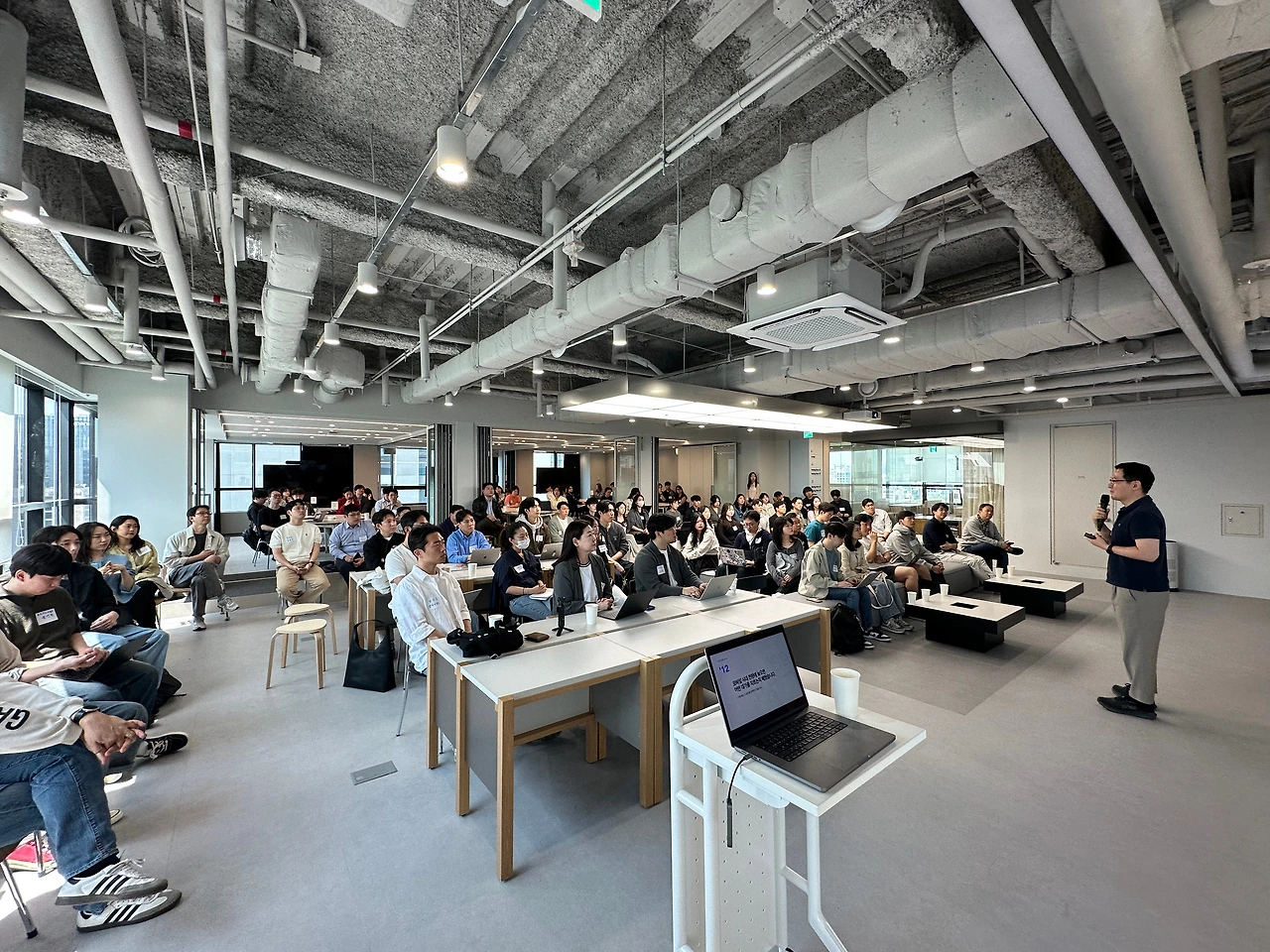
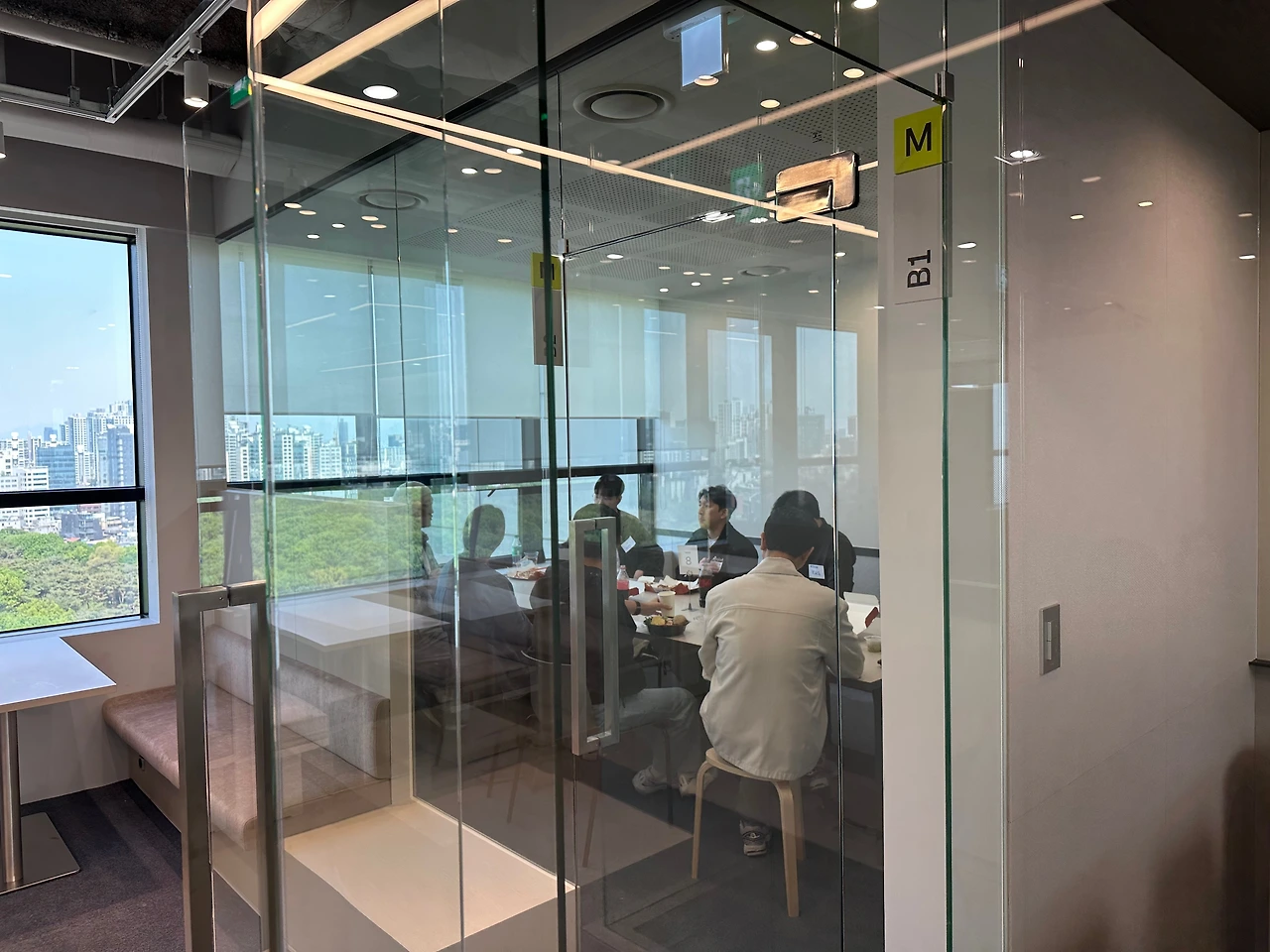
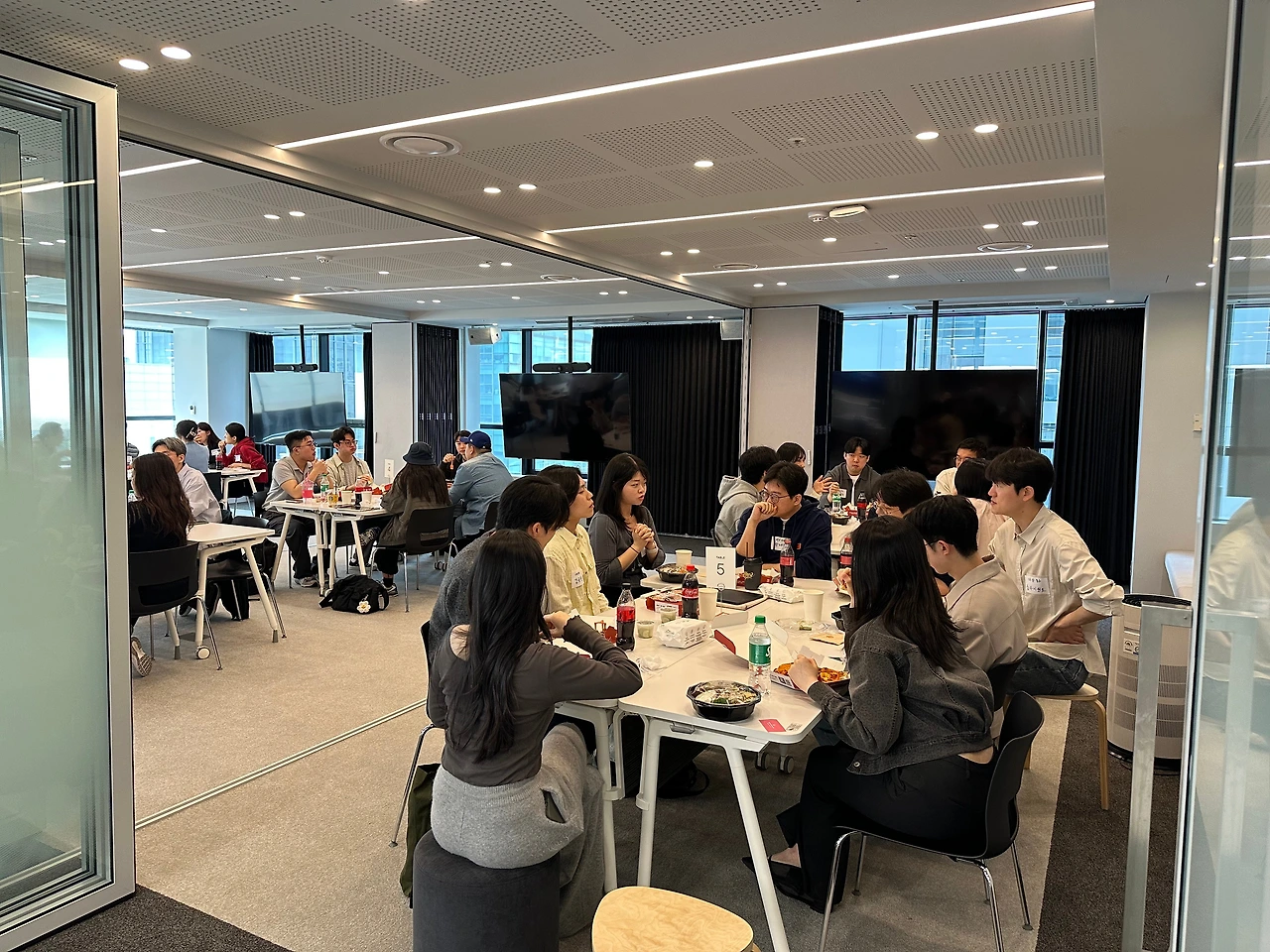
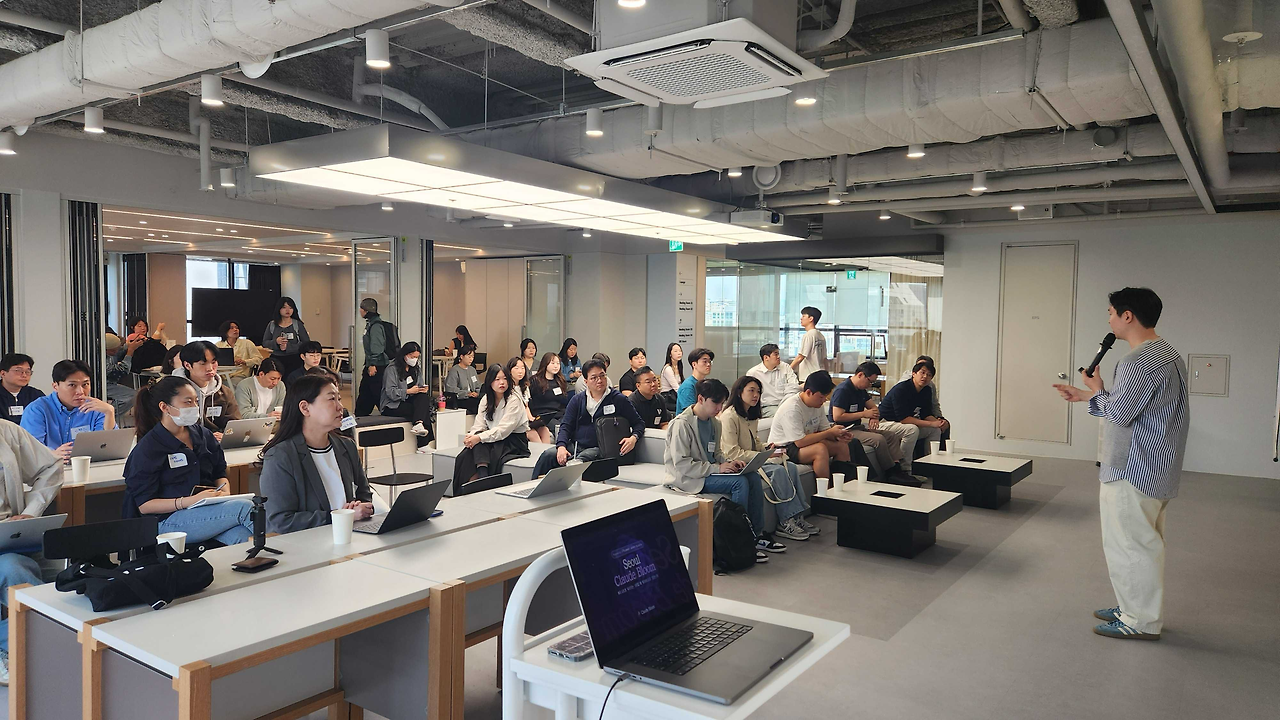
After the first session last week, feedback came in asking, "Why should we sit for an hour and a half listening to things we could hear online?" That prompted us to reshape the second session around deep conversations only possible in person. AB180 provided a space optimized for small-group discussion plus catering, and MyRealTrip's CEO shared their internal AX (work transformation) story in more concrete detail, raising the density of the event significantly. The throughline: paradoxically, in the age of AI, IRL (in-real-life) connections become more valuable, and the key question is not what tools you use but how you change the execution structure itself.
1. How Feedback from Session 1 Reshaped Session 2
The piece opens with the reaction to last week's first session. Interest was high, but so was criticism—the most common complaint was, "In this day and age, does it make sense to make people sit for an hour and a half listening to things they can find online?" The author acknowledges that despite working hard with the speakers, perfection wasn't achievable from the start, and resolves to absorb the feedback and improve immediately.
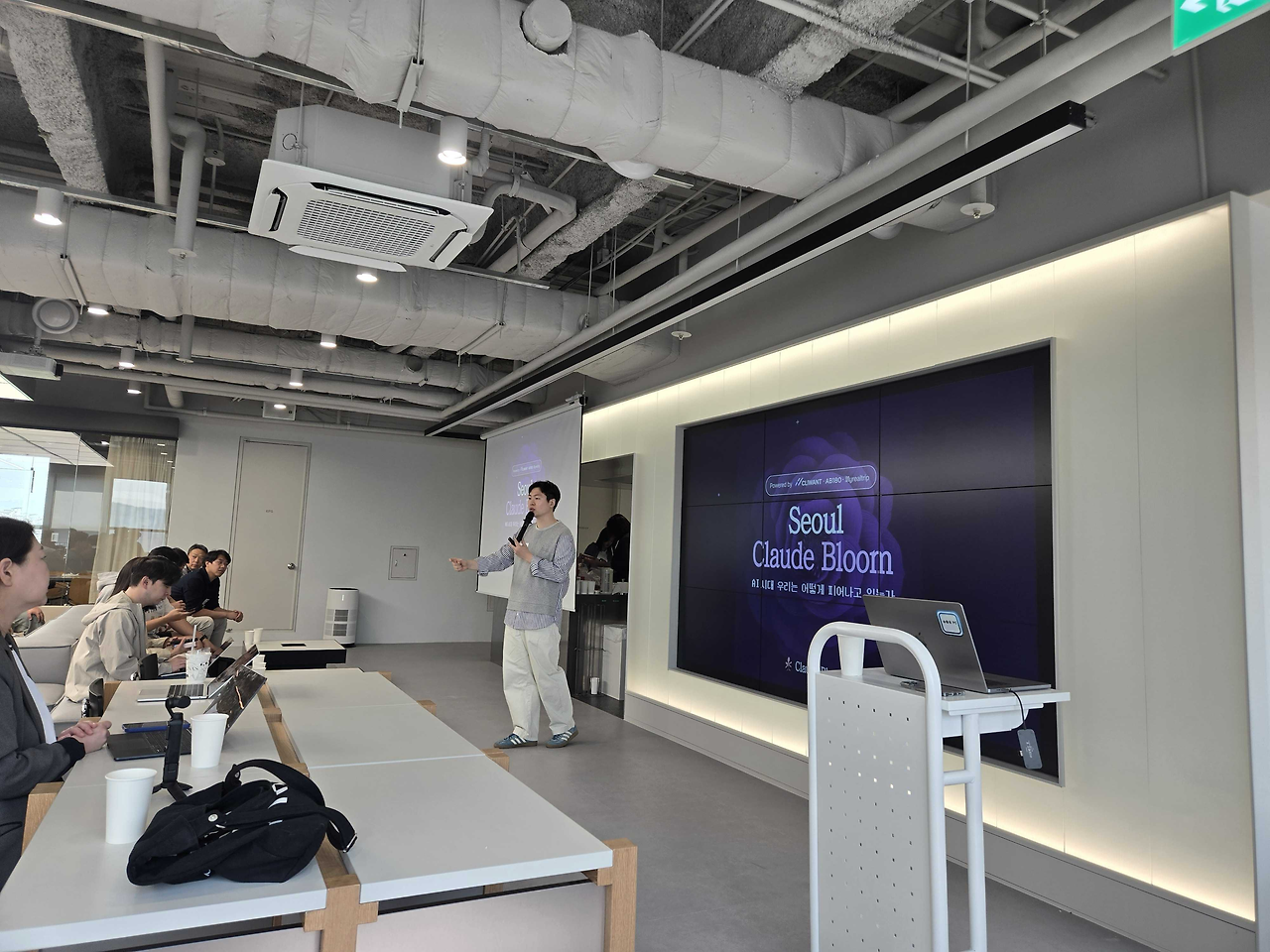
The core of that improvement was shifting from a "lecture-centric" format toward a community-style small-group gathering that would allow deeper conversation. Two partners stepped up to help. AB180 CEO Nam Seong-pil offered his office space and catering, well-suited for small-group formats, without reservation, and MyRealTrip CEO Lee Dong-geon said he could share the internal AX transformation story he had been telling in an even more concrete way on the day. That's how the three parties came together to organize Session 2.
2. On-the-Ground Reaction to Session 2: Better, With Room to Grow
The on-the-ground reaction to Session 2 is summed up as "very positive." The format improved based on Session 1 feedback, and participants especially felt the value of deep, in-person conversation among like-minded people. 😊
Still, practical suggestions for further improvement came up. When a group exceeds eight people, introductions alone can eat up 15-plus minutes, making it hard for real conversation to deepen. There were also proposals to try random group assignments or allow on-the-spot topic proposals that let groups form organically based on inspiration received during the event, rather than only pre-assigned tables based on pre-submitted questions.
The author describes receiving this feedback as "the feeling of putting a product online and having people care enough to give you feedback," expressing genuine gratitude. At the same time, they honestly acknowledge the pressure to come up with new differentiators and freshness for a third session.
A conversation with Joon Oh, who has hosted Startup Grind events, also yielded valuable advice: above all else, consistency—just keep going—is what matters for a community. See each other's faces often enough, and events become something people look forward to; a genuine pay-it-forward culture emerges naturally.
3. The Bigger Picture: English Meetups and Ambitions in Japan and Singapore
The author goes a step further, expressing a desire to hold dedicated English-language meetups for foreigners, Korean diaspora, and English-speaking Koreans on a regular basis. Beyond that, they share the goal of hosting similar meetups in Japan and Singapore to connect with local AI early adopters, then linking everyone via Discord to build a global AI early adopter channel. They mention they are already on calls with contacts in Japan and Singapore over the weekend to flesh out the plan.
4. Nam Seong-pil's Opening Remarks: Inspiration Always Comes from People
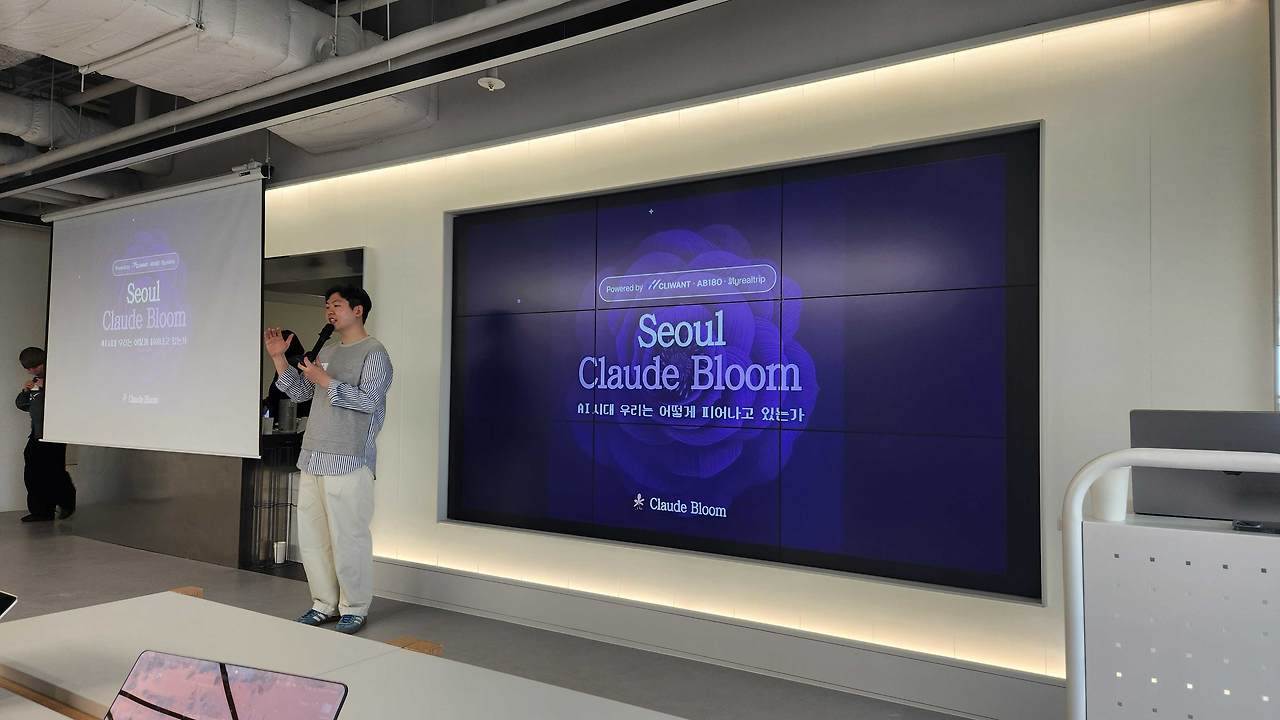
The first key insight comes from AB180 CEO Nam Seong-pil in a brief but essential message. AB180 builds marketing data solutions, and Nam takes the stage to welcome attendees while providing the space and catering.
He shares that he spends roughly 90% of his day working with AI, yet was simultaneously experiencing a great deal of Blue (a word that reads as a shorthand for the low-energy, anxious, or directionless feeling that can accompany rapid change). He says he came across the author's writing (a piece called "Claude Blue") and felt an immediate resonance with the event's purpose.
The most striking part was the chain of logic he laid out: will → inspiration → people.
"Inspiration comes from people."
He explains that the thing that got him seriously using Claude and Codex was a senior entrepreneur he met in the United States. Watching Oh Tae-ho, the CEO building the app "Kuvle," automate and transform his team's workflow with AI was a powerful source of inspiration—and that became the driving force behind changing the way he and his own team work over the past three-plus months.
The author distills this as follows: no matter how good the tool, the will to actually use it ultimately comes from interaction with other people. That single sentence, they say, most cleanly summarized the reason for the event's existence.
5. Lee Dong-geon's 'Mobile Trauma': Four Years of Regret Born of Imagination
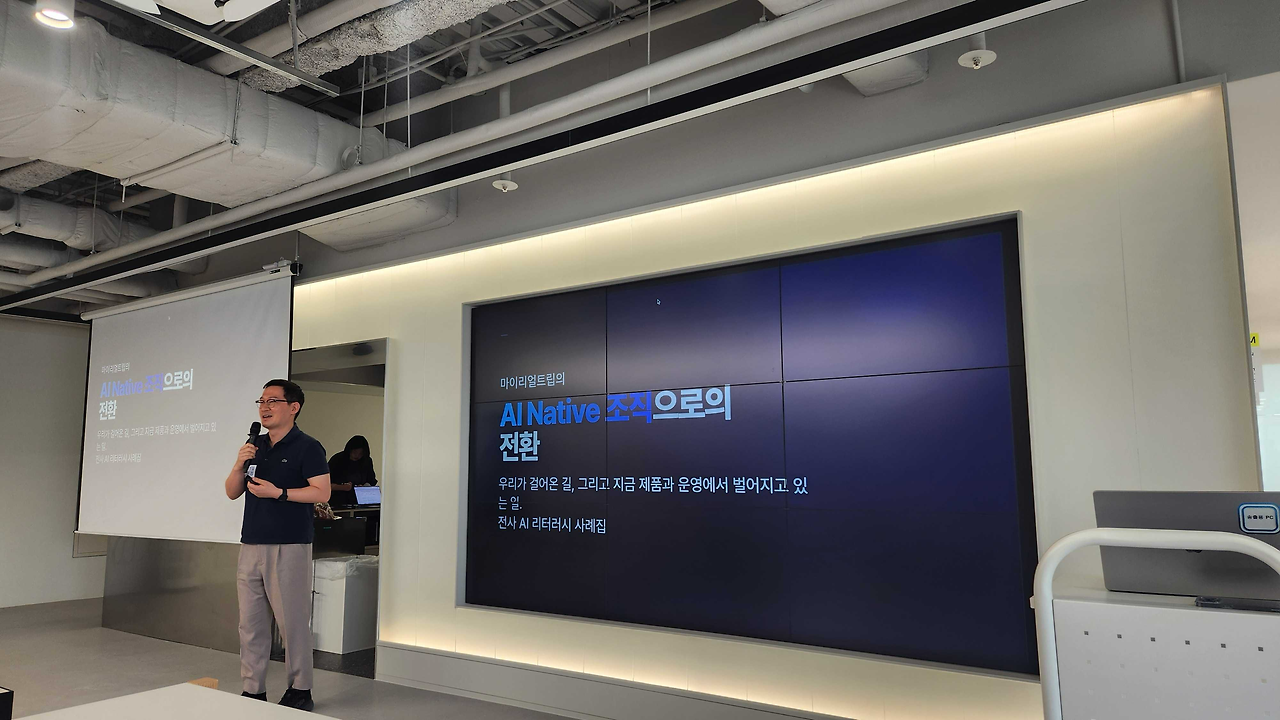
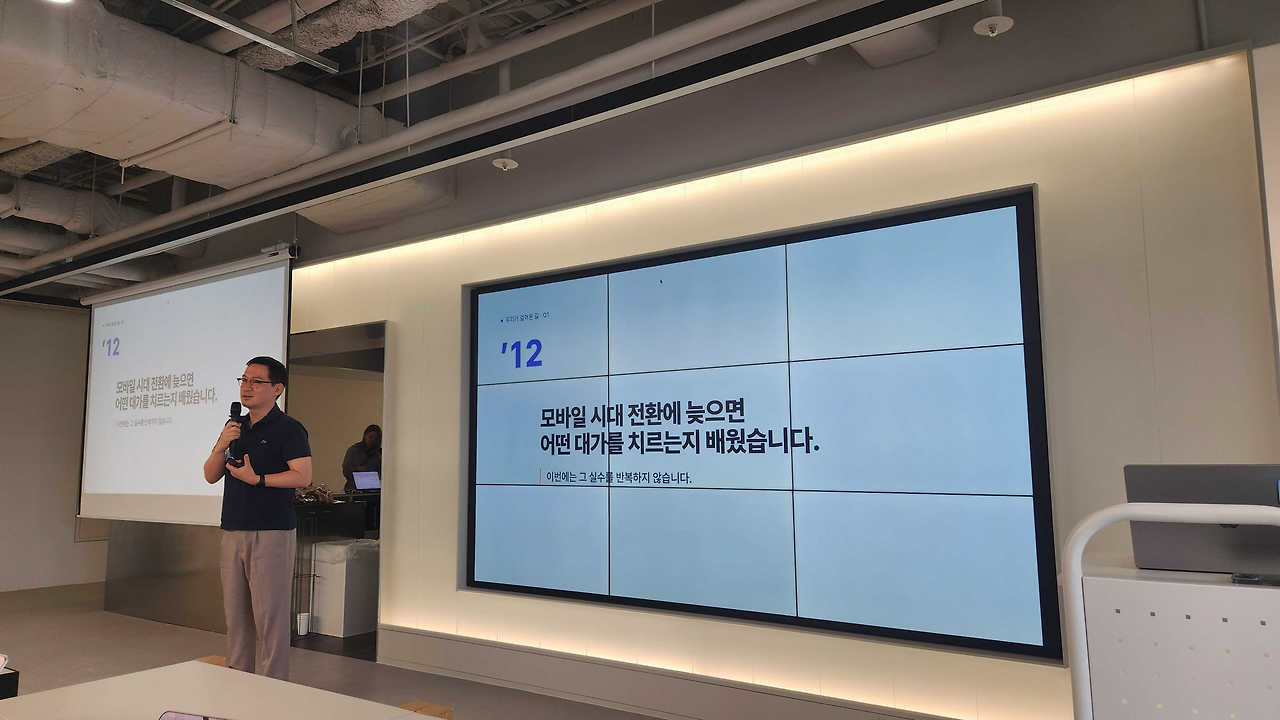
The second major thread follows MyRealTrip CEO Lee Dong-geon. He founded MyRealTrip in 2012 at age 27, and though he believed he understood and adopted mobile earlier than most, he confesses to having made an enormous mistake at the time.
Travel involves large transaction sizes—hundreds of thousands of won, or over a million for a family—and he concluded that "there's no way that kind of money will be spent on mobile." His conviction was that mobile was appropriate for the 10,000–50,000 won range, like Baemin or Coupang, while travel was something you planned on a PC with Excel open, mapping out a 3-night, 4-day itinerary. Based on that belief, he invested heavily in PC for over four years.
Meanwhile, later entrants had small teams and could only build a mobile app—and that constraint turned out to be their weapon. The result was shocking. It took a competitor operating entirely on mobile just ten months to catch up to MyRealTrip. Four years of lead, erased in ten months.
Lee Dong-geon puts his regret this way:
"As a CEO, my imagination was impoverished."
He says his biggest mistake was judging by the smartphone specs of 2012, and pledges that when the next wave comes, he will imagine the most disruptive and largest-scale possibility and move without hesitation.
6. Launching in 48 Hours After GPT-3.5: 'Let's Just Ship It' and the Ebb-Tide Dropout
The next wave he had been waiting for arrived in late 2022 with GPT-3.5. Watching Sam Altman's announcement, he felt certain: "This is it." From that moment, what he felt was not Blue or Bloom but pressure and urgency.
Interestingly, the go-to demo scenario for AI was travel—"Plan me a 3-night, 4-day trip to San Francisco"—and watching the answers pour out made him feel like the use case for AI in travel was already being shown to him. Within 48 hours of the announcement, over a weekend, he gathered the team and shipped a live service.
There were internal concerns about performance and security, but drawing on his mobile trauma, he pushed forward anyway:
"I don't know—let's just ship it."
The response after launch was explosive. The next day, a major evening news program reached out; the day after that, Microsoft headquarters called. He felt like he was "making up for the old mistake."
But the heat didn't last. Traffic dropped off after three or four days, for an obvious reason: travel is high-involvement decision-making, and at the time hallucinations were severe enough that you couldn't trust GPT blindly to plan your itinerary. People tried it a few times for fun and drifted away like an ebb tide, and within days other companies had shipped similar services too.
Lee Dong-geon's reflection evolves into a realization: the pressure isn't really about "what to build" but about understanding what consumers want and changing the way work itself gets done. They had bolted on a feature, but the way of working hadn't changed.
7. Four Years of Changing the Execution Structure: AI Lab, AICX, AI Champions, Role Integration
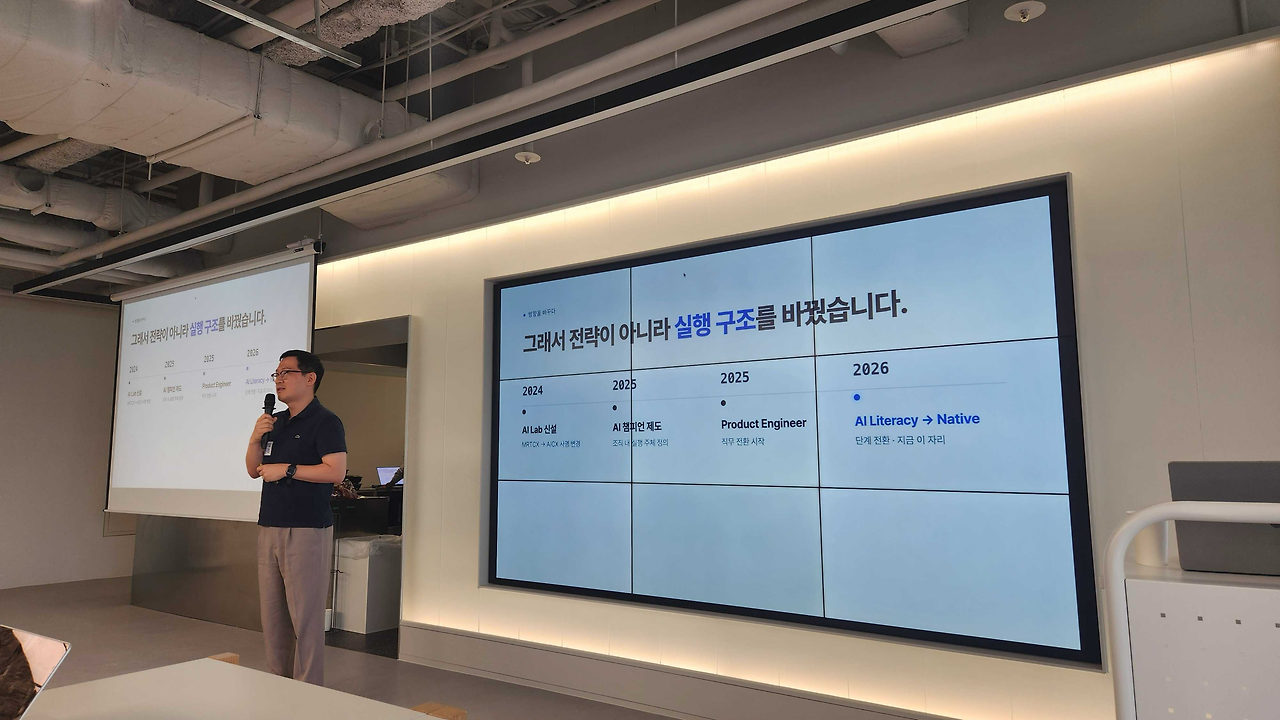
After that, MyRealTrip shifted focus away from what to build and toward changing the execution structure and organizational structure itself. That transformation unfolded over four years.
- 2024: Established an AI Lab (an education org) → "We're going to make every employee capable of handling AI well." Simultaneously, the customer service subsidiary MRTCX was rebranded as AICX, pivoting its mission to revolutionizing not just MyRealTrip's own customer service but other companies' contact centers with AI. (It's reminiscent of the AWS model—built internally, then taken external.)
- 2025: Introduced an AI Champion program → discovered that employees more naturally asked a colleague nearby than the AI Lab directly, so each team got a champion to spread influence organically. That same year, engineering roles were no longer divided into iOS / Android / backend / frontend—they were unified into one. Going further, design and PM roles were dissolved, and everyone merged under the single title of "product engineer."
- 2026 (present): If last year was about raising AI literacy, today he declares MyRealTrip has transformed into a company that works AI-natively.
The key word here is 'structure,' not 'strategy.' Instead of asking what to build, they changed who can execute what, and how.
8. Not "A Company That Uses AI" but "A Company That Works with AI": What AI-Native Means and How It's Measured
Lee Dong-geon defines an AI-native organization along three axes:
- An organization where work cannot function without AI
- An organization where a small elite team creates outsized impact
- An organization that grinds to a halt when Claude goes down—not AWS
The third condition lands with particular force:
"An organization that stops when Claude has an outage, not when AWS does."
In other words, AI-native is not about AI being "a nice-to-have tool" but about AI being essential infrastructure for how work runs.
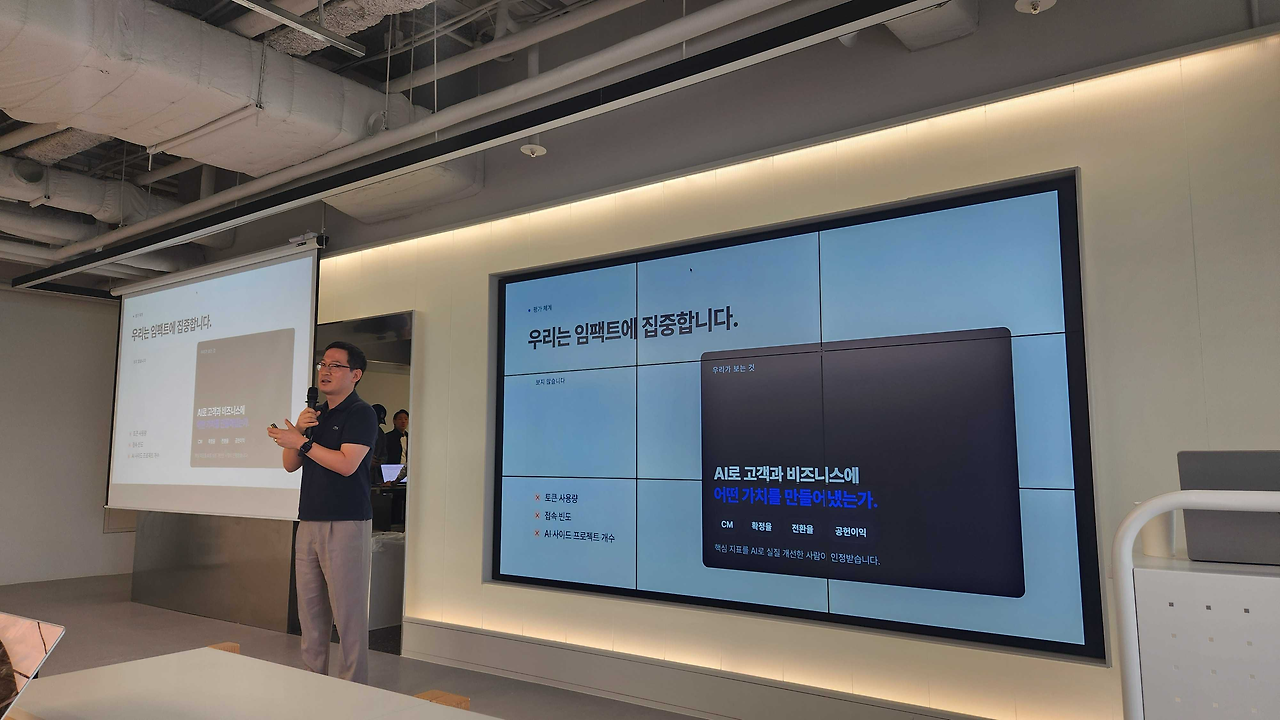
The evaluation framework changes too. Token usage, login frequency, number of AI side projects—"AI usage metrics" are no longer the core (they were factored in last year, but not anymore). Instead, the focus is on business metrics that always mattered—CM (contribution margin), confirmation rate, conversion rate—and on how AI improved them. Once you move past the literacy stage, what matters is impact.
9. Seven Real Cases: A Liberal-Arts Marketer Builds It, a CEO Builds It Himself
What made eyes go wide at the presentation were seven real cases, all running in actual products and operations.
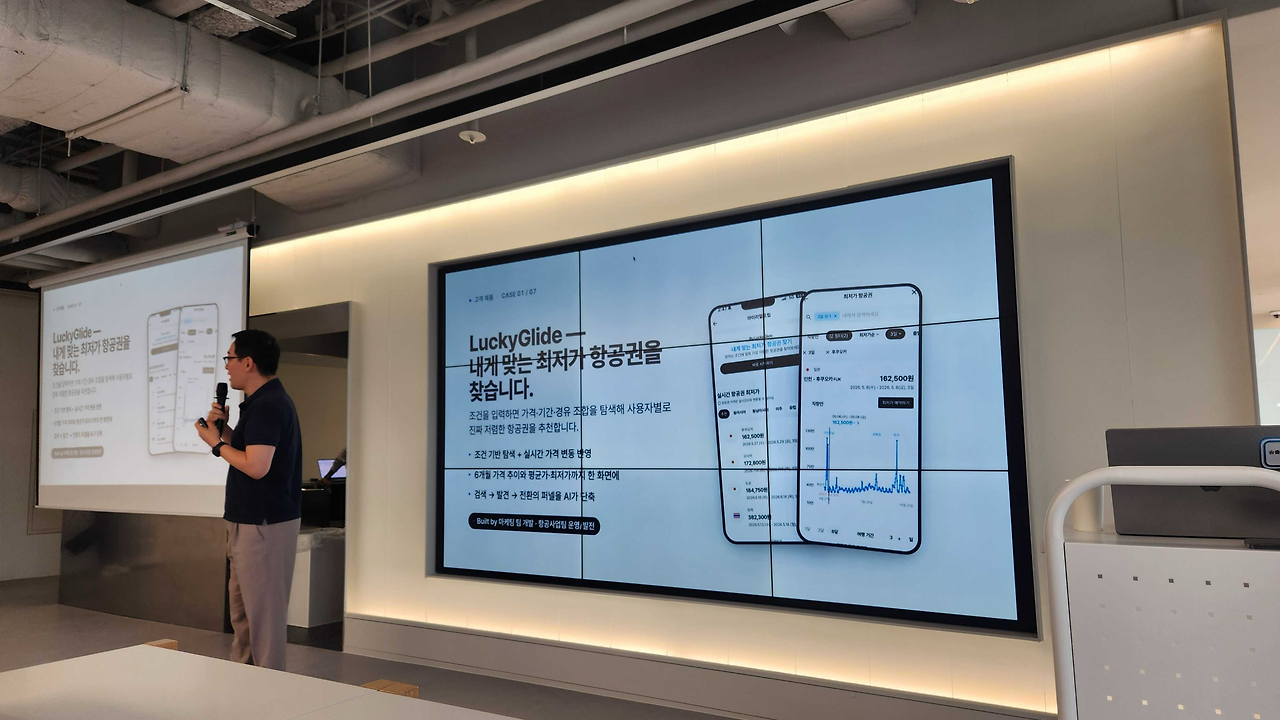
- LuckyGlide: Enter your conditions and AI searches through combinations of price, duration, and layovers to recommend the cheapest flight. Designed to reduce reliance on metasearch engine commissions and drive direct traffic. The standout detail: it was built from scratch by a marketing director with no coding background and a liberal-arts degree.
- MRT Biz: A B2B service for booking corporate business trips via Slack as if chatting, with ERP integration for approval workflows. After it kept getting delayed because "this feature's missing, that feature's missing," Lee Dong-geon built it himself from start to finish.
- Korean Foodies: AI curates, translates, and tags community restaurant posts, making 240 cities and 2,081 reviews searchable. (Also built by the CEO himself.)
- Mywork (attendance solution): Built by the People team to solve the shortcomings of existing tools.
- Plus a travel companion matching calendar (by a Mongolia BD manager), a travel collection (by the marketing team), and FlightPricingLab (by the airline business team)—all built by people who are not "developers" in the traditional sense.
The message this collection sends is clear: the job title of the person who builds is no longer fixed, and AI is dissolving that boundary. 🚀
10. "The Person Who Sees the Problem Should Solve It": What AI Lab's Early Failures Taught About Org Design
The principle running through all the cases comes down to one idea:
"The person who recognizes the problem and the person who solves it cannot be separated."
Lee Dong-geon honestly shares the early failures of the AI Lab. Initially, the AI Lab was "a group of developers who were good at AI," and other teams would make requests for things to be built—which ended up becoming an outsourcing structure.
For example, if the HR team wanted to revamp the attendance solution and put in a request, the AI Lab would first have to understand the attendance context, and even after building something with difficulty, any policy change would create another dependency on the AI Lab. The business team's reaction: "At that point, I'd rather go back to the old way."
So the conclusion was to transform the AI Lab's role from "a team that builds things for you" to an education team that helps business teams build things themselves. The organization's job is to remove the barriers—lack of dev knowledge, lack of AI understanding, cost—standing in the way.
11. What the Q&A Revealed: The CEO Is the Bottleneck, Recovery over Review, and the Timing of Education
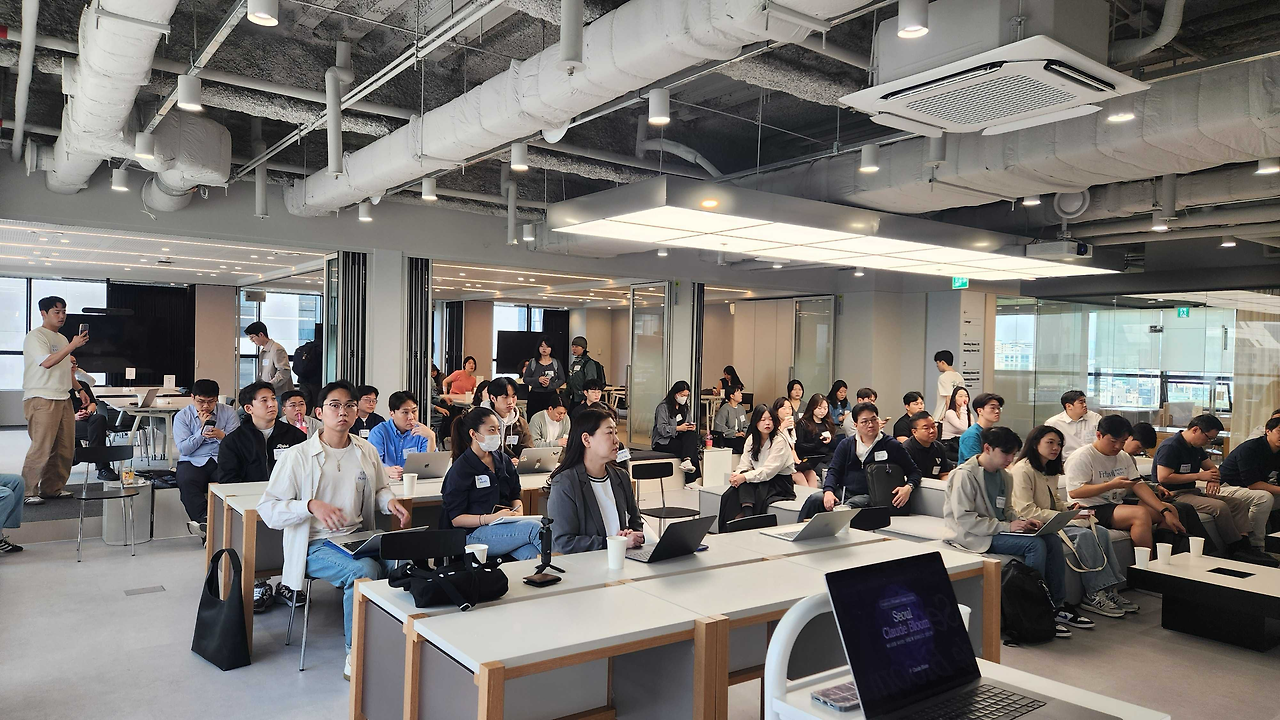
The Q&A session captured the real depth of the room. When asked what the bottleneck in AX transformation had been, Lee Dong-geon's answer was surprisingly simple and candid:
"The CEO is the bottleneck."
If the CEO blocks it, it stops. If the CEO leads by example, it turns out to not be that hard. The comment that resonated: a lot of employees' real difficulty lies in "how do you get the person above you to move."
Infrastructure and quality concerns came up too. As backend engineers started doing frontend work, the review burden grew and some felt "it's the same as before." The solution was to reframe the platform team's mission: not to prevent bad code from going out, but to invest in being able to recover from bad code in under a second. Shift from blocking errors in advance to fast recovery after the fact.
On the question of whether the literacy period could have been shortened, the answer was that if the AI Lab had been structured as an education org from the start rather than a "build-it-for-you" team, things would have moved faster. The ultimate bottleneck, again, is how well the final decision-maker understands the importance of this investment.
12. 16 Roundtables: 'Harness,' Output vs. Outcome, and the Uncomfortable Questions About Role Integration
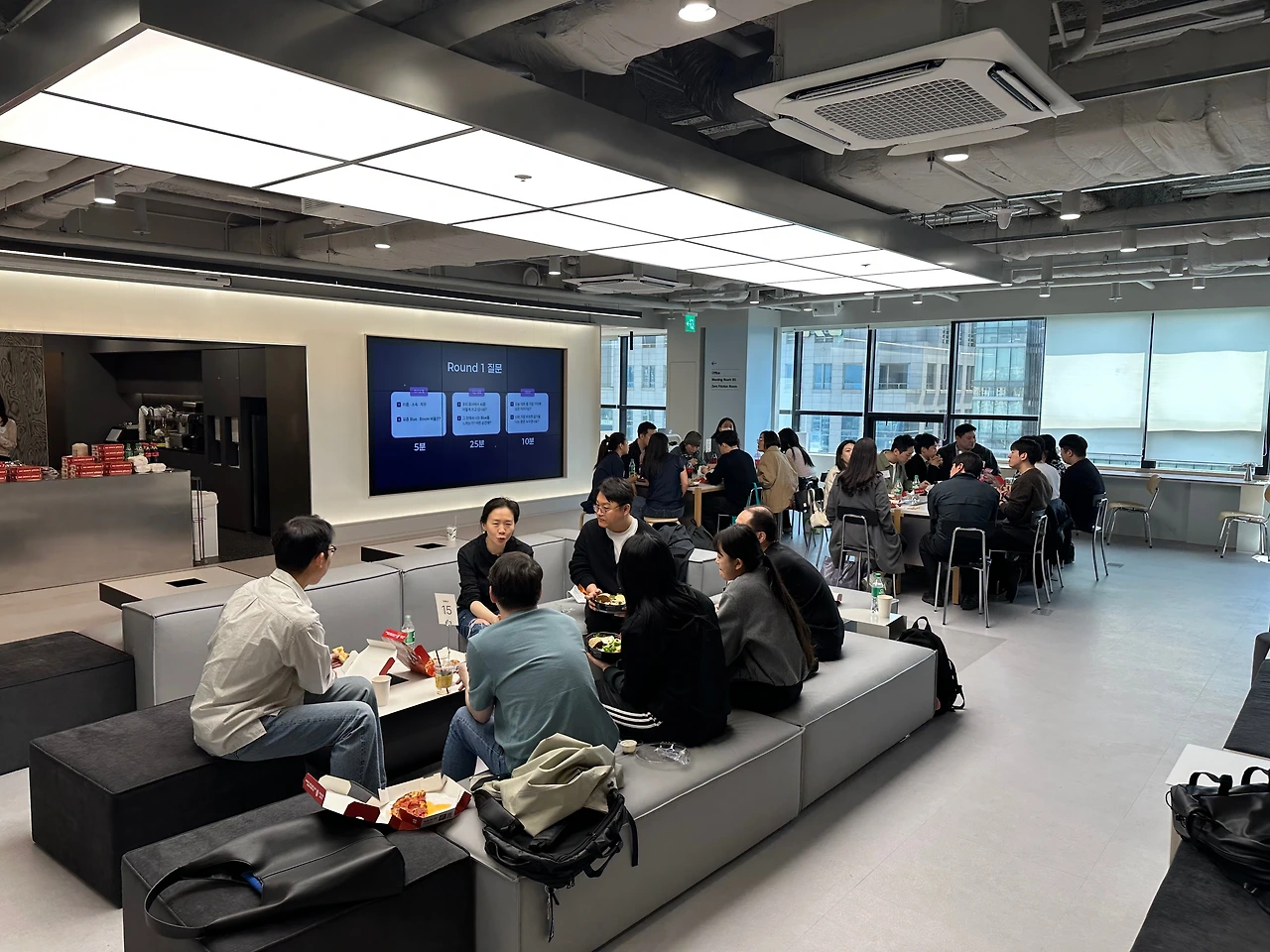
After the keynote and Q&A, two rounds of roundtables followed. The first was grouped by job function; the second regrouped by topic based on pre-submitted questions. At the close, each table facilitator shared a one-minute insight, surfacing the keywords of the whole room.
The word that appeared most: "harness." A KAIST physics researcher posed a philosophical question:
"Aren't our thoughts themselves being harnessed by the AI harness?"
The question was about how far down to the "base level"—where thought becomes execution—we can hold our ground. It expanded into a discussion of how prompt engineering, context engineering, and harness engineering all share the same starting point.
A participant from LG Household & Health Care drew a strong reaction with the observation that while AI had caused Output to explode, whether that translates into Outcome is a separate matter entirely. The description of feeling like a "red-pen teacher" burdened with QA was striking:
"AI has caused outputs to explode, but whether that leads to results is a completely separate problem." "I felt like I'd become a red-pen teacher."
So the core competency, they concluded, is not the ability to produce more, but the ability to define what to build and why and to align outputs so they lead to outcomes. This maps exactly onto Lee Dong-geon's "focus on impact."
At the table focused on company-wide AX, a Salesforce participant raised four questions: tool or culture, does the AX task force itself become a bottleneck, shouldn't we focus on the parts that connect to revenue, and what do you do with the freed-up resources after automation (do the job walls come down and only builders remain)? It was a discussion that illustrated the real-world difficulty of implementing "the person who sees the problem solves it."
At the table redefining seniority, an observation from a Karrot (Daangn) developer was shared: in a world of growing integrated teams, questions arise like "how far can a developer go on design quality?" and "if marketing does planning and development, how far can the end-product quality actually go?" The conclusion was that integration is the continuing direction, and each person's homework is problem definition ability and creative problem-solving.
A frontend developer from a large enterprise spoke about the difficulty of driving change the way a small-company CEO can, but also saw the essence of engineering as not fundamentally changing in the AI era: "Coding isn't the main thing—solving customer problems is the main thing."
At the product designer table, a sales leader who had encoded their own sales experience into an agent to automate target prioritization and call scripts became a topic of conversation. The shared takeaway: "Experiential skill needs to be embedded in harness engineering too."
At the monetization table, the discussion centered on how "building a product" has gotten easier, but "monetizing what you've built" still requires real expertise. And this line stuck:
"Right now, tokens are cheapest."
Meaning: now is the cheapest time to build AI literacy and level up your value.
Another participant summed up everyone who showed up on a Saturday morning this way:
"Whether senior or junior, nobody knows how to navigate the AI era. We who showed up here on a Saturday morning are the top 10%."
AB180's PM spoke about the importance of a manager who can regulate the energy between Blue and Bloom within a team, and the security/governance table shared the concrete real-world concern of figuring out the scope of responsibility when considering AI adoption in closed-network environments.
In the end, the common thread across all 16 tables was convergence on the question: "So what is the essential nature of our work?"—not tool performance. People from different roles, different scales, and different Blues all arrived at the same question. That, the author notes, was the striking conclusion.
13. The Paradox of the AI Era: The Easier Online Gets, the More IRL Matters
To close, the author returns to an episode they shared at the opening. When the Mayor of San Francisco held a roundtable in Seoul, and Korean companies asked about entering the US market, he said:
"Don't go to big conferences."
His reasoning: conferences feature polished—and already outdated—content, and the networking has no depth. Instead, he said, walking into a coffee shop in San Francisco and striking up a conversation with whoever is there yields far more genuine insight. The irony of someone who hosts many conferences saying this made it land as all the more sincere.
A similar point came from an American friend named Teddy. The insights at tech conferences are already on the internet, and "the kind of networking where you talk for 30 seconds and exchange LinkedIn handles" meant nothing. What did mean something: starting with "What do you do?" at a coffee shop, then going home for dinner and talking while cooking in the kitchen—that density of conversation was incomparably richer.
The takeaway: as AI makes it trivially easy to consume online information, the things that aren't online—the experiences, context, emotions, and struggles inside people's heads, and the process of sharing and refining them together—become more valuable by contrast. The reason 100 people gathered on a Saturday morning ultimately comes down to wanting exactly that kind of dense connection. ☕️


Closing
This piece traces, in chronological order, the journey from Session 1 feedback through Session 2: shifting perspective from lecture to conversation, strategy to execution structure, and AI usage to impact metrics. The MyRealTrip case in particular gives a very concrete picture of AI transformation through two lenses: "the person who sees the problem should solve it" and "an organization that stops when Claude goes down is a true AI-native." The closing message endures: the more AI flattens the online world, the more precious the inspiration and density that can only emerge between people in person.