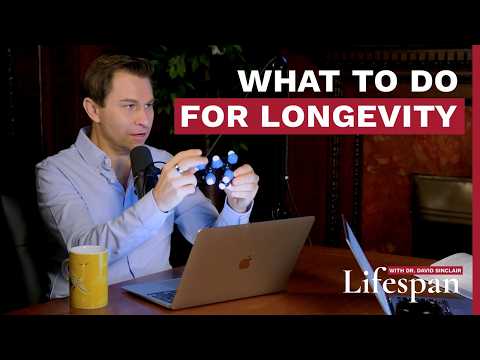
This video is a special episode summarizing the core lessons from season one of Dr. David Sinclair's podcast Lifespan, with additional updated context. Sinclair organizes the most important longevity actions into five major areas: nutrition, exercise, environmental exposure such as temperature, supplements, and future medical technologies. The episode goes beyond merely living longer and offers practical guidance grounded in science for a healthier, more energetic life, helping viewers understand longevity science and apply it in daily life.
1. The Lifespan Show and the Importance of Longevity Science
Dr. David Sinclair is a professor of genetics at Harvard Medical School and a leading researcher in aging, studying ways to understand and reverse the aging process. His podcast Lifespan sparked global interest in longevity science, with season one reaching number one among health and fitness podcasts. Although he has been busy preparing clinical trials for age-reversal drugs and season two of the show, he released this special episode in response to audience requests for the core insights of longevity science.
Sinclair emphasizes that "longevity is driven less by complexity and more by daily habits and consistency." In this episode, he revisits the main lessons from season one in light of the latest science. He also shares his ambition to build the global Lifespan community and magazine as a place for evidence-based insights, the latest research, support for young scientists, and contributions to medical research.
"Longevity is driven by daily habits. It is not complicated; consistency matters."
2. Diet for Longevity: Eat Less Often and Reduce Sugar
The first thing Sinclair recommends for longevity is "eating less often." The point is not simply to reduce calories, but to extend the amount of time the body spends without food, activating its anti-aging defense systems.
2.1 Intermittent Fasting and Time-Restricted Eating
- Eat less often: Reducing meal frequency naturally reduces calorie intake, which Sinclair says can be a "nice bonus" that makes the body feel more like it did in one's twenties. Fasting plays a crucial role in shifting the body into a defensive state that maximizes mechanisms against aging.
- Time-restricted feeding: Sinclair recommends limiting the eating window to eight hours or less and fasting for at least 16 hours. He skips breakfast and fasts until dinner, emphasizing the importance of maintaining a long fasting period before sleep.
- The secret to fasting: Sinclair shares his own method for overcoming hunger while fasting.
"The trick is to fill the body with fluids. In my case, I drink coffee, tea, and hot water throughout the day. If you stay well hydrated, you do not feel hungry." He adds that when hunger becomes strong, eating a small amount of nuts can help because the protein creates satiety quickly.
- The importance of nutritional balance: Fasting must be paired with adequate nutrition. It is not just about starving; during the shorter eating window, essential nutrients must still be consumed sufficiently to sustain healthy fasting.
2.2 Foods to Avoid: Sugar and Excess Protein
- Sugar: Sinclair strongly warns that sugar is one of the main culprits of aging.
"Sugar makes our bodies sticky like caramel, damages proteins, shortens lifespan, and can cause type 2 diabetes and cardiovascular disease." More broadly, sugar weakens the body's defenses against disease and aging by disabling protective mechanisms, especially sirtuins. Reducing sugar intake is the first step toward longevity. If you want dessert, he recommends eating only a small amount at the end of a meal.
- Excessive protein intake: Sinclair says that a constant high-protein diet can be harmful for longevity because overactivation of the mTOR pathway interferes with cellular defense mechanisms such as protein recycling. Meat-heavy diets can also increase cardiovascular risk by generating toxic substances such as TMAO.
"Many people ask where they will get protein if they stop eating meat. What do they think plants are made of? Plants are mostly made of protein too." Plant protein may be less readily absorbed than animal protein, but Sinclair says that can be beneficial because it makes the body work harder and activates defense mechanisms.
2.3 Diets to Aim For: Mediterranean and Plant-Based Foods
- Mediterranean diet: Sinclair recommends the Mediterranean diet as the easiest and most effective longevity diet for people in the West. It features low red meat intake, abundant plant foods, and olive oil. Oleic acid in olive oil helps activate sirtuins.
"Studies show that switching to a Mediterranean diet can reduce mortality by up to 31% in people under 80."
- Plant-based diet: Sinclair is not currently fully vegan, but he is gradually reducing meat consumption and moving toward a more plant-based diet. He says a vegan diet may be more favorable for longevity. Such diets create an "adversity mimetic" effect, making the body behave as if food supply is scarce and activating longevity pathways.
- Cautions: When eating a plant-based diet, people should watch for deficiencies in B vitamins such as B12, B6, and B3. These vitamins are important for regulating DNA methylation clocks, and deficiency can accelerate aging.
3. Movement and Vitality: The Remarkable Effects of Exercise
Just as important as diet is exercise. Sinclair warns that sitting too much weakens the body, reduces muscle, and ultimately accelerates aging.
3.1 Benefits of Exercise
- Overall health improvement: Exercise not only increases fitness and vitality, but also helps prevent disease and slow its progression.
"Exercise can prevent up to 23% of cancers and reduce cardiovascular disease by up to 30%."
- Slowing the biological clock: Exercise is one of the most reliable ways to slow aging on biological clocks such as the Horvath clock.
- Different forms of exercise: The best exercise is one you can enjoy. Low-intensity movement such as walking 4,000 steps per day also matters, not only intense exercise.
- Exercise guidelines:
- Low-intensity exercise: Keep moving instead of sitting, such as walking 4,000 steps per day. Sinclair recommends standing desks, treadmill desks, and the habit of walking after meals.
- High-intensity exercise: Do about 75 minutes per week, or 10-15 minutes per day, of exercise intense enough to make you breathe hard. This expands blood vessels and activates mitochondria.
- Strength training: Maintaining muscle mass is very important. Train large muscles such as the thighs and back, not only the arms. You do not need an elaborate gym; push-ups, sit-ups, and dumbbells at home can help.
- Resting heart rate: Resting heart rate is a useful indicator of fitness and health. Sinclair says his own resting heart rate stays very low, in the mid-40s, and advises that a lower heart rate is generally good. He recommends measuring and managing heart rate with wearables.
4. Environmental Exposure: Cold Therapy and Sauna
Like exercise, controlled stress that takes the body out of comfort can activate longevity pathways.
4.1 Cold Therapy
- Activating the body's defense mechanisms: Exposure to cold causes the body to generate brown fat and activate mitochondria to produce heat. This is more effective in young mice, but Sinclair says it is not too late even with age.
- Different methods: If visiting a cryotherapy center is difficult, cold showers or sleeping in a cool environment can also be effective. Sinclair says he uses a method of lowering body temperature while sleeping by barely covering himself with blankets.
- Caution: Extreme cold therapy, such as ice baths, can stress the heart, so it should be attempted only after consulting a professional.
4.2 Sauna
- An ancient longevity practice: Sauna is a traditional longevity practice dating back before Roman times, and is especially common in Scandinavian countries such as Finland.
- Improving cardiovascular health: Studies show that men who use saunas regularly have up to a 20% reduction in mortality from cardiovascular disease and heart attacks.
- Activating heat shock proteins: Sauna activates heat shock proteins (HSPs) rather than brown fat. HSPs play important roles in cellular health, including repairing damaged proteins, generating new blood vessels, and improving mitochondrial function.
- Repeating heat stress and cooling: Sinclair enjoys about 15 minutes of heat stress in a sauna followed by around four minutes in an ice bath, repeated in cycles. These extreme temperature shifts provide a strong adversity-mimetic effect.
- Different types: In addition to traditional Finnish saunas, infrared saunas may penetrate deeper into the skin and have been studied for anti-aging and hair-growth benefits.
5. Supplements and Future Medicine: Choose on a Scientific Basis
Alongside lifestyle changes, there is growing interest in supplements and future medical interventions that may amplify longevity pathways. Sinclair shares the supplements he personally takes and the scientific rationale behind them.
5.1 Supplements Sinclair Takes
Sinclair takes specific supplements each morning and evening, closely related to his own research.
- Morning:
- Resveratrol: He takes 1 gram mixed with yogurt or olive oil. Olive oil helps absorption and also contains oleic acid, which activates SIRT1, creating a double effect. Sinclair says resveratrol directly activates the SIRT1 enzyme and may contribute to anti-aging, cancer prevention, metabolism, and brain function.
- NMN (Nicotinamide Mononucleotide): He takes 1 gram. NMN raises NAD+ levels in the body and supports sirtuin activation. Sinclair says NMN can double NAD+ levels and may help prevent jet lag. It is best taken in the morning, aligned with the body's natural NAD+ rise.
- Fisetin and Quercetin: He takes 0.5 grams of each, mixed with yogurt. These are senolytic compounds that may help clear senescent cells, and clinical trials are under way at the Mayo Clinic.
- Spermidine: He takes 1 gram. Spermidine is known to contribute to cellular renewal and activation of autophagy.
- Evening:
- Metformin: He takes 800 mg right after dinner. Metformin lowers glucose levels, creates fasting-like effects, and helps activate survival pathways. However, he adjusts the dose, such as skipping metformin the night before exercising, because of concerns that it may interfere with muscle-building benefits from exercise.
5.2 Hormone Management and Skin Health
- Hormone balance: It is important to maintain healthy levels of hormones such as testosterone and growth hormone naturally. Training large muscles, especially the thighs and back, helps normalize testosterone. Good sleep and proper meal timing support growth hormone secretion. If natural methods are insufficient, supplementation can be considered in consultation with a doctor.
- Skin health: Skin is the body's largest organ and an important indicator of overall health.
"The skin, our largest organ, makes up 16% of total body weight and serves as a barrier to the outside world. Skin health is very important to the health of the rest of the body, and vice versa." Using sunscreen, not smoking, limiting alcohol, and reducing processed foods are essential for slowing skin aging and maintaining health. Sinclair also introduces the "skin pinch test," where faster return of the skin to its original state indicates more youthful elasticity.
5.3 Personalized Health Management
- The importance of measurement: Sinclair emphasizes that "you cannot optimize what you do not measure," and recommends using wearables such as Whoop or Withings to track sleep, recovery, heart rate, body composition, and especially visceral fat.
- Key biomarkers: Sinclair highlights five biomarkers:
- Glucose
- Heart function
- Inflammation markers such as CRP, TNF-alpha, and IL-16
- Cortisol, for stress level and exercise overload
- NAD+ levels, related to aging
- Future possibilities: For now, supplements and lifestyle changes matter, but Sinclair says there is a strong chance that drugs capable of reversing aging will be developed in the future.
6. Conclusion: Longevity Strategies to Practice Now
Sinclair emphasizes that longevity is not a distant future issue; it depends on the choices and actions we take now. He offers practical guidance not just for living longer, but for living healthier and happier lives, while conveying hope that the aging process can be understood and influenced.
- Diet: Eat less often through intermittent fasting, minimize sugar intake, and favor plant-based foods and a Mediterranean diet over meat-heavy eating.
- Exercise: Combine consistent movement, such as 4,000 steps per day, with high-intensity exercise for 75 minutes per week and strength training.
- Environmental exposure: Use cold therapy such as cold showers or cool sleeping environments, and heat therapy such as sauna, to apply controlled stress and activate longevity pathways.
- Supplements: Science-backed supplements such as resveratrol, NMN, fisetin, quercetin, spermidine, and metformin may be considered after consultation with professionals.
- Sleep: Deep sleep is central to activating longevity pathways, and morning sunlight exposure plus a comfortable nighttime environment are important.
- Measurement: Use wearables and other tools to consistently measure and manage your own health markers.
Sinclair says that we cannot yet become 20 or 30 years younger with one pill, but that such a future may become possible. For now, the best longevity strategy is to "do the right things."
"Life is short. Let's change that together."