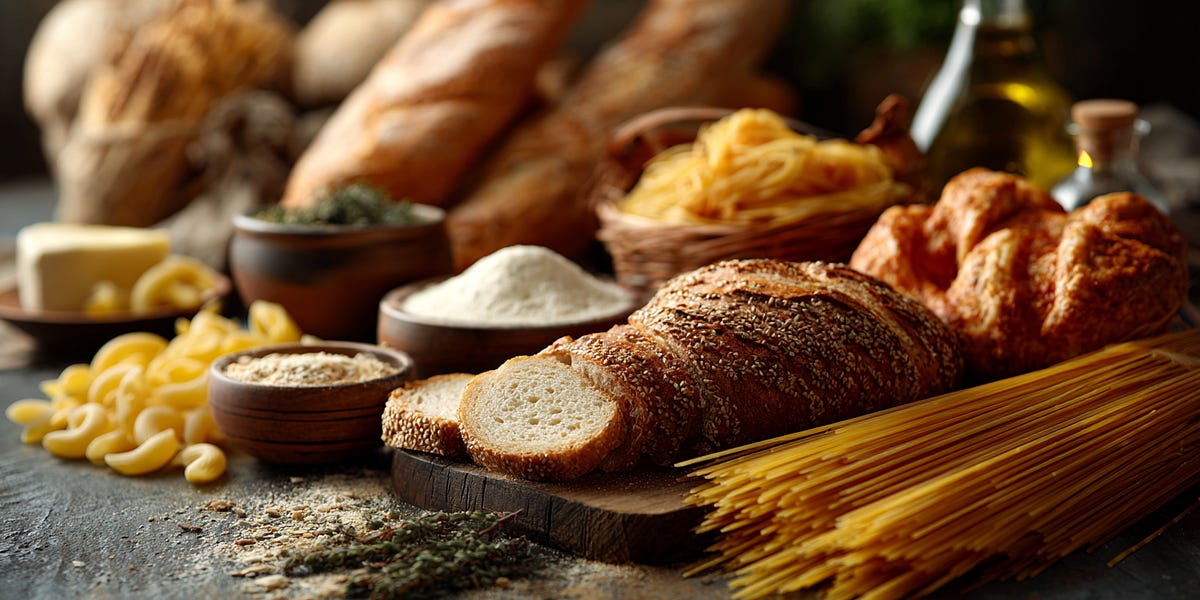
The negative perception of wheat and gluten is far too oversimplified. Based on recent research and personal experience, many symptoms attributed to wheat consumption are actually caused by a complex interplay of factors including grain preparation methods, varieties, additives, and psychological influences. The real answer lies not in "avoidance" but in "restoration" through proper grain selection and traditional fermentation methods.
1. A Decade Without Bread and Pasta, and the Beginning of Change
The author lived completely wheat-free at home for about 10 years. It wasn't initially for any serious reason -- his wife had become sensitive to grains. He had only noticed some brain fog on days when he ate a lot of pasta, rising inflammation markers when eating bread frequently, blood sugar spikes, and worsening sleep quality.
"These were silent signals, not blaring alarms."
A wheat-free life meant bread became a memory, pasta became a rare solo indulgence, and the smell of freshly baked sourdough became a source of longing.
But recently, driven by scientific curiosity and a spirit of "culinary rebellion," the author purchased a grain mill and organic wheat berries (whole grains). Within 48 hours of eating freshly milled pasta and bread, the changes were remarkable.
"Wheat, which had been banished from my diet for years, became nourishment instead of suffering. My brain cleared up, inflammation disappeared, and blood sugar stabilized."
This experience demonstrated that industrially processed flour and freshly milled, properly prepared grain are biologically, chemically, and nutritionally completely different foods.
2. Wheat and Gluten Sensitivity: Is "Gluten" Really the Culprit?
About 10-15% of adults worldwide claim to have gluten or wheat sensitivity -- an enormous number. However, when scientists subjected them to double-blind placebo-controlled trials, only 16-30% actually showed symptoms triggered by gluten. In more rigorous studies, this figure drops even lower.
"The discomfort is real, the suffering is genuine. But the culprit may not be what we thought."
A few years ago, a research team at Monash University made a discovery that overturned the prevailing "gluten narrative." They put self-identified gluten-sensitive individuals on a low FODMAP diet. FODMAPs are small-molecule carbohydrates that some people cannot absorb, causing hypersensitivity reactions. Wheat is particularly high in a FODMAP called fructans. Remarkably, most participants saw their symptoms completely disappear on the low-FODMAP diet -- even when gluten was included in their meals.
In a subsequent key study, participants were randomly given gluten, fructans, or a placebo. It was fructans, not gluten, that triggered IBS (Irritable Bowel Syndrome) symptoms. Gluten showed no difference from the placebo.
"The gluten protein played no role at all. The problem was fructans."
Traditional fermentation methods like sourdough (natural fermentation) break down 72-92% of these fructans. Mass-produced supermarket bread skips this process and becomes a high-FODMAP food, while traditional sourdough is officially classified as low-FODMAP.
"For millions of people, the problem was not wheat itself but 'insufficiently fermented bread.'"
3. Psychological Effects and Complex Interactions
A 2024 study published in The Lancet gave bread to participants while deceiving them about whether it contained gluten. The results were clear.
"The severity of symptoms was determined not by actual gluten content, but by whether participants 'expected' they had consumed gluten."
In other words, those who believed they had consumed gluten actually experienced symptoms, while those who believed they hadn't had almost no symptoms. This is called the nocebo effect, the opposite of placebo. Recent systematic analyses report nocebo responses averaging 40-56%.
"This doesn't deny the symptoms. It simply means the relationship between what we eat and symptom onset is surprisingly complex."
4. "Wheat" Is Not One Thing: Varieties, Genetics, and Industrialization
Wheat is a grain with 10,000 years of evolutionary history and diverse varieties with different genetic characteristics.
- Einkorn (AA genome): Humanity's first cultivated grain, an unhybridized diploid. It completely lacks the D genome that triggers celiac disease.
- Emmer/Durum (AABB): Pasta wheat, a tetraploid.
- Modern bread wheat/Spelt (AABBDD): Hexaploid wheat, where the D genome is the primary source of gliadin peptides that strongly trigger immune responses.
"When I eat einkorn, the problematic genetic package simply isn't there from the start. The most troublesome epitopes don't exist at all."
Recent studies show that the protein composition and toxicity of German wheat varieties from 1891 to 2010 have not changed significantly. In other words, wheat itself hasn't changed much -- it's the industrial processing methods after harvest that changed everything.
Starting in the 1990s, North America expanded pre-harvest spraying of the herbicide glyphosate. This was done to quickly dry the wheat to meet harvest schedules, spraying it directly on food-grade grain. This practice is banned or extremely rare in Europe.
"Glyphosate was originally patented as an antibiotic. It was considered safe for humans, but our gut microbiome is affected."
Research shows that glyphosate is toxic to beneficial gut bacteria (Lactobacillus, Bifidobacteria) while less harmful to pathogenic bacteria (Clostridium, Salmonella). The result is gut microbiome dysbiosis, intestinal barrier damage, immune responses, and systemic inflammation. However, human clinical studies remain limited.
"The phenomenon of eating bread and pasta without any problems in Italy -- the 'Italian Paradox' -- is not due to a single factor but a complex environment."
5. 'Living Grain' and Dead Flour: The Difference in Freshness and Digestion
The author experienced firsthand that grain is "alive" when milling whole wheat himself.
"A whole wheat berry is a biological masterpiece. The outer shell protects the nutrients, while the interior is concentrated with vitamins, minerals, fats, and enzymes. Once milled, oxidation begins."
- After 24 hours, 40-45% of nutrients are lost,
- After 72 hours, 90-95% are lost.
Store-bought flour is merely a "powder with almost no nutrients left" that is already weeks to months old.
Another important point is enzyme activity. Fresh flour is rich in alpha-amylase, beta-amylase, lipase, and protease, which begin breaking down sugars, fats, and proteins as soon as the flour meets water -- starting a kind of pre-digestion on its own.
"Commercial flour is 'dead flour' with all enzymes gone. Digestion falls entirely on us."
6. Multiple Triggers and Decisive Research Findings
According to The Lancet and other papers, non-celiac gluten sensitivity likely does not exist as a distinct biological entity.
- There is significant symptom overlap with IBS, and improvement occurs on a low-FODMAP diet.
- Other suspected triggers beyond gluten include:
- Amylase trypsin inhibitors (ATIs): Comprising 2-4% of wheat, they can trigger immune responses, but human studies are still limited.
- Wheat germ agglutinin (WGA): Found in wheat germ, it is completely destroyed by heating and poses no problem in cooked foods like bread.
- Changes in microbial composition.
Even in the most rigorous studies, when all variables -- FODMAPs, yeast fermentation, freshness, glyphosate, psychological effects -- are thoroughly controlled, the number of people who clearly react to "gluten" itself is extremely small.
"In most cases, the most practical answer is not complete grain avoidance but 'choosing properly prepared bread.'"
7. The Path to 'Restoration': Traditional Methods and Finding the Right Grain
After baking with freshly milled einkorn or emmer and long-fermentation sourdough (12-24 hours), the author clearly felt the difference.
"Blood sugar was stable and energy lasted longer. No inflammation, no brain fog, no afternoon crashes. Joints felt comfortable and sleep improved."
He emphasizes that these changes occurred because multiple variables combined.
- Freshly milled flour (rich in enzymes, preserved nutrients)
- Ancient varieties (no problematic genes)
- Long natural fermentation (breaking down fructans and some gluten)
- Organic (no glyphosate)
- Proper preparation (sufficient enzyme activity, complete cooking)
- Controlled psychological factors
Some people, like his wife, remain sensitive even with traditional methods. In such cases, possibilities include true gluten reactivity, severe microbiome damage, fructan sensitivity, or psychological influences -- the answer cannot be easily determined.
8. In Closing: Beyond Simplistic Narratives About Wheat
For 10,000 years, humanity has eaten wheat, but the past century of industrialization destroying traditional methods has brought dramatic changes.
"There's no need to wonder why factory-made, herbicide-sprayed, enzyme-deactivated, rapidly fermented, modified grain doesn't agree with our bodies."
At the same time, the extreme narrative that "gluten is poison" doesn't align with research findings. Today's widespread wheat sensitivity is the result of industrial manufacturing, additives, microbiome changes, and psychological responses all tightly interwoven.
The author summarizes:
"My path back to accepting grains wasn't driven by simple nostalgia. I realized that the body signals I had been ignoring were caused by 'industrialized flour,' and that the answer lay in properly preparing grain as it was meant to be."
Finally, he says:
"Wheat is not the enemy. Oversimplified narratives are the enemy. The answer is neither uncritical acceptance nor complete avoidance. The answer is understanding, restoration, and honest acknowledgment of complexity."
Conclusion
Excessive fear and unconditional avoidance of wheat and gluten are not the solution. The real answer lies in considering all variables together -- grain selection, traditional preparation methods, psychological and biochemical factors -- to practice a "restored food culture" that suits your body. It is well worth rediscovering the true taste and nutrition of fresh wheat and fermented bread, starting today.