1. Non-Technical Founders Can Succeed!
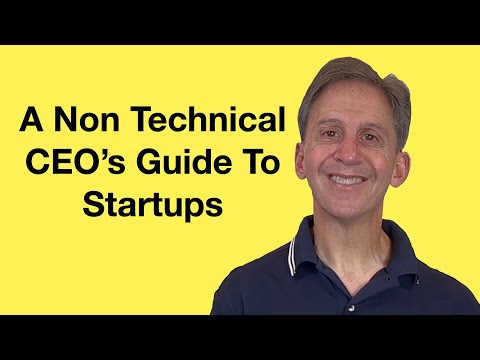
The video begins with the question: "How can a non-technical founder start a startup?" Many people believe it's difficult to build a successful tech startup without a technical background, but companies like Apple, Airbnb, Alibaba, Pinterest, and Snap were founded by non-technical founders. Even Brett, the video's host, has successfully founded a tech company as a non-technical founder.
"Don't try and be something that you're not. Instead, hire a great VP of engineering that can help you."
This video shares three essential elements for non-technical founders to become successful CEOs, based on Brett's experience.
2. First Key: Hire a Great VP of Engineering or CTO
The first challenge a non-technical founder must solve is finding a great VP of Engineering or CTO to handle technical leadership. Brett emphasizes this through his own experience.
He shares a conversation with an investor (Jack) as an example. At the time, the company's VP of Engineering had resigned, and Brett was temporarily filling the role. But the investor said, "I can't invest until you find a full-time VP of Engineering." Brett then brought Jeroen, an outstanding engineer, onto the team, and the investor immediately requested a meeting after reviewing his resume and expressed interest in investing.
"The reality is you as a non-technical CEO will not be perceived as being strong enough technically by investors."
Key lesson: Non-technical founders shouldn't try to exaggerate their technical strengths — they should hire a great technical leader to build team credibility.
3. Second Key: Actively Recruit Outstanding Technical Talent
After hiring a VP of Engineering, you need to actively participate in recruiting technical talent. Brett explains that in his experience, he personally recruited half of the initial engineering team, while the VP of Engineering recruited the other half.
"Mark my words, you will fail if you try and prove how technically strong you are. Great engineers will instantly see you for a fraud."
If a non-technical founder tries to exaggerate their technical abilities, they'll actually lose credibility. Instead, focus on cultural fit and vision alignment.
- First role: Evaluate whether candidates fit the company culture.
- Second role: Clearly communicate the company vision and persuade candidates to buy into it.
"You don't need to be a technical wizard to do this. You do need to ask good questions, listen well, and clearly articulate the vision of the company."
4. Third Key: Actively Engage in Technical Matters
Being a non-technical founder doesn't mean you should completely ignore the technical side. On the contrary, you should actively participate in technical discussions and be able to ask logical, sharp questions.
Brett uses the example of Jack Gifford, founder of Maxim Integrated Products, who led his team by constantly asking questions about technical problems.
"Why didn't we ask?" "Just be logical and don't be afraid to ask the tough questions of your technical team."
Brett also describes his own experience of challenging team members by asking probing questions about technical limitations. When one engineer (Chuck) said a technical problem was impossible to solve, Brett challenged him logically, which ultimately led to the development of a new technical approach and even a patent filing.
Key lesson: Don't try to solve technical problems yourself — lead the team with logical questions and a challenging attitude.
5. The Importance of Authentic Leadership
Brett emphasizes that for non-technical founders to succeed, they must honestly acknowledge their strengths and weaknesses and demonstrate authentic leadership to their team.
"I never professed to be a technical genius to the team. I was comfortable with what I was and what I wasn't. The team respected me for what I brought to the table."
He uses the mutual respect between tech and marketing teams as an example, emphasizing the importance of recognizing and leveraging each other's expertise.
"Great technologists recognize the value that non-technical people bring to a startup."
6. Additional Resources and Community
Finally, Brett introduces viewers to a free startup pitch deck template and the Zero to Pitch community, providing opportunities for founders to get help with networking and fundraising.
"Click the link below today's video and it's yours for free."
7. Summary: Three Keys for Non-Technical Founders
- Hire a great VP of Engineering or CTO.
- Actively recruit outstanding technical talent.
- Engage in technical matters with logic.
"Don't try and be something that you're not. Instead, be comfortable with who you are and what you bring to the table."
Brett emphasizes that non-technical founders can succeed by leveraging their strengths, collaborating with their team, and demonstrating authentic leadership. "Be true to yourself."
This video provides practical advice and inspiration for non-technical founders and serves as a useful guide for anyone looking to start a startup.