This essay draws on the concept of supernormal stimuli, first identified by Niko Tinbergen in the 1950s, to explore how overstimulation in modern society numbs us and prevents us from feeling genuine satisfaction. Accustomed to the optimized inputs of the digital world, we come to find reality dull — and this erodes our capacity for identity and meaning. To address the problem, the author proposes a three-phase destimulation protocol spanning 30 days, offering concrete steps for breaking free from intense stimulation, restoring inner life, and reclaiming authentic satisfaction.
1. Supernormal Stimuli: Why We're Drawn to the Artificial
In the 1950s, Dutch biologist Niko Tinbergen won the Nobel Prize for his remarkable research into animal behavior. He discovered that birds would abandon their own eggs to sit on large, exaggerated, brightly colored plaster fakes. These artificial eggs were unnaturally oversized and covered in bold polka-dot patterns that no real egg would ever display.
"The birds abandoned their own eggs and sat on large, fake plaster eggs painted in exaggerated colors. These fakes were bizarre, unnaturally big, and covered in bold polka-dot patterns that would never appear on a real egg."
Tinbergen found that these fake eggs registered in the birds' brains as more "egg-like" than real ones. In other words, the instinctual circuits that evolved to raise offspring had been hijacked by supernormal stimuli that triggered an even stronger response. The birds chose the fakes every time. He observed this phenomenon across species — male sticklebacks, for instance, attacked fake fish with exaggerated red bellies more aggressively than real rivals, and butterflies attempted to mate with scraps of paper bearing more vivid patterns than actual females.
The author confesses that reading this research was a revelation — because he recognized himself in those birds.
"I was that bird. Sitting on a beach ball painted like an egg, wondering why reality felt so boring. Why conversations with friends couldn't hold my attention. Why food tasted like nothing. Why I needed background noise while washing dishes, and why silence had become physically uncomfortable."
He argues that today's internet, social media, hyper-palatable food, and algorithm-driven content are the supernormal stimuli designed for humans. They fire our reward circuits — circuits that evolved to support survival and connection — but at an amplified intensity never encountered in nature. Like Tinbergen's birds, we keep choosing the artificial, and the result is a persistent emptiness. This is the end state of overstimulation, and it estranges us from our inner lives.
2. Reality vs. Simulation: Why Real Life Feels Boring
The root problem with overstimulation is that we're comparing reality to a simulation — and the simulation is optimized to outperform reality, so reality will always fall short.
The author describes what we experience when we scroll:
- Perfectly edited highlights from the lives of thousands ✨
- Content algorithmically selected to fire specific reward circuits 🧠
- An infinite supply of novelty compressed into 15-second packages 🚀
- Social validation quantified and displayed in real time ❤️
- Narrative arcs engineered by teams of behavioral design experts 🎬
Reality cannot compete with any of this. Reality has friction. It has boredom. It doesn't know your preferences and isn't trying to keep you engaged. So when you put your phone down and look around, everything feels flat. The room is just a room. People are just people. Nothing has been optimized for your attention.
We interpret this as "life is boring," but what it actually means is: "my perception has been trained to expect a level of interest that only exists inside engineered environments." The simulation has become the standard by which reality is judged, and reality will always lose that comparison.
3. The Attention Equation: Stimulus Value – Baseline Expectation
The core problem with overstimulation isn't simply the stimulation itself — it's that stimulation has colonized our sense of what experience is supposed to feel like. Our capacity for attention operates on a simple formula:
Attention = Stimulus Value – Baseline Expectation
- When baseline expectation is low (i.e., you've had less exposure to supernormal stimuli), ordinary things feel significant. A well-cooked meal feels like an occasion. A sunset is worth stopping for. A conversation with a stranger can be genuinely interesting.
- When baseline expectation is high (i.e., you've been marinating in engineered content for years), the same experiences register as noise. They fall below the threshold of noticeability. Your brain, always predicting what deserves attention, filters them out as irrelevant.
This equation explains that you can change your experience of reality by adjusting either variable. Most people try to find better stimulation — more intense experiences, more novel content, more optimized entertainment. This works temporarily, but it only raises the baseline, requiring ever-greater intensity.
The sustainable path is to adjust the baseline itself. Lower the denominator, and the same reality becomes more vivid. Simple experiences begin to carry meaning again. You haven't changed the world — you've changed your expectations of it.
This is measurable at the neurological level. fMRI studies show that meditators — who deliberately practice low-stimulation states — exhibit stronger responses to subtle positive stimuli than non-meditators. Because their baseline is lower, the same input generates more signal.
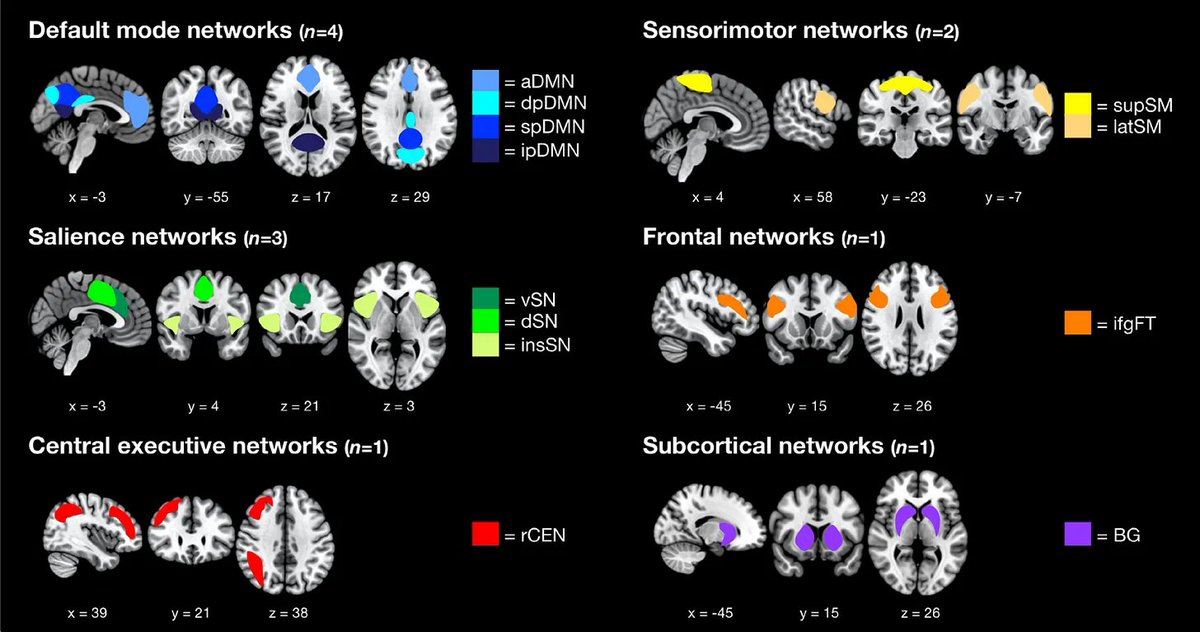
The goal of this shift isn't to become a monk — it's to train your brain to enjoy the reality in front of you: the one you can touch, feel, smell, and hear.
4. You Are What You Consume
"You become what you consume."
This sounds like a cliché until you understand the mechanism. The brain constructs a sense of self from the patterns it encounters repeatedly. Content you consume doesn't simply pass through you — it literally shapes the neural architecture you use to interpret reality.
Spending more than four hours a day in algorithmically curated feeds produces changes like these:
- Your values begin to align with what gets attention
- Your sense of humor shifts toward what goes viral
- Your opinions drift toward what generates reactions
- Your aesthetic preferences converge toward what's trending
- Your sense of what's possible shrinks to what others are doing
But if you think carefully, you'll realize you didn't consciously choose any of these changes. They happen below the level of conscious awareness, through pure repetition and reward association. The version of you that existed before the smartphone gets overwritten, and in its place appears someone more generic, reactive, and predictable.
The author admits there was a period when he could predict his own opinions before he'd formed them.
"I wasn't thinking. I was running an algorithm."
The destimulation process reverses this merger. Remove the input streams, and you create space for what's originally yours to emerge — thoughts that are genuinely your own, interests that arise from somewhere other than the feed, a sense of identity that isn't a composite of consumed content.
5. The Power of Boredom: From Avoidance to Self-Encounter
This is why the boredom phase matters. Boredom is frequently misclassified. When you feel the urge to reach for your phone in a quiet moment, you're not avoiding boredom — you're avoiding what boredom reveals.
Sit in silence long enough, and things like these begin to surface:
- The goal you've been postponing for three years 🎯
- The relationship you know isn't going well 💔
- The career path that no longer feels meaningful 🚶♀️
- The version of yourself you're disappointed in 😥
- The questions you've been drowning out with noise ❓
Stimulation is a fantastic avoidance strategy. As long as you're consuming, you're not confronting. The flow of content keeps uncomfortable thoughts at bay. As long as your phone is charged, you can go years without a single moment of genuine self-examination.
Carl Jung wrote about this in the 1930s — before smartphones, before television. He observed that modern people displayed "an extraordinary impoverishment of symbols" and "an intense fascination with trivial distractions." Their inner lives were withering because they refused to sit with them. And that was 1935 — imagine what he would say now.
Fear of boredom is, in truth, fear of self-encounter. Until you find the courage to meet yourself — including the parts you've been avoiding — the cycle of stimulation will continue. Because the cycle isn't about pleasure; it's about escape.
Destimulation is confrontation. That's why it works, and that's why most people won't try it.
6. The Compression of Time: Why Overstimulation Makes the Years Vanish
One of the stranger side effects of overstimulation is that time accelerates. As a child, summers felt endless; a single afternoon felt like an odyssey. By middle age, years begin to blur, and people remark that time "flies" and wonder where the decades went.
The common explanation involves novelty: new experiences create memories, and memories give us a sense of duration. When you're young, everything is new; as you age, you've already experienced so much.
But in the overstimulated brain, something else is happening. Dense stimulation compresses the experience of the present moment. When you scroll, you're not fully present anywhere. You're half in the stream of content, half aware of your surroundings, encoding nothing properly. Hours pass and you can't account for them. They weren't imprinted — they just happened somewhere in the background of consciousness.
Compare this to an hour of genuine present awareness: a conversation you're fully absorbed in, a walk where you notice everything, a meal tasted instead of scrolled through. That hour has weight. It stays with you. It becomes part of the felt texture of your life.
An overstimulated life feels short not because too little actually happens, but because during most of it, you were experientially absent. You were physically present for decades, but gone for most of it. Years disappear because you weren't really there when they were happening.
Destimulation is how you get more life in a real sense. The same 24 hours feel denser. More happens subjectively — because you're awake enough to register that it's happening.
The author noticed this after his first extended break from content.
"A week felt longer than the previous month. I could remember specific conversations, specific meals, specific moments of noticing. Looking back, they were actually there."
The years aren't flying. Time isn't speeding up. You're just unconscious for most of it.
7. Pleasure and Meaning: Sustained Emptiness vs. Sustained Satisfaction
Pleasure and meaning operate differently.
Pleasure:
- Immediate
- Requires no effort
- Feels good in the moment
- Diminishes with repetition
- Leaves no residue
Meaning:
- Often delayed
- Requires effort — sometimes discomfort
- May not feel good in the moment
- Deepens with repetition
- Accumulates into purpose
Modern technology has created a world overflowing with pleasure but starved of meaning. Every possible gratification is a click away — but meaning hasn't scaled. Meaning still requires what it always has: commitment, struggle, perseverance, genuine connection.
When pleasure is abundant and meaning is scarce, something psychologically interesting happens. We chase easy pleasures, but they never satisfy — because satisfaction comes from meaning, and meaning isn't being obtained.
So we consume more. And the more we consume, the more our capacity for the difficult work of creating meaning atrophies. It's a downward spiral: pleasure crowds out meaning, the absence of meaning breeds dissatisfaction, and dissatisfaction drives more pleasure-seeking.
Viktor Frankl observed this in 1946. He called it "the existential vacuum" — the emptiness that comes from a life without purpose. He predicted it would become the dominant psychological problem of the modern era. He was right, and the internet has made it worse.
A destimulated life is paradoxically more satisfying — not because it contains more pleasure, but because it makes room for meaning.
The ratio matters:
High pleasure + Low meaning = Sustained emptiness 😔 Moderate pleasure + High meaning = Sustained satisfaction 😊
You cannot meaning your way out of a life structured around pleasure-seeking. The structure itself must change first.
8. Neurological Debt: The True Cost of Overstimulation
Every binge comes with a price. Exposing your brain to high-dopamine stimulation for hours isn't just "spending" dopamine in that moment — you're creating a debt that has to be repaid.
Here's the mechanism:
- Supernormal stimuli trigger a dopamine spike.
- The brain detects the abnormal elevation and compensates.
- Receptor density decreases to maintain equilibrium.
- Baseline mood drops below its starting point.
- Stimulation is now required just to feel normal.
- Higher doses are needed to produce the same effect.
This is why the morning after a content binge feels particularly flat. It's why you feel emotionally subdued the day after drinking. It's why scrolling for hours "to relax" leaves you feeling worse. You've borrowed against your future capacity for feeling, and the interest rate is steep.
The concept of neurological debt reframes every question about stimulation. Every high-stimulation choice isn't just a transaction in time — it's a transaction in future emotional capacity. You're not spending an hour on content; you're spending tomorrow's ability to enjoy a conversation, a meal, a quiet moment.
Seen this way, the math changes. Scrolling isn't free. Bingeing has a price. And you're the one paying it.
9. The 30-Day Destimulation Protocol: A Systematic Approach to Rebuilding Attention
Enough theory. If you want to rebuild your capacity for attention, you need a systematic approach. Random "digital detoxes" don't work because they address only the behavior, not the underlying neurological and psychological patterns.
This protocol is designed to work with your brain's adaptive mechanisms rather than against them. It runs 30 days across three phases.
⮕ Phase 1: Elimination (Days 1–10)
Goal: Break the stimulus-response loop and begin lowering the baseline.
Eliminate:
- All social media 📵
- Streaming services 📺
- Video games 🎮
- Pornography 🔞
- News feeds 📰
- Processed food and sugar 🍫
- Alcohol 🍺
Keep:
- Essential work communication 🧑💻
- Physical books 📚
- Music (intentionally chosen, not algorithmic) 🎶
- Phone calls with real people 📞
- Movement and exercise 🏃♀️
This phase requires the nuclear option. There are no comfortable alternatives.
⮕ Phase 2: Sensitization (Days 11–20)
Goal: Train perception to extract reward from subtle stimuli.
Now you actively practice present awareness. This isn't meditation (though that helps) — it's the deliberate act of noticing ordinary experience.
Daily practices:
- Morning silence: Sit for 20 minutes after waking with no inputs. Be with whatever arises. 🧘♀️
- Sensory eating: Eat without screens. Notice texture, temperature, flavor. Make the meal an experience, not a backdrop. 🍽️
- Purposeless walking: Walk 30 minutes daily with no audio. Notice your surroundings. 🚶♂️
- Handwriting: Spend 10 minutes each evening writing with pen on paper — what did you observe today? ✍️
- Eye-contact conversations: Stay present when talking with people. Don't pre-compose your next response. 👀
These sound simple but are surprisingly difficult after years of fragmented attention. Your mind will wander toward absent stimulation. Bring it back. Each time you find satisfaction in a subtle experience, you're teaching your brain that subtle experiences are worth registering — reopening pathways that supernormal stimuli had buried.
⮕ Phase 3: Selective Reintegration (Days 21–30)
Goal: Reintroduce stimulation within a conscious structure.
You're not returning to old patterns — you're building new ones from scratch based on what you've learned.
Reintroduce one stimulus category at a time, and observe what happens:
- How strong is the pull?
- Do you feel in control, or like you're being dragged?
- How do you feel before and after use?
- Can you stop when you planned to?
Use your observations to create rules:
- Time boundaries: Social media only between 5–6 p.m. Streaming only on weekends. No screens after 9 p.m. ⏰
- Friction by design: Delete apps from your phone; access only through a browser. Log out after each session. Make unwanted behaviors harder. 🚫
- Replacement rituals: The moments you used to scroll — waking up, waiting, lying in bed — need new defaults. Reading, writing, sitting in silence. 📖
- Weekly Sabbath: Go completely offline for 24 hours each week. Non-negotiable. Your brain needs regular evidence that it can survive without the stream. 🧘♂️
Closing
We live in an age of overstimulation, and it numbs us, making genuine satisfaction hard to reach. Supernormal stimuli have hijacked our instinctual reward circuits, making reality feel dull and distorting both our sense of identity and our experience of time. True satisfaction does not come from immediate pleasure — it comes from meaningful experience.
The 30-day destimulation protocol presented here goes far beyond a simple digital detox. It is a systematic method for lowering the brain's neurological baseline and retraining it to find joy in subtle stimuli. Through this process, we can restore our inner lives, rediscover the richness of reality, and arrive at lasting satisfaction. Now is the time to break free from the scroll and meet your real self — to begin the journey of making life feel real again. ✨