This study analyzed individual metabolic responses to identical meals in over 1,000 participants, proving that blood glucose and triglyceride levels vary significantly between people. Surprisingly, these differences were found to be determined more by environmental factors like gut microbiome, sleep, and meal timing than by genetic factors. Based on these findings, the researchers developed a machine learning model to predict individual postprandial responses, opening the door to personalized Precision Nutrition.
1. Research Background and the Start of the PREDICT 1 Project
Although nutrition-related diseases pose a major global problem, existing dietary guidelines are mostly based on population averages and fail to account for individual differences. People respond differently to the same foods, and the effectiveness of weight-loss diets varies enormously from person to person. This drove researchers to recognize the need for large-scale data to precisely analyze and predict individual postprandial responses.
Against this backdrop, the PREDICT 1 (Personalised Responses to DIetary Composition Trial) study was launched. Conducted between 2018 and 2019, it recruited 1,002 twins and general adults in the UK, along with an additional validation cohort of 100 participants in the US.
The study comprised precision clinical testing and a two-week home phase. Participants consumed standardized test meals such as muffins or glucose drinks, and their postprandial metabolic responses (blood glucose, triglycerides, insulin, etc.) were measured through continuous glucose monitors (CGMs) and blood tests. Additionally, gut microbiome, sleep, and physical activity data were collected.
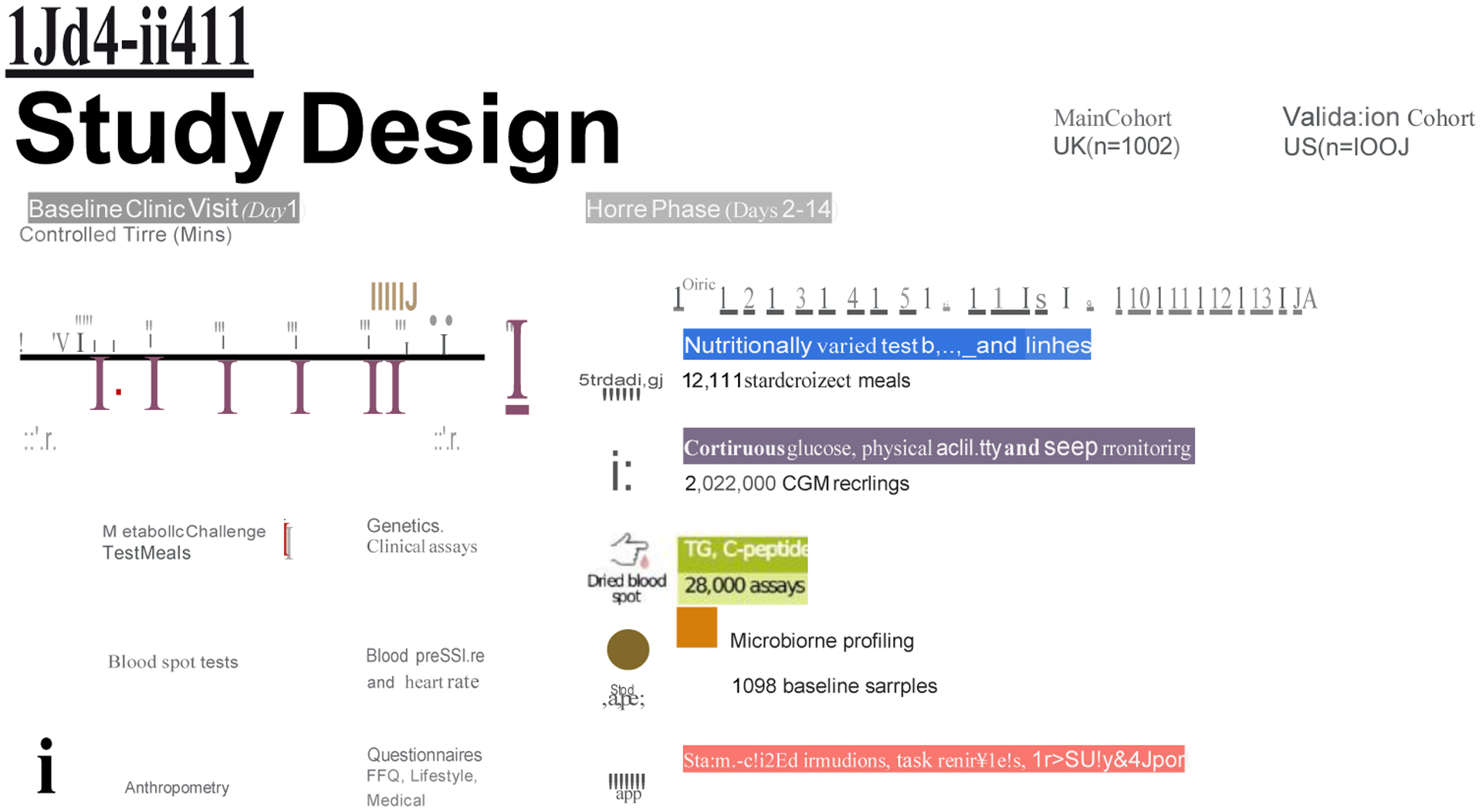 Study design overview: Data were collected from UK (n=1,002) and US (n=100) cohorts through clinic visits and a two-week home study.
2. Remarkably Different Postprandial Responses Between Individuals
One of the most fascinating findings was that people responded very differently even when eating the exact same food. The researchers observed changes in blood triglycerides, glucose, and insulin levels after meals, and found that individual variation was much greater for postprandial responses than for fasting levels.
- Triglycerides: Postprandial variability differed by as much as 103%.
- Glucose: Showed 68% variability.
- Insulin: Showed 59% variability.
These results suggest that fasting measurements alone are insufficient to properly assess a person's metabolic health. In fact, postprandial spikes in blood glucose or triglycerides can be stronger predictors of cardiovascular disease risk than fasting values.
Our findings show wide variations in postprandial responses between people, even identical twins, attributable in large part to modifiable factors.
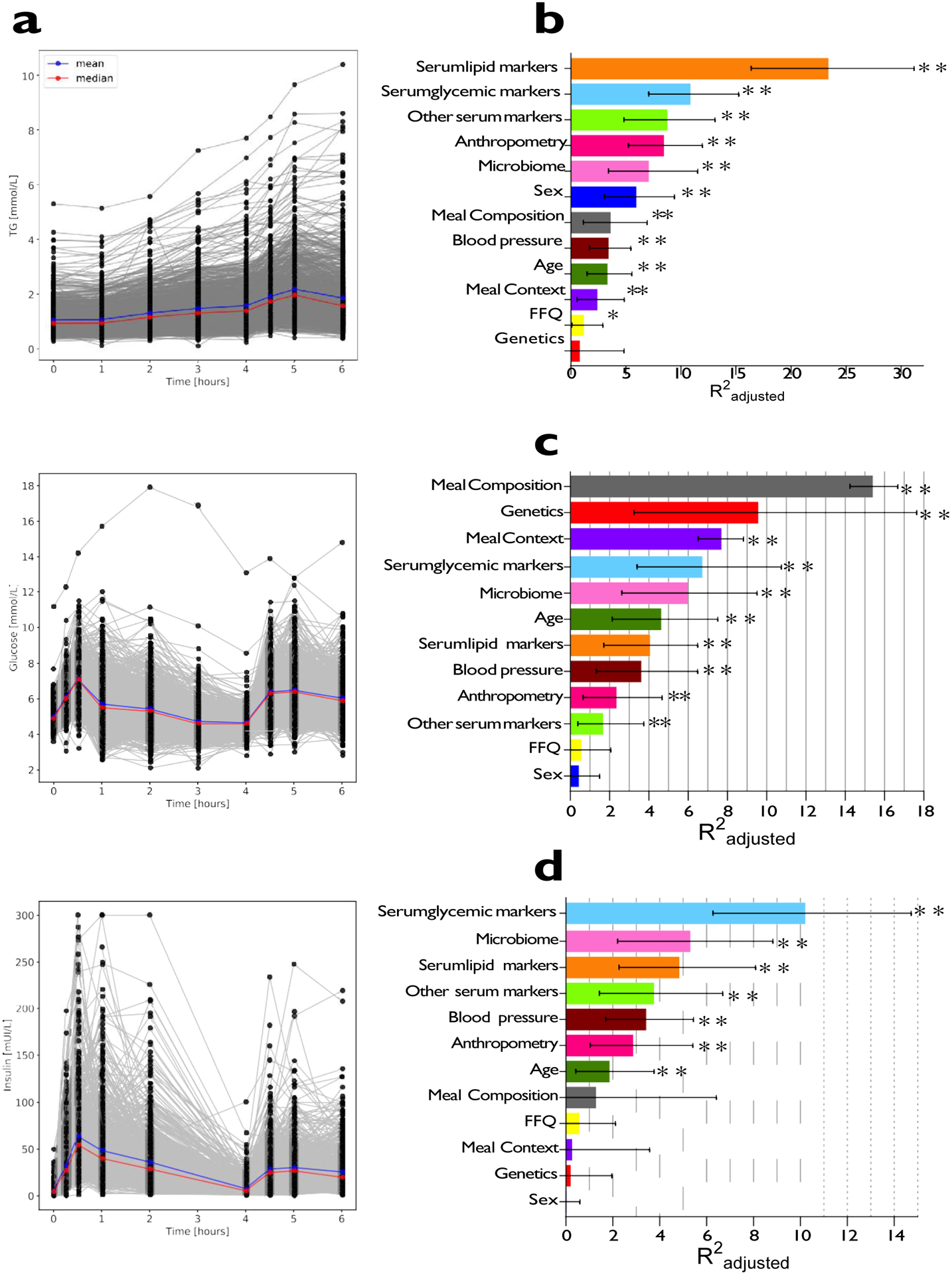 Figure (a) shows how blood glucose, insulin, and triglyceride responses to the same meal vary enormously between individuals.
3. Genetics Is Not Everything: The Importance of Environment and Microbiome
So what causes such large differences? While it is easy to assume genetics is the primary factor, the results defied expectations.
Using twin data, the researchers analyzed the genetic contribution to postprandial responses. Genetics explained only about 30% of postprandial glucose responses, and its influence on postprandial triglyceride and insulin responses was even lower (below 16% and 9%, respectively). In other words, our DNA is not the definitive factor determining postprandial metabolic responses.
In contrast, environmental factors and the gut microbiome played a considerably important role.
- Gut microbiome: Showed an influence equal to or greater than genetic factors in explaining postprandial glucose, insulin, and triglyceride responses. (e.g., explained 7.5% of triglyceride response)
- Meal context: Meal timing, sleep deprivation, and prior-day exercise had as much impact as meal macronutrient composition (carbohydrate, fat content).
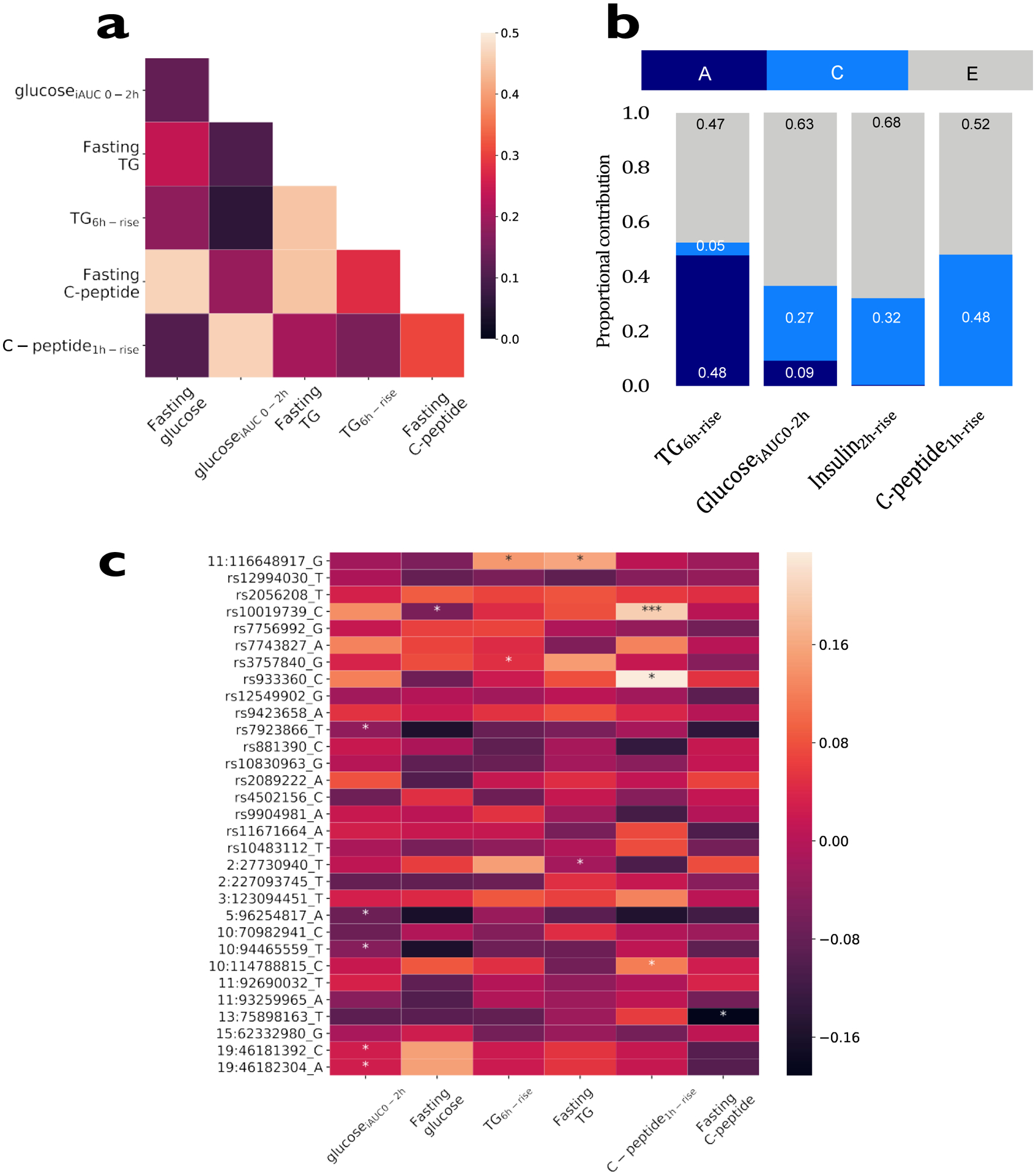 The genetic contribution (A) to postprandial responses was smaller than expected (Figure b), while gut microbiome and other factors played important roles.
4. Machine Learning-Based Prediction of Individual Responses
The researchers combined the vast collected data (meal composition, individual characteristics, microbiome, meal context, etc.) to develop a machine learning model that predicts individual postprandial responses.
The model showed quite impressive performance, predicting postprandial glucose responses (r = 0.77) and triglyceride responses (r = 0.47) with considerable accuracy. Notably, a model trained on UK participant data performed similarly well on a completely independent US cohort, enhancing confidence in the model's reliability.
This means we can go beyond simply saying "this food is healthy" to predicting: "Given your gut microbiome and sleep status, eating this food now will raise your blood glucose by this much."
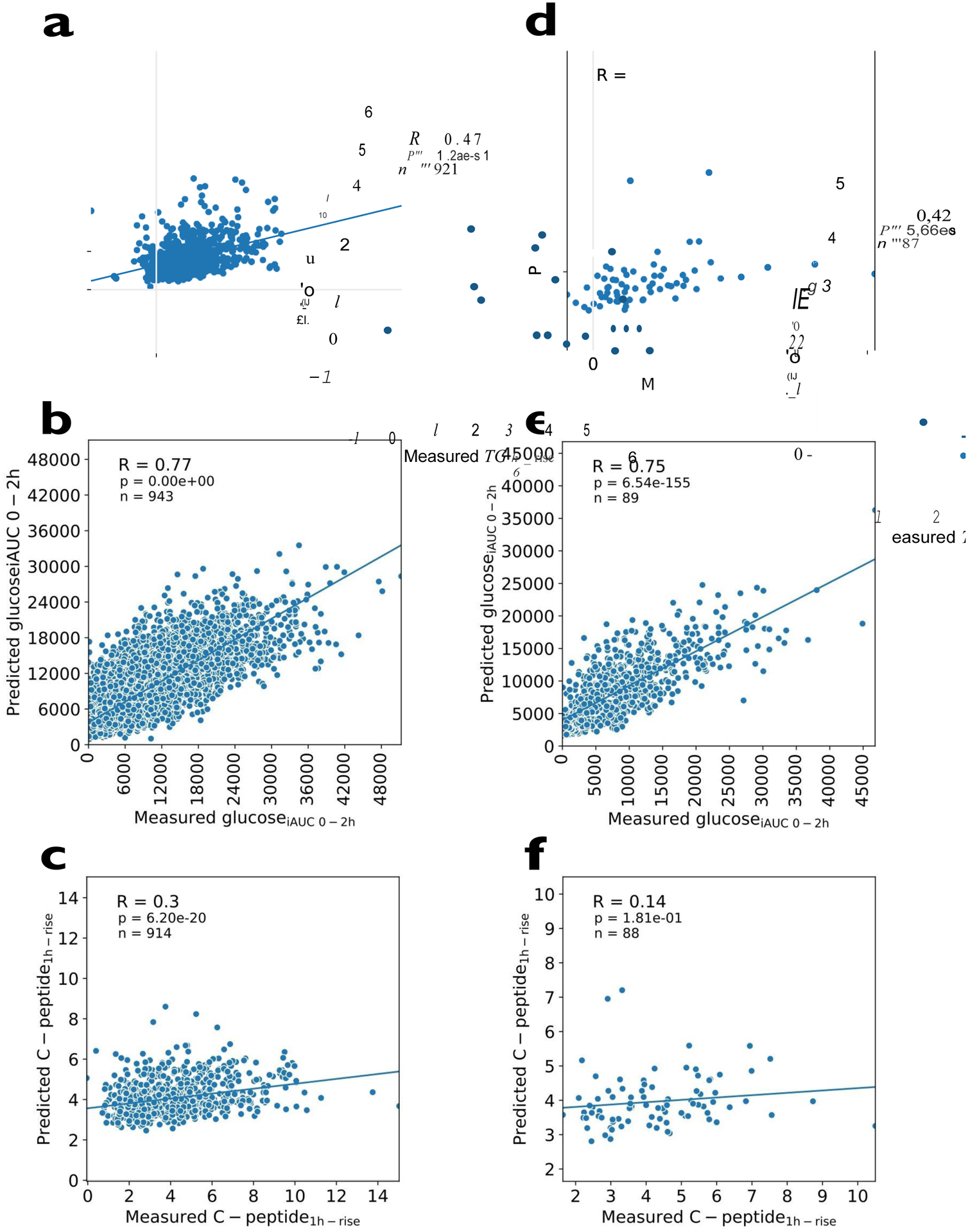 Graph showing the correlation between machine learning model predictions (X-axis) and actual measurements (Y-axis). Blood glucose (b) prediction was particularly accurate.
5. Even for the Same Person, 'When' You Eat Matters
The researchers also conducted in-depth analysis of intra-individual variation. An interesting finding was that even the same person shows different responses depending on meal timing.
For example, the same high-carbohydrate meal consumed at lunch produced a much higher glucose response (nearly double on average) compared to breakfast. This is strong evidence that our body's circadian rhythm significantly affects metabolic capacity.
Additionally, some individuals were consistent "high responders" across all meals, while for others, rankings changed depending on the type of meal. Person A might be more sensitive to bread than muffins, while Person B could show the opposite pattern.
Findings from the PREDICT trial and elsewhere suggest that even in highly-adherent participants, substantial response variations exist, which might be predictable. In PREDICT, non-food-specific factors (e.g., meal timing, sleep, activity) were highly informative of these person-specific responses.
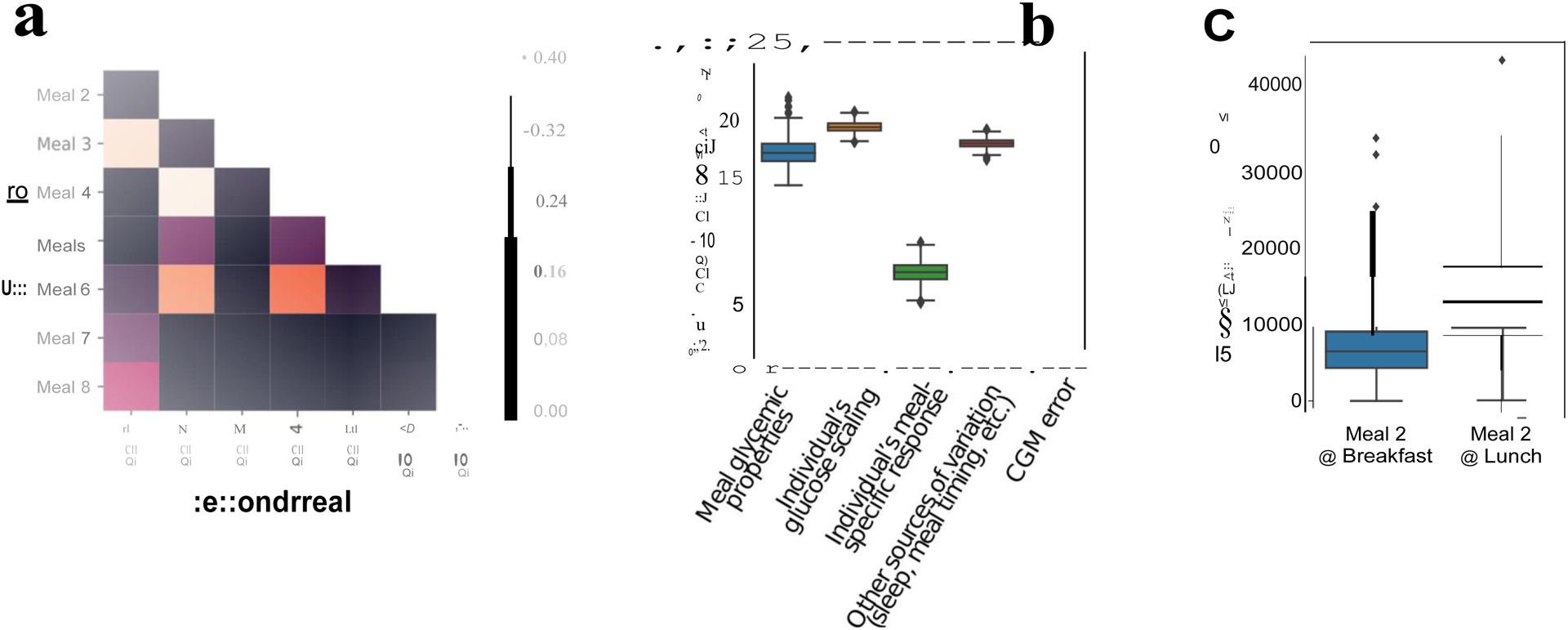 Figure (c) shows that blood glucose responses to the same meal were much higher at lunch (Lunch) than at breakfast (Breakfast).
Conclusion
Looking back from 2026, this PREDICT 1 study published in 2020 was a pivotal turning point that shifted the paradigm of nutritional science.
The key messages from this study are:
- There is no standardized diet: No single healthy diet works for everyone.
- Genetics is not destiny: Lifestyle factors like gut microbiome, sleep, and meal timing have a greater influence on postprandial metabolic responses than genetics.
- Personalized prediction is possible: Combining machine learning with personal data allows us to know in advance how our body will respond to specific foods.
Ultimately, this study strongly suggests that for better health, we need to go beyond simply finding "good food" and adopt a Precision Nutrition strategy of eating "the right food for me" at "the right time" — an approach that could play a central role in disease prevention and health management.