This study compared heart rate variability (HRV) and stress index changes across four major activities — humming (Bhramari Pranayama), physical activity, emotional stress, and sleep. The results showed that humming reduced the stress index more than any other activity and produced clear improvements in HRV. These findings demonstrate that a simple daily humming habit can support a healthy autonomic nervous system and is highly effective for stress relief. 🎶
1. Research Purpose and Background
The aim of this study was to examine how humming (simple Bhramari Pranayama) actually reduces stress and affects autonomic nervous system balance, and to compare HRV changes across physical activity, emotional stress, and sleep over an extended period.
"Humming showed the lowest stress index compared to physical activity, emotional stress, and sleep."
Adverse Effects of Stress and HRV
Stress is closely associated with the worsening of cardiovascular disease, diabetes, pulmonary disease, and cancer, raising not only quality-of-life concerns but also tangible health risks. HRV (heart rate variability) is an important indicator of autonomic nervous system health — higher HRV means better stress resilience and overall health.
"Relaxation, slow breathing, or any stress-reduction intervention increases HRV."
2. Effects of Humming (Bhramari Pranayama) and the Need for Research
Humming is a simple practice with a wide range of documented benefits, including:
- Reduced heart rate
- Increased HRV
- Improved autonomic and pulmonary function
- Enhanced attention and sleep quality
This study sought to determine how distinctively the effects of Bhramari humming stand out compared to various activities throughout the day, and whether those effects appear consistently across different individuals.
"It has been observed that HRV metrics improve markedly through humming practice related to HRV biofeedback. These changes are not seen during stress or physical activity."
3. Study Methods and Participants
Study Design and Participants
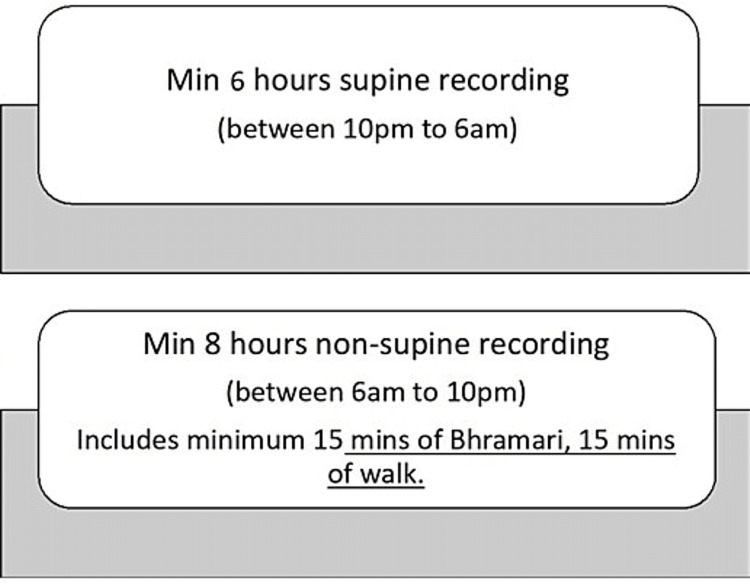
- Method: HRV comparison across 4 activities (humming, physical activity, emotional stress, sleep) measured with a Holter monitor for 16+ hours
- Participants: 29 men and women aged 18–60; 23 provided final data (mean age 38.8, some with chronic conditions)
Key Activity Definitions
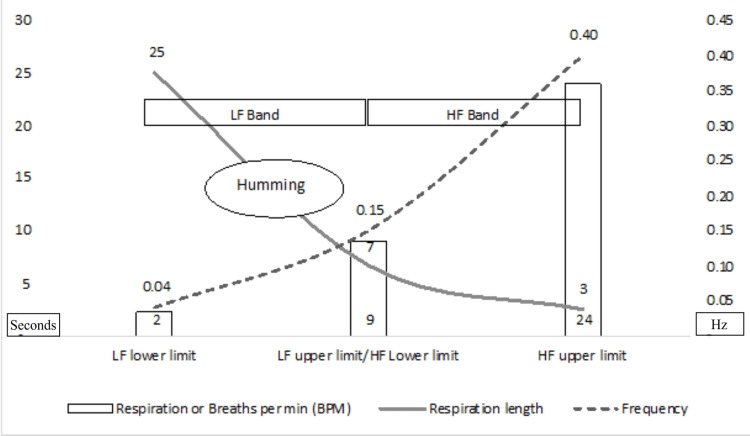
- Humming (Bhramari): Inhale for 3–4 seconds, exhale slowly while humming for 6–8 seconds (15+ minutes)
- Physical activity: Walking, running, cycling, etc.
- Emotional stress: Moments such as traffic jams or emotionally difficult phone calls, self-reported by participants
- Sleep: Nighttime sleep (daytime naps excluded)
Each participant kept an activity log, and the results were verified by experts alongside HRV measurements.
4. Key Findings
HRV & Stress Index Comparison
Summary of key results:
- Stress index (SI) during humming was the lowest of all activities — significantly lower even than sleep (p<0.00073)
- SDNN (total autonomic variability) and Total Power were also highest during humming
- Heart rate during humming: significantly lower than during physical activity and stress; second lowest after sleep (which was lowest)
- RMSSD (parasympathetic variability) during humming was higher than during physical activity and stress, but did not differ significantly from sleep
- LF/HF ratio: highest during humming (a result of total power concentrating in the LF band)
"Humming consistently showed unique improvements in stress index, SDNN, total power, and LF/HF ratio compared to all three other activities."
| Activity | Stress Index (SI) | Heart Rate | SDNN | Total Power | LF/HF |
|---|---|---|---|---|---|
| Humming | 9.26 (±2.49) ★ | 82.5 | 61.8 | 4318.8 | 13.5 |
| Physical activity | 23.4 (±13.1) | 103.3 | 26.7 | 1003.8 | 5.24 |
| Sleep | 10.9 (±3.47) | 70.3 | 47.7 | 2750.9 | 2.26 |
| Stress | 21.7 (±7.39) | 97.2 | 22.4 | 648.4 | 5.70 |
"Both humming and sleep are effective at reducing stress, but humming produces an even lower stress index than sleep."
5. Discussion and Implications
Humming's Unique HRV Pattern
- Humming outperformed physical activity and stress conditions across multiple HRV metrics, and showed substantial efficacy even compared to sleep.
- Despite the interpretive ambiguity of the LF/HF ratio, total power during humming concentrated in the LF band, giving it a distinct profile.
- The increase in SDNN also suggests potential benefits for focus and autonomic nervous system balance.
"Most HRV metrics (especially those other than RMSSD) were higher during humming than during sleep. This demonstrates a unique, intentional pattern of autonomic activation specific to humming."
Real-World Applicability and Future Research Directions
- Humming may offer a more accessible way to realize the positive effects of HRV biofeedback.
- Practicing humming for just 10–15 minutes twice a day is expected to yield a range of health benefits — for the autonomic nervous system, cardiovascular health, respiratory function, and attention.
- Future research should compare HRV across individual sleep stages and investigate the effects of long-term habituation.
"Practicing humming for just 10–15 minutes twice a day can yield multiple benefits: improved HRV, a stronger autonomic nervous system, and reduced stress."
6. Limitations and Caveats
- Sample size: The number of participants was not large; larger-scale studies are needed in the future.
- Differences in measurement duration across activities: Long-duration activities (sleep) and brief activities (humming/stress/physical activity) were not measured under strictly identical conditions, which limits direct comparison.
- Ambiguity in LF/HF interpretation: Interpretation of the LF/HF ratio can vary depending on breathing patterns and measurement environment, so caution is warranted when interpreting the results.
Conclusion
This study experimentally demonstrated that simple humming (Bhramari Pranayama) can effectively reduce stress and improve autonomic nervous system health as reflected in HRV and other metrics. Humming — easy to practice in everyday life — outperformed sleep, physical activity, and even stress conditions, suggesting it can be recommended as a healthy lifestyle strategy. With consistent practice and further follow-up research, we can look forward to seeing what changes humming may bring to health and well-being! 😊
"Humming is not only a genuinely effective stress reliever — it can also contribute to improved HRV and enhanced quality of life."