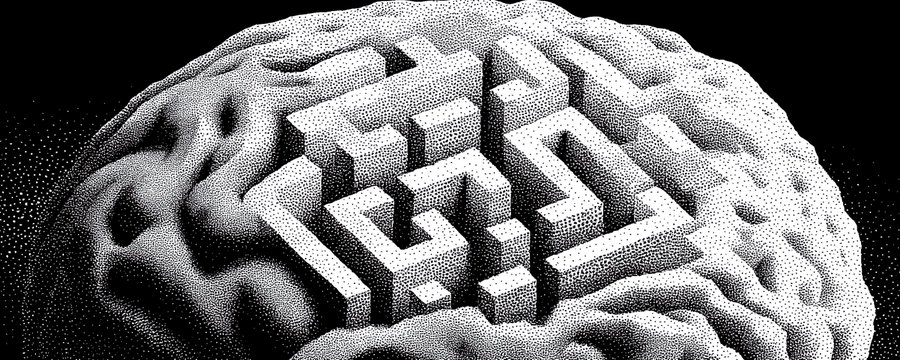
This piece argues that real change requires understanding and using our survival mechanisms. Instead of depending on external motivation, it suggests working with psychological survival instincts so they pull us toward a better life: material progress, inner steadiness, and a clearer relationship with ambition.
1. The Beginning of Numbness and the Loop
Many people begin losing faith in themselves in early adulthood. The author points to a common loop among people in their twenties and thirties: they get motivated by a video, book, or conversation, start a business, work out, learn a new skill, and then return to the old pattern within days or weeks.
The problem is that the desire to change can itself become a cheap dopamine hit. Wanting a different life feels good for a moment, but it is not always strong enough to disrupt the identity that prefers the familiar one.
That is why ordinary productivity advice, discipline content, or dopamine tips often solve only half the problem. To change deeply, we have to look at the deeper machinery of the mind.
2. The Root of Everything: Survival
Behind every thought, emotion, and action is a survival instinct. The author separates survival into two layers.
- Physical survival is the biological drive to keep the body alive and reproduce.
- Psychological or conceptual survival is the drive to preserve the ideas, beliefs, worldviews, and practices that make up our identity.
The second layer is where most modern change gets stuck. Our minds carry memes in the older Richard Dawkins sense: cultural units that move from mind to mind. Parents, schools, institutions, online communities, and peer groups all install memes that tell us what is normal, successful, respectable, or safe.
Some of those memes were once useful but become outdated. For example, the old model of going to school, getting a job, and retiring at sixty-five no longer maps cleanly onto a world shaped by AI and rapid cultural change.
2.1. Institutions and Ideologies as Survival Systems
Institutions and ideologies help memes survive. Religions, nations, political groups, companies, online subcultures, and even lifestyle identities preserve their values by turning them into belonging.
The author's sharper claim is that almost everything becomes a kind of religion: a morning routine, a political opinion, a gamer identity, a fitness identity, minimalism, stoicism, or craft beer culture. Once something becomes part of who we are, we defend it because it feels like defending ourselves.
3. Self-Deception and Threats to the Ego
The reason people often return to old behavior is that the mind is a self-deception machine. When we pursue a goal that would fundamentally change who we are, the ego reads that as a threat.
The mind responds with anxiety, fear of failure, rationalization, and distractions. It behaves as if the old identity is under attack and must be protected.
This is why the author distinguishes between people who fear success and people who fear mediocrity. Someone who identifies with unhealthy habits may feel threatened by the discipline required to become healthy. A healthy person may feel threatened by losing the habits that keep them healthy. In both cases, the survival system protects the identity.
The key question is whether we can reprogram that response. What if stopping meaningful work felt threatening? What if becoming better felt less like a project and more like self-preservation?
4. Reprogramming the Mind: Weaponizing Survival
The author argues that we can consciously redirect our survival mechanisms. Instead of letting the old self treat change as a danger, we can learn to identify with the future self strongly enough that stagnation becomes the threat.
This will not happen overnight. There will be withdrawal, relapse, and resistance. But the article offers several practices.
4.1. Find a Reason to Change
The strongest seasons of change often begin when we unexpectedly find a reason powerful enough to reorganize attention. That reason might come from a book, a conversation, a trip, or an uncomfortable experience.
It usually appears outside the predictable loop of daily life. If we wake up every morning replaying the same old stresses, we repeat old emotions and create the same future. New insight usually comes from entering the unknown.
4.2. Negative Visualization
One practical exercise is to write down exactly where your life is headed if you repeat today's actions tomorrow, next year, and for the next decade.
If you are honest, the answer may disgust you. The author frames that disgust as fuel. But honesty is difficult because the identity doing the evaluation is the same identity being evaluated. It has a survival interest in softening the truth.
The exercise works only when we can look clearly at where our current habits lead.
4.3. Rebuild the Environment
The old self is stored partly in the environment: who we follow, where we sleep, the apps on our phone, the places we go, the routines we repeat, and the people around us.
Changing the environment breaks triggers. The author suggests radical but simple moves: reset the phone, stop reinstalling old feeds, spend time somewhere new, and immerse the mind in the information environment of the future self.
Identity is learned. If we keep bathing in the same inputs, the same self keeps surviving.
4.4. Do Nothing
The most direct way to interrupt old patterns is to do nothing in the moment between impulse and action.
When the hand reaches for the phone, when the mind starts arguing with a belief, when the old comfort appears, sit with the discomfort without immediately obeying it. That pause trains the nervous system to survive the gap between impulse and response.
Meditation, cold exposure, fasting, and delayed gratification can all help, but the article frames the deeper practice as becoming an observer throughout the day: expanding awareness, noticing the survival response, and then choosing deliberately.
5. The New Survival Game: Growth and Transcendence
The article closes with a warning: replacing one survival game with another can still create suffering.
It is better to feel stress about building a meaningful business or body than to feel trapped in poverty or poor health, but achievement can also become a moving target. A founder may remain unhappy until revenue reaches the next number. A bodybuilder may remain unhappy until the next milestone. If the identity never changes, the goalpost keeps moving.
So the author proposes a paradox. Play the survival game of growth, because stagnation hurts. But also learn to transcend the game enough that setbacks do not destroy you.
Two practices help:
- Keep widening the gap between impulse and response.
- Distinguish pain from suffering. Pain is part of life; suffering is the identity's refusal to accept what happened.
The mature mind can hold both forces at once: intense enough to work hard, detached enough not to collapse when things go badly. That combination is the real win.