This article is written by Nabeel S. Qureshi, who worked at Palantir for eight years, drawing on his own experience to cover in detail Palantir's rapid growth, unique corporate culture, and technological and ethical dilemmas in chronological order. The strengths and weaknesses as seen from an insider's perspective, along with what he learned, are presented in an approachable manner. The key conclusion is that Palantir has truly transformed into a software company, creating unique value through "execution" and "continuous learning."
1. Palantir Rises to Prominence
These days, Palantir is an incredibly hot company. It was recently added to the S&P 500 index, and with its stock price surging, its market capitalization is approaching $100 billion. Venture capitalists are lining up to invest in founders who came from Palantir.
However, the company's long-time employees and alumni say the current popularity and attention feel quite awkward and unfamiliar. Between 2016 and 2020, saying you worked at Palantir wasn't exactly welcomed. The dominant perception was that it was a "spy tech company," involved in "NSA surveillance," or that it was a consulting firm pretending to be a software company. Protests in front of the office were routine, and even people who didn't object on moral grounds often dismissed the company.
"For a while, it wasn't easy to bring up that I worked at Palantir."
So the author decided to share what he learned during his eight years at the company and tell the real story of Palantir that most people don't know.
2. Why Palantir? -- Personal Motivation and Expectations Before Joining
The author started his career as an engineer at Palantir's London office in the summer of 2015. At the time, Palantir was a 1,500-person Silicon Valley company; today (2025) it has grown to about 4,000 employees with headquarters in Denver.
The first reason he chose Palantir was that he wanted to tackle meaningful problems in 'hard' industries. He was particularly interested in healthcare and biotech, and at the time, almost no companies were seriously entering these fields. It was an era when social media and consumer apps (Facebook, Airbnb, Uber, etc.) were all the rage.
"If you wanted to work on really hard problems and also wanted the Silicon Valley culture, Palantir was pretty much the only option back then."
Second, he was struck by the talent density. He was deeply captivated during interviews with early members of the healthcare team, and likewise with the business and strategy teams. These were genuinely driven people who wanted to win, read philosophy, and enjoyed 100-mile bike rides -- truly unusual individuals. This was also a legacy of the PayPal Mafia (early executives). For example:
"Peter Thiel and Max Levchin were both possessed of enormous tenacity, competitiveness, and grit. This kind of leadership elevates an ordinarily talented team into a great one."
Palantir was a truly serious yet eccentric place. (In interviews with CEO Alex Karp, he reportedly asked offbeat questions without looking at resumes or job descriptions, assessing a person's nature and thinking in a short time.)
"I meet candidates knowing nothing about them. I ask completely unrelated questions and observe how they break down problems and view them from different angles."
In interviews, they would spend over an hour discussing philosophy (Wittgenstein, etc.) rather than actual work or software.
3. Palantir's "Field-First" Work Model -- The Symbiosis of FDE and PD
When the author joined, Palantir broadly divided engineers into two categories:
- Forward Deployed Engineers (FDE) who worked on-site at client locations
- Product Development (core product team, PD) engineers who developed the core software without visiting clients
FDEs went to client sites and worked alongside them 3-4 days a week. This was an extremely rare approach among Silicon Valley companies.
This method allowed them to deeply understand the actual work processes in difficult industries, and based on that experience, design software that actually solves problems. PD would then 'productize' the initial solutions FDEs created to enable broader application.
The product called Foundry also originated from this experience. They solved on-site frustrations with their own hands and gradually built them into 'tools.' Examples include Magritte (a tool for pulling data from SAP and AWS), Contour (a visualization tool), and Workshop (a web app UI tool).
Exposing these actual tools to customers was highly innovative at the time, but today it has become the core business accounting for over 50% of the company's revenue.
"Palantir is a rare case of successfully transitioning from a 'services company to a product company.' The current 80% margins are the result."
The key to this approach is understanding the customer's 'context.' Rather than merely collecting requirements, they focused on going directly into the field to observe and learn.
"Palantir's culture was 'get on the plane first, ask questions later.'"
The costs were significant, but an equally powerful learning feedback loop was created in return.
4. A Real-World Example -- Airbus, Success and Learning
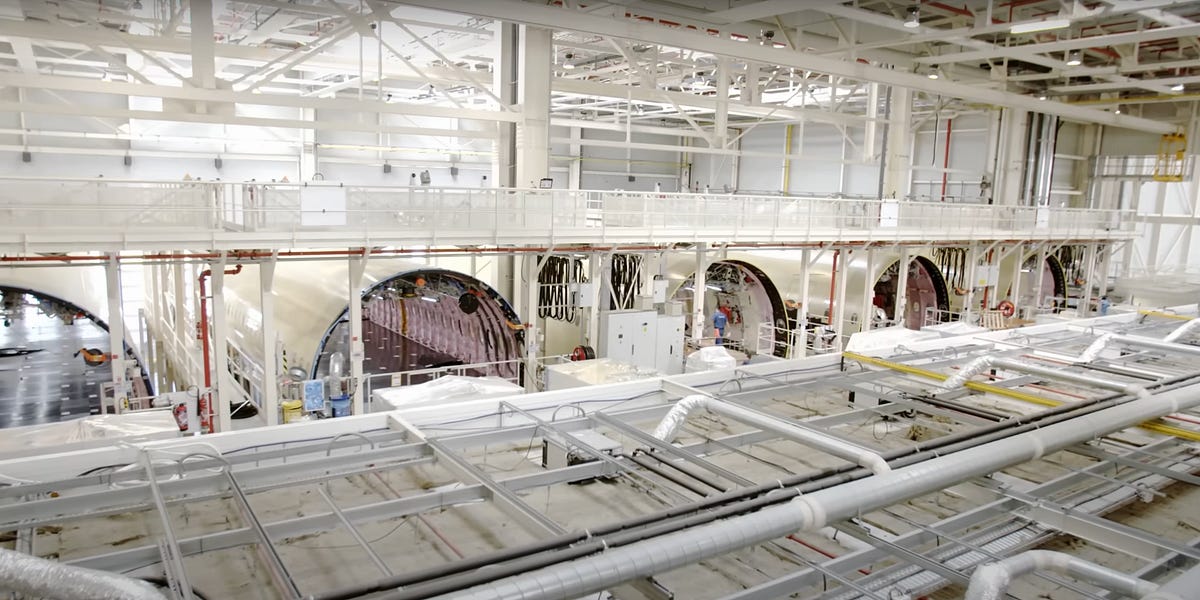
The author's first 'real-world project' was a collaboration with French aircraft manufacturer Airbus. He spent a year embedded at the Airbus site in Toulouse, co-developing software to solve factory problems.
"The Airbus CEO said that increasing the A350 manufacturing rate was their biggest challenge. So we built software specifically to solve that problem."
They integrated individual data (work orders, missing parts, quality issues) into a single interface, enabling workers to see at a glance what was happening where, and also allowing them to search past problem cases. As a result, they played a major role in quadrupling the A350 production rate while maintaining quality standards.
"When you think about how terrible enterprise software typically is, just introducing a 'good UI' to the actual work floor creates enormous power."

5. The Role of FDEs and Palantir's Organizational Culture
FDEs needed both the 'craftsmanship' to deliver results quickly and political acumen. Even at the expense of some code quality, they had to quickly show customers 'something they could actually use' to earn trust.
PD, on the other hand, builds general-purpose, scalable software. Both roles are equally important.
For this approach to succeed, free debate within the organization and strong accountability are necessary. Palantir had a truly 'maniacal yet internally critical, sect-like atmosphere.' It was commonplace for a new engineer and an executive to have a serious argument over a company-wide email.
"Debating in meetings was actually considered a virtue. Everyone was genuinely thinking about this problem -- about the relationship between software and the world."
Upon joining, new hires received books as gifts: 'Impro' (on theatrical improvisation), 'The Looming Tower' (about 9/11), 'Interviewing Users,' 'Getting Things Done,' among others. 'Impro' in particular was used to help FDEs understand the essential sensibility for earning trust in the field -- social context, role-playing, and reading group dynamics.
6. Founders Palantir Produced, Practical Skills, and Internal Language
An interesting point is that Palantir has produced more founders than other tech companies (e.g., Google). The reason is that FDEs had to constantly practice negotiation, politics, and coordination skills. They had to learn the 'language' of each industry and client and communicate with field experts.
"Palantir was a world overflowing with its own unique jargon and memes."
The terminology was distinctive too. There were numerous original concepts like 'ontology,' 'artist's colony,' '36 chambers,' 'dot,' and 'metabolizing pain.' At the same time, the author emphasizes that companies with such 'internal language' tend to have higher innovative capacity.
7. Flat Organizational Structure and Unique Hiring Strategy
Palantir maintained a structure with almost no job titles (everyone unified under titles like "Forward Deployed Engineer"), not fixated on titles. Influence was based on actual results. People could choose and pursue the work they wanted.
"Culture was shaped by looking at actual impact and execution rather than titles. Instead of being told what to do from above, people took the initiative to create what they thought was needed."
Hiring backgrounds were also unique:
- Many were defense and intelligence community-friendly talent (former military, CIA/NSA agents, etc.)
- They preferred 'oddballs' -- people who think for themselves and aren't swayed by others' opinions
- Pay was actually 'below market,' and those who worked despite the disadvantages truly had conviction in their own values
8. Thoughts on the 'Moral Gray Zone' -- The Question of Ethics for Technologists
Palantir worked on many projects in 'morally challenging (brave)' domains (defense, healthcare, insurance, immigration, etc.). Some critics said "don't touch these dangerous areas," but the author says reality isn't so black and white.
"It's true that soldiers armed with machine guns defend the country, and police must enforce the law. There are 'bad aspects' in all these domains, but you can't completely wash your hands of them."
Palantir didn't work with every client -- they stepped away from a few 'clearly bad' cases (e.g., Trump-era immigration enforcement ERO). For other areas (defense, intelligence, large enterprises), they generally believed they were working for good, and disclosed that there were positive outcomes, such as preventing terrorist attacks.
9. Data Integration and Technical Innovation
One of Palantir's most notable strengths is its 'enterprise data integration' capability. Tools for organizing, refining, and improving data accessibility were the core of Foundry. They worked hard to break through multiple data formats and the political and access barriers within organizations, and by embedding security (features like row-level access control, audit trails, etc.) as a default, they actually strengthened data security.
10. Future Outlook and the Author's Choice
The author sees a bright future for Palantir. As the AI era fully arrives, leveraging AI for large enterprises and institutions will ultimately require clean data and workflow integration.
"The moment is coming when AI accesses the core data of large enterprises and automates actual business workflows. Palantir has already accumulated the know-how for data integration."
Meanwhile, the author also declared he would pursue his long-held dream of entrepreneurship, working on government-related projects while carrying forward the reflective and pragmatic culture he learned at Palantir.
Closing Thoughts
Palantir, based on its once-overlooked 'field-first, problem-solving' approach and unique corporate culture, has transformed from mere consulting into a software company that creates real change. Companies in today's AI era similarly find that the attitude of grappling with chaos and ethical gray zones while 'executing' is becoming increasingly important. The author emphasizes that "diving directly into reality for better outcomes" is Palantir's greatest legacy.