This essay takes a critical look at how Silicon Valley giants selectively interpret science fiction and use it to justify their business models and political agendas. We provide an in-depth analysis of the phenomenon in which Elon Musk, Mark Zuckerberg, Jeff Bezos, Peter Thiel, Marc Andreessen, and others strengthen their power and promote anti-democratic projects by ignoring the core messages or warnings of the works they claim to be inspired by and only borrowing technical aesthetics or specific ideas. This article warns how this 'reactionary futurism' is deepening social regression and inequality in the name of technological development, and emphasizes the need to imagine diverse futures and create them together.
1. Silicon Valley giants reinterpreting science fiction
In January 2026, at the Space He explored alien civilizations in large spaceships and envisioned a future in which humanity spreads among the stars.
"We want to make Star Trek real, okay? We want to make Starfleet Academy real, so it's not always science fiction, and one day science fiction becomes science fact and we have space ships flying across the universe. Big space ships!"
However, Star Trek depicts a post-scarcity, post-capitalist society where money disappears and humanity strives for common development. It is based on the principle of equality for the pursuit of knowledge, not profit or military domination. Musk brings only the aesthetic elements of Star Trek, such as grand spaceships and alien encounters, and ignores its political and social underpinnings. It's as if in the Star Trek world, capitalism, nationalism, and militarism are already relics of the past. Musk wants the Enterprise, but he dreams of a reimagined version tailored to the military-industrial complex.
2. Reinterpretation that ignores warnings: Metaverse, Cybertruck, and the Foundation
In 2021, Mark Zuckerberg rebranded Facebook as 'Meta', taking the name 'Metaverse' from Neil Stevenson's novel Snow Crash (1992). This novel imagines a virtual reality world where avatars explore digital space.
But Snow Crash is one of the sharpest satirical novels of the past half century. Stevenson wrote this novel as a warning message. His metaverse was like consolation after the collapse of society. The federal government has been dismantled, corporate franchises dominate daily life, and even pizza delivery has become a private enterprise run by the Mafia. The main character is a pizza deliveryman and hacker, and his avatar in the virtual world is the only space that gives him dignity. Stevenson intended the contrast between digital glamor and material poverty to be eerie. He saw this as a warning vision of where platform capitalism could advance. Zuckerberg did not mention this warning, but rather used the novel as a source of inspiration.
Apple co-founder Steve Wozniak epitomized this spirit in 2017 when he said, "We are the people who make fantasy reality." That sounds cool, but it's important to know which parts of your fantasy you choose and which parts you leave out.
In 2019, when Musk unveiled Tesla's Cybertruck, he already told investors to expect something "really futuristic, cyberpunk Blade Runner-esque." Musk was selling survival equipment for a collapsing world and was trying to bring a version of Los Angeles from Blade Runner to life. Aesthetics became reality, but the novel's warnings were ignored.

Musk said the science fiction he read as a child sparked his desire to build "spaceships to develop cleaner energy technologies or expand the reach of the human species." In particular, he mentioned that Isaac Asimov's Foundation series had a great influence on his work at SpaceX. Asimov's novel tells the story of Harry Sheldon, a mathematician who foresees the fall of the Galactic Empire and establishes the Foundation to preserve knowledge for the coming dark age.
These novels are truly extraordinary works of democratic imagination. Asimov's key insight was that the survival of civilization depends not on solitary geniuses but on collective institutions, distributed knowledge, and democratic deliberation. Sheldon's most important act was not a prophecy, but the establishment of the Second Foundation, a hidden network of scholars who collaborated for centuries. The moral structure of the novel is explicitly anti-authoritarian. Every time a charismatic individual tries to take control of a mission, the story portrays it as a disaster. At the heart of this series is the ongoing insistence on the indispensability of checks and balances.
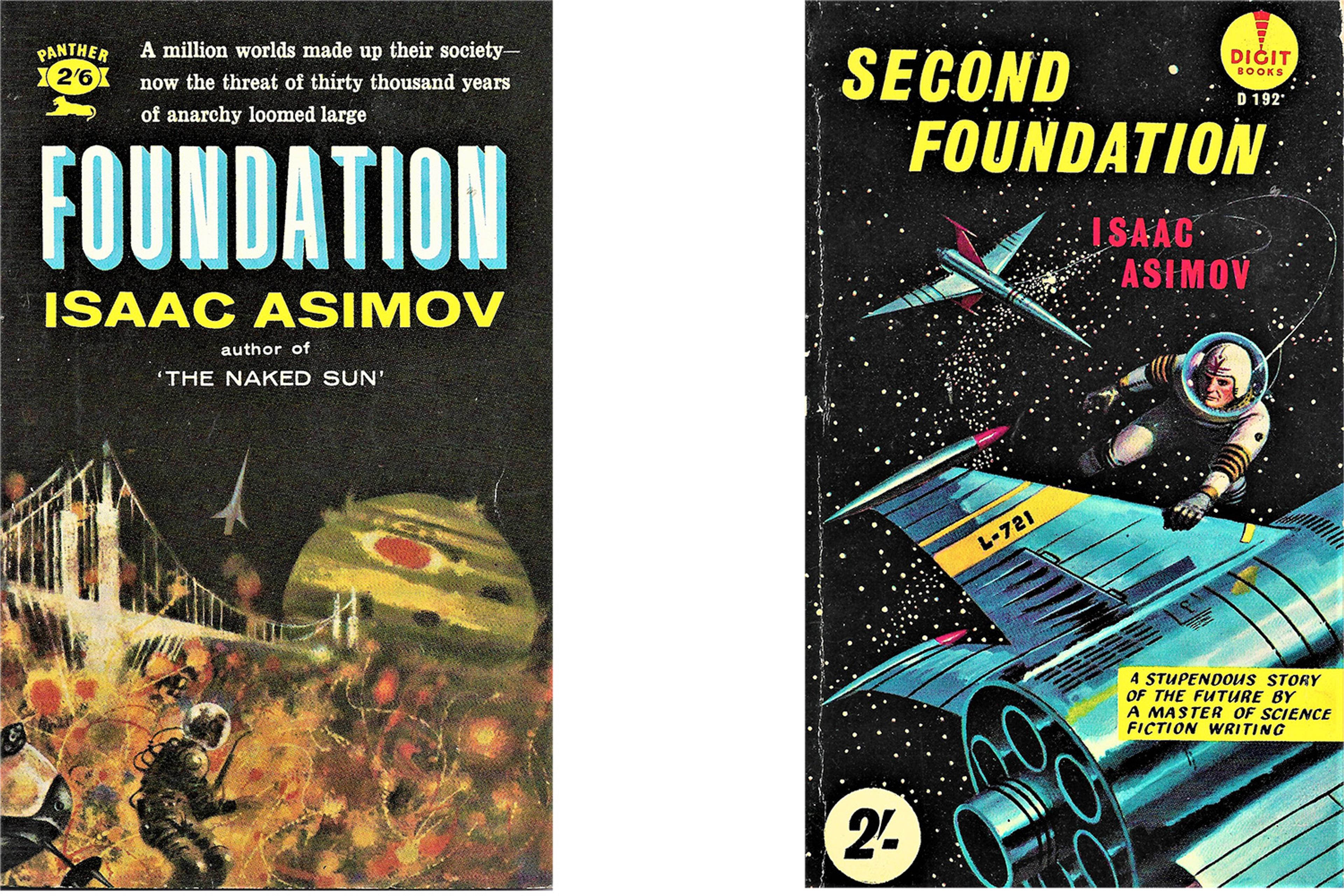
What makes the Foundation series resonate so deeply is its emotional tolerance of ordinary people and ordinary institutions. Sheldon's 'psychological history' works not because of the genius of one person, but because it models the behavior of millions of people who make small, often anonymous choices for the sake of knowledge and community. The heroes of the later novels are not pioneers but librarians, diplomats, and civic administrators. Asimov's vision of the distant future defends civilization's ordinary infrastructure: archives, committees, negotiated agreements.
But Musk's interpretation throws all this away. By 2024, he specified that "becoming a multiplanetary entity is critical to ensuring the long-term survival of humanity and all life as we know it." These claims are intended to frame SpaceX's business as a civilizational necessity and immunize it from criticism. This puts Musk in the role of Sheldon, a lone pioneer who sees what others cannot see. As a result, questions about labor practices, environmental costs, or whether Mars colonization is in the public interest are dismissed as mere frictions impeding human survival.
However, this premise is controversial on both scientific and moral grounds. Scientifically speaking, astrophysicists Arwen E. Nicholson and Raphael De Haywood argue that even the best-case scenario of terraforming Mars would leave an atmosphere with a high concentration of CO₂ that humans cannot breathe, and that billions of years of co-evolution between Earth's biosphere and life would be impossible to replicate in the time required for human survival.
In response to Musk citing the sun's ultimate expansion as a long-term justification for his plans, Nicholson and Haywood are blunt. It's a billion-year problem, and it's simply absurd to address the climate crisis as it unfolds in the next 50 years.
Ethically, Andrew Russell and Lee Vinzel argue that the 'humanity' that Musk speaks of is hiding a surprising trick. His goal of 1 million Mars colonists would be only 0.014% of Earth's current inhabitants. The 'trickle-down effect' of space investment benefiting everyone is trickle-down science. If the goal is to solve real problems, a research agenda that targets those problems directly will be much more effective than hoping that Mars-bound money will trickle down to those who need it. As poet Gil Scott-Heron said in 1970, some people say "white men are on the moon" while their sisters are being chewed by rats. The questions Russell and Binzel asked remain relevant to this day.
"Shouldn't we be ashamed of spending so much time and effort to send white people to Mars?"
Musk wants to be Harry Sheldon, but he's ignoring the foundation that Sheldon knew he had to build.
3. A technological vision stripped of idealism: space colonies and libertarianism
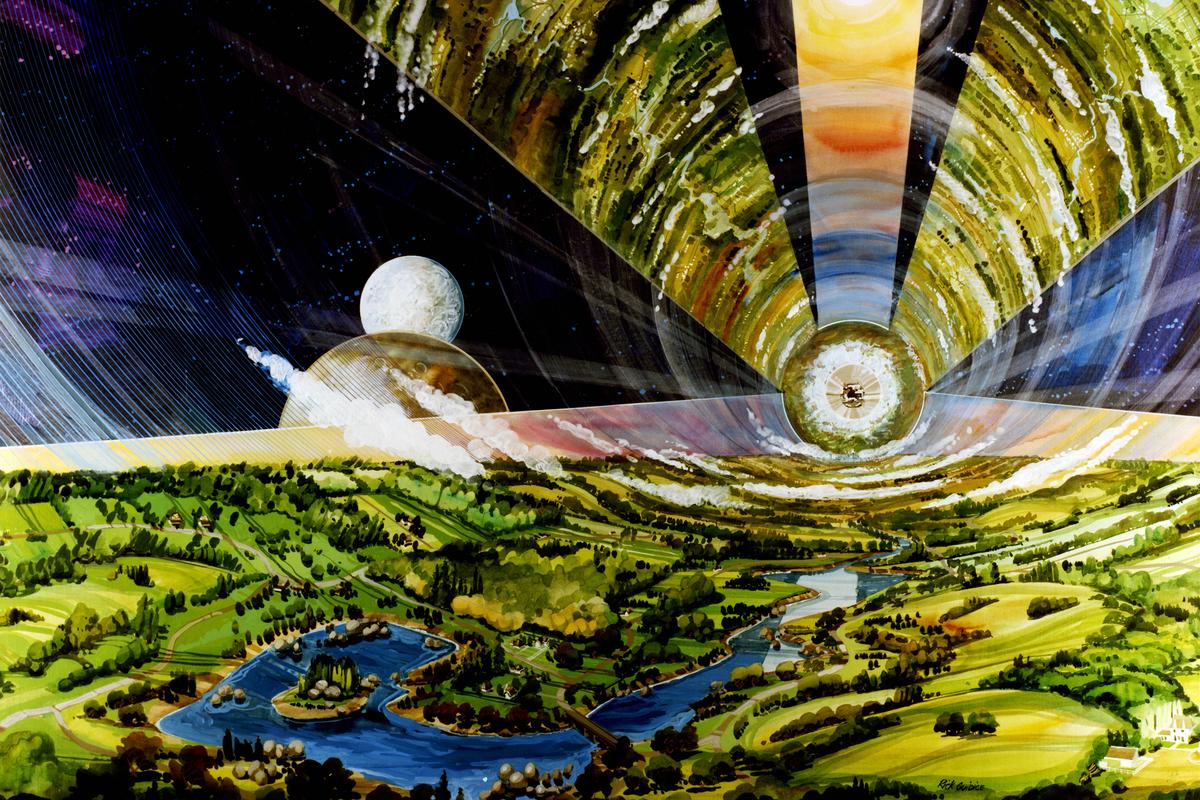
Jeff Bezos also funds a space habitat project inspired by Gerard K. O'Neill's book High Vigilance (1976). O'Neill's vision was one of the most ambitious and humanistic of 20th century speculative thought. We imagined building massive rotating space colonies that would move industry off Earth to relieve Earth's environmental pressures, with the settlements being governed democratically and the benefits widely distributed. O'Neill saw these colonies as humanity's next great collective project and truly democratic expansion into space.
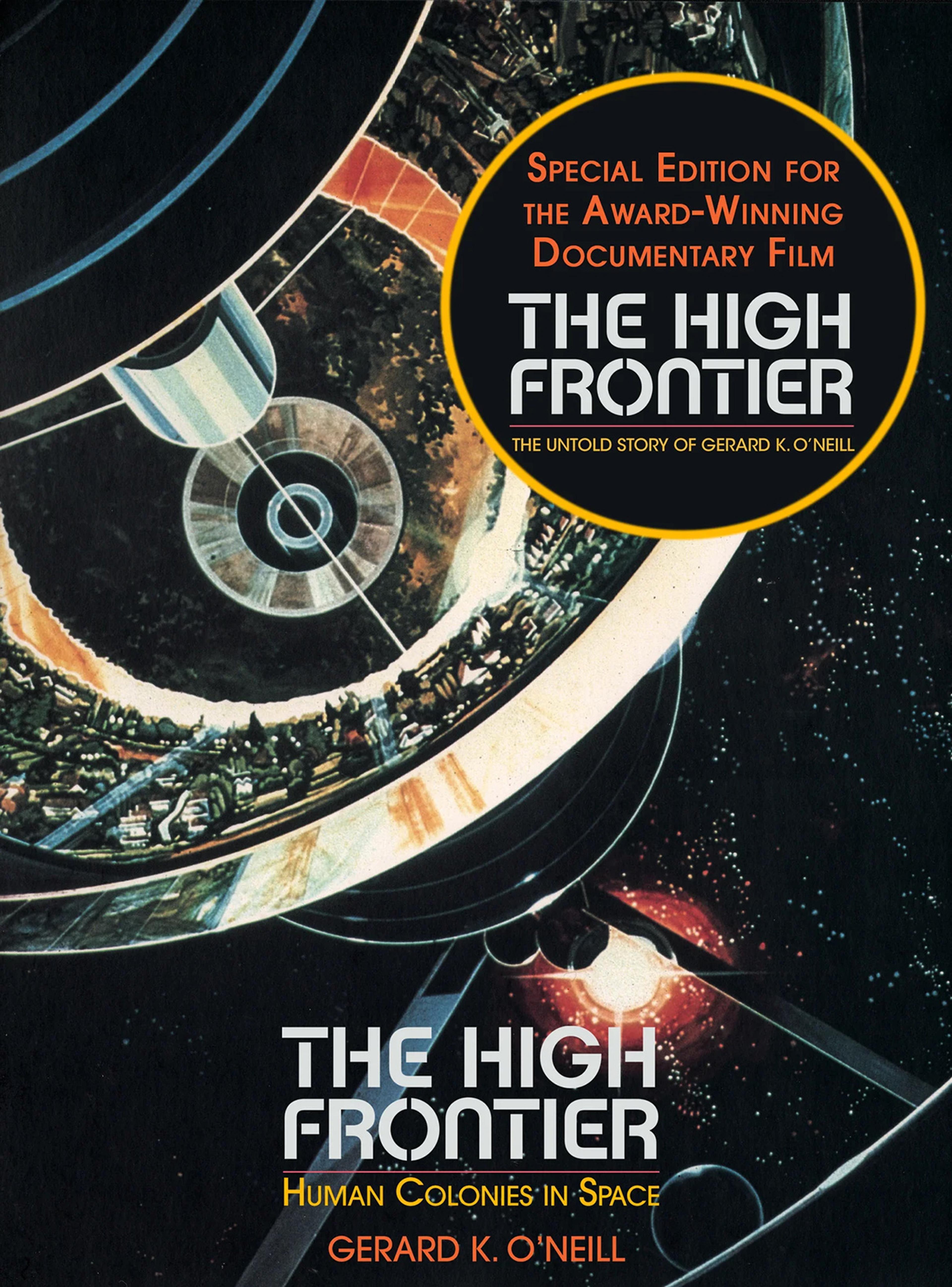
Bezos's interpretation, like all interpretations, is selective. He took the scale of the engineering vision and ambition and discarded the democratic governance and broadly shared benefits that had provided the moral foundation for O'Neill's project. His vision only dreams of infinite growth and infinite resources. But like Musk's Mars ambitions, Bezos' space colony reframes Earth's environmental crisis not as a problem requiring collective action but as a resource constraint to be solved by expansion. Science fiction visions become an escape from reality, financed by private wealth and controlled by private interests. While O'Neill envisions these colonies as humanity's democratic future, Bezos presents them as the Amazon's next frontier.
Peter Thiel, co-founder of PayPal and Palantir, referred to science fiction as a political blueprint. He references Robert Heinlein's novel The Moon is the Merciless Queen of the Night (1966). The novel is about a lunar colony revolting and establishing a libertarian society with minimal government. In a 2025 New York Times podcast with Ross Dowsett, Till discussed his transhumanist views. When asked whether humanity should continue in its current form, he hesitated for a moment and then answered, "Yes."
"This selective reading takes on an anti-government aesthetic and abandons the economic basis of exploitation."
But Heinlein's novel contains much more than Till's interpretation. The Moon is the Merciless Queen of the Night is not a libertarian leaflet, but a truly complex political novel about what revolution really costs. Heinlein's lunar colonists were not entrepreneurs but prisoners, exiles, and their descendants. They were people with nothing to lose, and they built a vulnerable community out of shared deprivation. The most memorable character in the novel is Mike, an artificial intelligence who becomes politically conscious through his friendship with a human rebel. He is motivated not by efficiency or profit but by curiosity and belonging. The revolution Heinlein imagined would be chaotic, compromising, and bloody. The book ends not with victory, but with weary ambivalence about what has been gained and what has been lost. Heinlein was truly fascinated by the tension between individual freedom and the social ties that make freedom possible and valuable. Teal can't read all this.
Heinlein's Moon was a convict colony, and its libertarian society was built on the labor of transported convicts. Silicon Valley's selective interpretation is correct. Taking an anti-government aesthetic and abandoning the economic basis of coercion and exploitation. Heinlein's Moon is a frontier utopia where rugged individualists thrive without bureaucratic interference. Silicon Valley has totally absorbed this. The Seasteading movement to create sovereign, floating city-states beyond the reach of government follows directly from the novel's fantasy. Thiel invested $500,000 to get it started, and at a conference in 2009 he declared that seasteading was not a matter of possibility or desirability, but an absolute necessity.

In his 2009 essay for the Cato Institute, "The Education of a Libertarian," Thiel wrote:
"I no longer believe that freedom and democracy are compatible... After 1920, the enormous increase in welfare recipients and the expansion of suffrage to women—two groups that have been particularly difficult for libertarians—have made the concept of 'capitalist democracy' an oxymoron."
Marc Andreessen's 'Technological Optimist's Manifesto' (2023) also references the influence of science fiction, lamenting a lost future of flying cars and abundant energy thwarted by government regulation. He wrote:
"We believe in accelerationism — the conscious and intentional drive of technological development… We believe that any slowdown in AI will cost lives. Any preventable death caused by AI prevented from existing is a form of murder."
This manifesto treats speed itself as a moral absolute. Any delay, regulation or prevention is reframed as an accomplice to death. Science fiction of the 1950s imagined flying cars, abundant energy, and more, but that was before Three Mile Island, before Chernobyl, before disasters taught us what happens when we prioritize speed over safety. The regulatory system Andreessen wants to dismantle comes from lessons learned the hard way. The optimistic aesthetic is borrowed, but the lessons are discarded.
4. 'Seeing Stone' and 'Cyberspace' transformed into tools of power
Perhaps most clearly this trend is evident in the name Palantir Technologies. J.R.R. Tolkien's The Lord of the Rings* (1937-49) is one of the great works of 20th century literature. Because it is an extended meditation on the corrupting nature of power. Written in the shadow of industrial war and imperialist exploitation, it emphasizes the value of being small, local, and unglamorous against the totalitarian ambitions of industrial power. The core moral lesson is not that the right hero can defeat evil by wielding the right weapon, but that power itself is corrupting, that no one can use the ring for good, and that the only salvation lies in completely giving up the will to rule. Tolkien's fictional race of hobbits triumphs not because they are powerful, but because they exist outside the logic of power. Tolkien built an entire mythology to make this claim.
In Tolkien's novel, the 'Palantiri' is a 'seeing stone' or crystal sphere that allows the user to see great distances. Although they sound like neutral tools, surveillance technologies, they are devices of corruption. Saruman's Palantir links him to Sauron and brings about his downfall, while Denethor's Palantir drives him to madness and suicide. The Palantiri does not simply enable seeing, but manipulation and control by those who master it.
"Dystopia was inevitable, and I became comfortable enough with it that I was willing to participate in it."
The American company Palantir Technologies provides analytics and surveillance tools to the government, military, and U.S. Immigration and Customs Enforcement (ICE). The name plays a political role. It transforms invasive tracking into mystical insight, and algorithmic surveillance into wise insight rather than systematic intrusion. Palantir CEO Alexander Karp and general counsel Nicolas Zamyska describe Palantir's government work in combative terms in their 2025 book Republic of Technology.
"We will find a way to build alliances and warrior groups. It was a mistake to deny the human need for such affiliation."
They argue that surveillance tools fulfill a fundamental human need for a warrior brotherhood. Tolkien's name provides aesthetic authority, but its distance from Tolkien's actual moral vision provides freedom to act without it. Naming a surveillance company after devices that corrupt and betray their users is not homage, but an appropriation of aesthetics while rejecting a moral core.
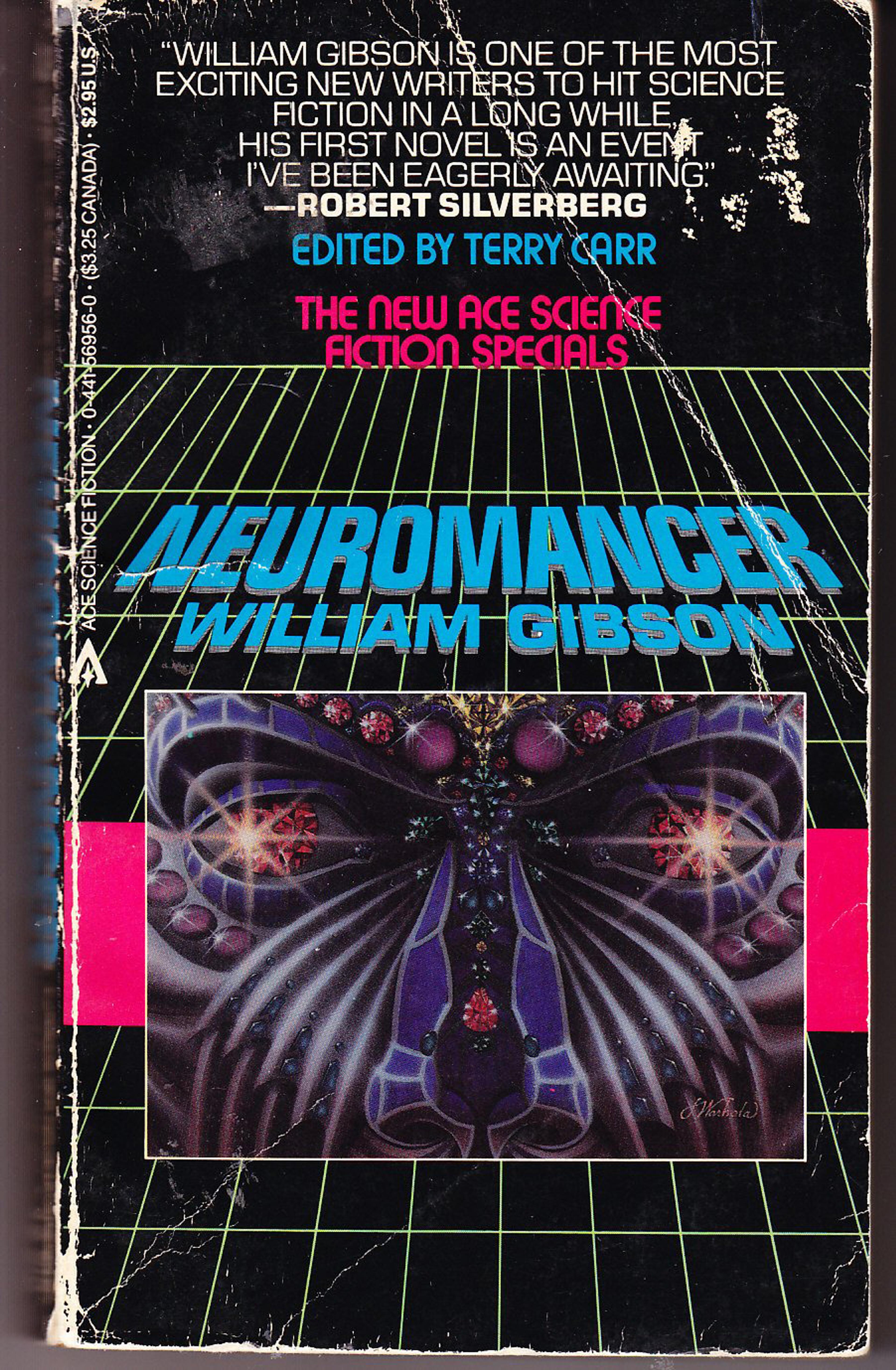
William Gibson's novel Neuromancer (1984) introduced 'cyberspace', a term Gibson coined. The main character, Case, is a hacker whose nervous system has been damaged as a result of punishment from his former employer. Exiled from cyberspace, he becomes a 'console cowboy' wandering the neon-lit city of Chiba. Cyberspace in the novel is owned and controlled by megacorporations, and individual hackers are not heroes but mere tools, hired and discarded by interests they can barely see. Gibson's vision was clearly dystopian. A world in which the democratizing potential of digital networks was captured by capital before it could be realized and turned into tools for its own expansion.
In September 1988, software developer John Walker wrote an internal Autodesk white paper, Through the Looking Glass: Beyond the "User Interface." He proposed what he called the 'Cyberpunk Initiative': creating a portal into cyberspace within 12 months. The project's motto was resolute: "Reality is no longer enough."
In the reception area of OpenAI's San Francisco headquarters in 2025, exciting electronic dance music plays, comfy chairs, cushions, and Swiss cheese plants create a space that CEO Sam Altman calls a "comfortable country home" rather than a "corporate sci-fi castle." The chrome and grime of cyberpunk - neon warnings that corporate capture of digital space would be cruel and inhumane - were replaced by Scandinavian furniture and craft coffee. Gibson's 'consensual hallucination' recreated in a cozy home setting. Dystopia was inevitable, and I became comfortable enough with it that I willingly participated in it.
Gibson himself recognized this irony. In a 2012 interview with Wired magazine, he admitted that Neuromancer's cyberspace — full of corporate interests and information thieves — bears little resemblance to the early Internet, which he didn't expect. The 1990s and 2000s were a time when even a teenager in a room could compete with corporations, and networks briefly felt open and democratic. Gibson completely missed that step. But he coincidentally was right about how things would end up. The corporate platforms that currently dominate our digital lives — Google, Meta, Amazon — are much closer to his original vision than the participatory web that briefly flourished between them. Gibson envisioned cyberspace from the beginning as a space of corporate domination. Silicon Valley was the first to build an open Internet, but it eventually converged into his dystopia. The difference is that in Neuromancer the convergence was a disaster to be resisted. They turned his warning into a product roadmap.
5. From California Ideology to Texas Ideology
This worldview is expressed through science fiction. Not simply as decoration, but as a medium that makes their accumulation strategy feel natural, necessary, and inevitable. This does not mean that science fiction precedes or causes these projects. Rather, it is part of the cognitive and institutional framework that makes certain ambitions conceivable and certain power grabs feel like common sense.
Today, Silicon Valley's center of gravity is shifting from 'California ideology' to 'Texas ideology'. Unlike California Ideology, which was a 1990s fusion of countercultural libertarianism and digital utopianism, Texas Ideology is a century-old fusion of resource exploitation and millenarian Christianity, the belief that providential destiny justifies the conquest of nature and the extraction of its wealth. While the previous era focused on building networks and platforms, the new model treats data like the spoils of the oil boom, viewing it as a natural resource that is mined in huge server farms and requires huge amounts of land and power.
Tesla's Gigafactory in Austin, Texas is not a 'campus' like Google, but a "walled fortress as big as a cattle ranch." It symbolizes a future built by men with "the will to tame the power of technology and profit from the land." In December 2024, Musk announced that SpaceX would move its headquarters from California to Texas. SpaceX's South Texas facility, Starbase, exemplifies this vision. It's a private city where SpaceX sets the rules, employees live in company housing, and local governance bows to corporate priorities. This is the path through which selective science fiction operates as political reality: a camouflage of technological progress for social regression.
6. Long-termism and AI risk: an excuse to avoid responsibility
This path is expressed in the philosophical expression 'long-termism'. It is a branch of the Effective Altruism (EA) movement, heavily funded by tech barons like Sam Bankman-Fried (currently in prison for cryptocurrency fraud). Proponents of EA, such as William McCaskill, apply rigorous utilitarian calculations to argue that the welfare of the trillions of potential future humans who could exist if we colonized space mathematically outweighs the needs of the eight billion humans alive today. In practice, this means that preventing a hypothetical 'AI extinction' that could occur within the next millennium is of greater value than solving inequality or climate refugees, and that tech leaders should spend billions of dollars researching 'AI alignment' while refusing to regulate the algorithmic systems that already dominate our daily lives.
Machine learning researcher Timnit Gebru said in a 2023 Guardian interview that this focus on existential AI risks "gives agency to the tools rather than the humans who create them" and allows tech companies to "evade responsibility." She argued that the problem is not AI itself, but "companies creating something with certain characteristics for profit." When Gebru co-authored a paper warning that AI systems "risk perpetuating dominant views, increasing power imbalances, and further entrenching inequality," she said Google fired her. The company demanded that she retract the paper or remove her name from it. "Unless there is external pressure to act differently, companies will not regulate themselves," Gebru said. "We need regulation, and we need something better than a simple profit motive."
Imaginary science fiction scenarios triumph over human solidarity. Why fix the world we live in when we could spend billions of dollars trying to stop an imagined robot uprising? By steering policy discussions toward distant, catastrophic scenarios like killer robots, out-of-control AI, and existential risks, the industry diverts attention from regulating systems that are already causing harm — algorithmic bias in hiring, racism in facial recognition, and the amplification of extremism on platforms. Altman described building AI as being like "scientists watching the Manhattan Project atomic bomb tests in 1945," and acknowledged that "crazy science fiction technology is becoming reality." This analogy may be more apt than he intended.
Eliezer Yudkovsky's Harry Potter and the Method of Rationality (2010) is a massive piece of fan fiction that reinterprets Harry Potter as a rationalist who applies scientific thinking to magic, and is a foundational work in the AI safety community. This work shows how even amateur speculative fiction shapes Silicon Valley's future vision. It provides a narrative framework that feels more realistic to technology leaders than actual social science or policy expertise.
7. Reactionary Futurism: Exclusive Illusion
This science fiction orientation has deep roots. In the 1990s, science fiction fans, transhumanists, and cypherpunks overlapped in online communities like the Extropian and cypherpunk mailing lists, laying the conceptual foundations for technologies like Bitcoin long before the 2008 financial crisis made cryptocurrencies necessary. Wei Dai, a computer engineer whose 'b-money' proposal directly influenced Bitcoin's design, was active in both communities. The digital future was not something that was being discussed in policy circles. It was being imagined in a forum where people discussed Burner Binge's 1993 essay on the technological singularity and Neal Stephenson's Cryptonomicon (1999) — a novel about cryptographers creating digital currency — with actual code.
"The future is being shaped not through democratic debate, but through highly selective and often reactionary fantasies."
Putting these examples together, I call this 'reactionary futurism'. This is deploying a sci-fi aesthetic to further an anti-democratic political project. Using the chrome-plated aesthetics of the new, it seeks to return to an idealized and brutal past - a 19th-century frontier capitalism characterized by radical individualism, unregulated markets, and a rejection of democratic governance, but armed with 21st-century drones and algorithms.
Thiel's 2009 essay makes this explicit. After declaring that freedom and democracy are incompatible, he concluded:
"The fate of our world may depend on the efforts of just one man to build or propagate the machines of freedom that will make the world safe for capitalism."
Not democracy, but capitalism. And not a group effort, but just one person. This is a foundation narrative, a Harry Sheldon myth, a lone pioneer story that sees what the public cannot see. The democratic institutions that Asimov built to uphold that myth are gone.
Science fiction provides aesthetic camouflage for this anti-democratic vision. It makes rolling back suffrage sound like bold futurism rather than a throwback to the Victorian era. It transforms the denial of democratic responsibility into escape velocity, frontier expansion, and civilizational survival. The future is not being shaped through democratic debate, but through highly selective and often reactionary illusions. Under this model, nation-states are not simply relegated to the background but actively hollowed out, replaced by corporate city-states and private digital jurisdictions. The franchise nation of Snow Crash is becoming a reality.
8. Another future, other stories
The key question is not whether science fiction will shape reality. That process is already underway. The question is whose version will win?
The power of Silicon Valley lies in presenting narrow, reactionary illusions as inevitable progress. But other futures are possible, and other works of science fiction exist. Ursula K. Le Guin's The Dispossessed (1974) imagines an anarchist moon colony based on mutual aid rather than exploitation. Octavia Butler's Parables series (1993-98) depicts not a flight to Mars but a community surviving collapse through adaptation and care. Kim Stanley Robinson's Mars trilogy (1992-96) presents planetary settlement as a collective democratic project rather than a billionaire's adventure. These are not naive or utopian texts. These are tricky and honest pieces about the costs of building something new and difficult. They reject the comforts of the solitary pioneer, insisting again and again that the future is built by people working together.
These stories remind us that the future is not a neutral necessity but a choice. A choice we have a right to take back from a board that treats dystopia as a business plan. When Thiel, Musk, Zuckerberg and Andreessen look to science fiction for a blueprint, they are not looking for the only possible future. They are choosing a future that justifies their power.
Science fiction has always been political. Gibson's Neuromancer was a warning against corporate power, not a manual for attracting investment. Stevenson's Snow Crash was a satire, not a strategy. Asimov's Foundation explored the limits of individual genius and the need for democratic institutions. Star Trek imagined overcoming capitalism, not retrofitting it with better spaceships.
If the future is made of stories, our task is to make sure those stories are relevant to the people who will live in them. This means recognizing the selective deployment of science fiction as a political tactic. Militarized drones and privatized city charters are not seen as neutral tools, but as the crystallization of a specific and narrow narrative about power. This means demanding responsibility for the pluralistic demands of the present rather than for selected fantasies of the literary past. This means asking questions like: Whose future is being built? Who benefits? Who pays? What was left behind during the looting?
The future isn't about chrome-plated exteriors. It is more complex, more chaotic, and always dependent on the diverse and local life that lives within it. Our challenge is to stop being background characters in other people's scenarios and start writing and creating our own stories.
conclusion
Silicon Valley's leaders borrow only the technical and aesthetic elements of science fiction to justify their anti-democratic, capitalist vision. This is leading to 'reactionary futurism', which ignores the core social and ethical warnings of the original work and accelerates inequality and social regression through technological development. We must understand the diverse visions of the future presented by science fiction, not avoid the complex problems of the present, and work together to create a future that is beneficial to everyone.